
Where a clinic panel earns its place
In a clinic, wall visuals are not just decoration. They need to support a clean, professional setting while staying easy to wipe down and less likely to warp in air conditioned rooms or humid coastal towns. Dye sublimation onto coated aluminium is well suited to this work because the image is transferred into the coating, not simply printed on the surface. The result is a hard wearing panel that handles frequent cleaning and still keeps colour depth, useful in rooms that see daily foot traffic and strong daylight.
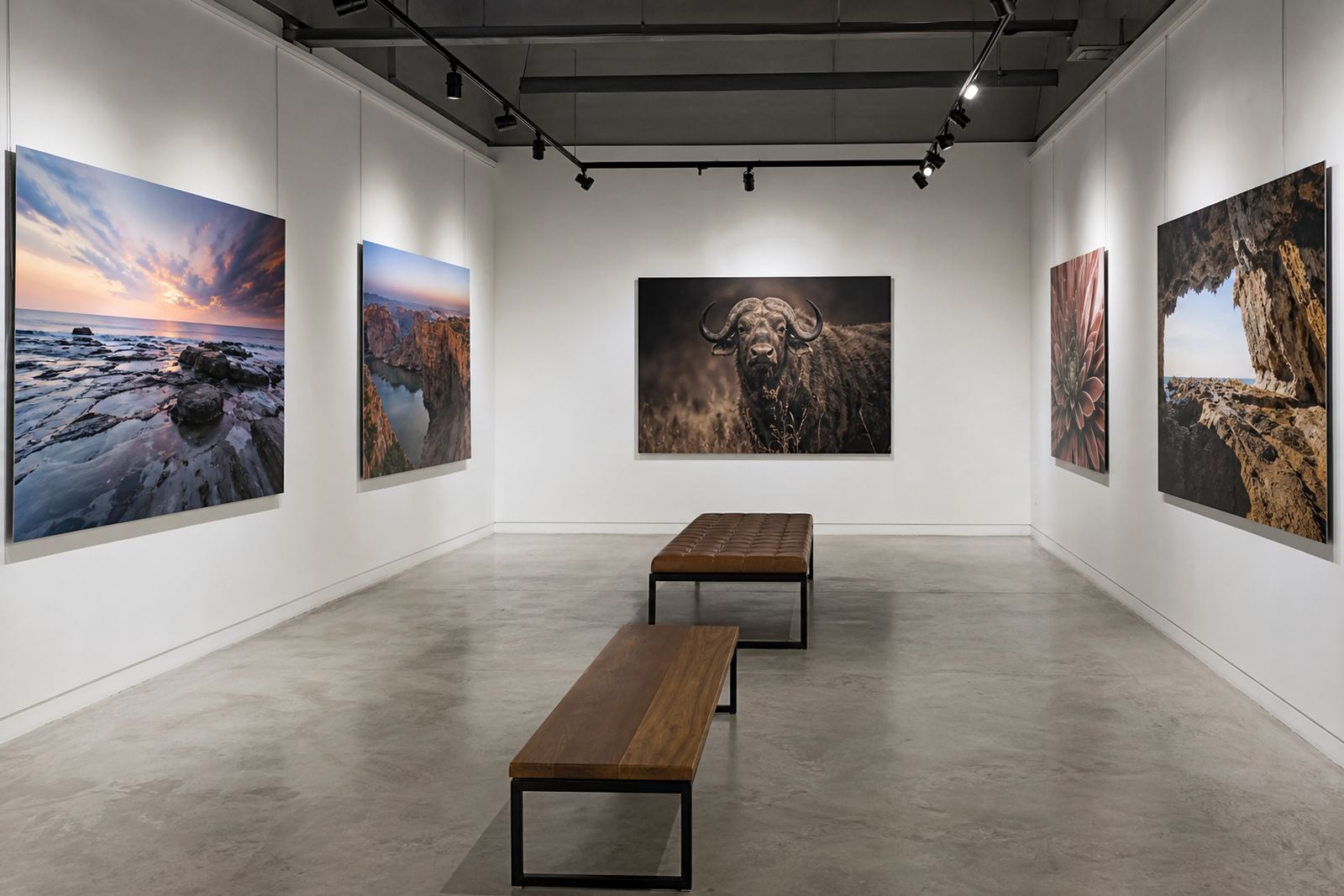
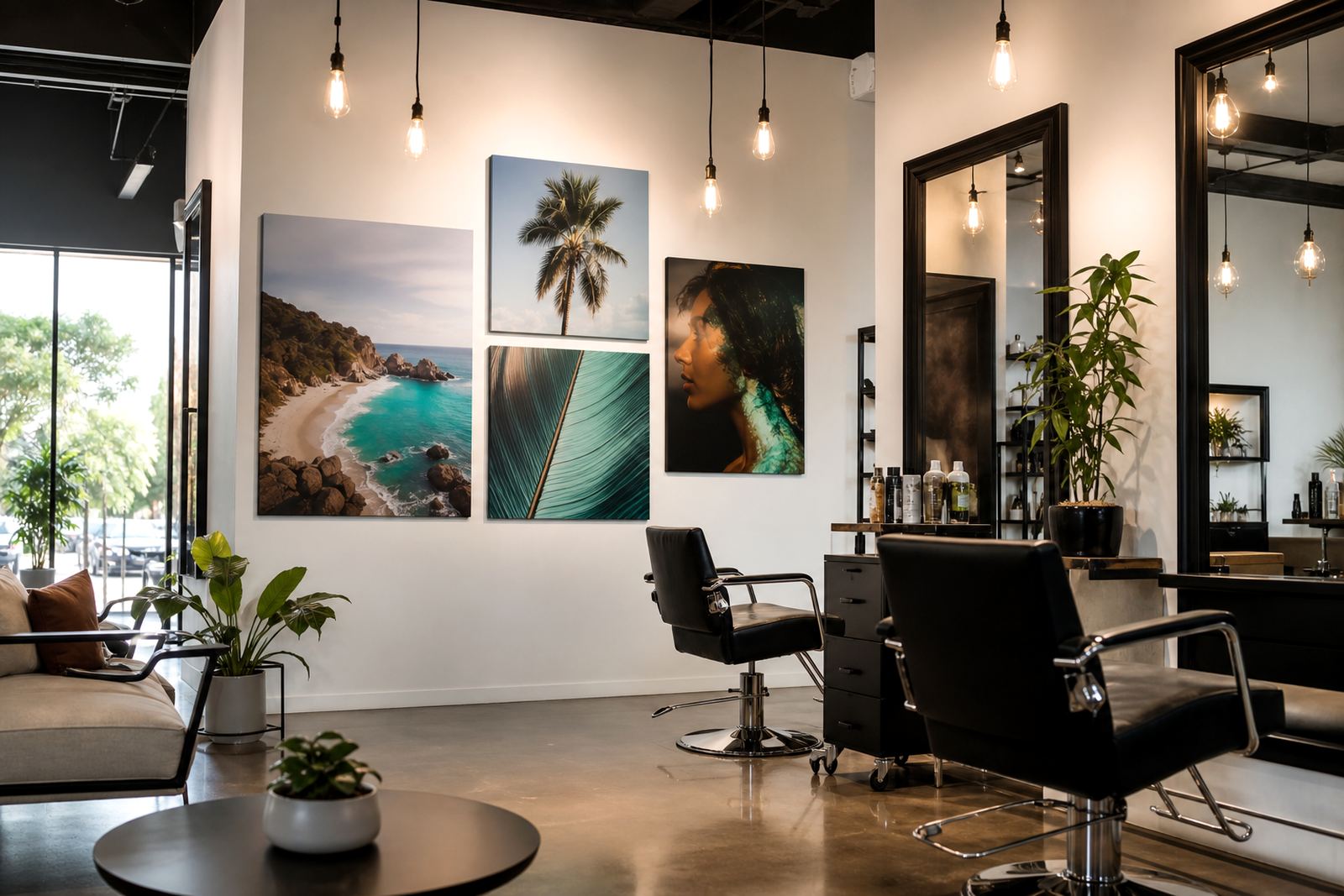
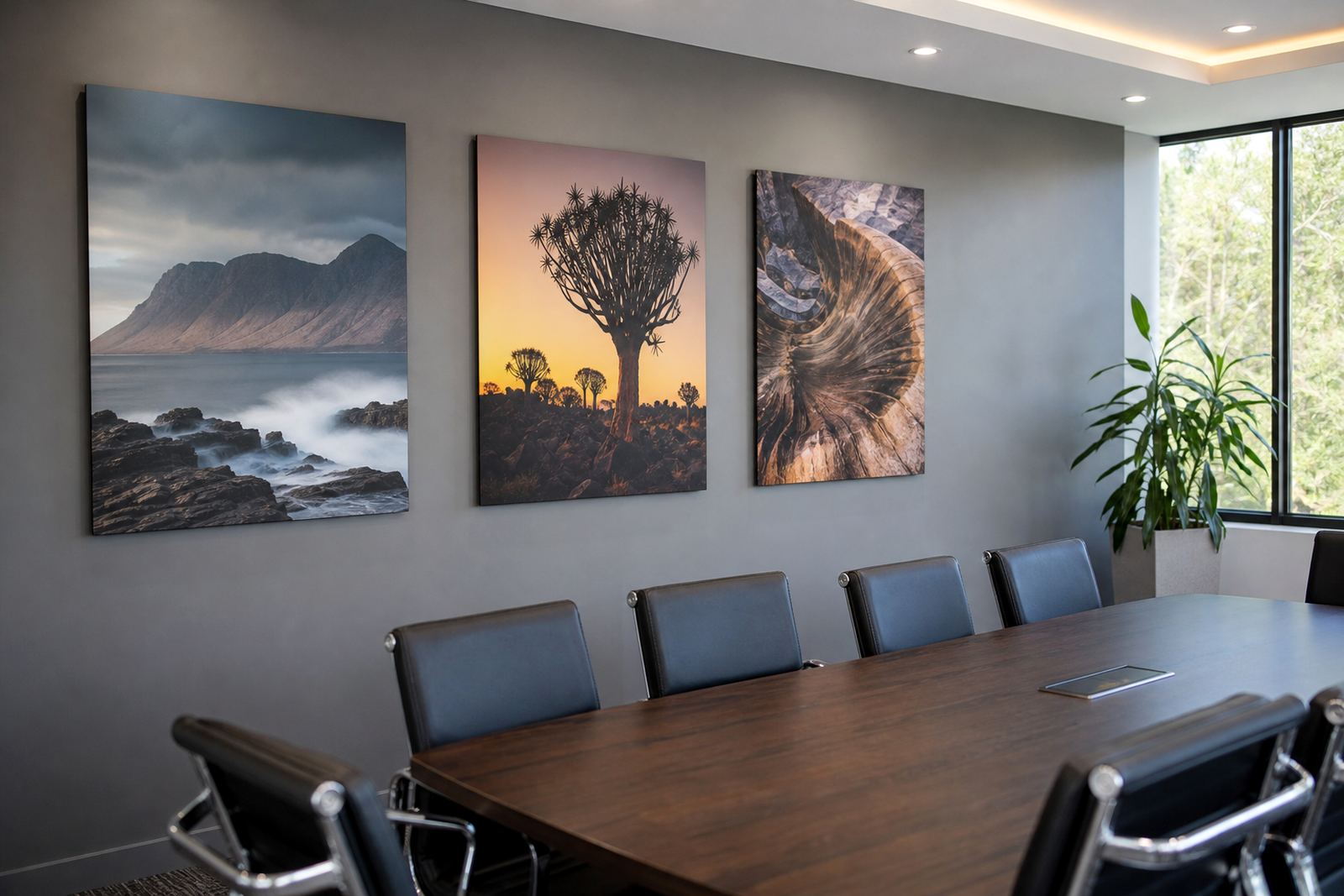
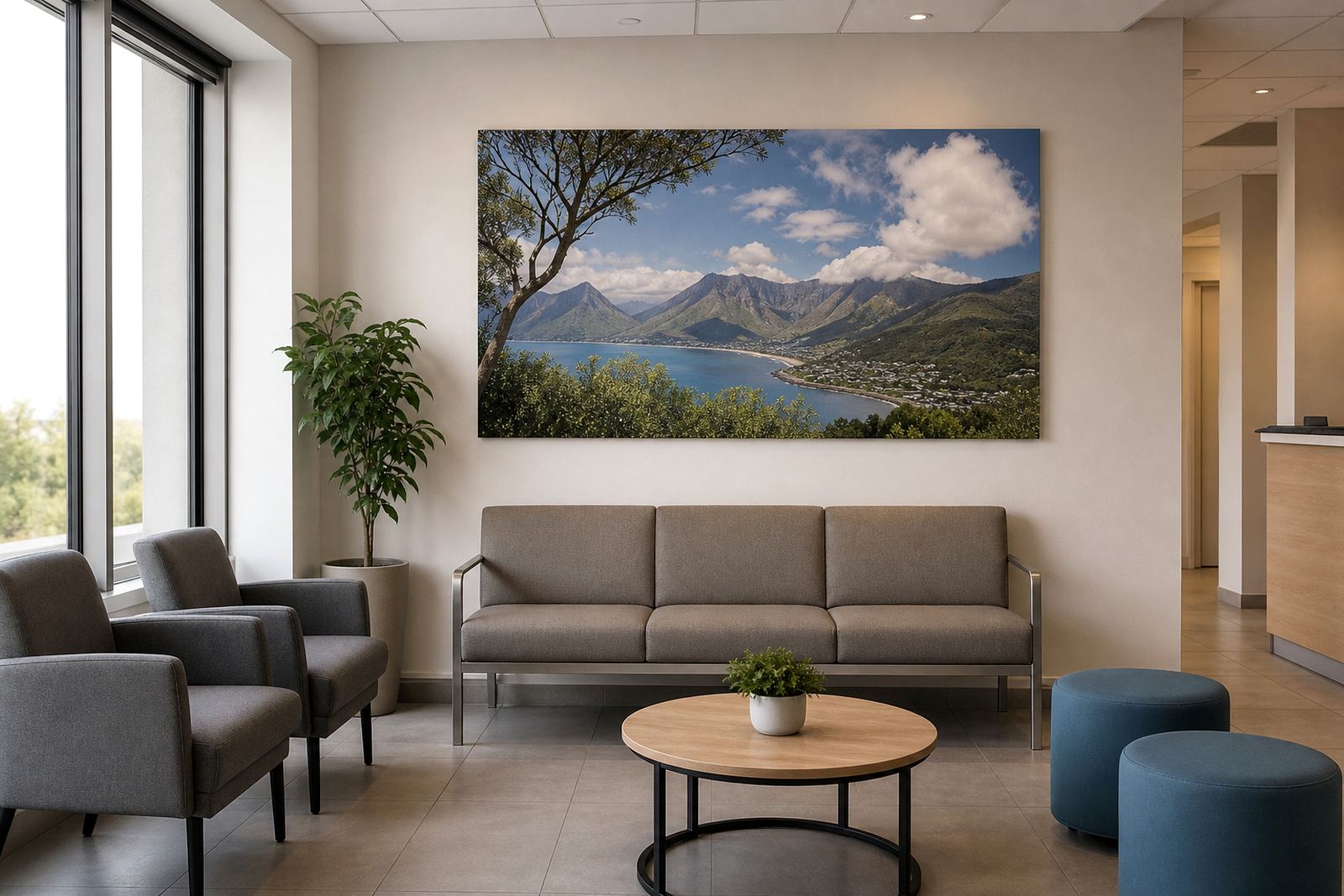
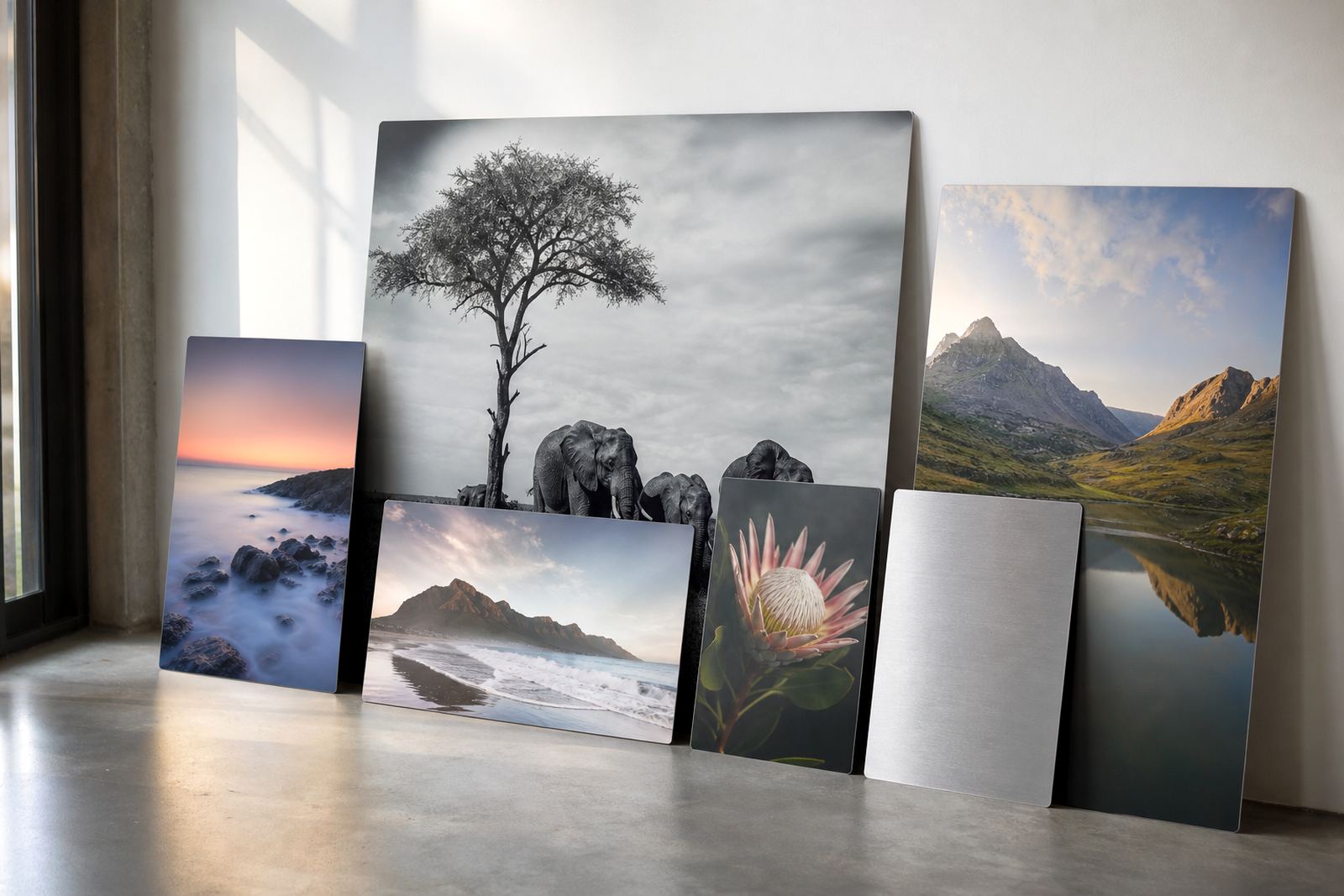
For reception walls, waiting areas, paediatric rooms and consultation passages, clinics often prefer artwork that is calm rather than busy. Landscapes, abstract colour fields, local city scenes and soft photographic work are common choices. The right image scale matters too. A small panel can get lost on a long corridor wall, while one oversized piece may dominate a room with low ceilings. We help with file checks, crop planning and finish selection so the panel fits the space properly.
- Reception areas often suit one hero panel or a small pair mounted level with the seating line.
- Corridors work well with a sequence of matching panels at equal spacing.
- Consulting rooms usually need restrained imagery, not high contrast clutter.
- Treatment spaces benefit from matte or brushed finishes where glare is a problem.
Finish choices that behave well under clinic lighting
Lighting in clinics can be unforgiving. Fluorescent fittings, LED strips and daylight from glass doors can all create glare if the surface is too reflective. That is why finish selection is one of the first planning steps. Gloss gives strong colour pop and works in controlled lighting, while matte softens reflections and feels more subdued. White panels suit full colour images and clean graphic work, and brushed aluminium can add a more industrial look where a clinic wants a contemporary edge without losing clarity.
Colour preparation matters as much as the finish. A bright sky or pale skin tone can shift badly if the file is too small or if the contrast is pushed too far before production. For clinics, we normally suggest high resolution source files so faces, signage and fine lines stay crisp. If the wall is long or the viewing distance is short, that detail becomes even more important. A file that looks fine on screen can still show weakness once enlarged, so a proper resolution review saves trouble later.
- Gloss: strong colour, more reflection, best for controlled light.
- Matte: lower glare, ideal for waiting rooms and passage walls.
- White: clean base for bright images and graphic layouts.
- Brushed: visible metal grain for a modern, technical look.
Where needed, we can also set up test panels. That helps a practice compare how the same image behaves in a foyer and in a room with brighter task lighting, instead of guessing from a small sample on a screen.
Planning around rooms, rules and daily movement
Clinic walls are often full of practical constraints. There may be hand sanitiser stations, notice boards, fire points, exit signs and glass partitions already on the wall. Municipal and building rules can also affect where fixtures go, especially in leased premises or shared medical suites. Before any panel is made, it helps to measure the wall, note socket positions and check whether the mounting surface is plaster, painted brick or board. That avoids awkward drilling after the panels arrive.
A clean layout also depends on how people move through the room. A reception wall seen from a seated position needs different proportions from a corridor panel that is viewed while walking. In a narrow space, wide landscape images often work better than tall portraits. In a larger room, a set of aligned panels can break up a blank wall without making the space feel busy.Some finishes read better than others in those conditions.
- Leave enough margin around the artwork for skirting, switches and frames of doors.
- Check whether the wall can take concealed fixings or needs stand-off hardware.
- Keep text heavy artwork at a readable height for standing and seated visitors.
- Use a repeatable layout where multiple rooms need a consistent look.
The clinic set-up that is ordered most often
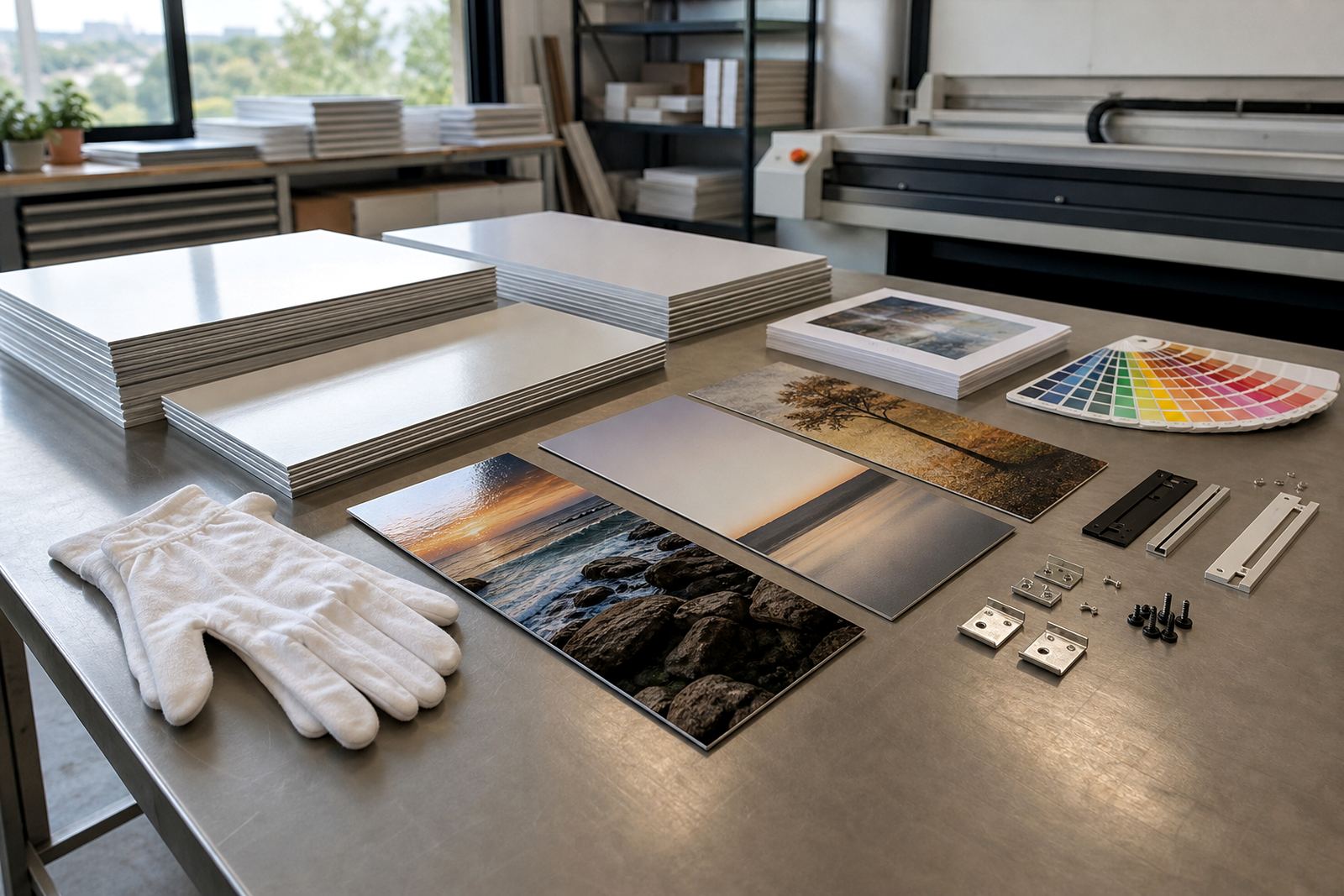
Most clinics do not need a complicated equipment list. They usually want a selection of panels that can be used in different zones, plus hardware that is neat and secure. For a small practice, one or two statement panels may be enough. Larger medical centres often need a coordinated set across reception, passageways and branch rooms. The aim is consistency without making every wall identical.
Typical orders include custom sizing, mounting options, packing and delivery to Johannesburg, Pretoria, Cape Town, Durban and Gqeberha. For South African clinics, that usually means planning around wall size in millimetres, not rough estimates. A panel that is 800 x 1200 mm may work well over a sideboard or bench, while a long corridor might call for a sequence of 600 x 900 mm panels with even spacing. Where a practice wants multiple rooms to match, we can help with reprint matching so a later replacement still looks consistent with the original batch.
- Single feature panel for reception.
- Set of matching panels for corridor walls.
- Room number or department panels with calm imagery and subtle labelling.
- Mounting systems suited to brick, plasterboard or tiled surfaces.
We also handle packing carefully because clinic orders often travel to branch sites, storage rooms or reception loading points, and nobody wants scratched corners after a long trip across Gauteng or the coast.
Mistakes that make a calm room feel untidy
One common mistake is choosing an image that is too busy. In a clinic, very high contrast artwork can make a waiting room feel restless, especially if there are already posters, notices and branded materials on the wall. Another issue is under sizing. A panel that is too small looks accidental, while one that is too large can crowd seating or make a narrow room feel boxed in. The right scale makes the room feel settled.
Another regular problem is ignoring the finish. A glossy panel may look excellent in a showroom, then pick up reflections from ceiling lights and windows once it reaches the practice. Matte is not always the answer either, because some images need stronger colour punch to avoid looking flat. That is where finish selection, colour preparation and a test panel can save time and money. It is also worth checking the image rights before production. Customers must own the images they send or have the right to use them, especially where photography includes people, medical spaces or identifiable property.
We also see layouts where the hanging system was not thought through. If a wall is uneven or the fixing points are rushed, the panel may sit slightly out of line. In a clinic, that small error is visible every day. Proper mounting avoids that problem and keeps the wall looking orderly, which matters in a place where first impressions carry weight.
What clinic walls usually cost in rand
Budgets vary by size, finish, number of panels and mounting method. A small single aluminium panel for a consulting room will cost far less than a large reception feature wall with several matching sections. As a general working range, smaller clinic panels often start in the low thousands of rand, while medium and larger custom sets can move into the mid thousands or higher once design coordination, mounting and delivery are included. The exact price depends on dimensions, file quality and how much preparation is needed before production.
For practices planning a whole suite of rooms, it is often worth grouping the order so file checks, colour preparation and finish selection happen together. That can keep the visual result consistent and avoid paying twice for separate setup work. Clinics in Randburg and Sandton sometimes prefer local delivery for faster turnaround, while branches in Cape Town, Durban or Gqeberha may plan slightly earlier to allow for transport time. If a practice needs a later replacement after a room refurb, we can match the earlier panel as closely as the source file allows.
For many clinics, the best value is not the cheapest panel but the one that still looks right after repeated cleaning and months of daily use. That is the standard we work to.