
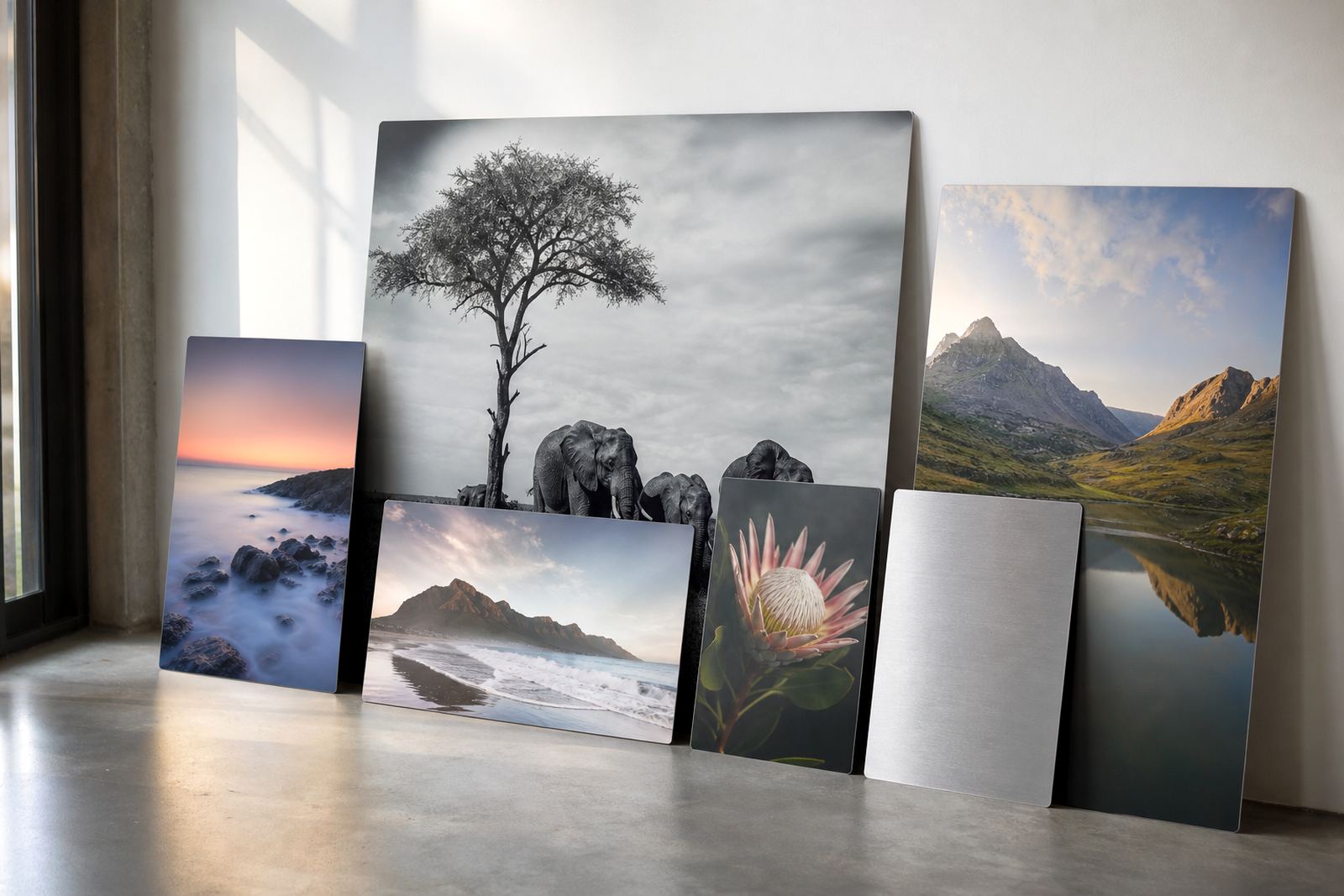
Colour that holds its own under salon lighting
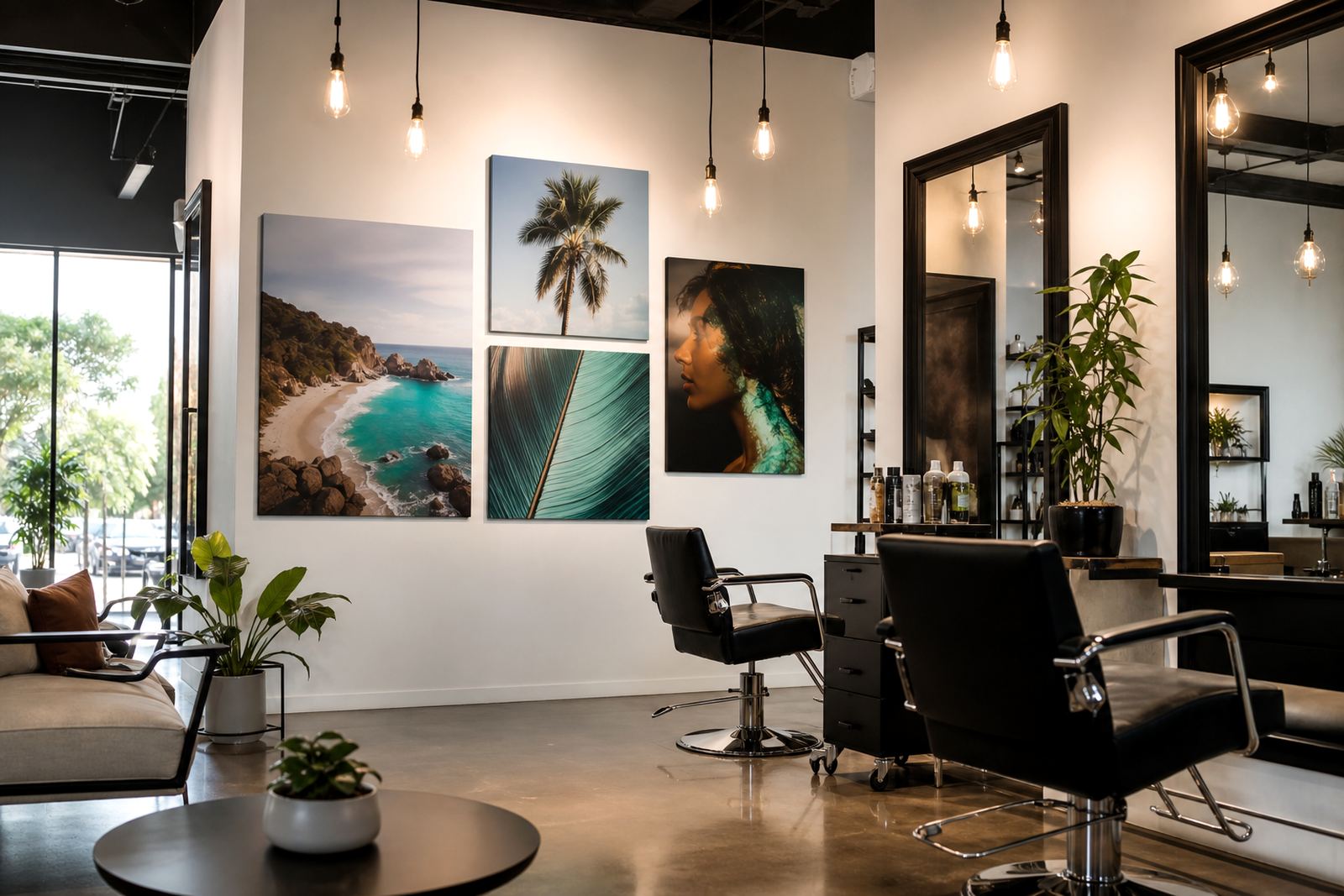
Salons often use strong downlights, mirrors and window light all in one room, so artwork needs to keep its colour without looking dull or washed out. Dye sublimation onto coated aluminium gives a clean, contemporary surface that suits hair salons, nail bars, grooming spaces and beauty rooms where the decor must feel current and professional.
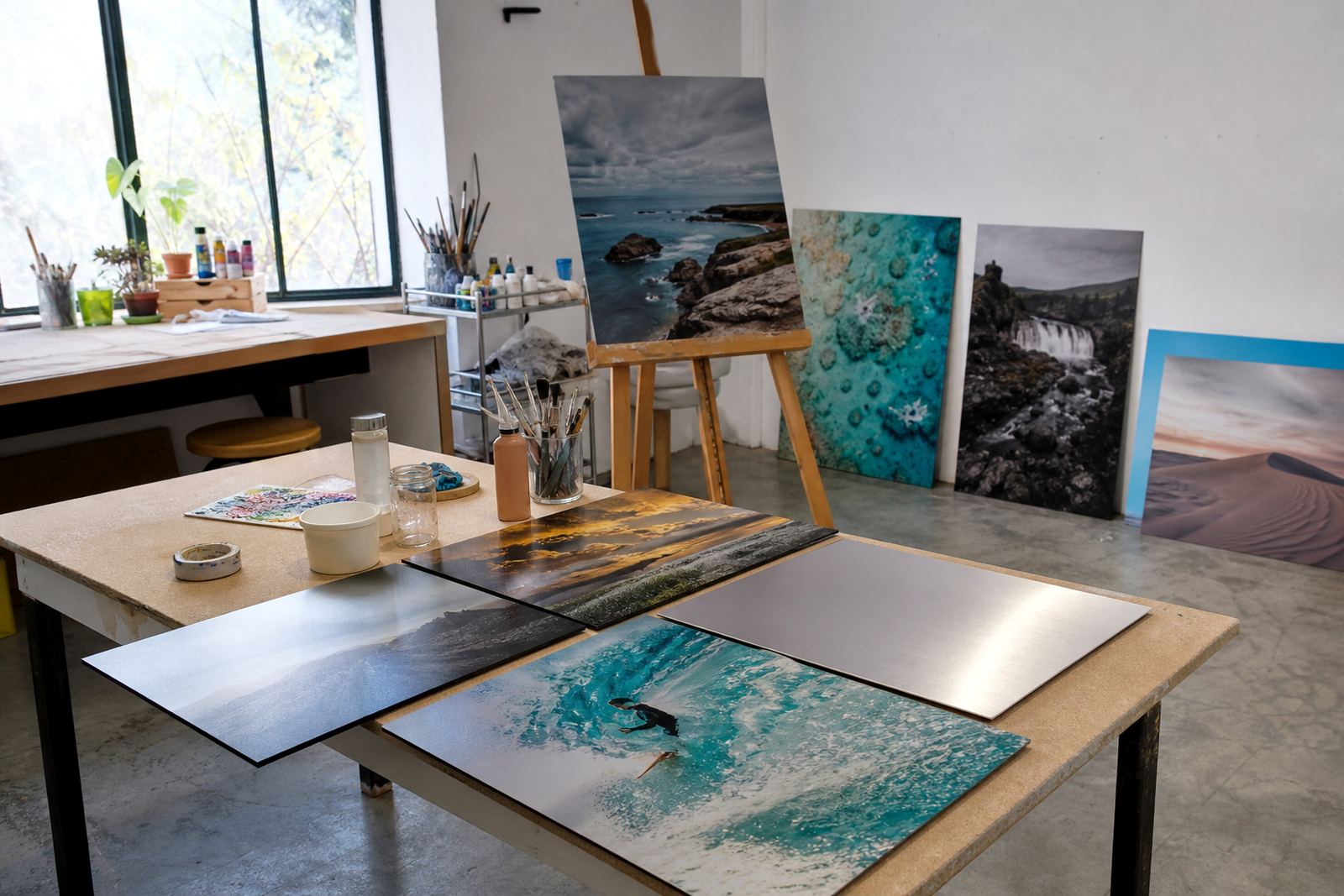
For salon interiors, the most practical choices are usually gloss for extra punch, matte for softer viewing, white for full colour density, and brushed aluminium where a more industrial finish works with concrete, timber or black fittings. The right option depends on the wall position, how much glare you get from mirrors, and whether the panel is meant to be the main feature or a supporting accent.
- Gloss works well on feature walls where colour needs to pop.
- Matte helps in bright rooms with a lot of reflected light.
- White panels suit photo-based artwork and brand visuals.
- Brushed panels suit modern, pared-back interiors with metal details.
What salons usually send for panel production
Salon decor panels normally come from a mix of brand images, mood photography, hairstyle collections, beauty imagery, texture shots or local artwork. The file needs enough resolution for the finished size, because a 600 mm x 900 mm panel asks for far more detail than a small A3 feature panel. If the image is too soft, the result may look blurry once it is printed at display size.
We check files before production, prepare colour for the chosen finish, and advise if a crop will affect a face, product shot or logo placement. Customers must own the images they send, or have the right to use them. That matters for salons too, especially when using supplier photographs, staff portraits or campaign visuals.
- High-resolution photos are best for close viewing near mirrors or reception.
- Logos and text need clean artwork so edges stay sharp.
- Busy images can be adjusted to avoid awkward cropping around chairs, hands or product bottles.
- For repeat walls, panels should be planned as a matched set, not one by one.
Wall layouts that make a salon feel finished
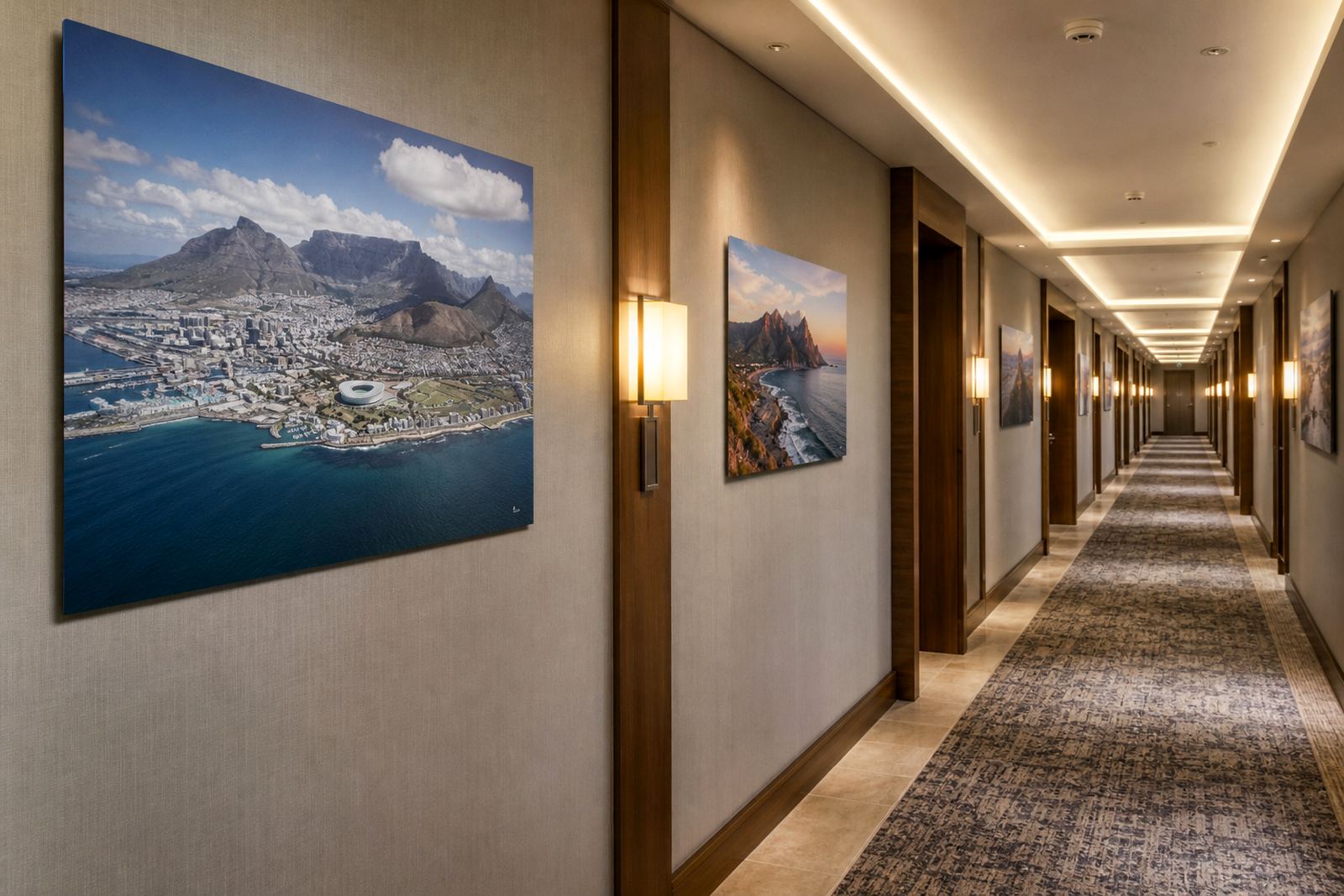
A good salon wall layout does more than fill space. It helps customers read the room, whether they are waiting at reception, sitting at a wash station, or moving between treatment areas. A single large panel can anchor a compact space, while a row of smaller panels can carry a corridor or waiting area without making the room feel heavy.
In Johannesburg, Cape Town, Durban, Pretoria and Gqeberha, we often work around different wall conditions, from smooth painted plaster to tile and masonry. That affects hanging hardware and placement. Panels should sit clear of splash zones, be level with mirrors and shelving, and allow enough space for cleaning around them. In humid coastal areas, the finish choice and mounting method matter even more, because bathrooms and treatment rooms can see more moisture.
- Place feature panels where clients naturally wait or face the wall.
- Avoid hanging directly where hair spray, water mist or product overspray can build up.
- Leave enough side clearance so shelving, mirrors and signage do not crowd the image.
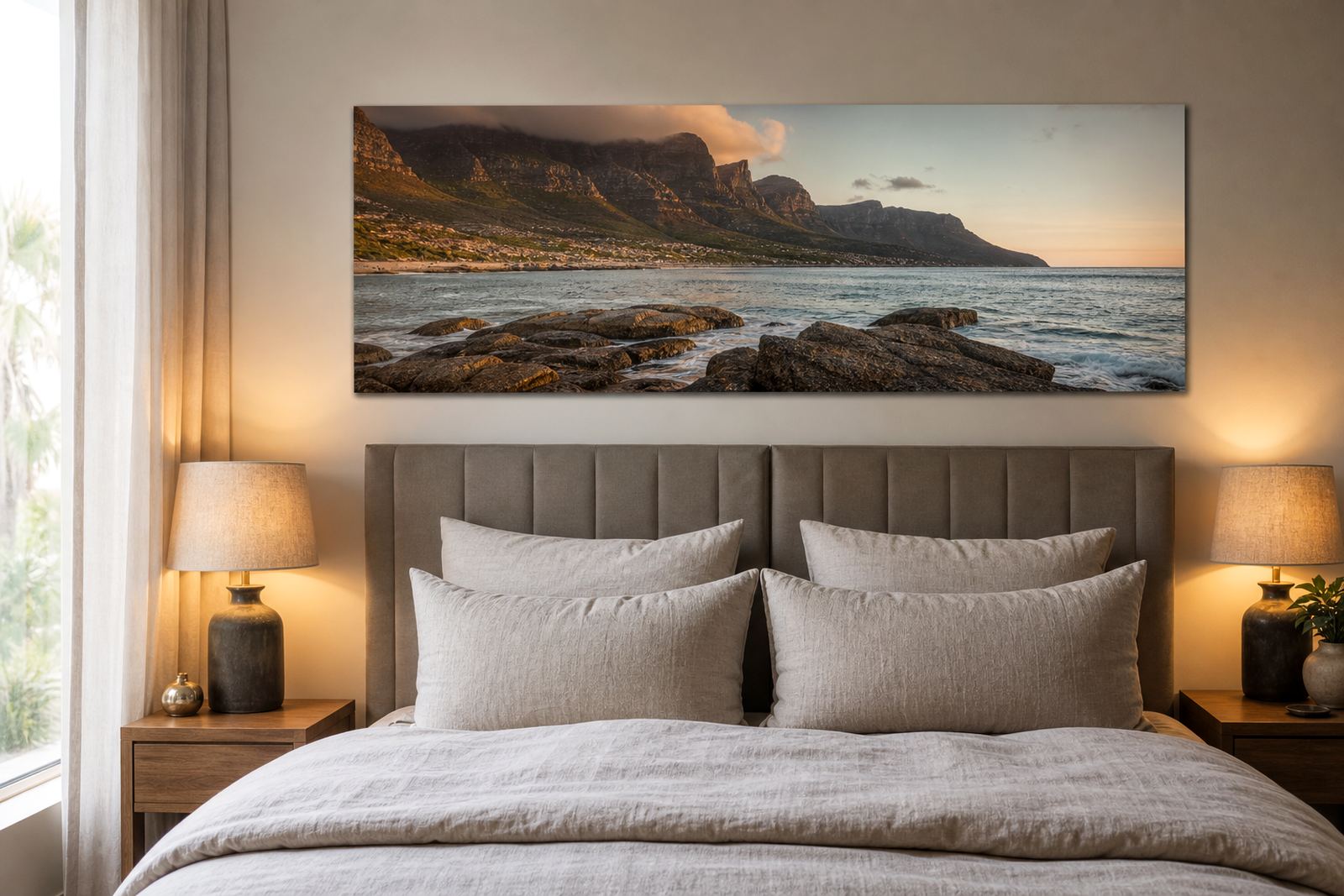
- For narrow rooms, vertical panels can make the space feel taller without clutter.
The mistakes that show up in salon decor
One common mistake is choosing artwork that is too small for the wall. In a salon, small pictures can disappear behind chairs, mirrors and retail displays. Another is using low-resolution files and hoping they will print cleanly. That nearly always shows up once the panel is mounted and the lighting is switched on.
Another issue is picking a finish only for its look and not for the room conditions. High gloss can look strong, but under some salon lights it may catch reflections at the wrong angle. Matte is calmer, though the image may feel slightly softer. The better choice depends on how the room is used, not just on a sample photo. We also see panels placed too high, too low, or too close to the edge of a doorway, which makes the wall feel off-balance.
- Do not use images with poor contrast in bright interior spaces.
- Do not ignore the room’s mirror positions and window glare.
- Do not choose a finish before confirming where the panel will hang.
- Do not skip crop planning when faces, hands or product labels matter.
Budget ranges salon owners can plan around
Salon decor budgets vary with size, finish, file preparation, mounting and delivery. A small feature panel for a reception nook may sit in the lower budget range, while a set of larger coordinated panels for a main wall will cost more because of material, print work and finishing. Custom sizing also changes the total, especially when the layout must fit between shelves or around branding.
For planning purposes, many salons start with one statement wall rather than trying to do the whole premises at once. That lets the owner test the look, match it to the furniture, and add more panels later if needed. Packing and delivery are arranged for Randburg Orders, Johannesburg Delivery, Pretoria Delivery, Cape Town Delivery, Durban Delivery, Gqeberha Delivery, Midrand Delivery and Sandton Delivery, with care taken on stacked orders so the finish arrives clean and ready to mount.
- Smaller panels suit reception counters and retail corners.
- Medium sets work well behind waiting benches or along passage walls.
- Larger multi-panel layouts need more planning and a firmer budget line.
- Test panels can help when a salon wants to compare finishes before a bigger order.
From file review to the last mounting bracket
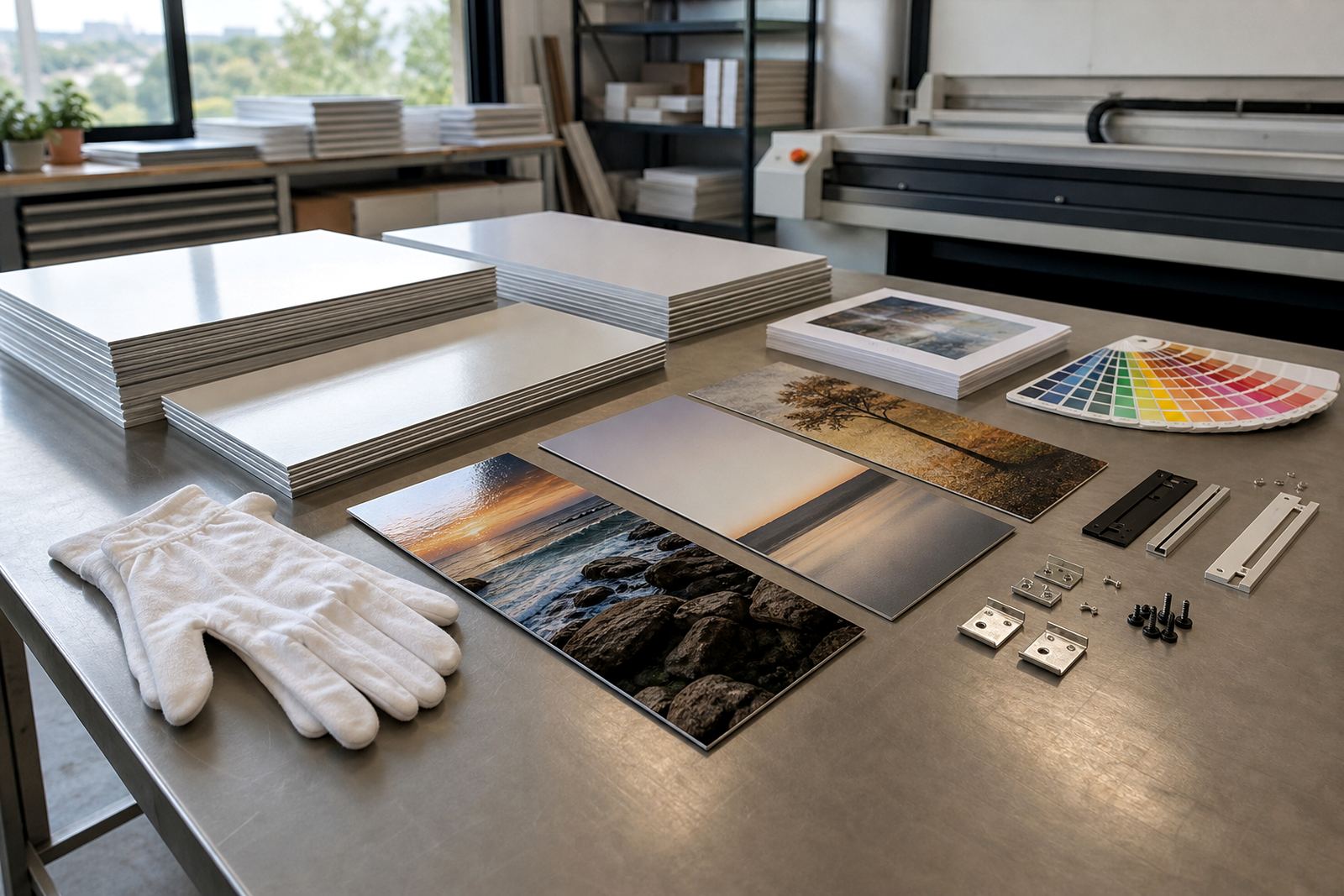
Our process covers file checks, resolution review, colour preparation, crop planning, finish selection, test panels, custom sizing, mounting options, multi panel layouts, packing and delivery, care advice, and reprint matching. For salons, that sequence keeps the artwork consistent if one panel is added later or a wall is extended after a refurbish.
Clients reach us through the enquiry form on our contact page, then we work through the artwork and placement details before production. SubAlu operates from Randburg, Johannesburg, with Mandla Chetty as Managing Director, and the team handling production, prepress, finishing, client service and dispatch. That local setup helps when a salon needs a practical turnaround and a proper fit for the room, not just a print that looks good on screen.