
A coffee shop wall needs more than one big picture
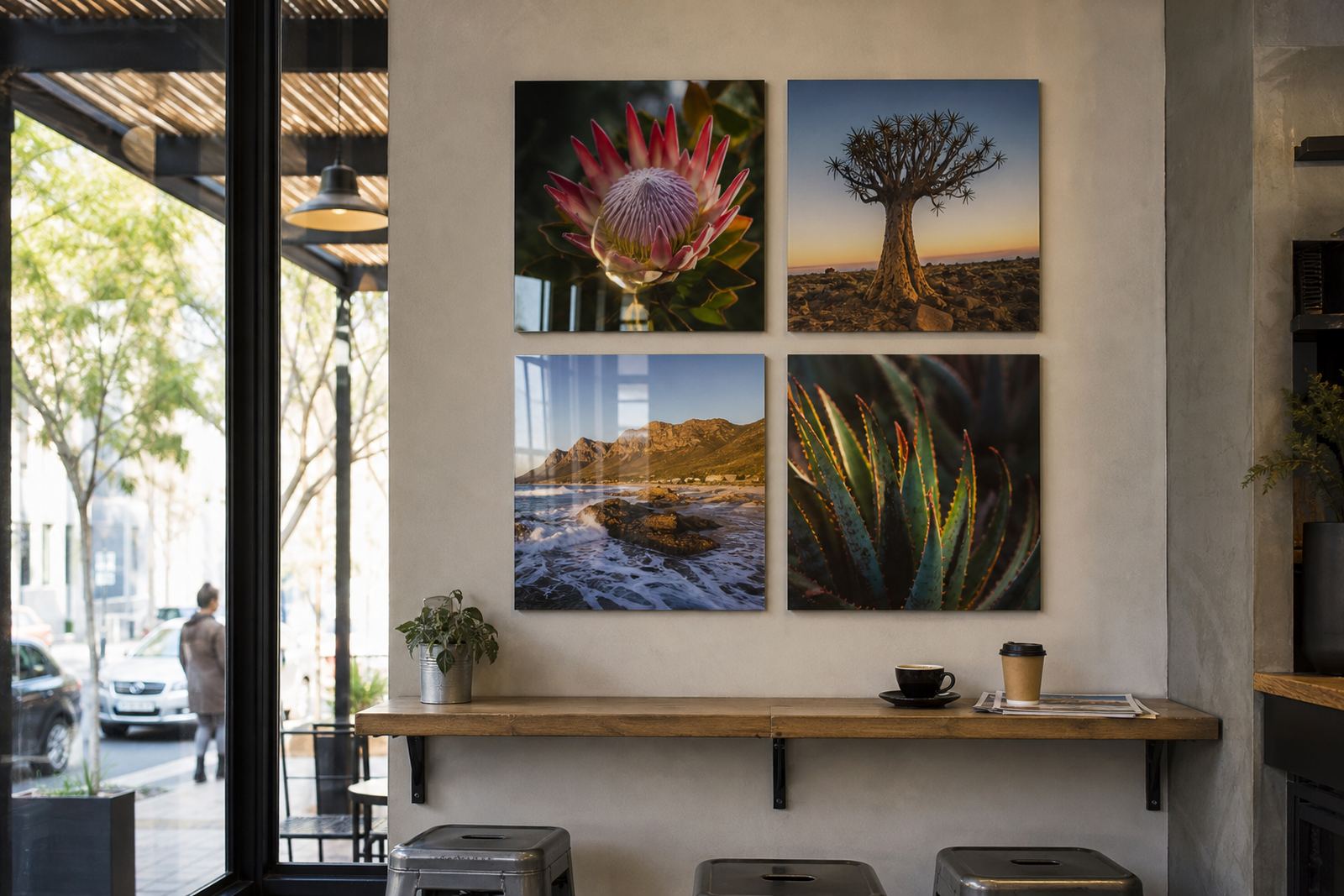
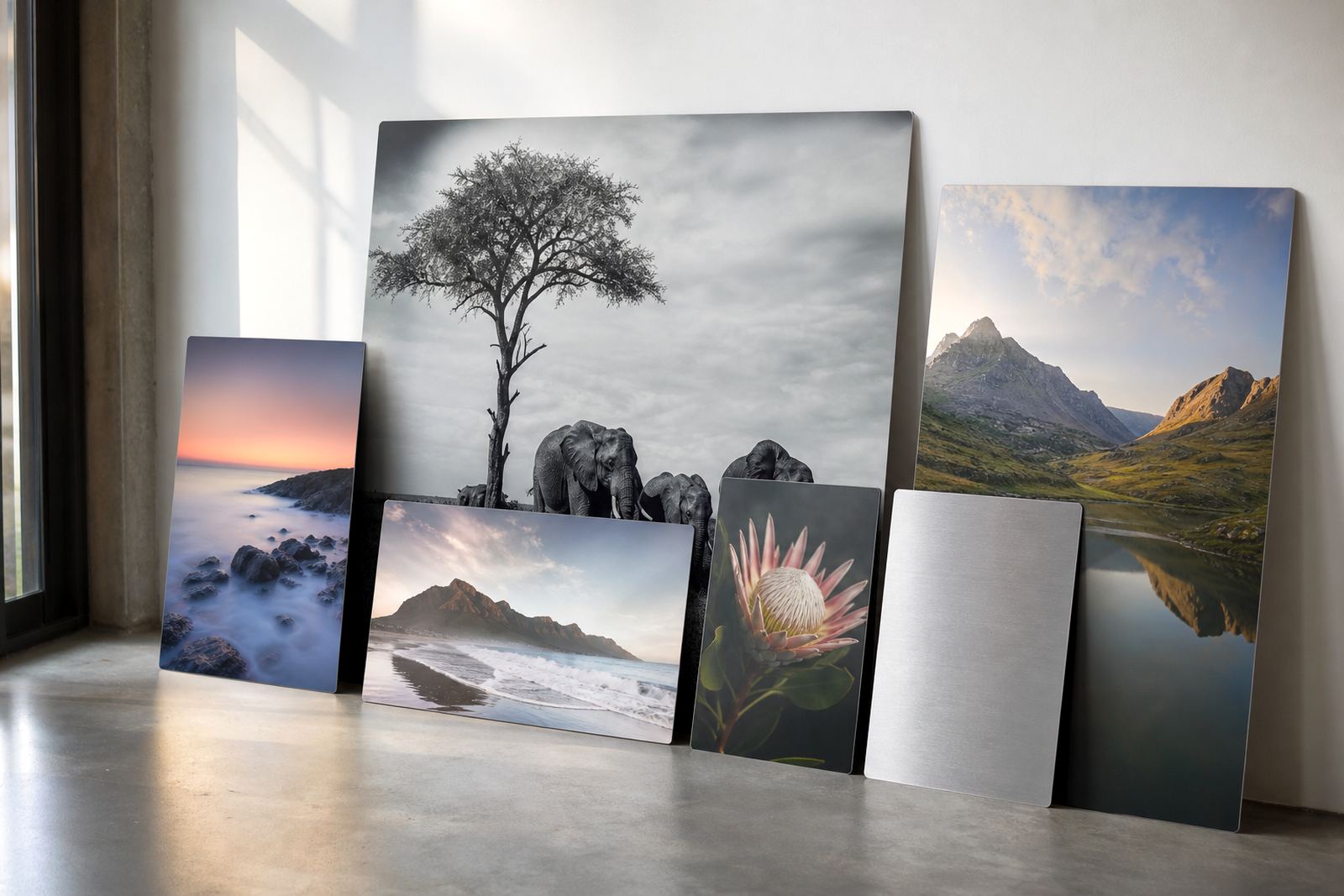
Most cafe interiors work better with several smaller panels than one oversized print. A set of 3, 4 or 6 aluminium panels can sit above banquettes, beside the till point, or along a long passage wall without crowding the room. The format lets you mix close-up coffee shots, local street scenes, textured food imagery and subtle brand artwork in a way that feels planned rather than busy.
For cafes in Johannesburg, Cape Town, Durban, Pretoria and Gqeberha, the wall art has to cope with moisture, sunlight from shopfront windows and the constant wipe-down that happens near serving counters. A dye sublimation finish on coated aluminium keeps the image sealed into the panel surface, so the artwork is easier to maintain than paper prints or ordinary framed posters. It also suits spaces where the team needs a clean, hardwearing surface that does not bow in humid weather.
Picking the right panel finish for steam, glare and foot traffic
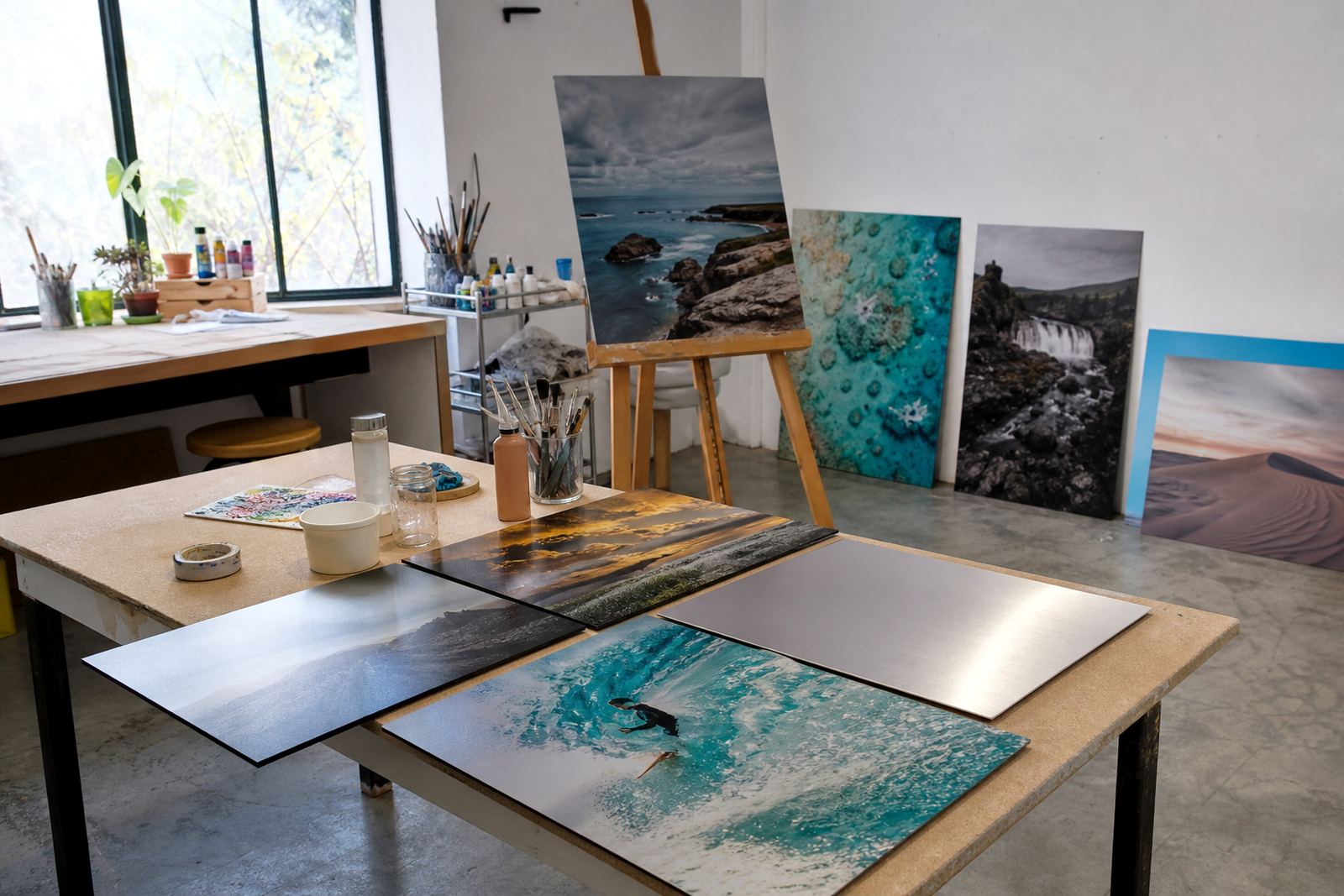
Finish choice changes how the wall reads in real light. Gloss works well where the cafe wants stronger colour pop and a polished look, but it can catch reflections from downlights and windows. Matte reduces glare, which is useful near glass fronts or in morning sun. White aluminium gives a clean base for bright imagery and light cafe interiors, while brushed aluminium lets parts of the metal show through for industrial or minimalist spaces.
In practice, the choice often comes down to the room layout and the mood you want at eye level. A matte set can suit a calm breakfast room, while a gloss panel behind the counter may draw attention to signature drinks or pastries. Brushed finishes work well when the image has strong lines or muted tones, though they are less suitable for fine detail in faces or food photography. The right answer depends on how the wall is lit and how close customers stand to it.
- Gloss: stronger colour, more reflection
- Matte: lower glare, softer viewing
- White: clean colour base for most cafe imagery
- Brushed: metal texture shows through lighter areas
Files that print well above the espresso machine
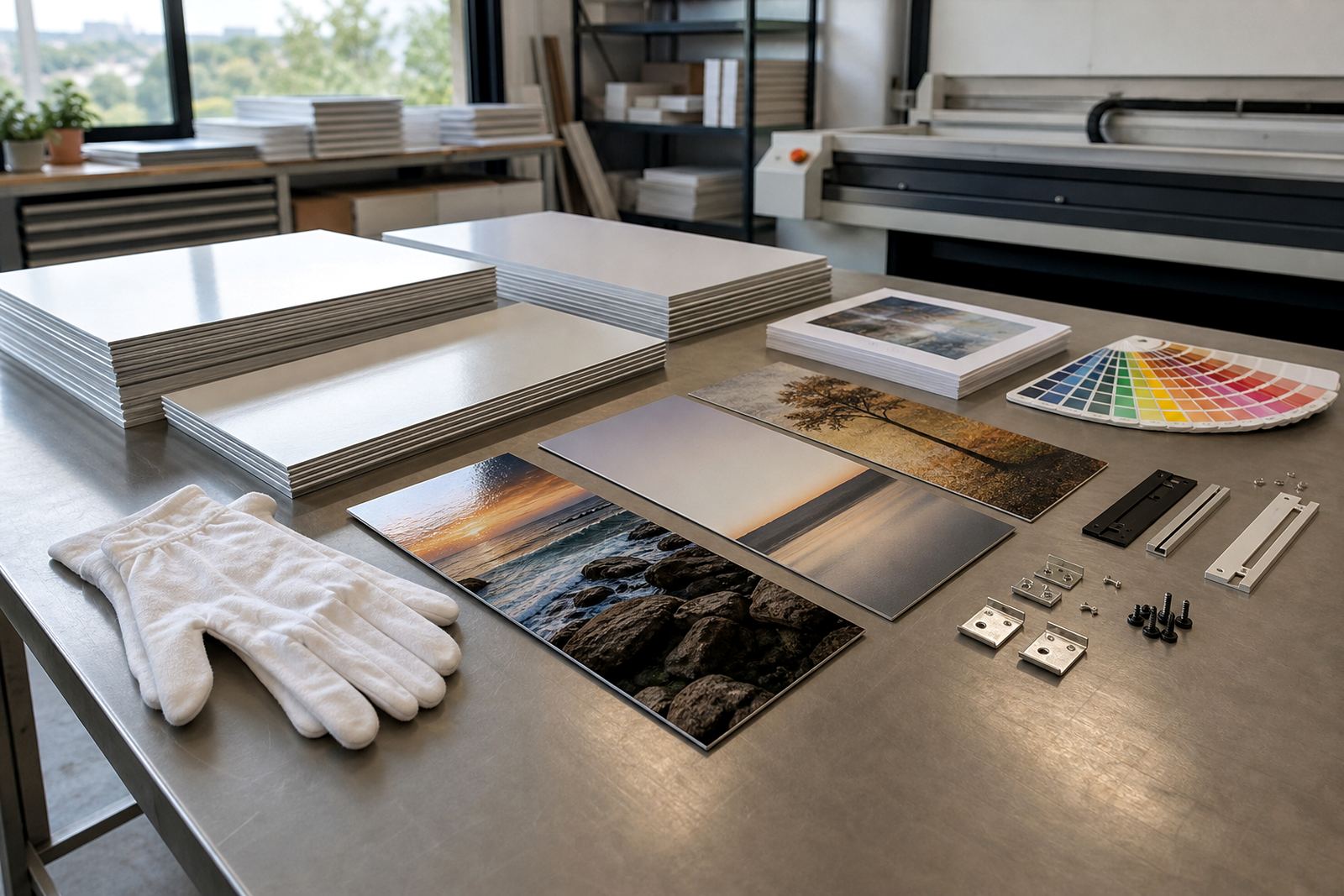
Cafe wall panels look best when the source file is sharp enough for the final size. A small image can still work for a tight cluster if it is cropped carefully, but low resolution files tend to break up once they are enlarged. We review image quality, crop placement and edge margins before production so the finished panel lines up properly on the wall.
Customers should own the images they send or have permission to use them. That matters for branded cafe photography, stock-style food images, customer portraits and artwork that belongs to another creator. We can help with file checks, colour preparation and test panels when a cafe wants to confirm the tone before committing to a full wall set. If the image was shot on a phone, it may still work for smaller panels, but the file needs to be checked carefully first.
- Check the image resolution against the final panel size
- Keep important text away from cut edges
- Allow for crop adjustments on vertical and square pieces
- Use test panels when matching a specific wall colour
Layout choices for banquettes, corners and long service walls
Small grouped panels suit cafe walls because they can follow the shape of the room. A row of square panels can run above seating, while mixed sizes can break up a long blank wall near the entrance. If the cafe has exposed brick, timber or painted plaster, the aluminium panels add a cleaner visual line without adding much depth to the wall.
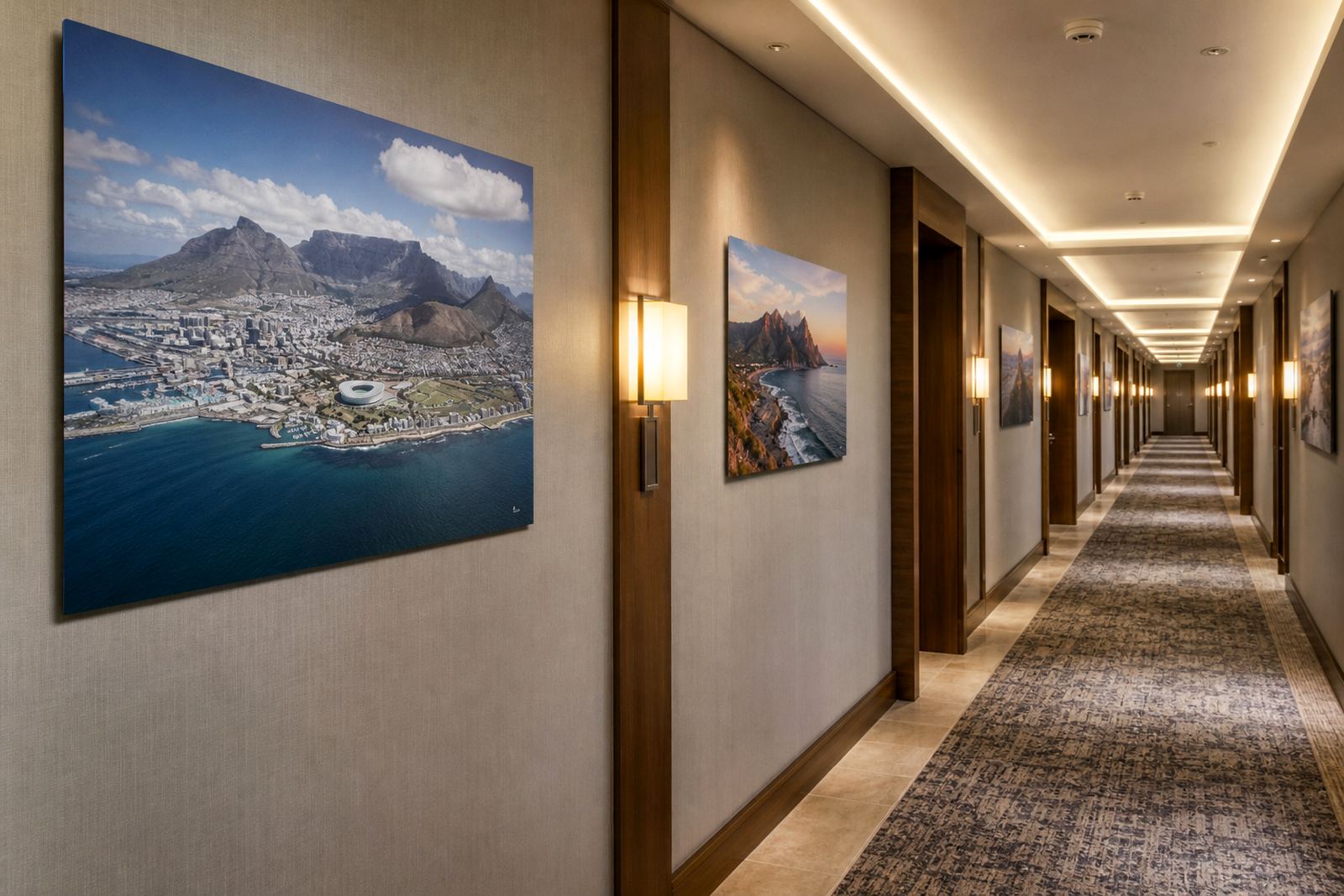
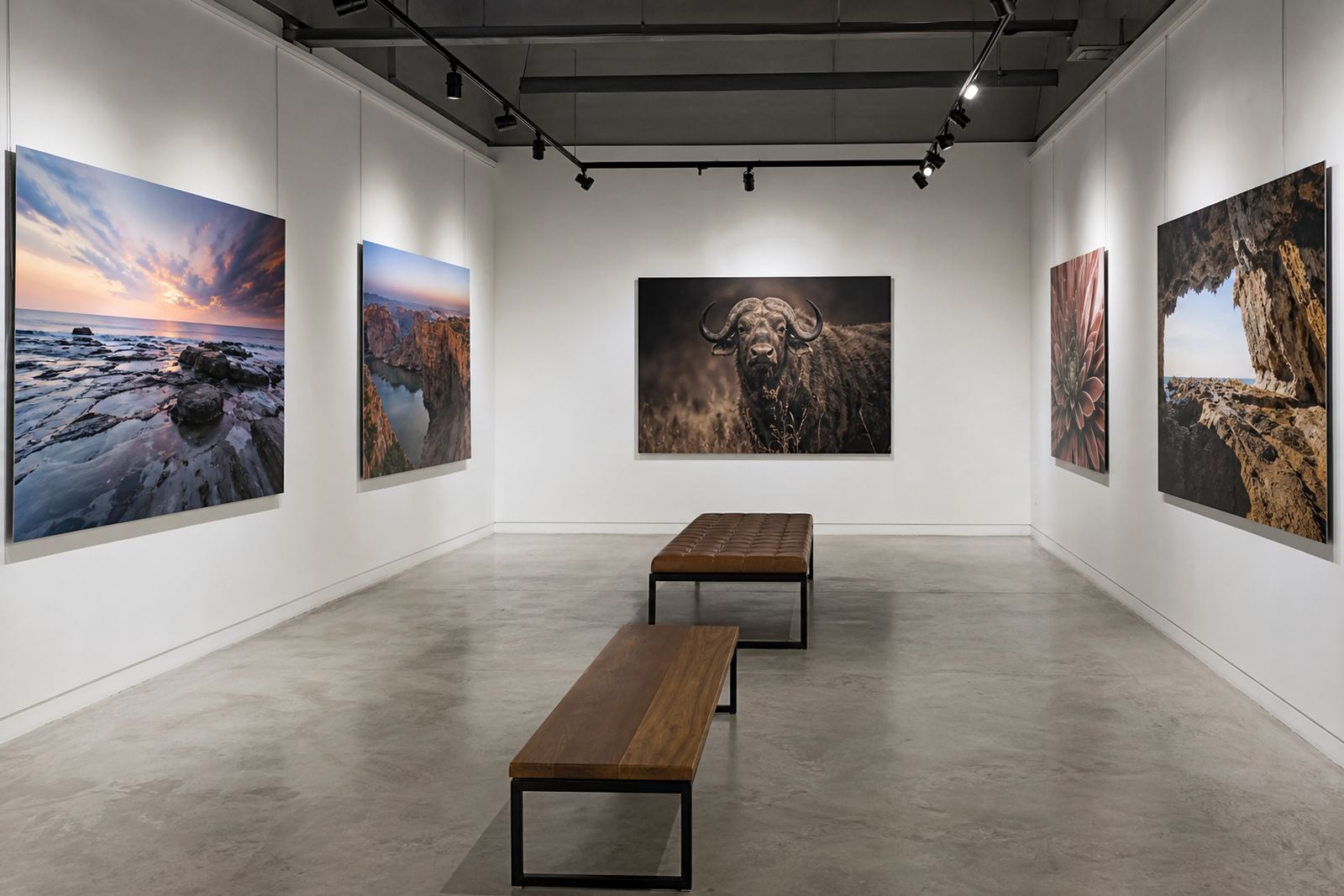
Planning the spacing is just as important as the image choice. Panels usually look better with even gaps and a clear centre line at about eye level. In tight spaces, a cluster of smaller pieces can avoid the cramped feeling that one huge print creates. For larger venues, a multi panel layout can guide the eye from the counter to the seating area, which helps the room feel ordered without shouting at customers.
- 3 panel sets suit narrow walls and corridor seating
- 4 to 6 panel layouts work well above booths or feature walls
- Mixed sizes help with corners and broken wall sections
- Leave breathing room around menu boards and lighting fittings
Common mistakes that make cafe art look rushed
One of the biggest mistakes is choosing a panel that is too large for the wall, then crowding it with furniture or menu boards. Another is using images that are too dark for the room, which can make the cafe feel gloomy even when the rest of the interior is well lit. Gloss panels placed directly opposite windows can also cause glare at certain times of day, so the orientation matters.
Colour mismatch is another issue. Warm white lighting can shift the look of food photography, while cooler lighting can flatten skin tones and coffee colours. That is why colour preparation and, where needed, test panels are worth doing before a full order. Mounting also needs care. If the hardware is fixed unevenly, the set can sit slightly off line, and people notice that straight away. It is a small thing but it changes how the room feels.
Randburg production, South African delivery and a realistic budget frame
For cafes, the budget depends on the number of panels, the size of each piece, the finish and whether mounting hardware is included. Smaller grouped sets can start in the low Rand thousands for a simple feature wall, while larger custom layouts with multiple panels, special sizing and packing for delivery move into a higher range. The main cost drivers are surface area, finishing and the amount of prep needed on the files.
From our Randburg base, we handle orders for Johannesburg, Midrand, Sandton, Pretoria, Cape Town, Durban and Gqeberha, with packing and delivery arranged for cafe openings, refurbishments and staggered fitouts. The team can assist with custom sizing, mounting options, reprint matching and care advice so the panels fit the wall properly the first time. In a busy cafe, that matters because staff do not have time to redo wall decor every few months.
- Budget more for multi panel layouts than for a single piece
- Allow for mounting hardware and careful wall placement
- Ask for file checks before the artwork goes to production
- Plan for delivery timing around shop fitout work or trading hours