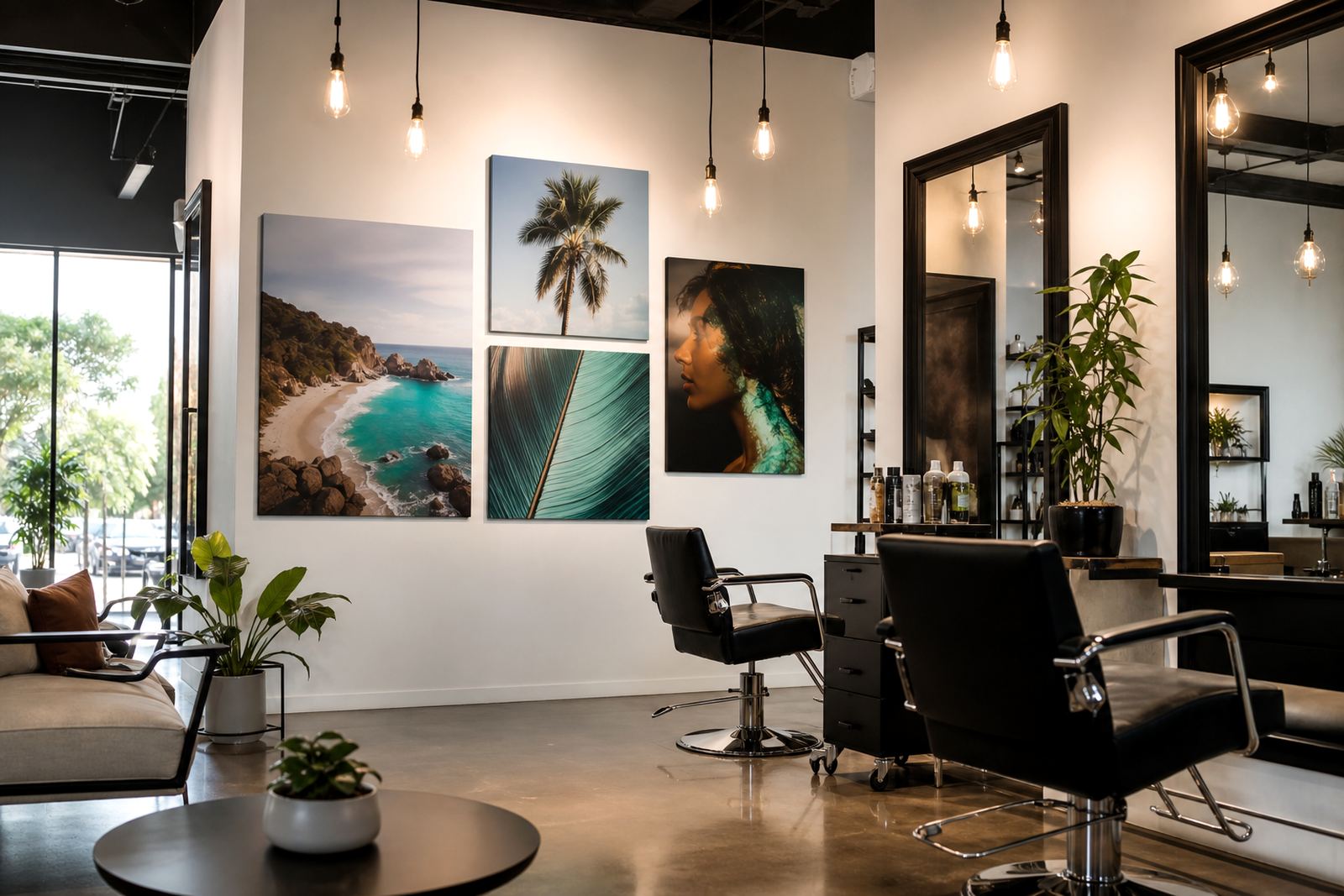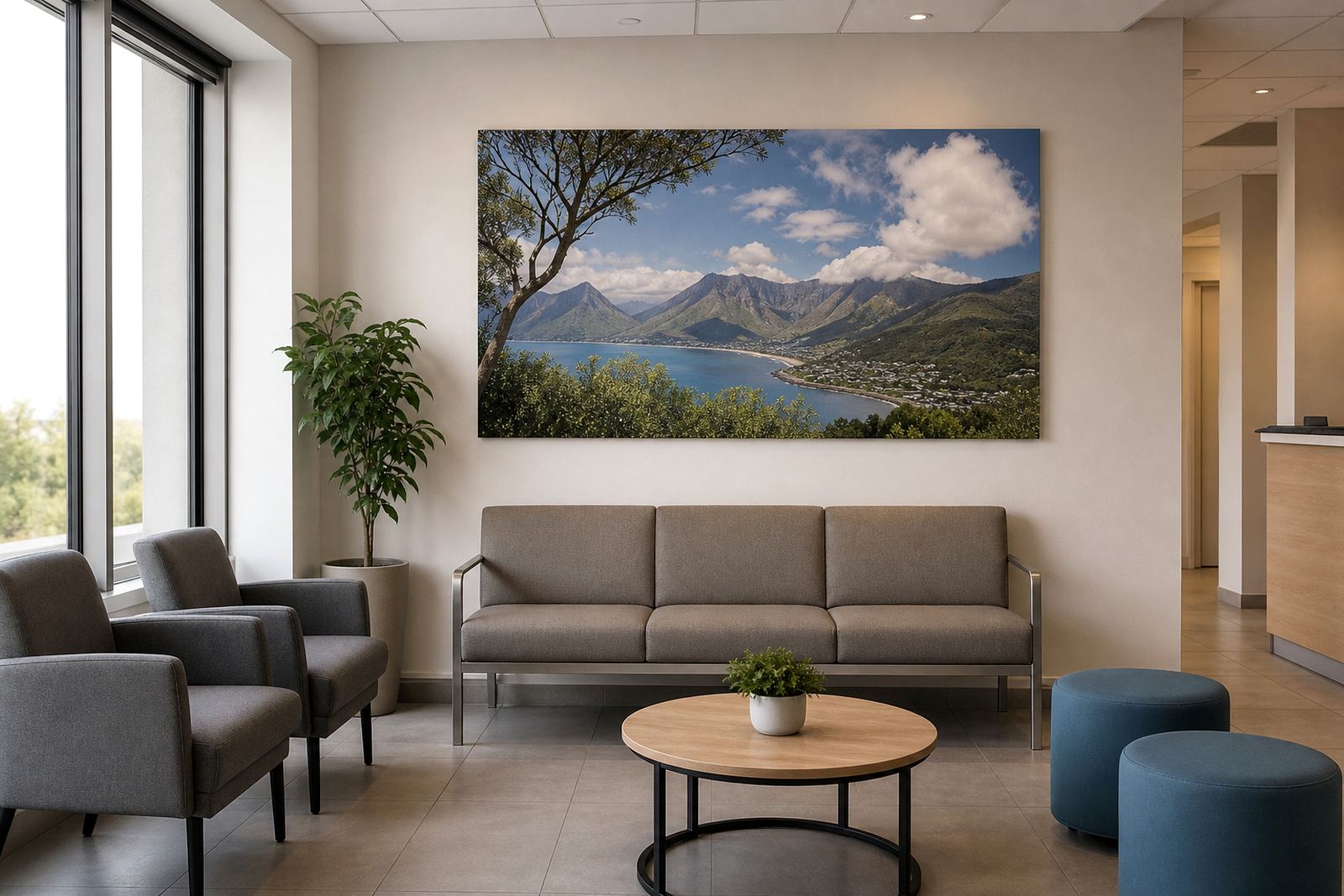

Rooms that feel thought through, not overfilled
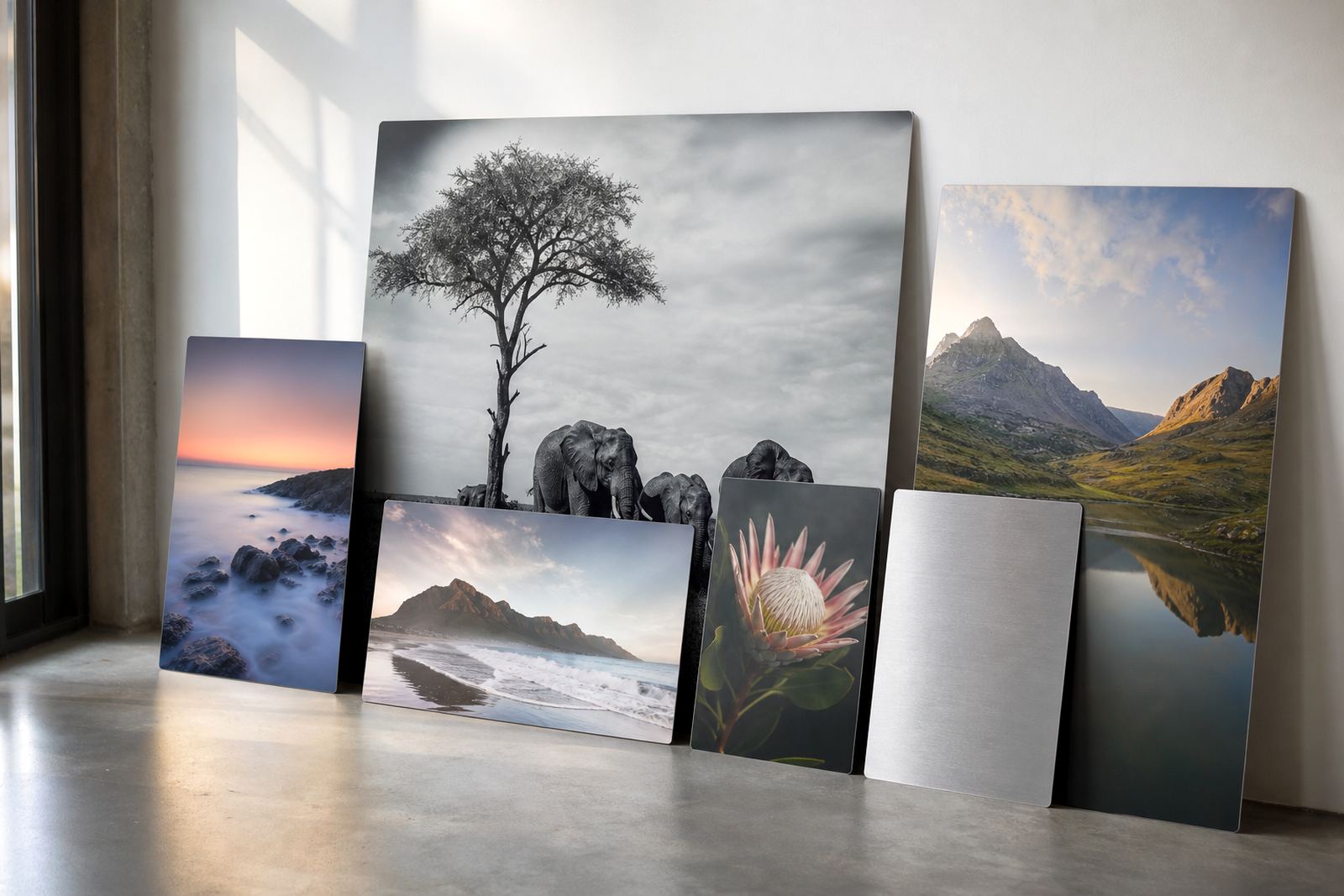
In a hotel room, every item has to earn its place. Aluminium panels help create a calm, finished look above a headboard, near a work table or along a feature wall, without the bulk of framed prints or stretched fabric. Dye sublimation onto coated aluminium gives a crisp image with colour depth that works well for city views, landscape photography, abstract art and branded visuals. For rooms in Johannesburg, Cape Town or Durban, the finish can also help manage glare from bright daylight or strong lamps.
Most hotel clients order repeat sets across multiple room types so the artwork feels consistent from floor to floor. That is where crop planning matters. A portrait image may suit a narrow wall over twin beds, while a wide panoramic panel can anchor a king room or suite. The image must be supplied at suitable resolution, and the client must own the image or have rights to use it. If the file is soft or badly compressed, the print will show it, especially on larger panels.
Corridors that do more than fill a blank wall
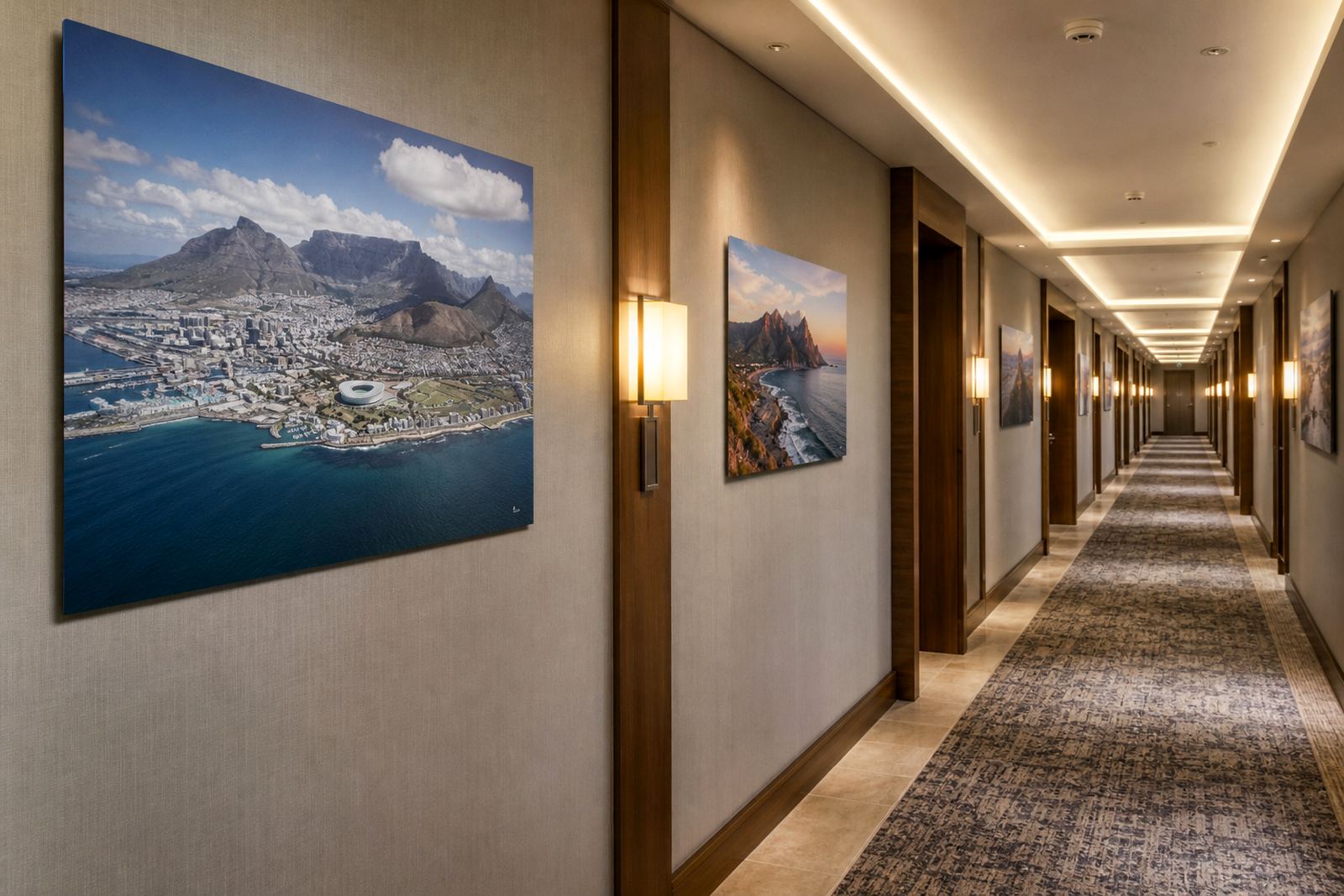
Passages are often the hardest hotel areas to style because they are long, narrow and under constant foot traffic. A smart panel layout can break up the run of a corridor and guide the eye without making the space feel cluttered. We often recommend smaller repeated panels, a grid of matching sizes, or a sequence of related images that work as one visual story.
- Use a consistent spacing rule between panels so the corridor feels planned.
- Keep the top line level from end to end, even when walls are not perfectly straight.
- Choose images with enough breathing space around the main subject.
- Avoid tiny text, logos or fine detail that becomes hard to read at distance.
For older hotels, wall surfaces are not always perfect and this can affect mounting. Good planning includes checking for uneven plaster, security bars, fire doors and access panels before production starts.
Public areas need tougher finishing choices
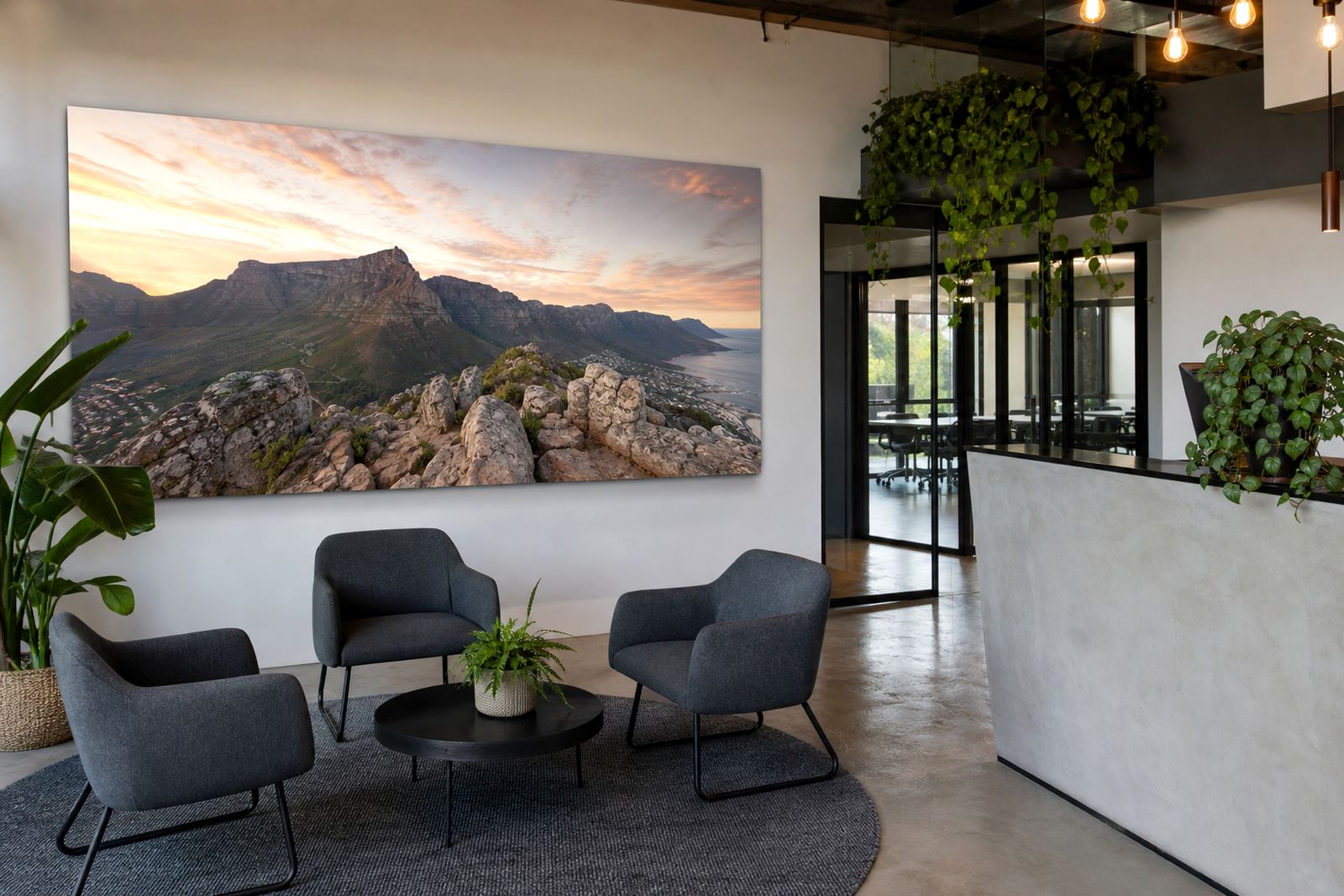
Lobbies, lift foyers, restaurants and conference spaces usually need more durability than guest rooms. Aluminium panels are suited to these areas because they are rigid, light and easier to keep clean than many traditional wall coverings. A gloss finish gives stronger colour pop, while matte suits softer branding or spaces with lots of glass. White aluminium provides a clean base for full colour imagery, and brushed aluminium can leave selective metallic texture showing through lighter parts of the artwork.
The hanging hardware should match the wall and the usage. In high traffic areas we normally look at secure concealed mounts, standoff fixings or other generic hanging systems that keep the panel flat and stable. For coastal hotels in Durban or Gqeberha, the fittings and backing choice should also take humidity and salt air into account, because corrosion can creep in faster than many owners expect.
- Reception walls often suit one large hero panel or a tidy three-panel arrangement.
- Dining rooms need artwork that can handle steam, wipes and occasional splashes.
- Conference areas benefit from quieter visuals that do not fight with signage or projection screens.
- Brushed finishes can work well where you want a more contemporary, restrained surface.
What gets checked before anything goes to print
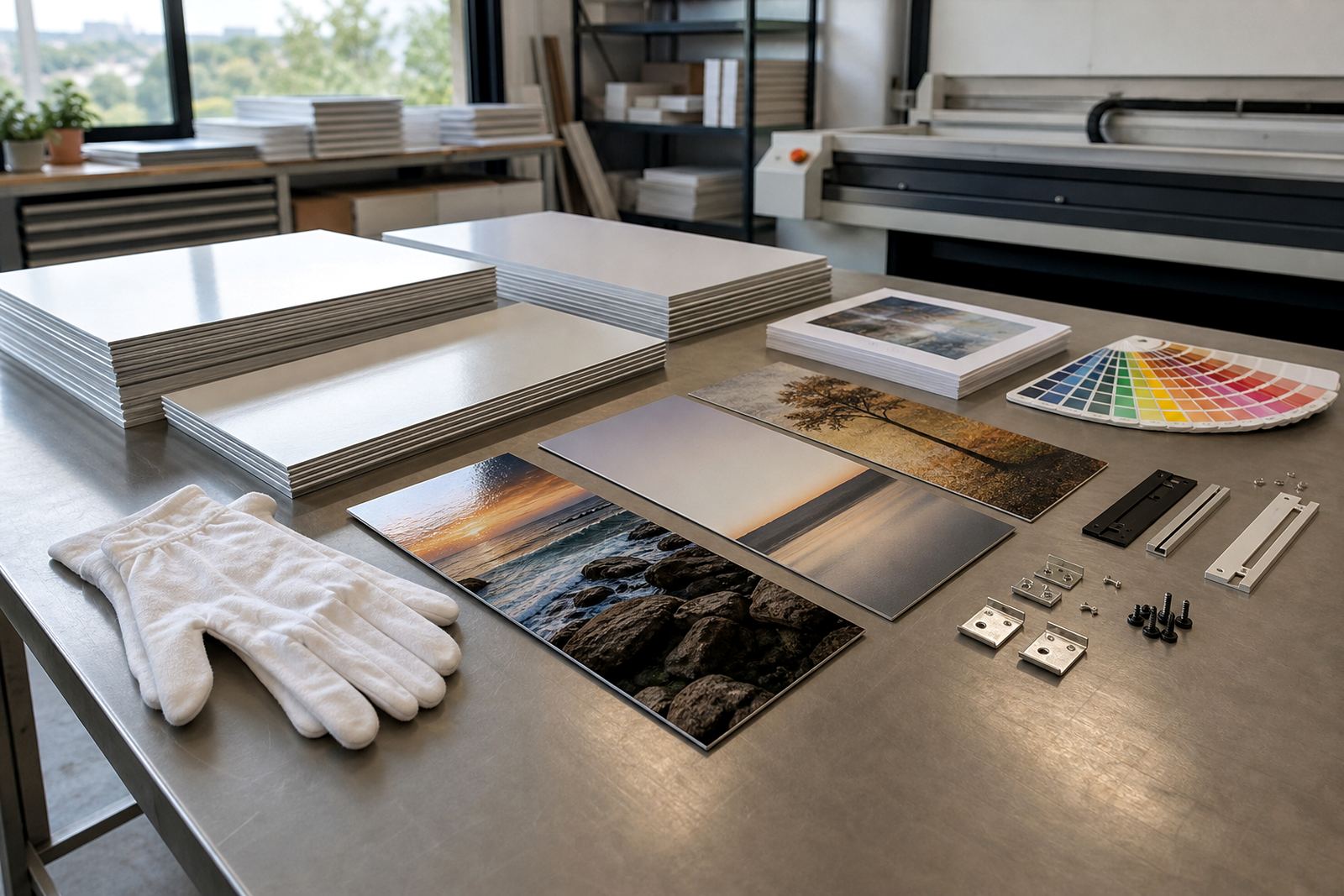
Our file checks cover image size, crop position, colour balance and whether the artwork will hold up at the chosen panel size. If a hotel is refreshing several floors, we can review a set of images together so there is a common tone across the property. Colour preparation matters because screens lie. A blue wall on a laptop may print slightly greener or flatter if the file has not been prepared properly. We also check for border placement, edge wraps where relevant, and the best finish for the room use.
Test panels are useful when a hotel is changing décor and the team wants to see how the artwork behaves under the actual lighting. One small sample can save a lot of back and forth. It also helps with areas that have warm lighting, cool daylight or mixed light from corridors and lamps. Sometimes a panel looks perfect in the studio then changes character under the hotel’s own fittings, so a sample is worth the extra step.
Our production team in Randburg works with custom sizes for single panels, paired layouts and multi panel sets, then the finishing and dispatch side handles packing so corners arrive clean and undamaged. Hotels in Pretoria, Midrand and Sandton often need staggered deliveries for staged refurbishments, while coastal properties may ask for extra packing care because of moisture and transport time.
Mistakes that show up after the installer leaves
Most problems in hotel artwork are not dramatic, they are practical. The wrong size can leave awkward gaps above beds or under bulkheads. A low-resolution file can look acceptable on screen but soft on the wall. A glossy finish in a brightly lit passage may create reflections where staff and guests move past all day. Even the best panel can feel wrong if the image theme clashes with the room palette or the property type.
- Do not choose a panel size before measuring the wall including skirting and headboard height.
- Do not rely on a compressed WhatsApp file for a large print.
- Do not place delicate visuals where cleaning teams will scrub them daily.
- Do not mix too many finishes in one area unless there is a clear design reason.
Hotels also forget maintenance. Aluminium panels are easy to wipe, but they still need sensible care. Harsh abrasives can mark the surface, and heavy impact from luggage trolleys or vacuum handles can dent edges. In guest areas with regular cleaning, mount height and placement matter as much as the picture choice.
Budget planning for room counts and rollout phases
Hotel budgets usually work better when the project is split into phases. A small group of suites may call for larger custom panels and better finishes, while standard rooms can use a simpler repeated size. Costs depend on size, finish choice, mounting method, image preparation and whether the order needs test panels or multi panel layouts. For a practical planning range, many hotel projects start with entry-level room panels in the low hundreds per panel and move upward for larger custom pieces, premium finishes and complex layouts. Full corridor runs or lobby feature walls will sit higher because they need more material and more careful production.
The strongest value often comes from consistency. One well planned set across bedrooms, passages and public areas can make the whole property feel more ordered than a pile of unrelated décor purchases. Hotels across Johannesburg, Cape Town, Durban, Pretoria and Gqeberha often reach us through the enquiry form on our contact page when they need repeatable sizes, clear lead times and delivery to multiple addresses. We can also coordinate packing and delivery for different branches or renovation stages, which helps when rooms are being taken out of service one section at a time.