
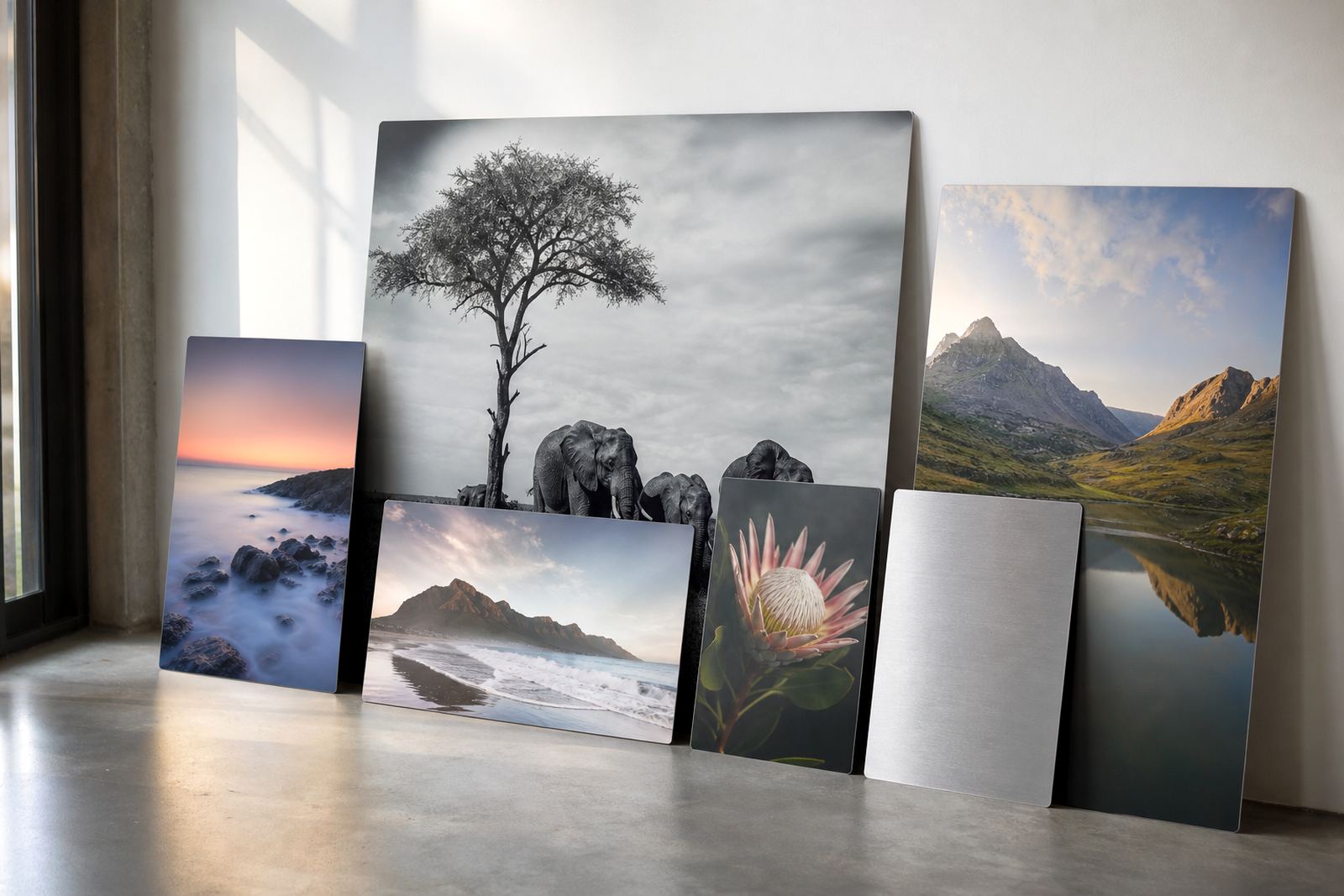
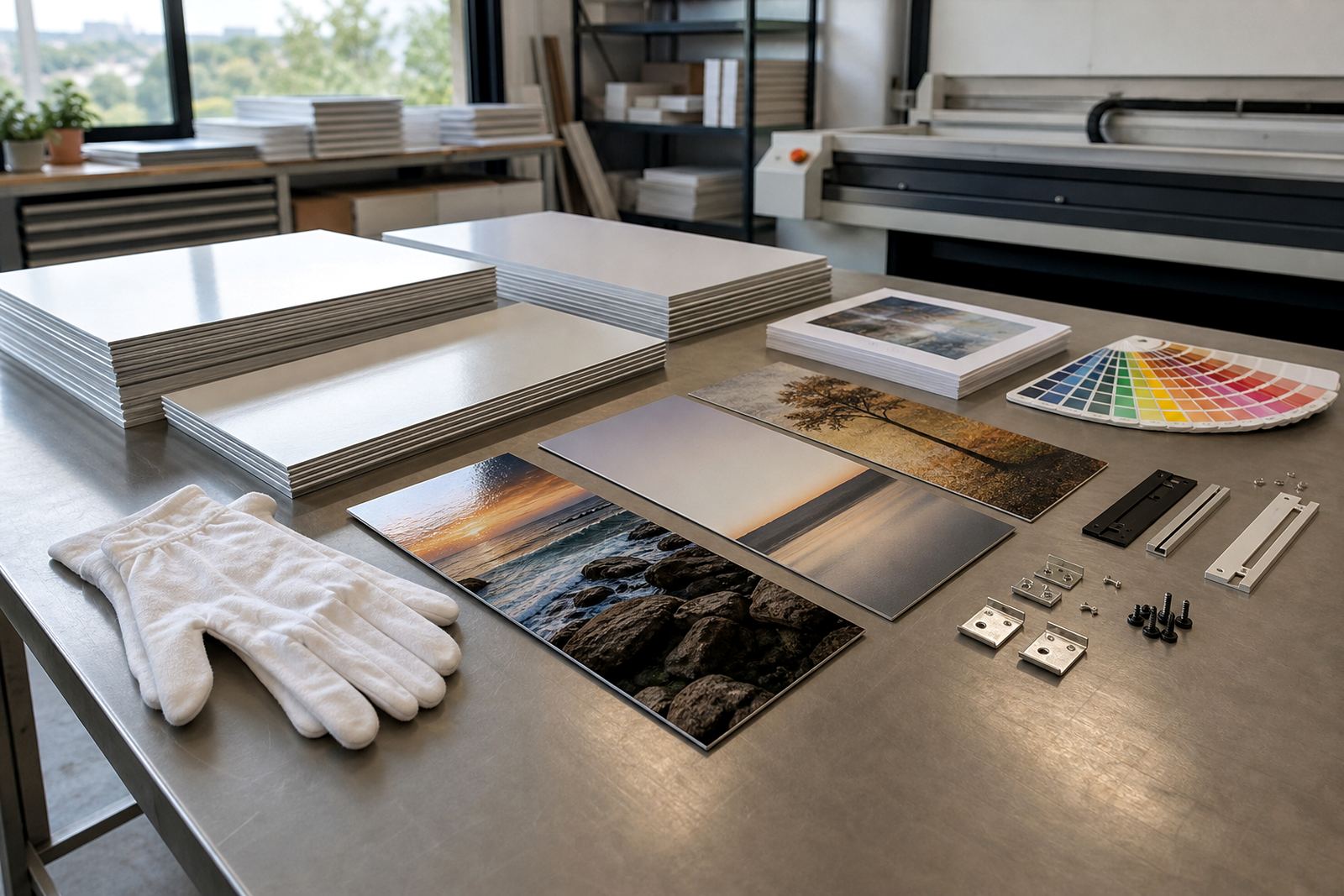
Two bases, two very different moods
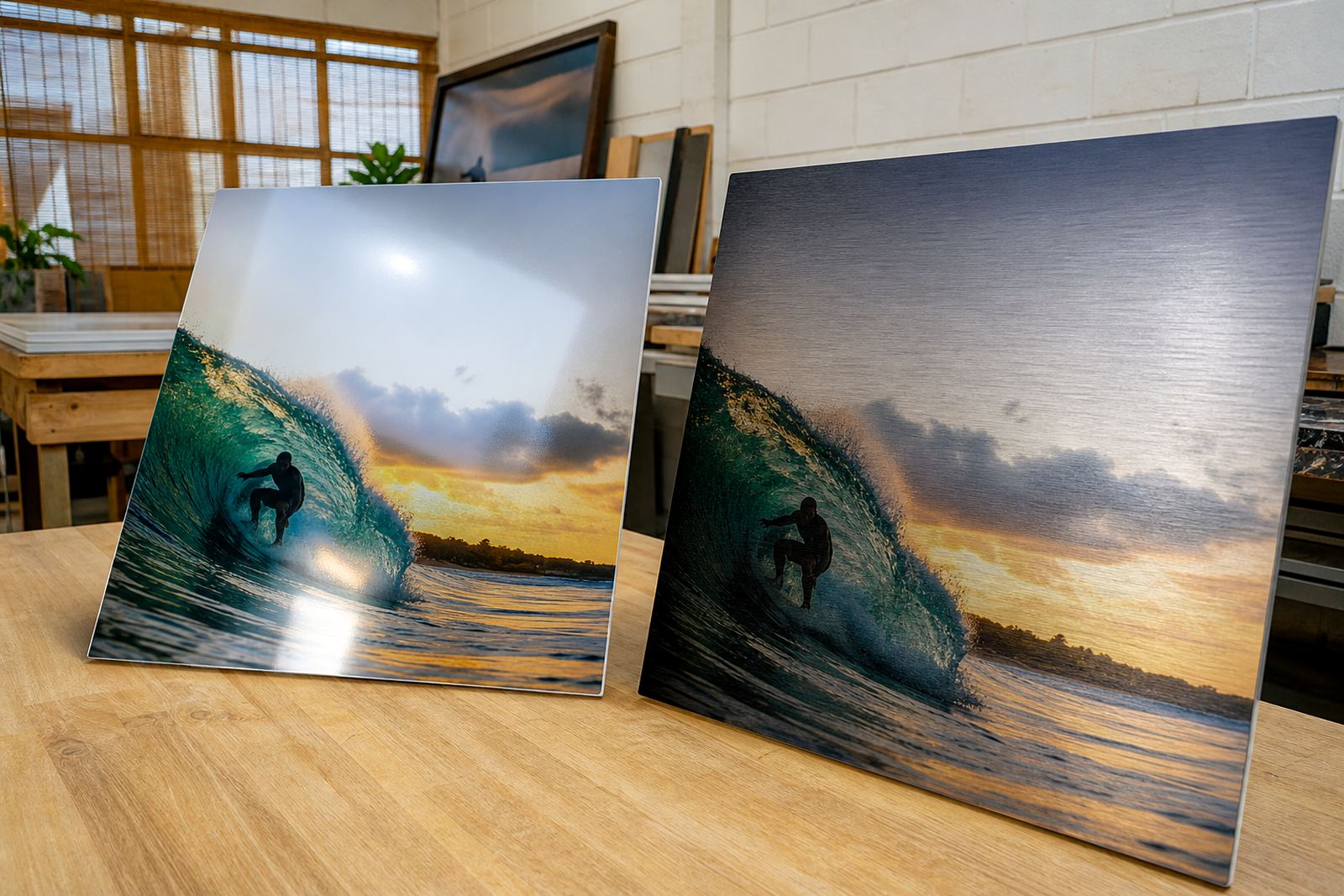
When dye sublimation is applied to coated aluminium, the base finish is not just a background, it becomes part of the picture. White panels give you the cleanest colour reproduction because the image sits on a bright, neutral surface. Brushed panels allow the natural metal texture to show through lighter areas and metallic parts of the artwork, which gives the print a more industrial or photographic feel.
In Randburg, where offices often want something sharp for reception walls and homes want something a little warmer for passage displays, that choice matters. A portrait, wedding image or product shot may read best on white. A moody skyline, machinery photo or black and white image can feel stronger on brushed, especially when the subject has steel, chrome or reflective surfaces.
Why white panels hold colour so evenly
White aluminium panels are usually the safest choice when colour accuracy matters. The white coating acts like a bright paper base, so reds stay rich, blues keep their depth and skin tones look more natural. If the image has fine detail, such as hair, fabric weave or product labels, white also helps keep the edges clear.
- Best for full colour photographs and brand images
- Useful for lighter interiors, clinics and corporate spaces
- Strong option for prints where the metal should not show through
- Helps keep whites bright instead of tinted by the substrate
For photographers sending family portraits or catalogue work, white panels are often the first recommendation after a file check and resolution review. If the image has been cropped tightly or needs colour preparation, white gives the prepress team more room to keep the final print clean and accurate.
Where brushed aluminium earns its keep
Brushed aluminium is chosen when the metal grain should be part of the look. The coating takes the transferred dye, but very light areas and unprinted highlights can reveal the brushed lines underneath. That can be very effective for black and white work, architecture, automotive imagery and any artwork with strong contrast. It can also make a business logo feel more technical and less glossy.
Brushed panels suit images that already have texture, shadows and darker tones. On a sunrise over the Magaliesberg, for example, the sky may remain soft while steel structures or railings pick up a subtle metallic sheen. It is not the right choice for every picture though, because pastel colours and skin tones can pick up a cooler cast.
- Good for monochrome art and architectural pieces
- Useful when a metallic finish is part of the design brief
- Can emphasise highlights on chrome, water and glass
- Works well in modern offices and gallery walls
How light and highlights change the final image
The same file can look different on white and brushed aluminium because the substrate changes how light behaves. White panels reflect the printed colour evenly, so bright areas stay bright without becoming metallic. Brushed panels add character to highlights, but they can also reduce the softness of pale tones. That is why a sky, candle glow or pale fabric may need closer review before printing.
In practical terms, white is usually better when the image relies on gentle tonal steps. Brushed is better when the image benefits from contrast and the suggestion of metal. A photograph of polished parts in a workshop in Pretoria might feel flat on white, but on brushed the reflective areas can pick up a bit of life, even if the file itself is not especially dramatic.
Picking the right base for your room or display
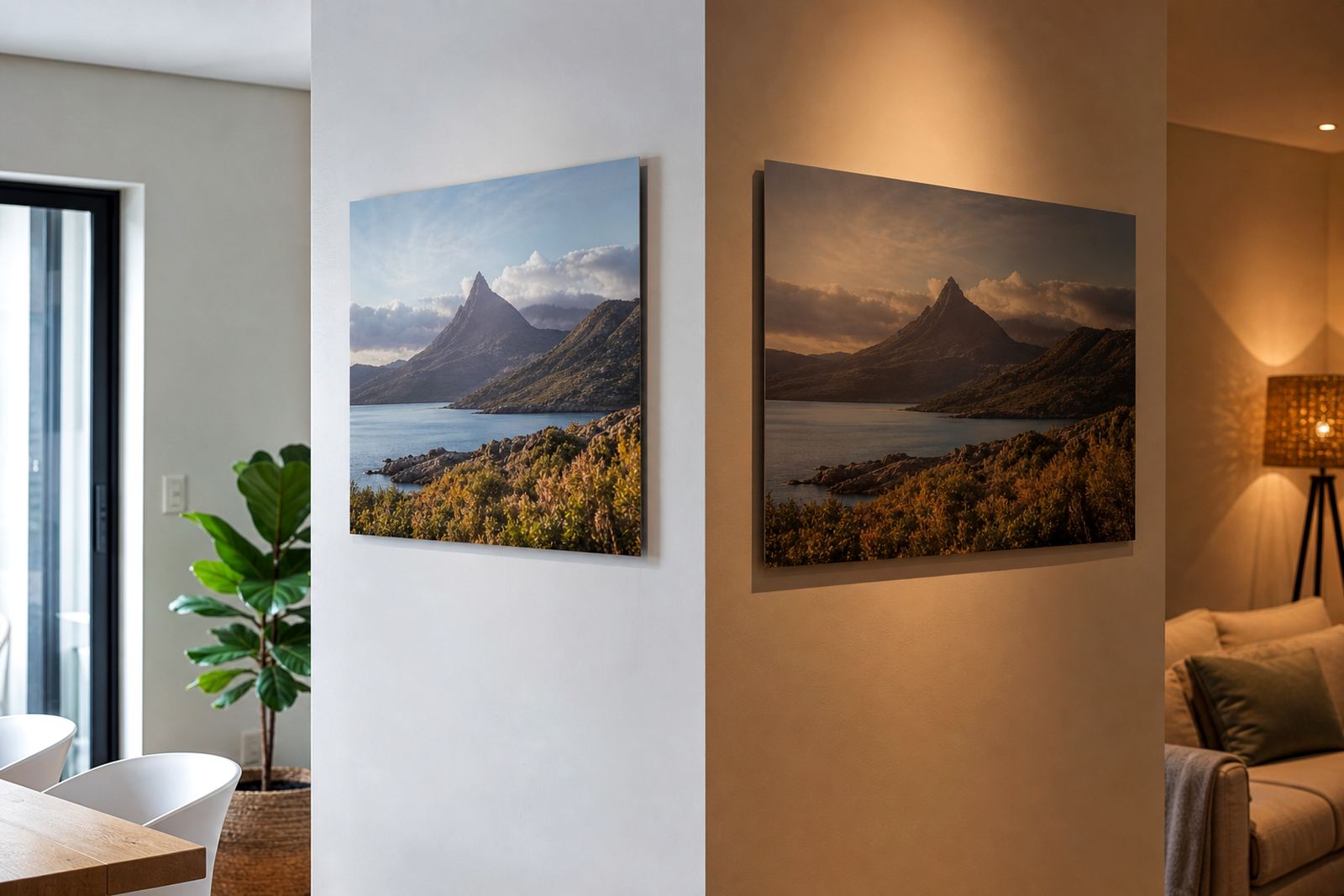
The room matters as much as the file. Offices in Sandton often want a crisp, polished look that sits well under LED lighting and aircon. White panels usually read cleaner there, especially when the wall colour is pale. In a home with warmer paint colours or natural timber, brushed aluminium can add contrast without needing a frame.
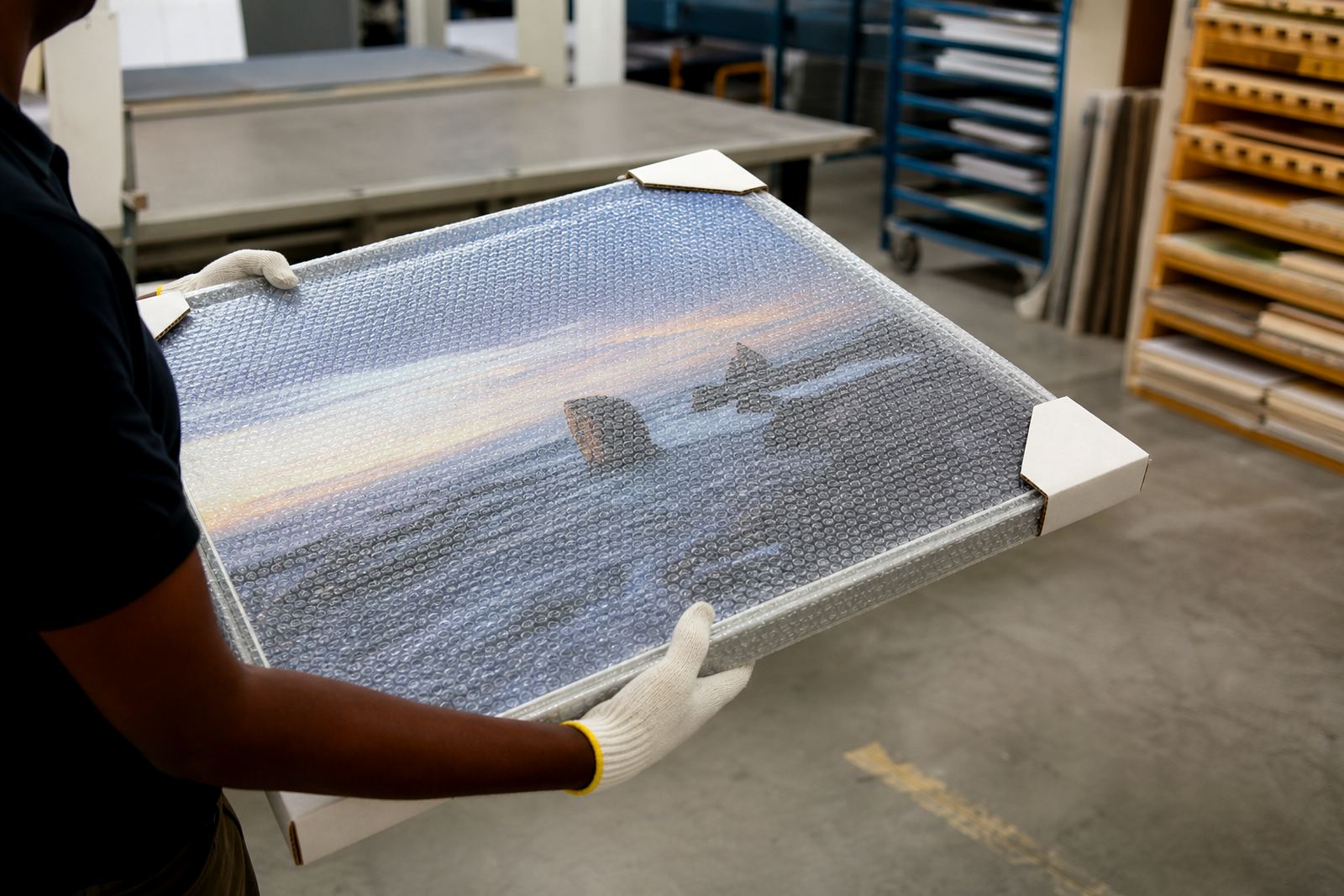
For coastal installs in Cape Town, Durban or Gqeberha, the finish choice can also affect how the piece feels over time. Humidity and salty air do not change the printed image itself, but the panel still needs proper mounting hardware and sensible handling so the edges stay neat. If the piece is going to hang in a corridor, waiting area or restaurant, we normally check the wall type and suggest hanging options that suit the weight and size of the panel.
- White for clean corporate walls and colour critical work
- Brushed for darker art, metallic subjects and contemporary spaces
- Consider ambient light from windows, downlights and glazing
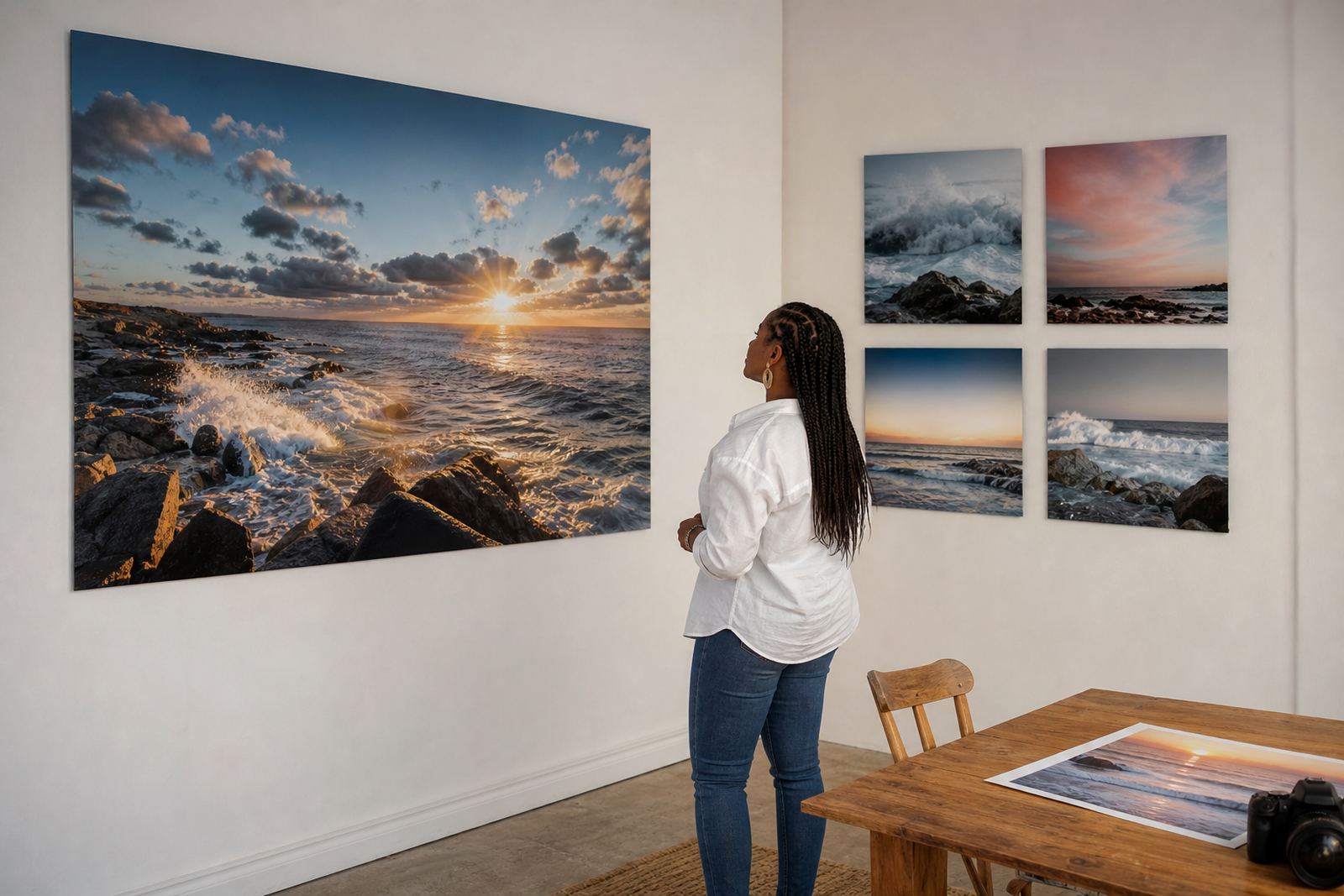
- Match the finish to the wall colour, frame style and viewing distance
A Randburg job that showed the difference clearly
A local client in Randburg sent two versions of the same automotive image, one for a boardroom and one for a showroom wall. The white panel was used for the boardroom because the brand colours had to stay exact and the reflections in the car body needed to be controlled. The brushed version went to the showroom, where the metallic base added more bite to the chrome details and made the headlights catch the light.
That kind of split is common. The file may be identical, but the message changes with the base. If the image will be seen close up, the white option often wins. If it will be viewed from across the room, brushed can carry more presence and less glare, specially under strong overhead lighting.
Before you send the file, think past colour alone
White or brushed is not only a style choice, it is a production choice. The image must be sharp enough for the chosen panel size, and the sender needs rights to use the photo or artwork. If the file is low resolution, blown up too far or heavily compressed, even the best finish will not rescue it. The same goes for crops that cut off key parts of the subject.
For clients across Johannesburg, Pretoria, Cape Town, Durban and Gqeberha, the safest path is to decide on the finish first, then review the file, then confirm size and mounting. We can help with custom sizing, test panels, finish selection and reprint matching so the final piece looks right on the wall and not just on screen.
- Check image resolution against the final panel size
- Confirm you own the image or have permission to use it
- Decide whether the metallic base should show through
- Plan the mounting style before packing and delivery