
Start With Clean Hands and Surface
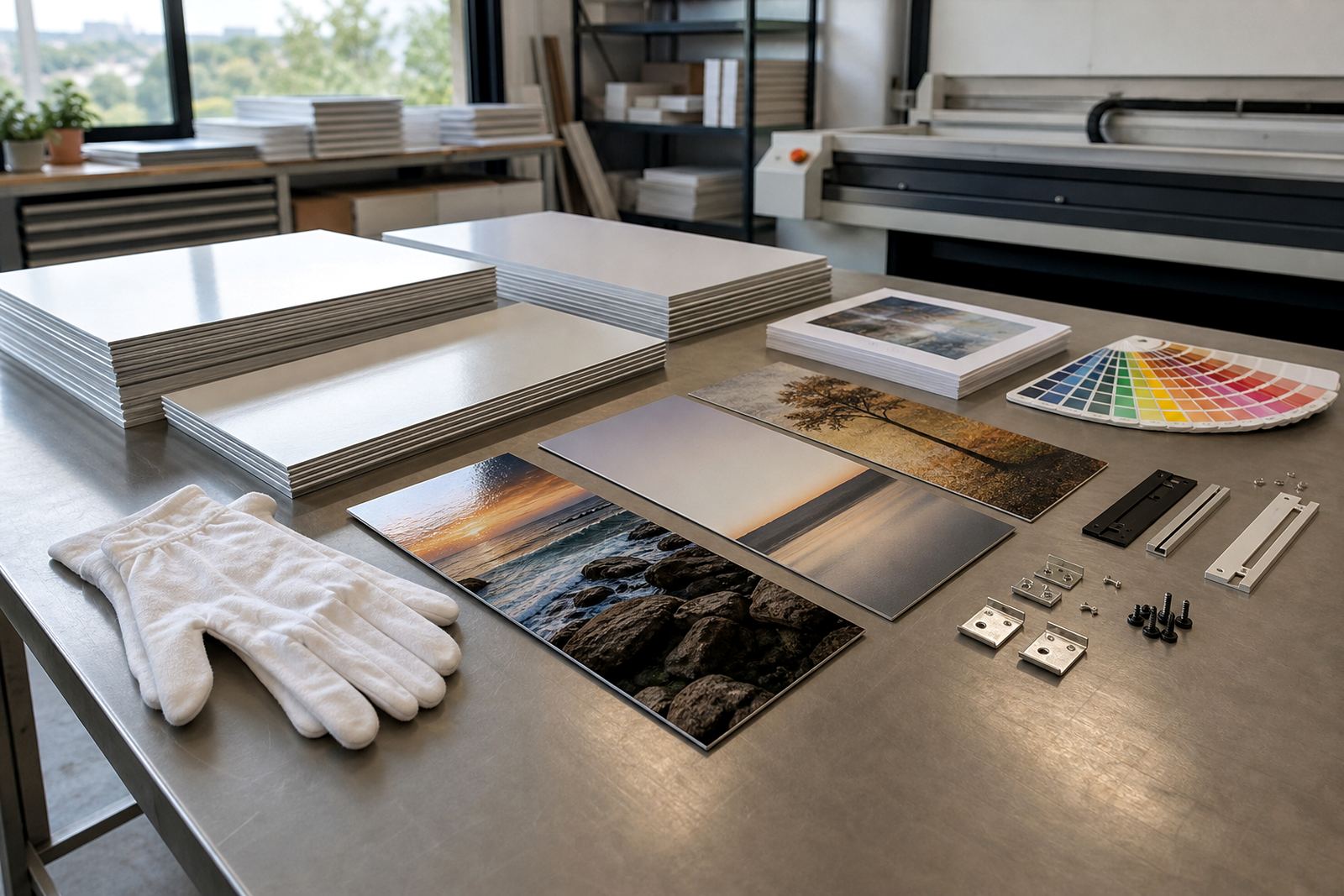
Before a panel leaves the wrapping, make sure the table, trestle or counter is free of grit, dust and metal offcuts. A speck of sand from a Randburg workshop floor can scratch a gloss finish in seconds. Wash and dry your hands first, then handle the panel by the edges only. If the panel is large, ask someone to help so it is not flexed while you move it.
Never set a face-down panel on rough cardboard, exposed timber or a tiled floor with debris. Use a soft blanket, clean foam sheet or a lint-free cloth under it. If the panel is still wrapped, open the packaging fully before lifting it out, rather than dragging it across the edge of the box.
Why the Image Side Needs Soft Hands
Dye sublimation bonds the image into a coated aluminium surface, which gives strong colour and good detail, but it still needs careful treatment. Finger oils, pressure marks and small knocks can show up more on glossy panels than on matte or brushed finishes. That is why the safest rule is to hold the panel at the sides and avoid touching the printed face unless you are fitting it.
If you need to inspect the panel under light, tilt it gently instead of rubbing it with a cloth. Do not use household polish, glass cleaner or rough paper towels. A soft microfibre cloth is fine for removing a light mark, but only with minimal pressure.
Corners and Edges Take the Hardest Hits
The corners are usually the first place to chip if a panel is knocked against a frame, door jamb or boot lip. This matters even more when panels are being moved through busy spaces like office lifts, apartment corridors or loading bays in Sandton and Midrand. Keep the panel upright and clear the path before you carry it.
For larger pieces, use two people and keep the panel level. If it bows while being carried, the corners can twist and the mounting points may be stressed. That kind of damage is avoidable, and it is usually caused by one rushed move too many.
- Keep panels separated during transport, do not stack them face to face.
- Use corner protection when moving more than one piece.
- Lay the panel flat only on a soft, even surface.
- Check that the route from storage to wall has enough clearance.
Choose the Right Finish for the Room and the Handing Routine
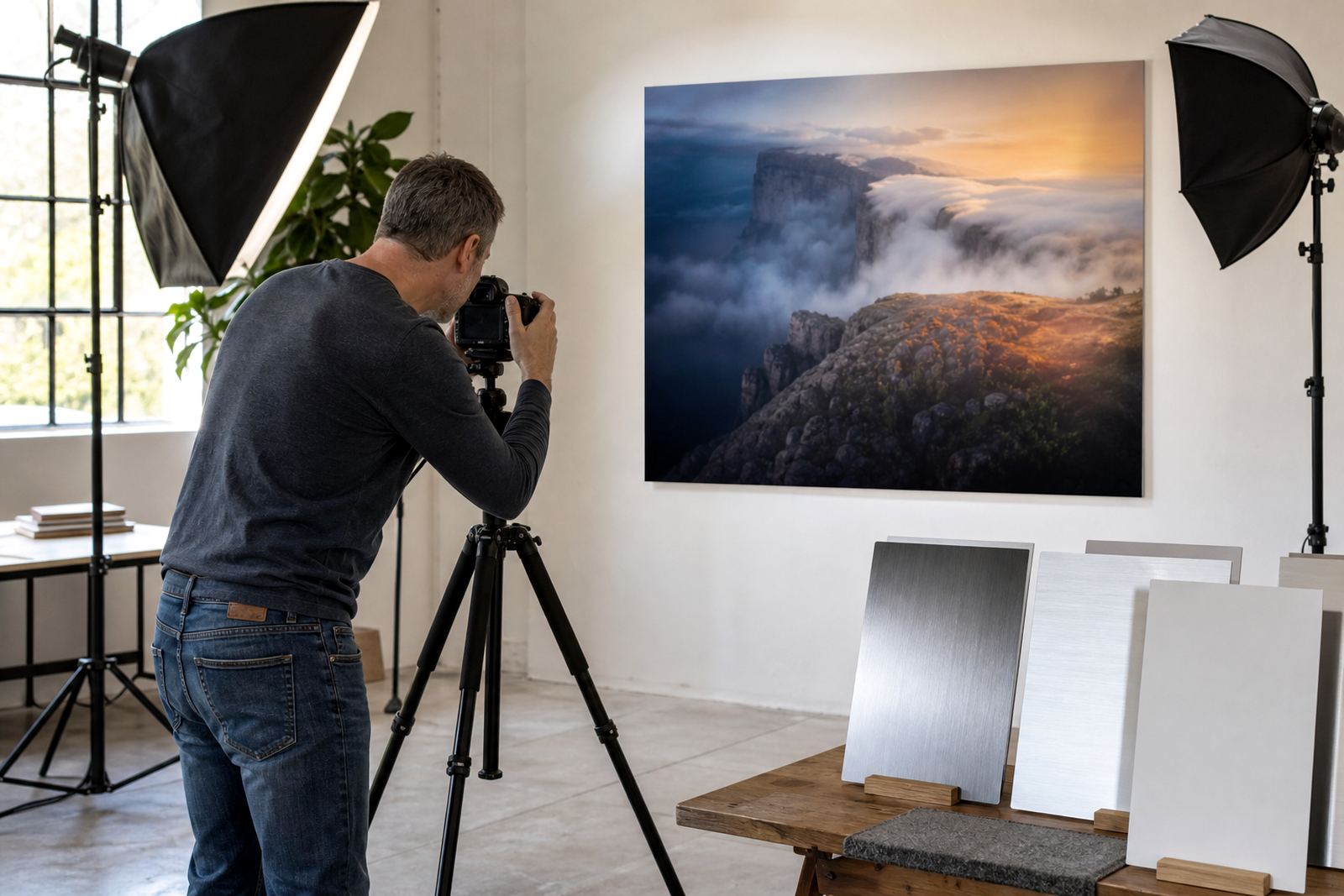
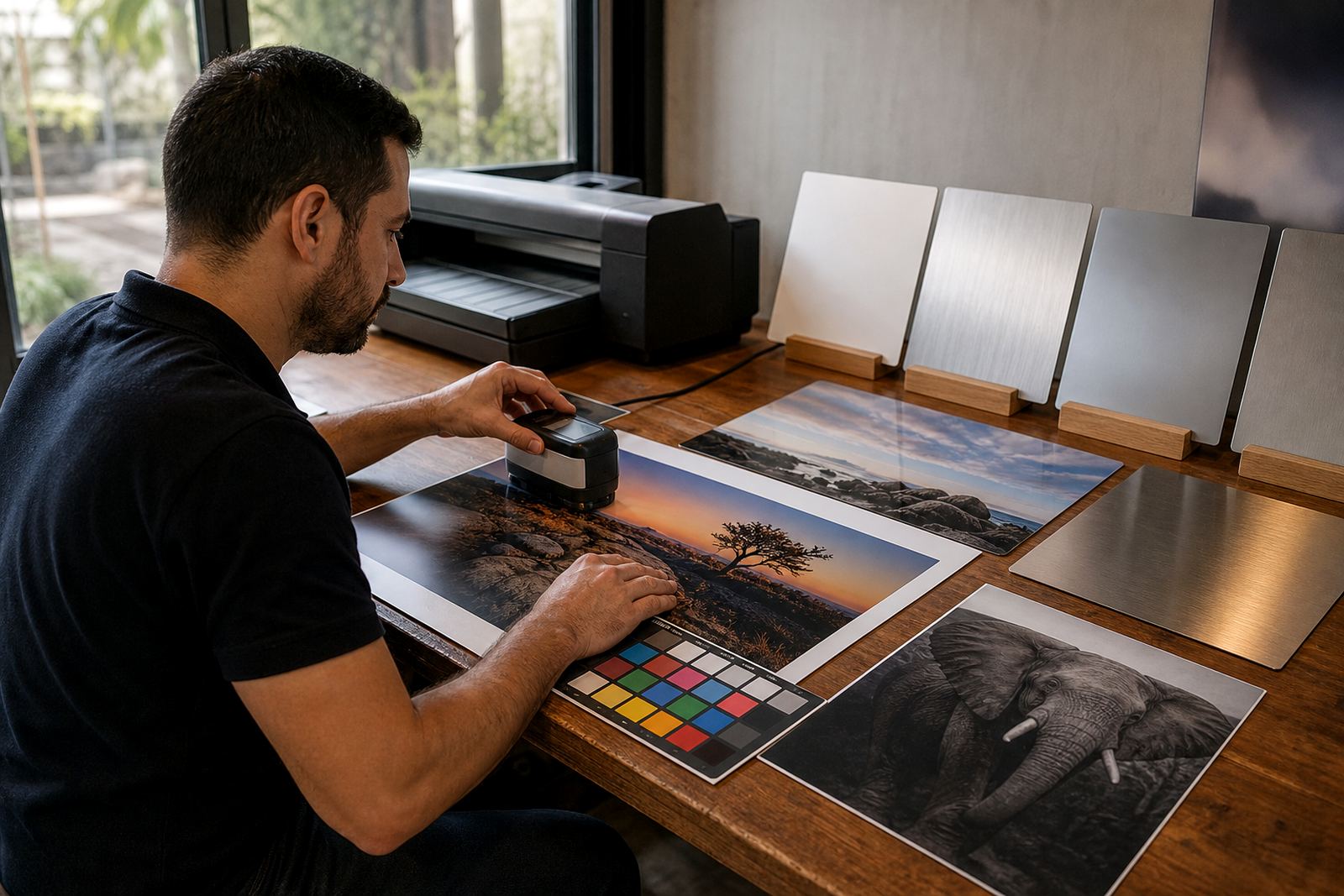
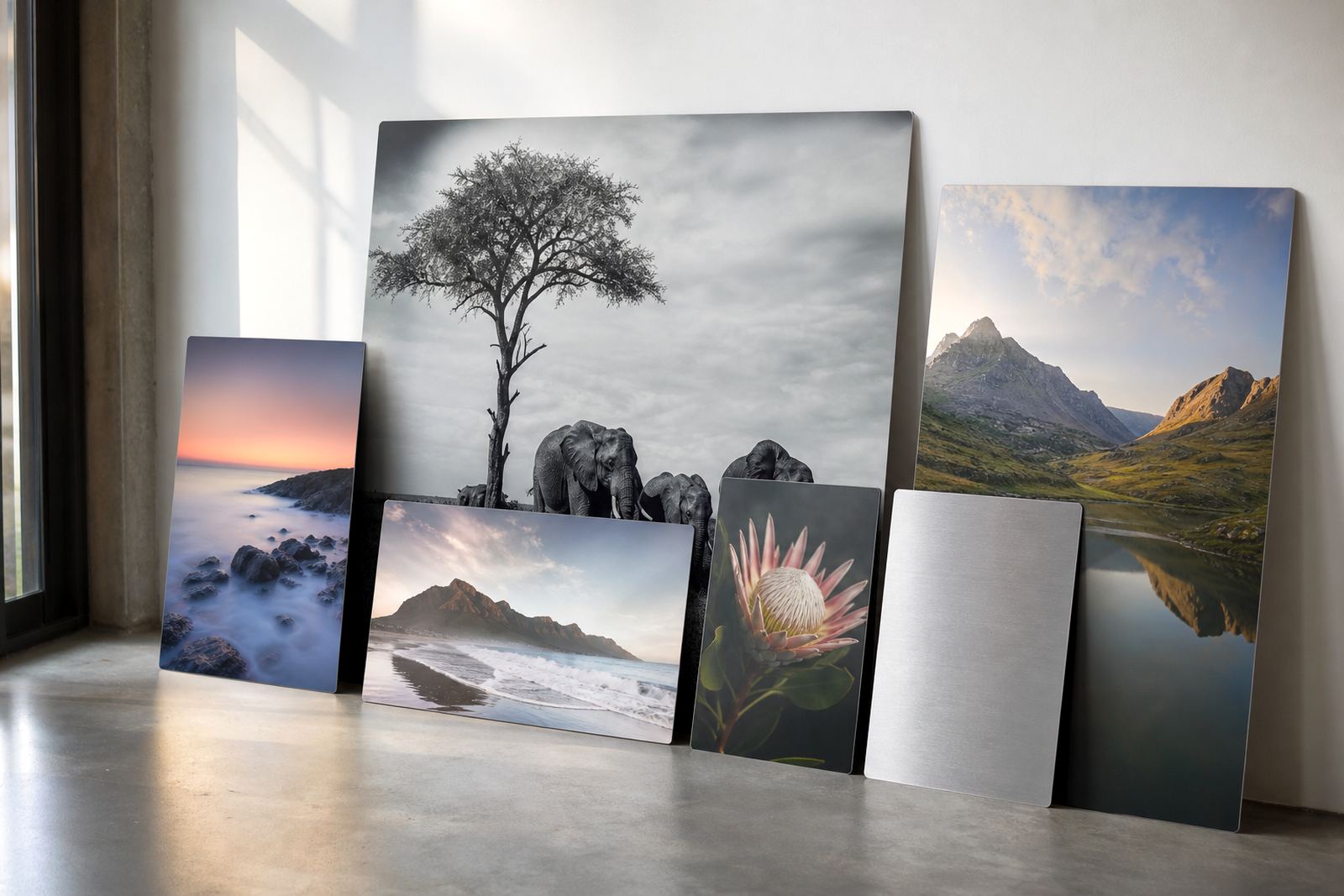
Gloss, matte, white and brushed finishes each behave differently during handling. Gloss gives strong contrast and deep colour, but it shows fingerprints and dust quickly. Matte is kinder in bright offices or rooms with large windows, where reflections can be a nuisance. White aluminium gives the cleanest colour base for photographs, while brushed aluminium leaves parts of the metal texture visible, which can suit graphic work and industrial interiors.
Think about where the panel will live before you move it around. In coastal towns like Durban, humidity can mean more care during unpacking and storage, while in a busy Johannesburg office the main risk is scuffing from repeated handling. Keep the panel in its protective wrap until the wall is ready.
Test the Hanging Point Before the Panel Goes Up
Do not wait until the panel is in your hands to find out whether the wall fixings are ready. Check the hanging method first. Measure the spacing, level the fixing points and confirm the wall can take the load, especially if the panel is going onto gypsum board or an uneven plaster wall. If the wall is dusty, wipe the contact area clean before marking it.
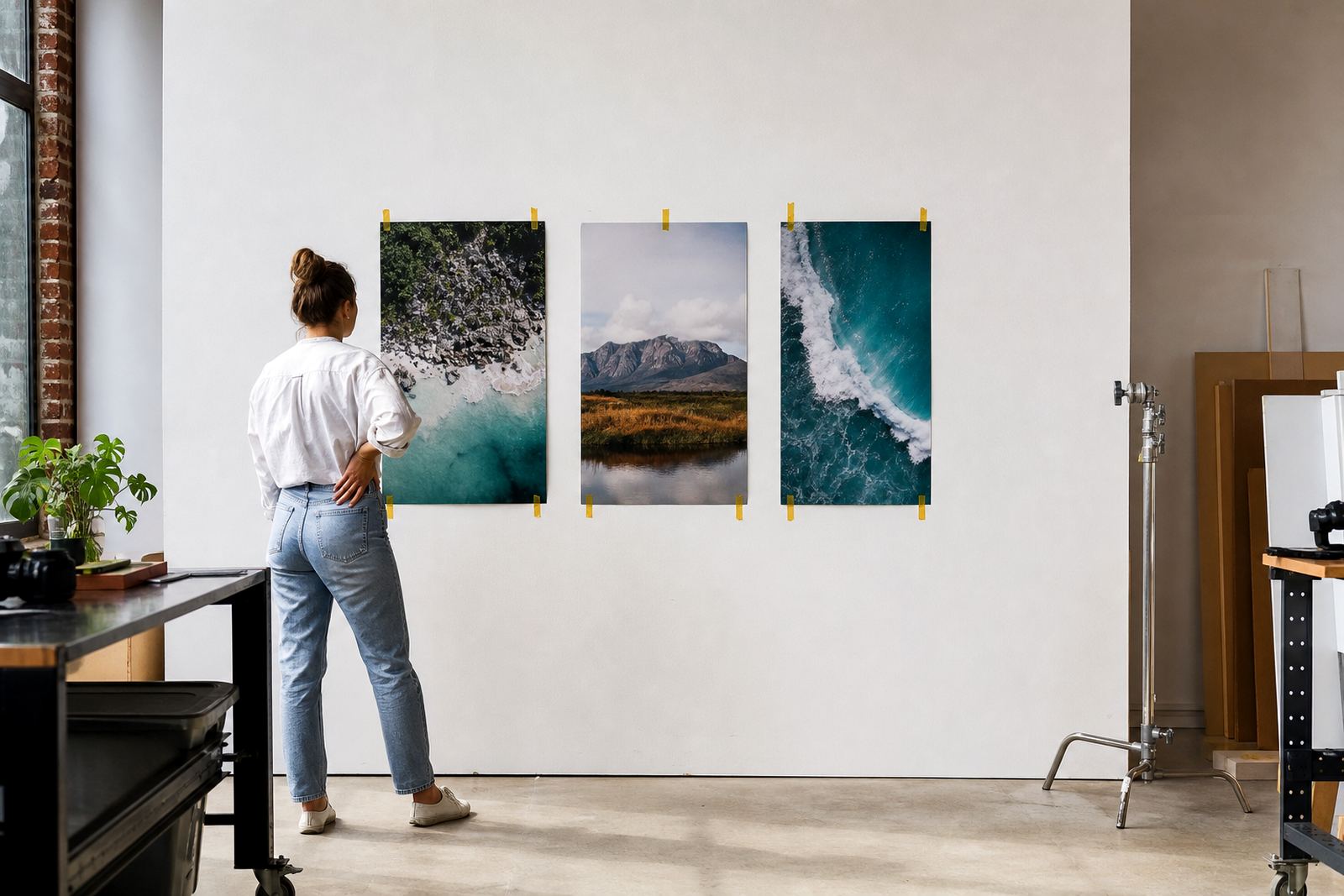
When you fit the hardware, keep the panel supported on a soft surface. A second person can hold the panel while the first person checks the alignment. If the panel is large or part of a set, mark each position clearly so there is no confusion at the wall.
- Confirm the wall plug or screw type suits the wall material.
- Use a level before drilling, not after the holes are made.
- Keep all fixing pieces in one small container.
- Have a soft cloth nearby for the final wipe before hanging.
Packing, Moving and Rechecking After Delivery
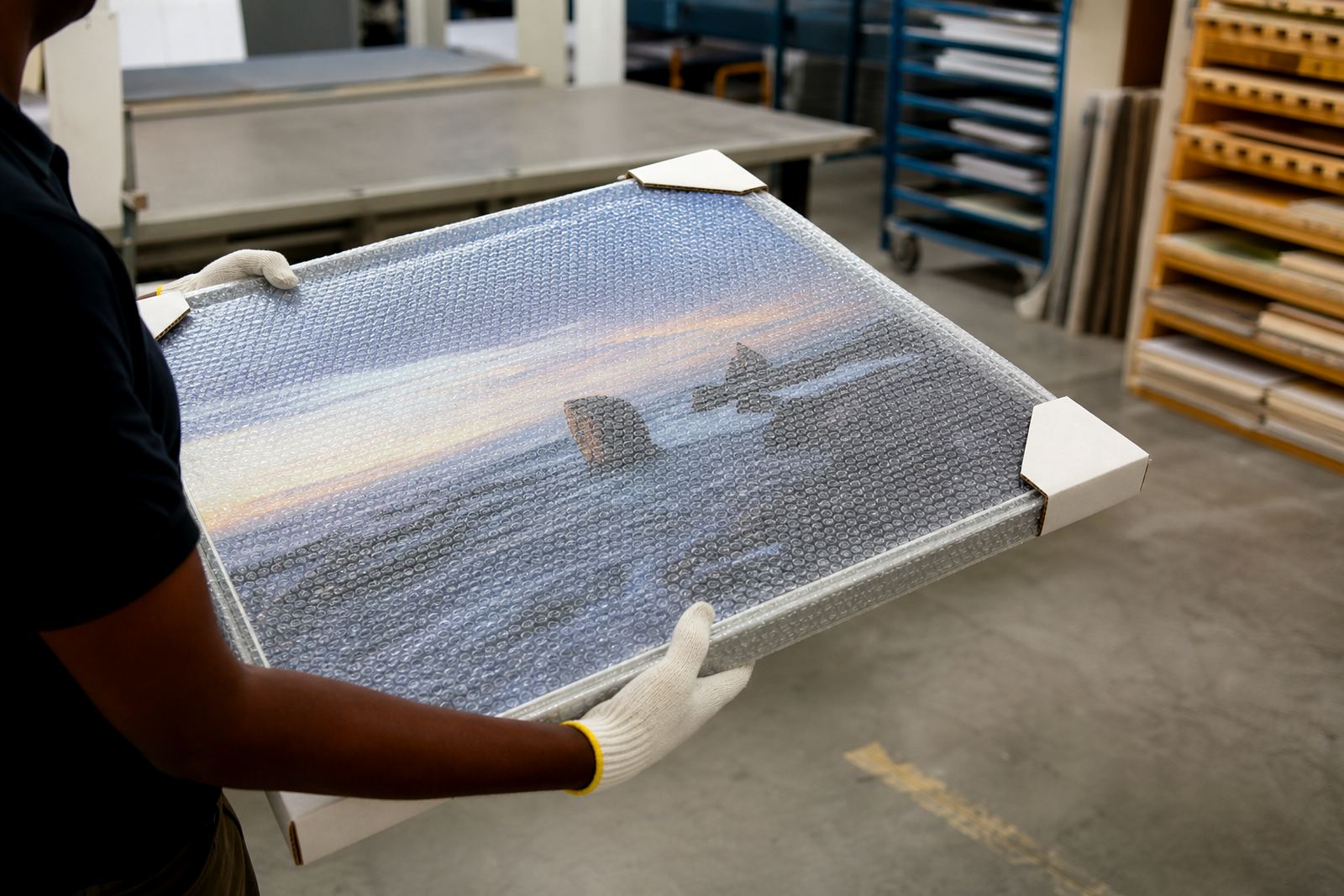
Once a panel has left production, packing becomes part of the job. The face should stay protected, the corners should be cushioned and the parcel should not rattle around inside the box. If a delivery is going to Pretoria, Cape Town, Durban or Gqeberha, the same rule applies: reduce movement inside the parcel, because repeated vibration can mark the edges or loosen fittings.
When the panel arrives, leave it in the box until the room is ready. Open it in a clean space, check the surface under natural light and confirm that the hanging point still matches the wall marks. That final check takes only a minute, but it can save a lot of grief.
A Good Example From a Busy Office Wall
A local example is a small law office in Johannesburg that had a set of family panels going into a reception area with strong afternoon light. The team unpacked the panels on a clean blanket, kept the prints face-up only when needed, and fit the hanging hardware before the board was carried into place. Because the corridor was narrow, two people handled the larger panel together and the corners stayed safe.
The result was not about special treatment, just careful handling. The client got clean edges, no fingerprints and no last-minute scrambling. That is usually the difference between a panel that looks polished and one that needs repair before it ever reaches the wall.