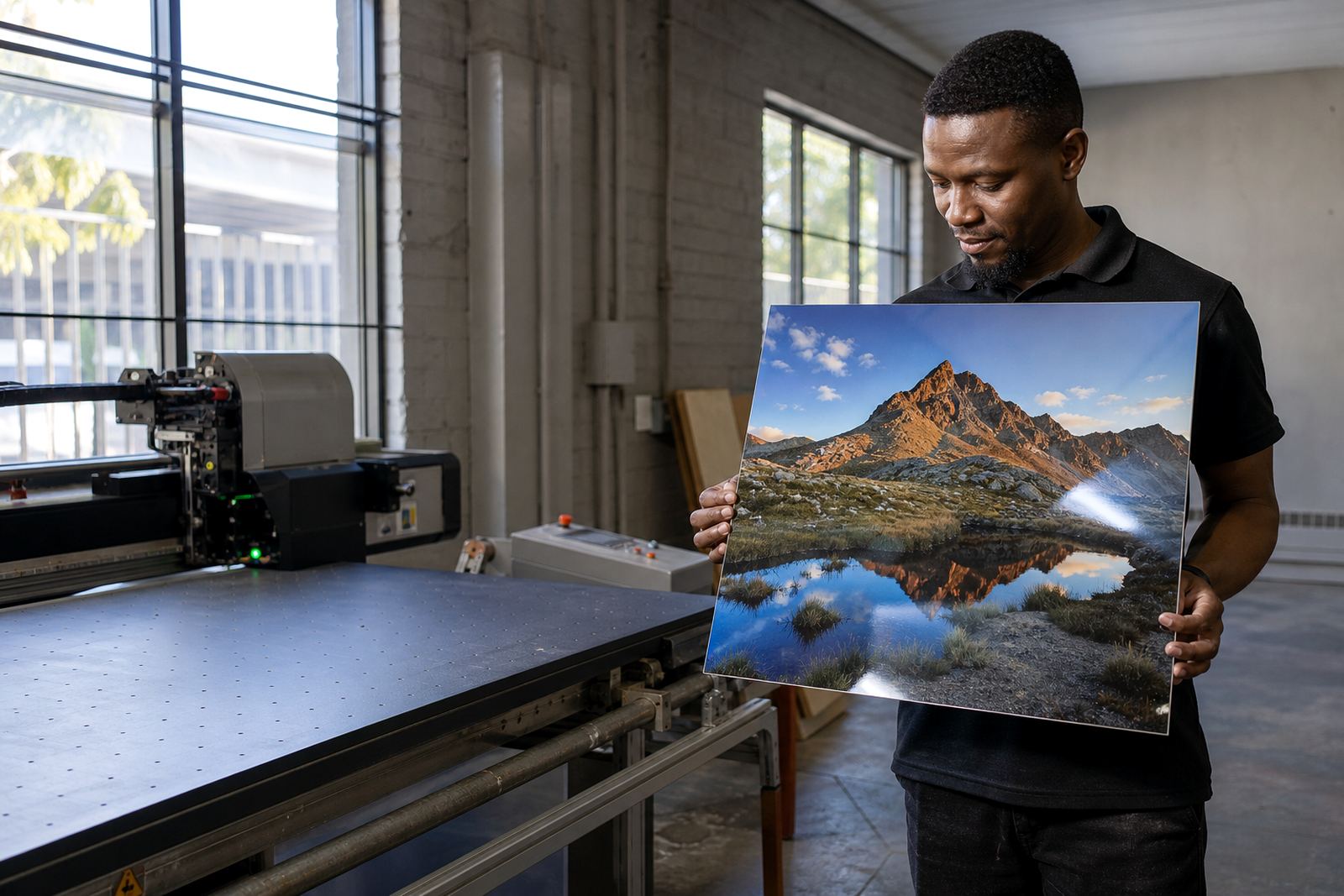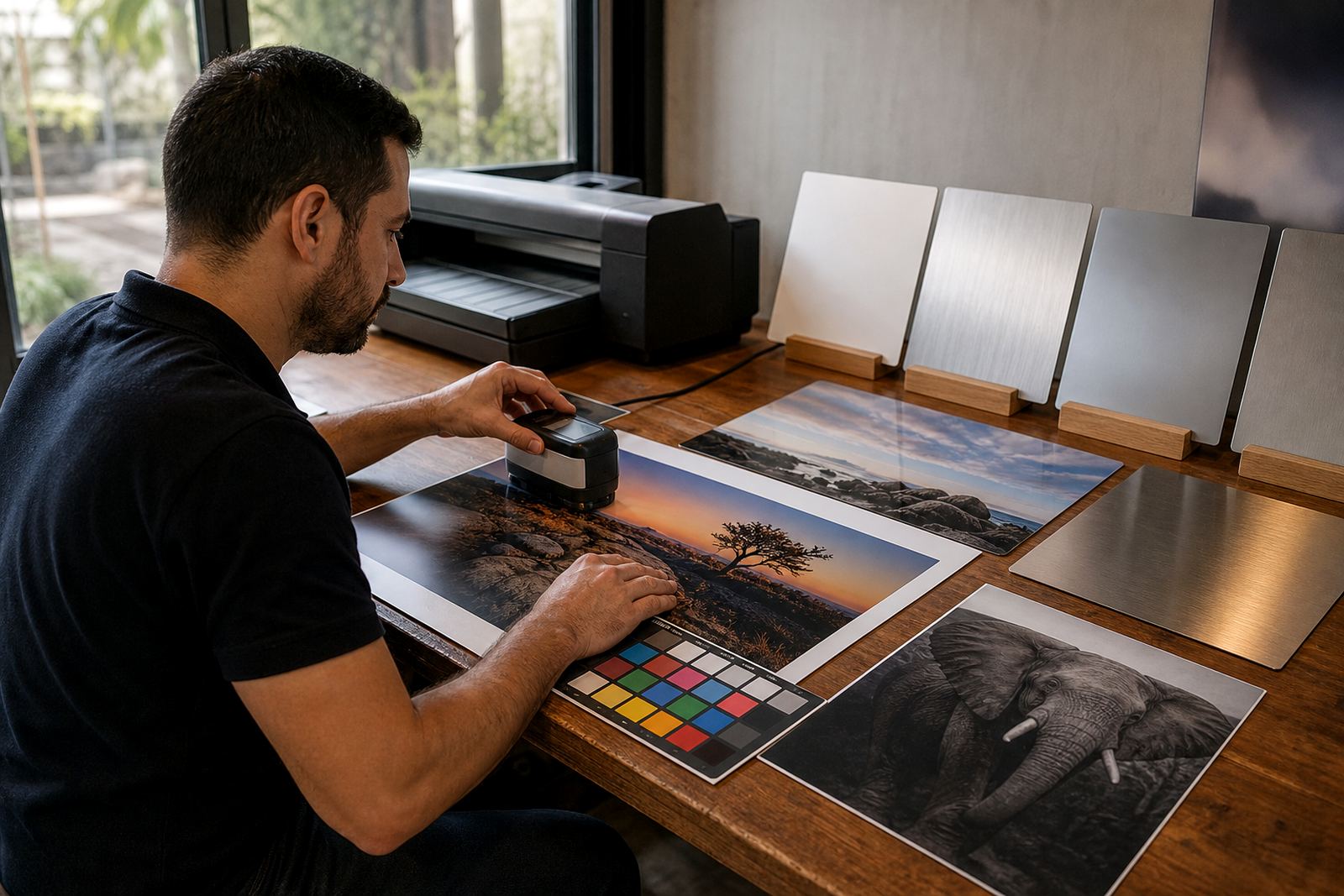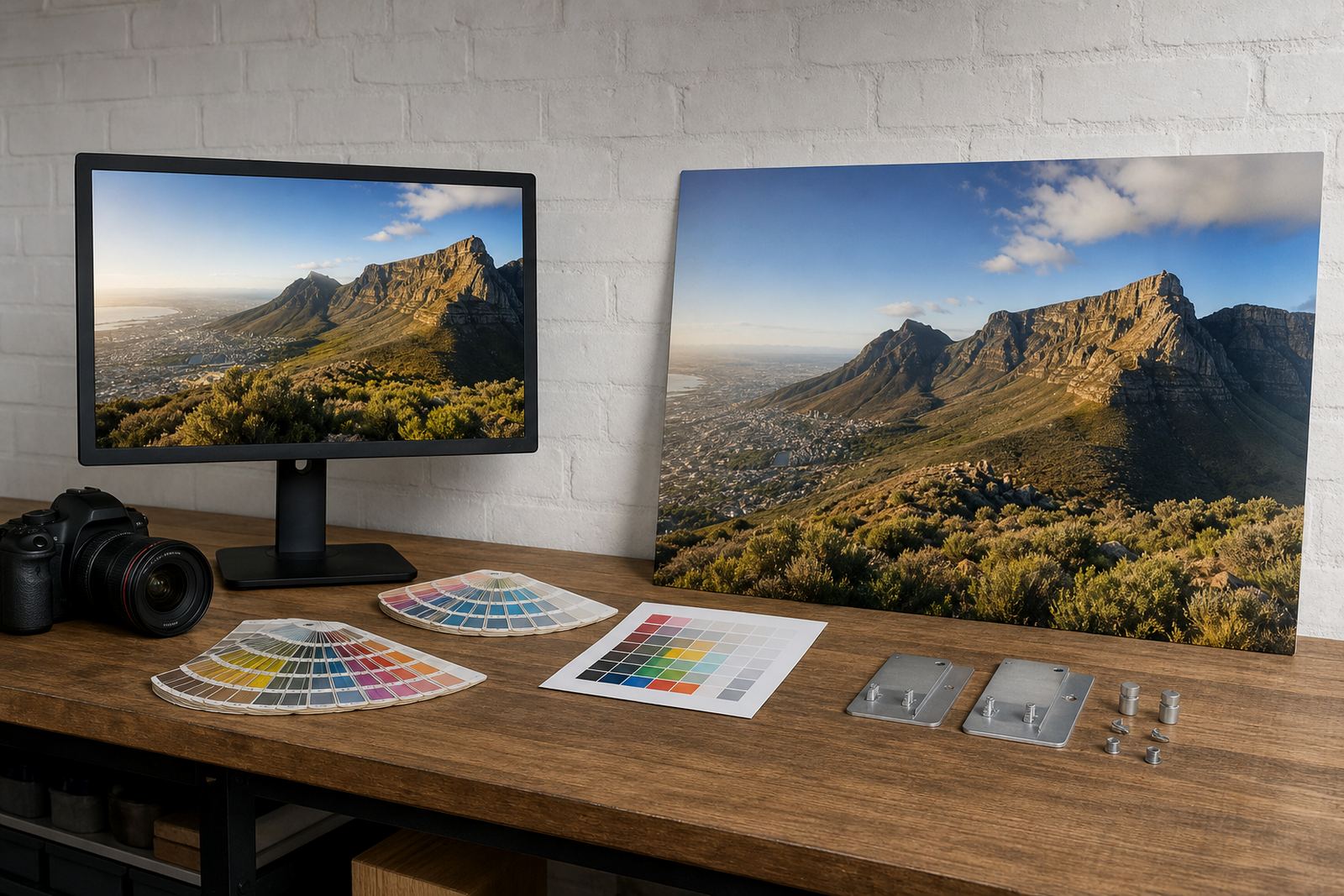

A photo can look ready, but rights are the real starting point
A file can be technically perfect and still not be fit for printing. If the image belongs to a photographer, designer, stock library, gallery or brand, you need the right to reproduce it before it goes onto a dye sublimation aluminium panel. That applies whether the panel is going into a home in Randburg, an office in Sandton, or a gallery wall in Cape Town.
We see this most often when a client sends a beautiful portrait, event image or product shot and assumes the file itself is enough. It is not. Ownership of the file and permission to reproduce are two different things. If you are not the creator, or you commissioned the work under specific terms, check the usage first. It saves time and avoids awkward backtracking later.
What permission should actually cover
Good permission should say you may reproduce the image on aluminium photo panels, in the size you need, and for the place where it will be used. If the work includes people, property, artwork or branded items, those may carry separate rights too. A photograph of a mural, sculpture or interior can still involve more than one rights holder.
For business use, it helps to be clear about where the panel will be displayed. A boardroom piece, retail display or reception wall can count as commercial use even when the print itself is only one item. If you plan to reprint later, or make a matching second panel for another branch, that should be covered as well.
- Confirm who created the image.
- Check whether the licence allows printing on physical products.
- Ask if the permission includes commercial use, if needed.
- Keep written approval, not just a verbal go-ahead.
Why aluminium panels make rights issues more visible
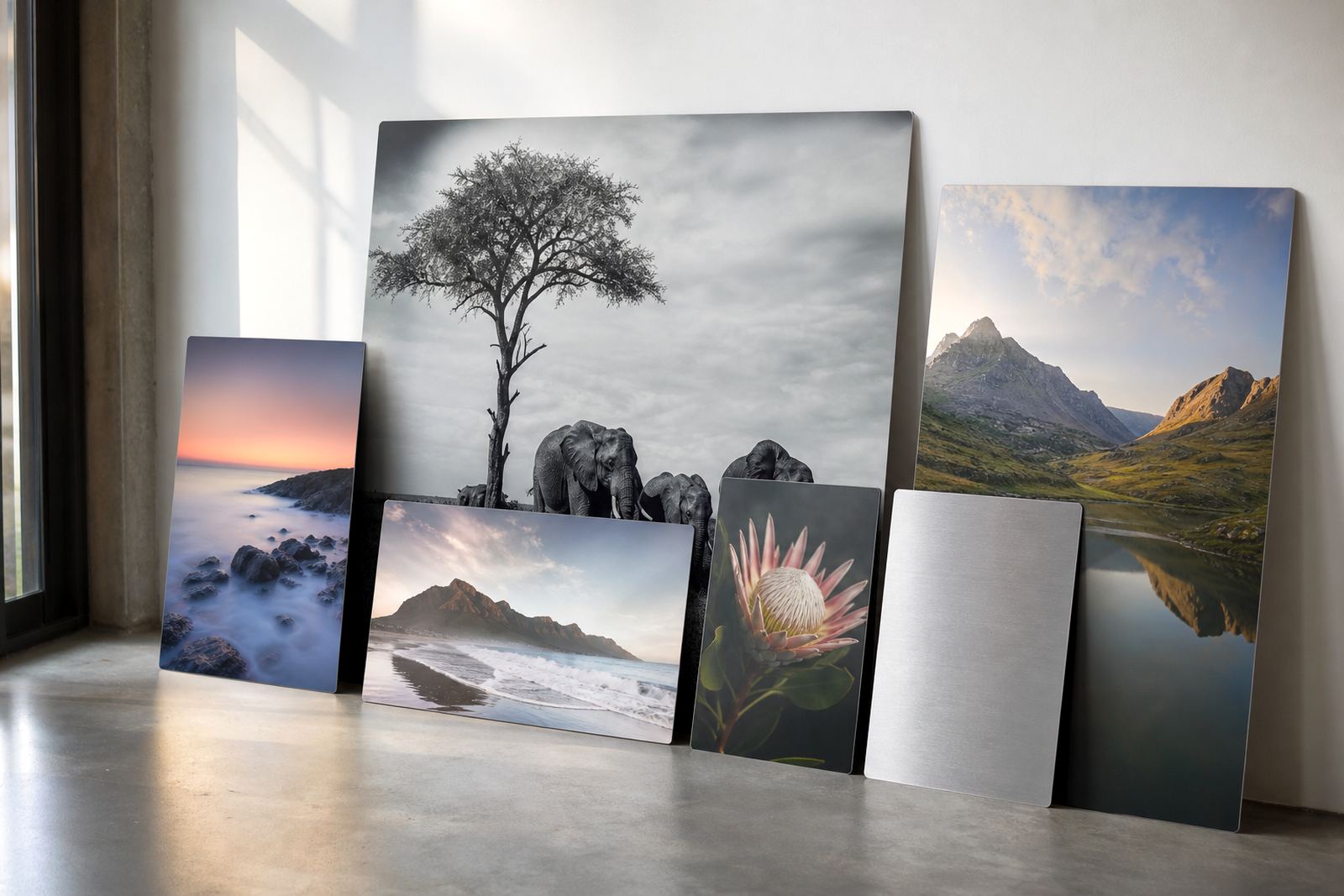
Dye sublimation onto coated aluminium gives a finished result that lasts well indoors and handles colour with real punch. Gloss, matte, white and brushed finishes all show the image differently, and the surface can make a photograph feel more permanent than a framed print behind glass. That is one reason rights matter so much here. The print is not a quick copy, it is a durable display piece.
If the original image belongs to someone else, the finish does not change the legal position. A brushed panel with a portrait of a musician, a matte panel with a wedding image, or a white panel for a corporate wall still needs the same permission. The fact that the result looks polished is exactly why customers should slow down and check.
We also advise clients to think about image quality at the same time. A file can have the rights sorted but still be too soft for a large panel. A low-resolution file stretched to 1.2 metres wide will not give the clean detail people expect. Rights and resolution go hand in hand, and both need attention before production.
A Randburg example that saves a reprint
A photographer in Johannesburg may have a strong portfolio shot from a styled shoot at a venue in Pretoria. The image includes a model, a decorator’s work and a venue feature wall. Before that image is printed for a Cape Town client, all the permissions need to be checked. The photographer may own the photo, but not every element inside it.
That kind of check is not pedantry, it is practical business. If a business in Durban orders a set of panels for an entrance area and the artwork includes someone else’s brand or a protected artwork, the display can be delayed or even stopped. One clear file note at the start avoids a reprint and wasted packing. It also protects the people on the receiving end of the order.
- Do not assume a social media image can be printed.
- Do not use a screenshot if you do not have the source file rights.
- Do not rely on a forward from a third party as proof.
- Do keep a written trail for every approved image.
File checks are not only about colour and crop
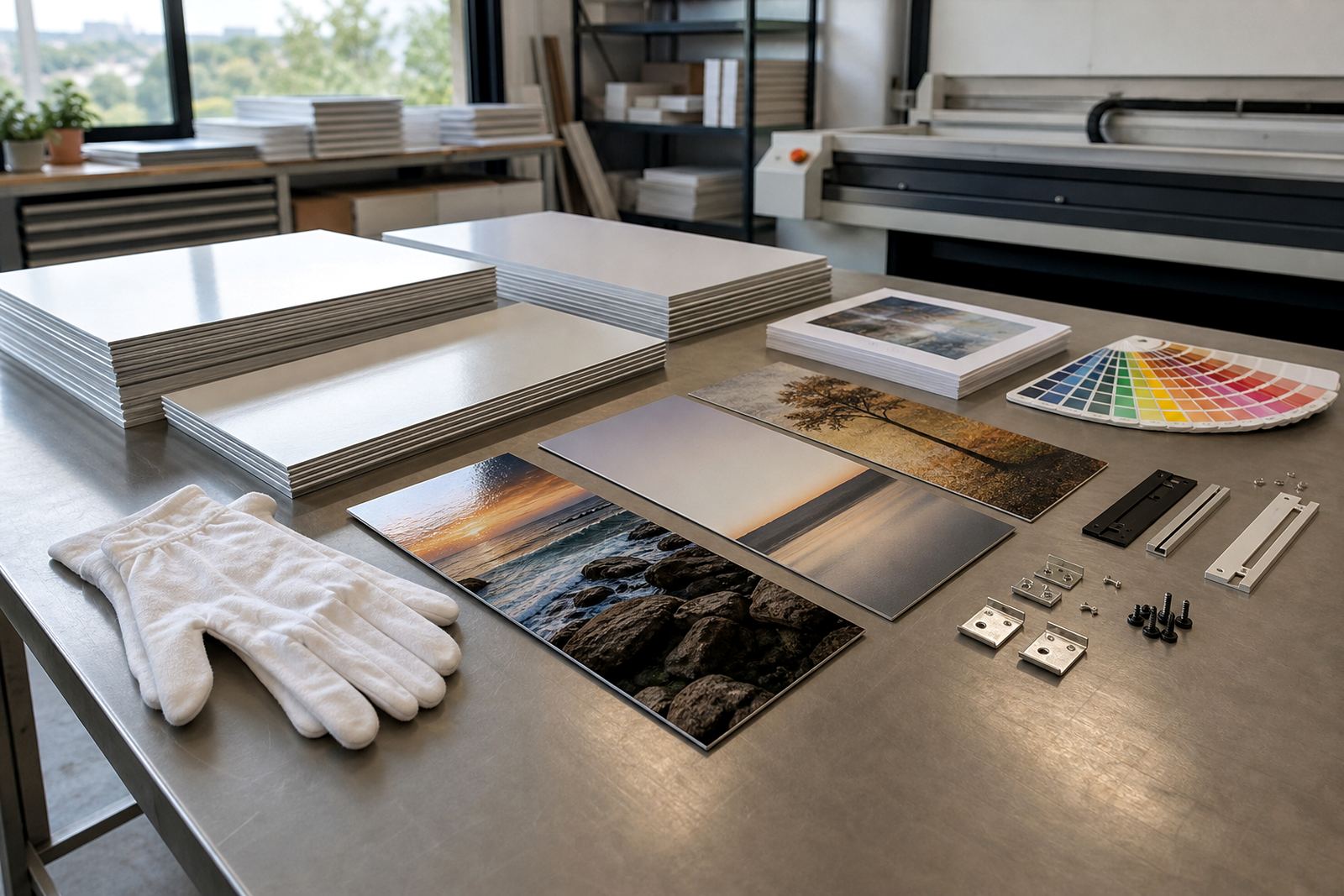
When we review artwork for sublimation aluminium, the technical check is only part of the job. We look at resolution, crop, bleed, edge placement and how the image will sit on the chosen finish. But the rights check should happen first, because there is no point preparing a file that cannot be used.
Clients who send in files for panel production across Johannesburg, Pretoria, Midrand and Gqeberha often need help separating the technical from the legal. A good image can still be wrong for use if it came from a source without permission. Likewise, a legally approved image may still need colour preparation and crop planning before it can be printed properly. The two checks support each other.
For multi panel layouts, the matter is even more important. One image may run across three or four panels, and if that image belongs to a third party the scale of the use is bigger. That is why we ask customers to own the image or have clear reproduction rights before any test panels or final mounting work is done.
What to have ready before you send the image
The cleanest jobs arrive with the right file and the right permission. That lets us focus on finish selection, mounting options and packing without delay. If a client in Sandton wants brushed aluminium for an office piece, or a client in Cape Town wants a glossy family portrait panel, the same rule applies: rights first, then production.
Before sending artwork, have these points ready:
- The original file or a high quality export from the creator.
- Written proof that you own the image or may reproduce it.
- Any instructions about credit, limits or restricted use.
- The size, finish and intended location of the panel.
- Confirmation that all people and property shown are cleared for use.
Once those basics are in place, the rest of the process is straightforward. We can move on to colour preparation, test panels, custom sizing and the correct hanging hardware for the wall. That is the proper order, and it keeps everybody out of trouble.