
Start with the part of the view that carries the picture
A good landscape file needs a clear centre of interest, even when the image stretches wide. A mountain ridge, coastline, skyline or open veld can all work, but the eye still needs a place to settle. If the scene is all horizon and no anchor point, the finished panel can feel empty, especially on larger sizes.
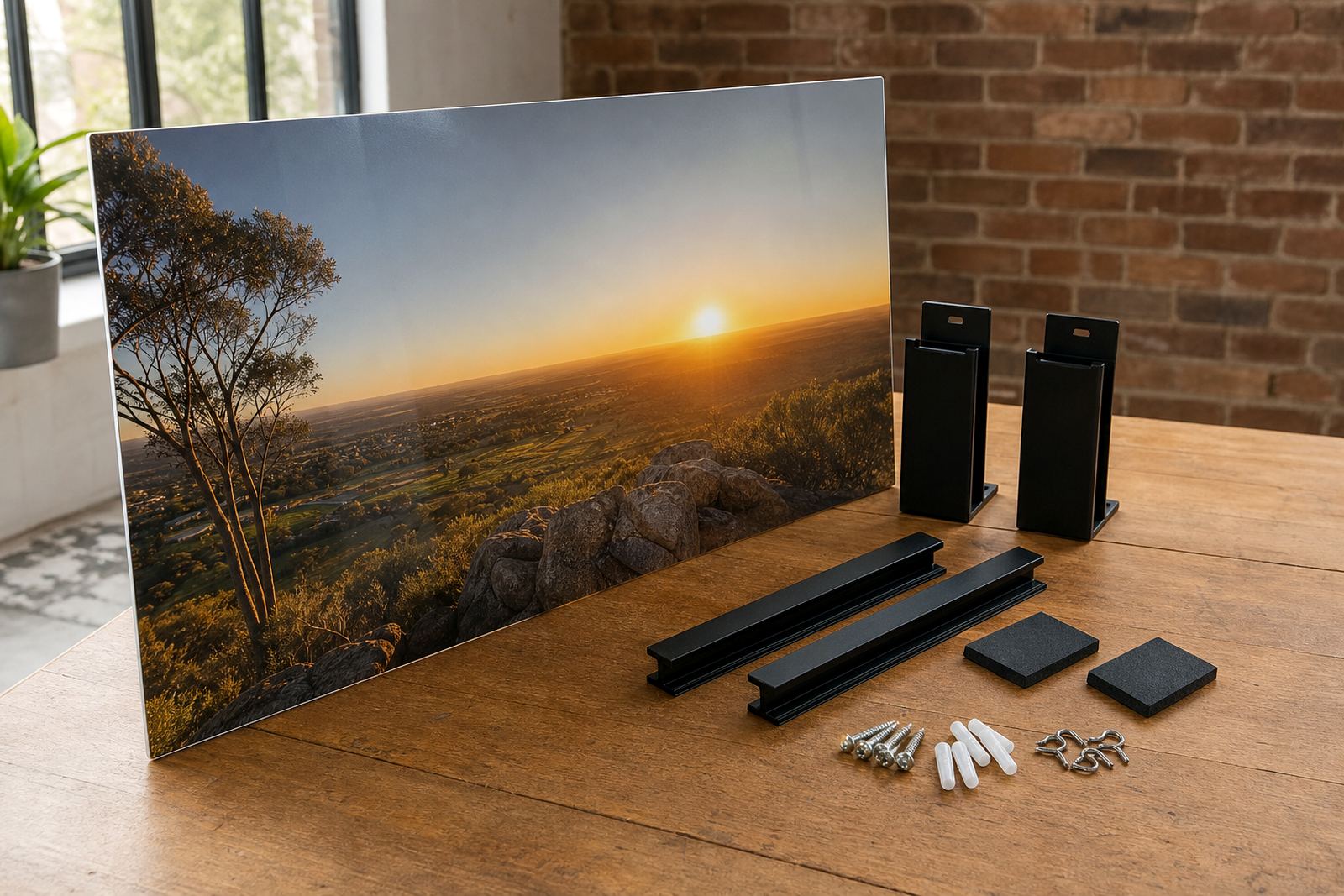
For panoramic work, check the far left and right edges before you send the file. Tree tops, lamp posts, cropped rocks and stray vehicles often sit in those outer areas and become more obvious once the image is printed edge to edge. In Randburg, we often see strong sunset files from Gauteng that need a small crop adjustment because the horizon runs too low or too high for the final format.
Skies carry more weight than most people expect
In landscape prints, the sky is not just background. It sets contrast, depth and mood. Blue skies with a few cloud bands usually hold detail well, while hazy noon light can wash out the scene. When the sky is pale, the aluminium surface will show that brightness clearly, so the image must have enough tonal variation to stay interesting.
- Check that cloud detail is not clipped out in the highlights.
- Keep an eye on blown whites around the sun and bright water.
- If the sky is meant to be dramatic, allow room for darker tones near the horizon.
- For coastal scenes, remove colour cast where mist or salt haze has softened the file.
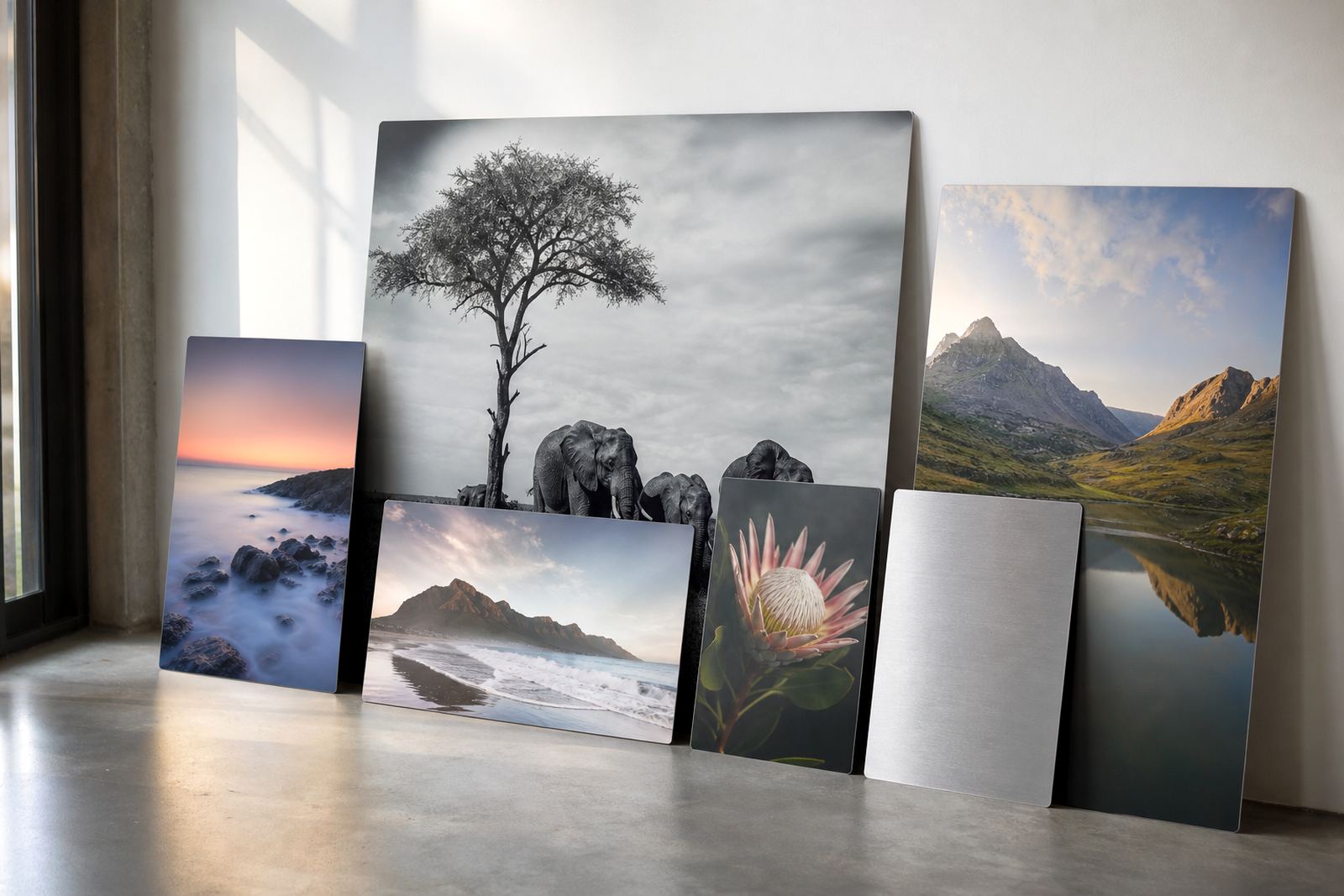
On gloss finishes, bright skies can look vivid and reflective. Matte reduces glare and suits spaces with direct light or large windows, while white coated panels give clean colour and brushed panels can suit industrial or architectural scenes where texture adds character.
Resolution matters more once the panel gets bigger
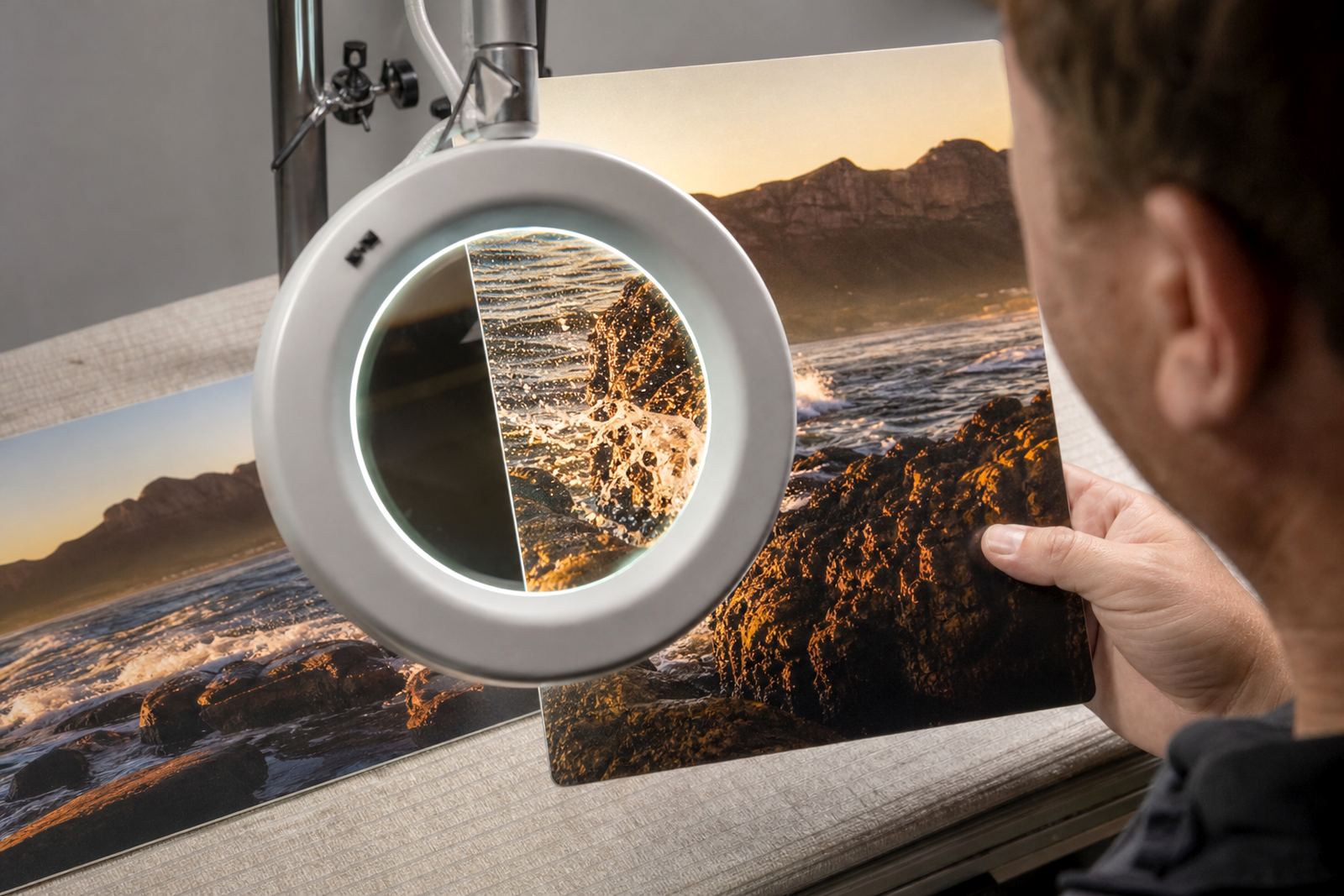
Panoramic images often look fine on screen, then fall apart when enlarged. That is why file resolution must be reviewed against the final panel size, not only the camera spec. A sharp landscape shot from a modern camera may still need trimming, noise control or a careful resize before printing.
If the image will be viewed from across a boardroom, lobby or hotel passage, slightly softer detail can still work. For closer viewing in a home or gallery, fine edges in grass, surf, fences and rooftops must hold together. Our production team checks the file before printing so that the panel is not pushed beyond what the image can support.
- Use the largest clean file you have, not a compressed social media copy.
- Avoid heavy sharpening that leaves halos along hills or buildings.
- Check that shadows still hold detail after editing.
- If the image was shot in low light, test whether noise reduction has blurred fine lines.
Cropping a wide scene without losing the story
Panoramic cropping is where many landscape files succeed or fail. A crop that feels balanced on a monitor can change completely once it is stretched across a long aluminium panel. The trick is to protect the main line of the scene, whether that is a shoreline, mountain ridge, road or horizon.
For long wall pieces, avoid placing the key subject too close to the edge. Leave breathing room around trees, peaks and built structures so the composition can work with hanging hardware and the final frame-free finish. If a scene is meant to read from left to right, keep the movement clear. If it is still and formal, reduce clutter and let the horizon sit steady.
A local example: a Pretoria client sending in a Hartbeespoort dam view may have a strong sky and waterline, but the file could need a small top crop to remove dead space and bring the clouds lower into the composition. That one adjustment can make the print feel far more grounded.
Colour choices for land, water and weather
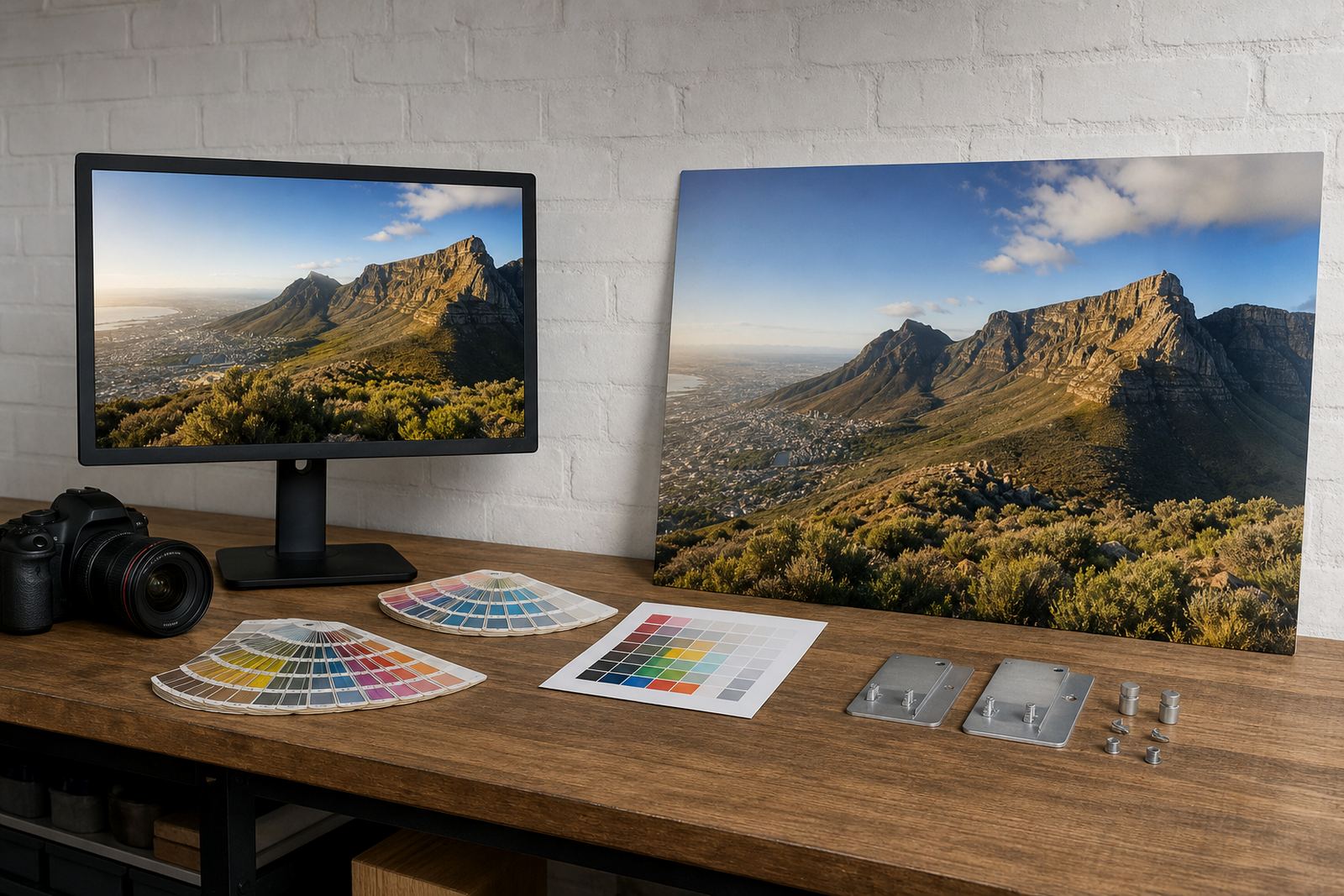
Landscape files often need colour preparation because the same scene can look very different on screen and on coated aluminium. Greens can go muddy, blues can turn too cyan and warm evening light can lose its softness. A careful balance between contrast and natural colour usually gives the best result.
Brighter scenes suit gloss or white coated panels when the image already has strong colour separation. If the landscape relies on subtle tones, such as mist over the Magaliesberg or grey winter surf in Gqeberha, matte can help keep the mood gentle and reduce reflections. Brushed aluminium works best when part of the panel can remain exposed for a more industrial look, though it is not the first choice for every landscape.
A stable file with settled colour saves time and avoids rework.
Mounting, spacing and the wall it will live on
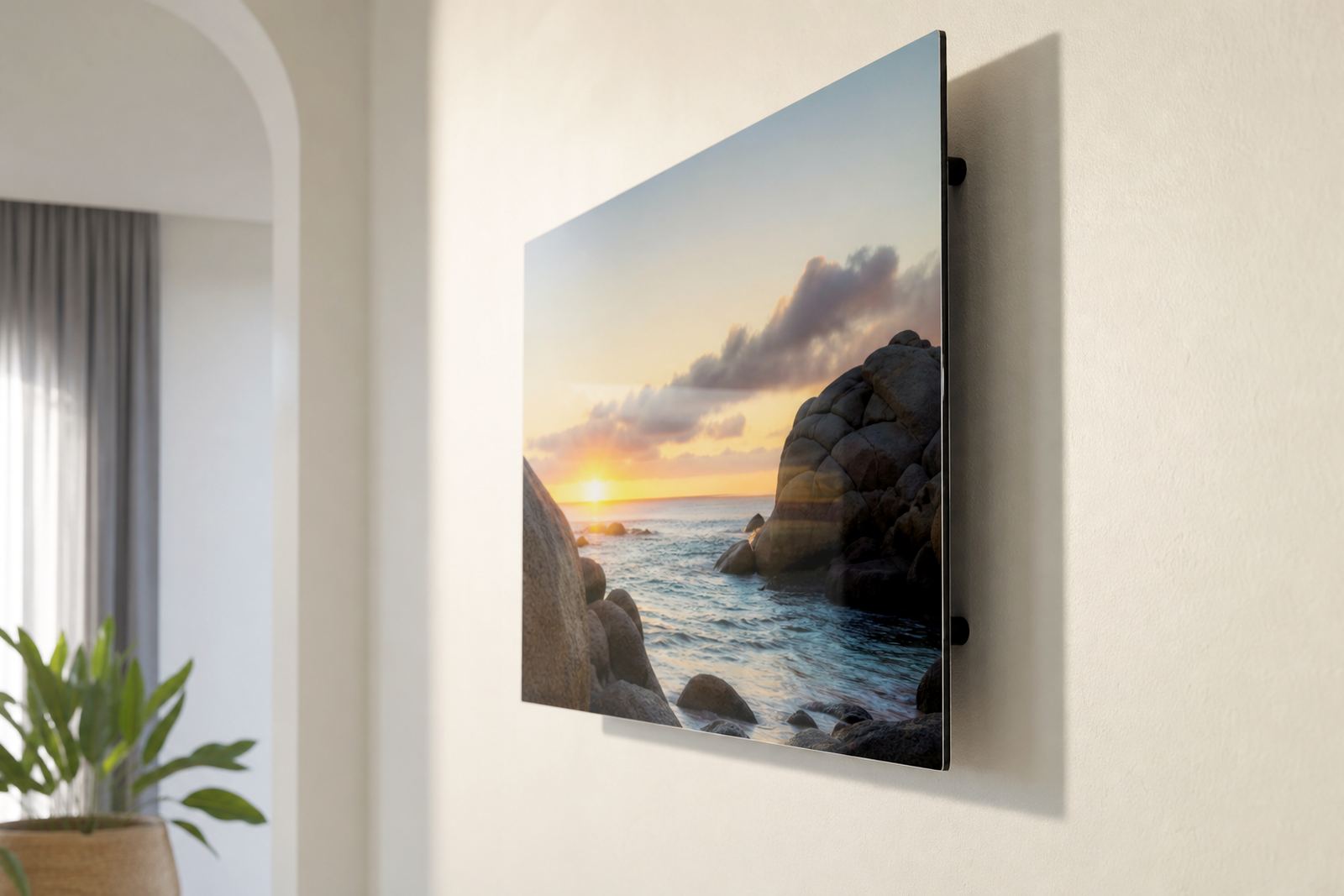
A landscape panel is not only about the print itself. The hanging method changes how the image reads in the room. Hidden standoffs or rear hanging systems keep the surface clean and let the panel sit flat, while the wall colour behind it can alter how edges appear. If the panel is going into a narrow passage or reception area, make sure the size suits the viewing distance.
For offices in Sandton or Midrand, large horizontal panels often work well above seating areas or in boardrooms. In homes, a lower hanging height can make wide landscapes feel more connected to the room. If the space gets strong sun from a north-facing window, matte is often the safer choice. We also check packing and delivery so the panel arrives without bent corners or pressure marks.
- Confirm the wall space before finalising the crop.
- Allow for the hardware so the image does not sit too close to door frames or light switches.
- Choose a finish that matches the room lighting, not only the file.
- For multi panel layouts, keep horizon lines consistent across all sections.
What to send if the landscape must print cleanly the first time
Before a file goes into production, it should be checked for ownership, clarity and fit. Customers must own the images they send or have the rights to use them. That matters for photographers, artists and businesses alike, especially when the panel will be used in public areas or commercial displays.
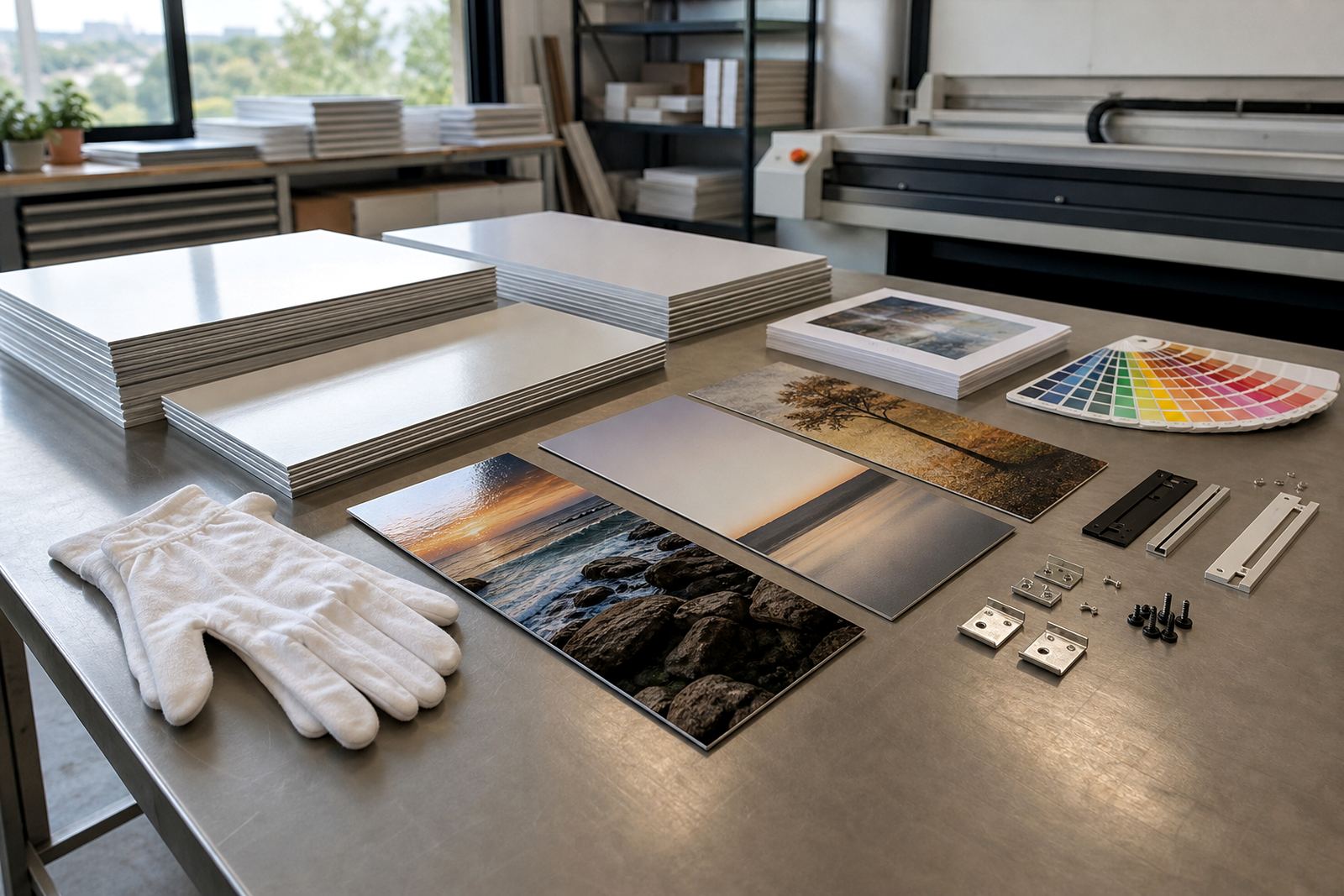
A clean submission should include the highest quality file available, the intended size, preferred finish and any notes on crop direction. If the picture is part of a set, tell us whether the horizons must match from panel to panel. We can review the file, advise on resolution, prepare colour and suggest mounting options that suit the final wall. The result is better when the layout is settled before printing begins, not after.
SubAlu works with landscape files every day from Johannesburg, Cape Town, Durban, Pretoria and Gqeberha, so the details matter. A file that holds its shadows, keeps its sky and respects the final crop will always give a stronger panel than one pushed too hard.