
When a large panel starts asking for more than a flat back
A small aluminium panel can often hang happily with a standard backing, but once you move into larger sizes or long-format work, the panel has more chance of flexing. Heat, transport, and uneven walls can all put strain on a flat sheet. A rear rail adds a firm structure behind the piece, so the print is not left carrying its own weight across the full surface.
This matters most on pieces that are wide, tall, or expected to stay up for years in a home, office, gallery, or reception area. In places like Randburg and Sandton where offices want a neat finish, or in coastal spaces such as Durban where humidity can test materials, added support helps keep the panel sitting true. It also gives the installer a cleaner fixing point, which makes the final result look more deliberate.
What the rail is actually doing behind the print
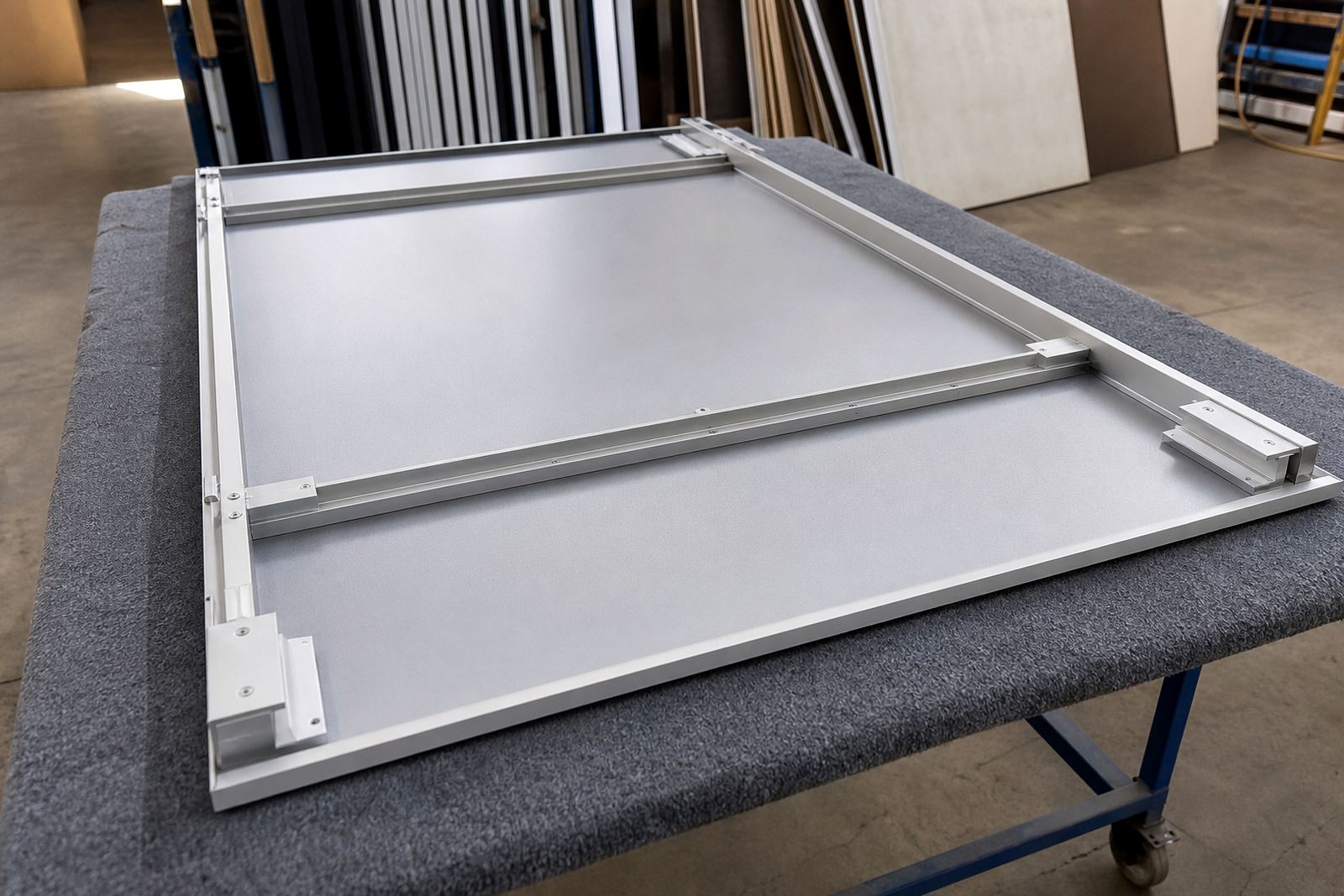
A rear rail is fitted to the back of the coated aluminium panel to stiffen the structure and create a secure hanging point. Instead of relying on the panel edge alone, the rail distributes support more evenly. That helps reduce bowing, twisting and stress around the mounting hardware.
On long-format work, especially panoramic images or tall portrait pieces, the benefit is easy to see. The panel holds shape better during handling and after installation. It also helps protect the finished print from minor knocks during delivery and mounting. For customers sending in artwork, the image file should be print-ready at the correct size and resolution, and they must own the image or have the rights to use it.
- Improves rigidity on larger or narrower panels
- Helps reduce flex during handling and hanging
- Creates a more secure fixing point for installation
- Can help the panel sit flatter against the wall
Why long-format pieces benefit most in South African interiors
Long-format aluminium panels are popular for cityscapes, architectural images, corporate branding, and series work. A piece stretching across a boardroom wall in Pretoria or a gallery passage in Cape Town needs to remain true from one end to the other. Without extra support, the slightest movement can be more noticeable on a long panel than on a square one.
Rail mounting also helps when a wall is not perfectly level, which is common in older buildings and some commercial properties. A stronger backing gives the installer more confidence to align the work properly. For businesses that want a polished finish in waiting areas or showrooms, that consistency counts. It is one of those details people may not notice straight away, but they do notice when it is missing.
- Useful for panoramic landscapes and wide street scenes
- Helpful for office branding panels and entrance displays
- Supports multi-panel layouts where alignment matters
- Better suited to pieces that will be moved between sites
Finish choice still matters, even when the back is reinforced
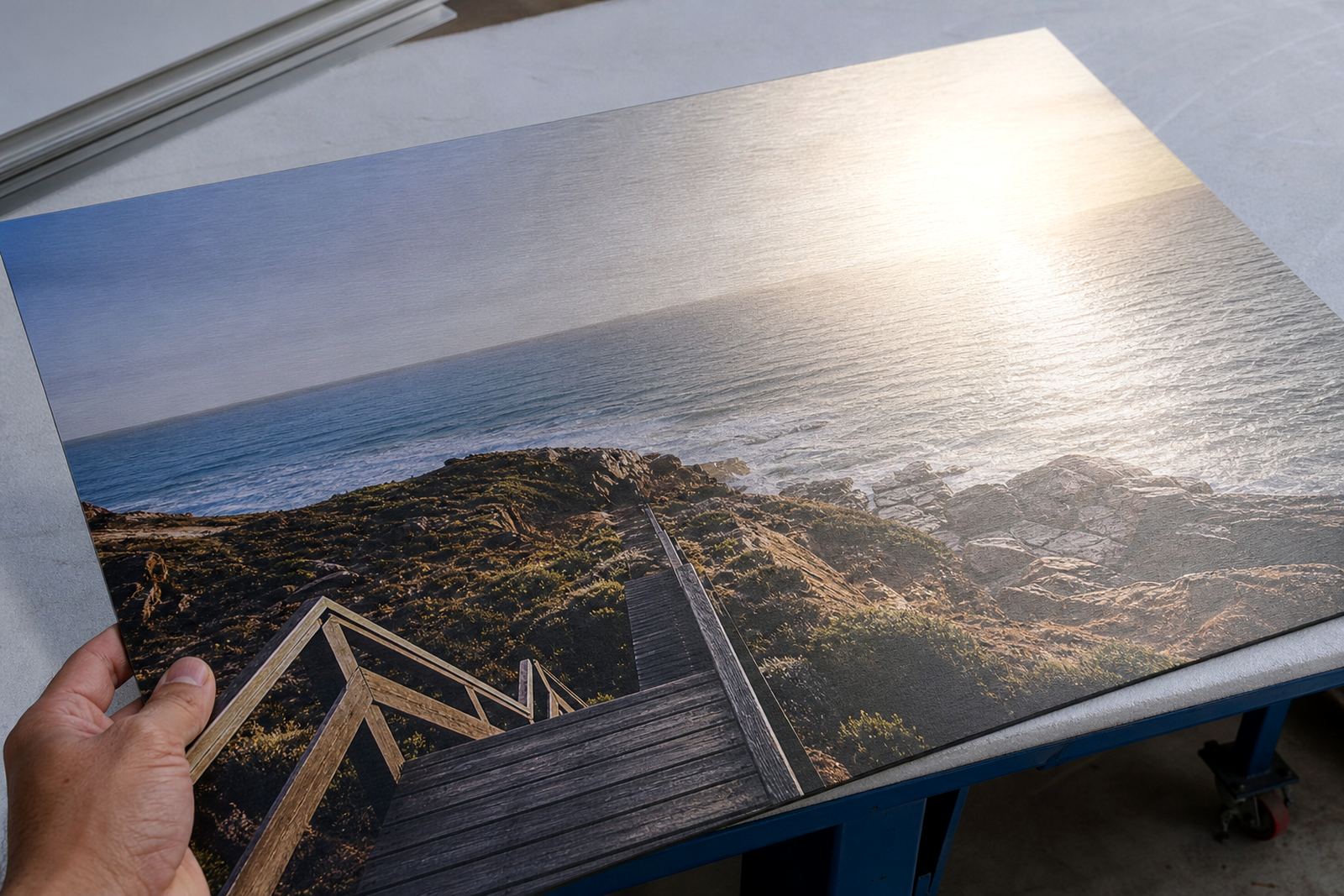
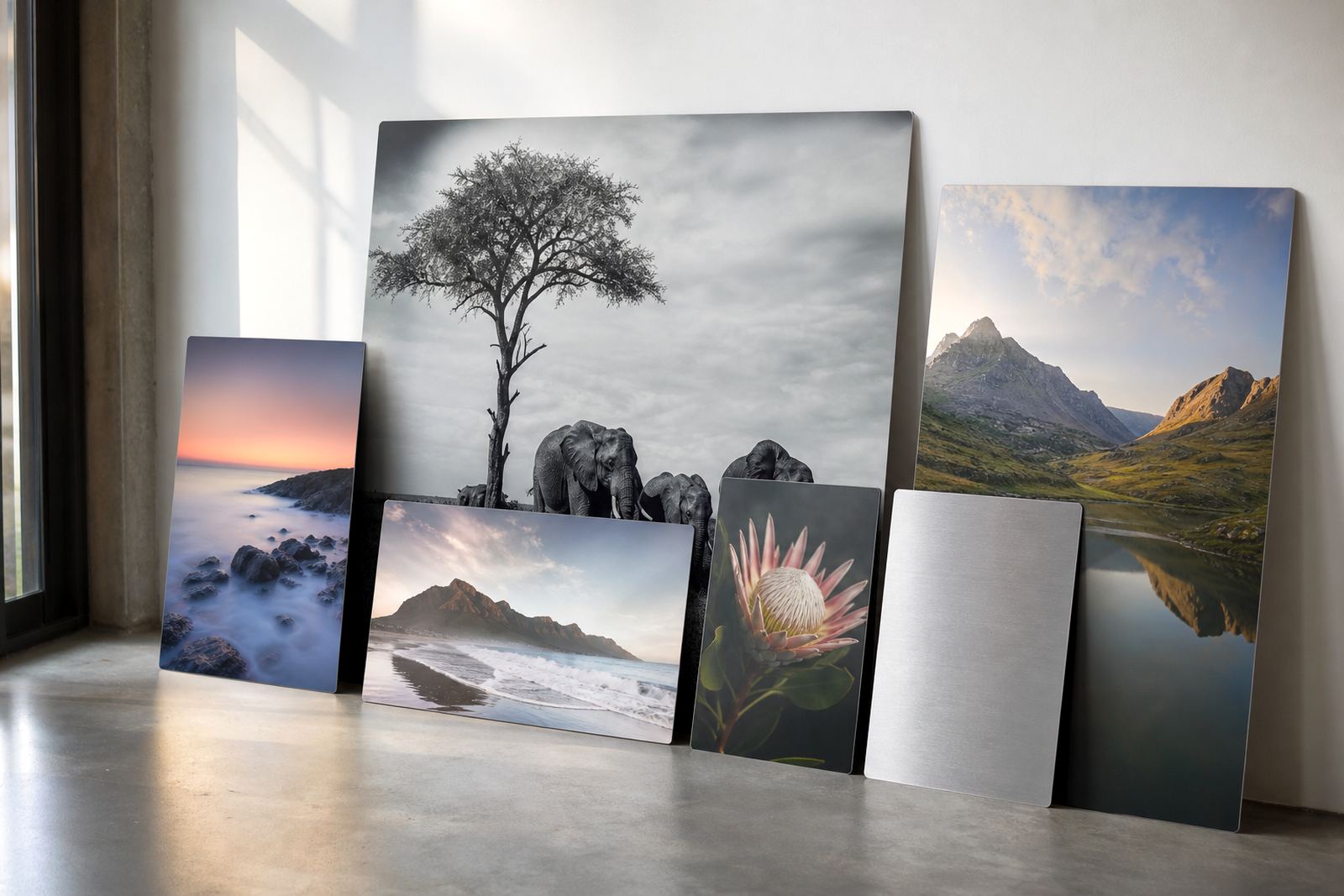
Rail mounting is about structure, but the front finish still shapes how the artwork reads in the room. Gloss finishes can bring out deep colour and strong contrast, while matte finishes reduce glare in bright spaces. White aluminium coated panels are often chosen for clean, bright image reproduction, while brushed finishes can suit images where a metallic texture is part of the look.
The rail does not change the image itself, but it supports the panel so the finish can be enjoyed properly. In a sunlit office in Midrand, matte can be easier to live with. In a gallery or feature wall where controlled lighting is used, gloss may suit the image better. The right choice depends on the space, the viewing distance, and the subject. Colour preparation and crop planning also matter, because a strong mount cannot fix a poorly prepared file.
Hanging hardware should suit the wall, not just the artwork
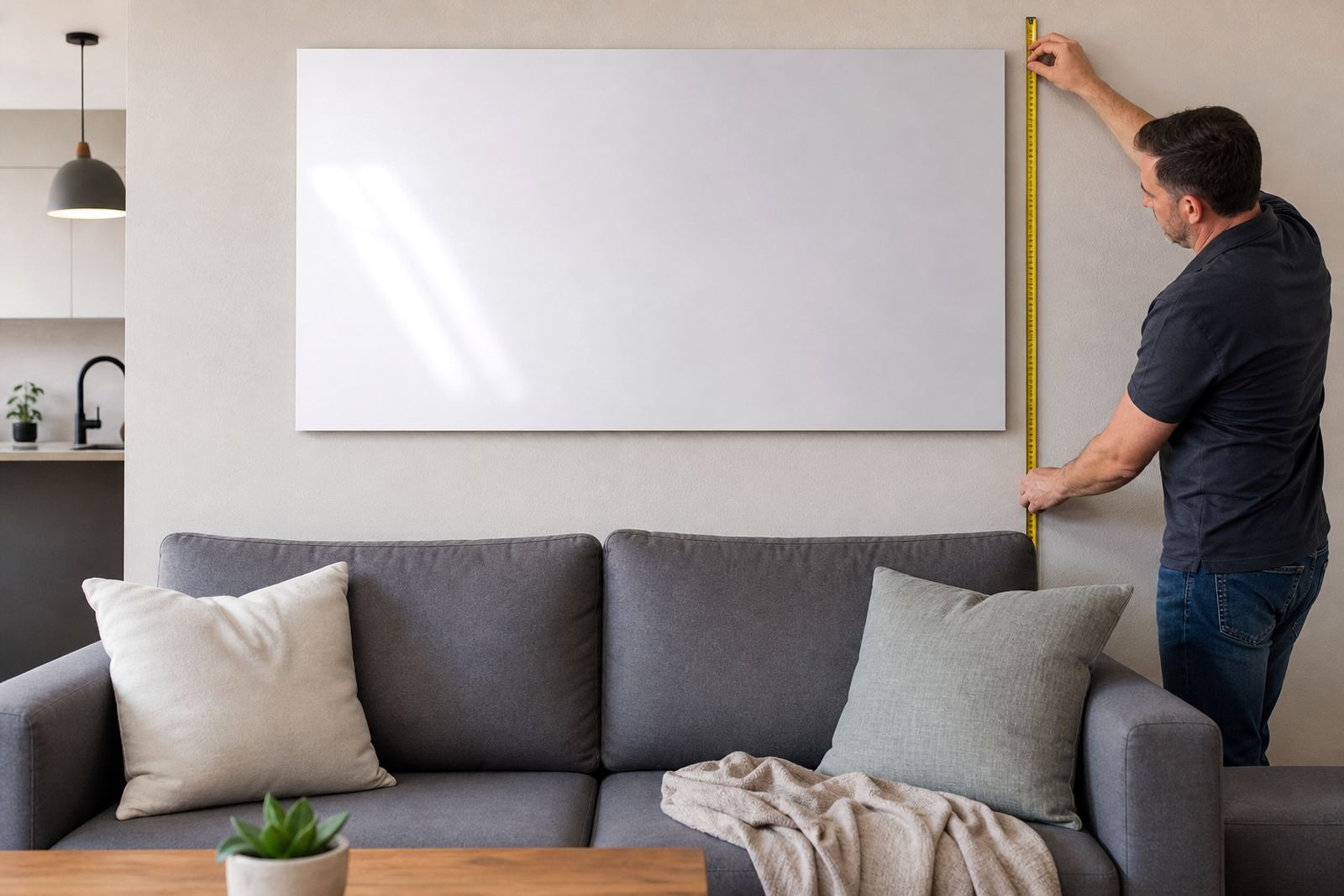
Rail-mounted panels can be fitted with different hanging hardware depending on the wall type and the finished size. Brick walls, drywall, tiled surfaces and office partitions all behave differently, so the fixing method must match the site. The goal is not only to hold the piece up, but to keep it safe and level over time.
For a large panel in Johannesburg, the installation crew may need to account for wall condition, access, and nearby foot traffic. In a busy retail or hospitality setting, extra care is needed so the panel is secure and does not shift with vibration or daily use. Good mounting practice is part of the job, not an afterthought.
- Choose fixings that match the wall material
- Check wall level before marking the hang points
- Allow enough clearance for the rail profile
- Use hanging methods suited to the panel size and weight
A practical example from a Randburg production floor
A photographer in Johannesburg might send a 1.8 metre wide landscape for a corporate reception area. The image could look excellent on a coated aluminium panel, but without rear support the size alone may make handling awkward. A rail mount helps the team move, package and hang the piece with less risk of flex or visible bend. The result is a cleaner presentation once it reaches the wall.
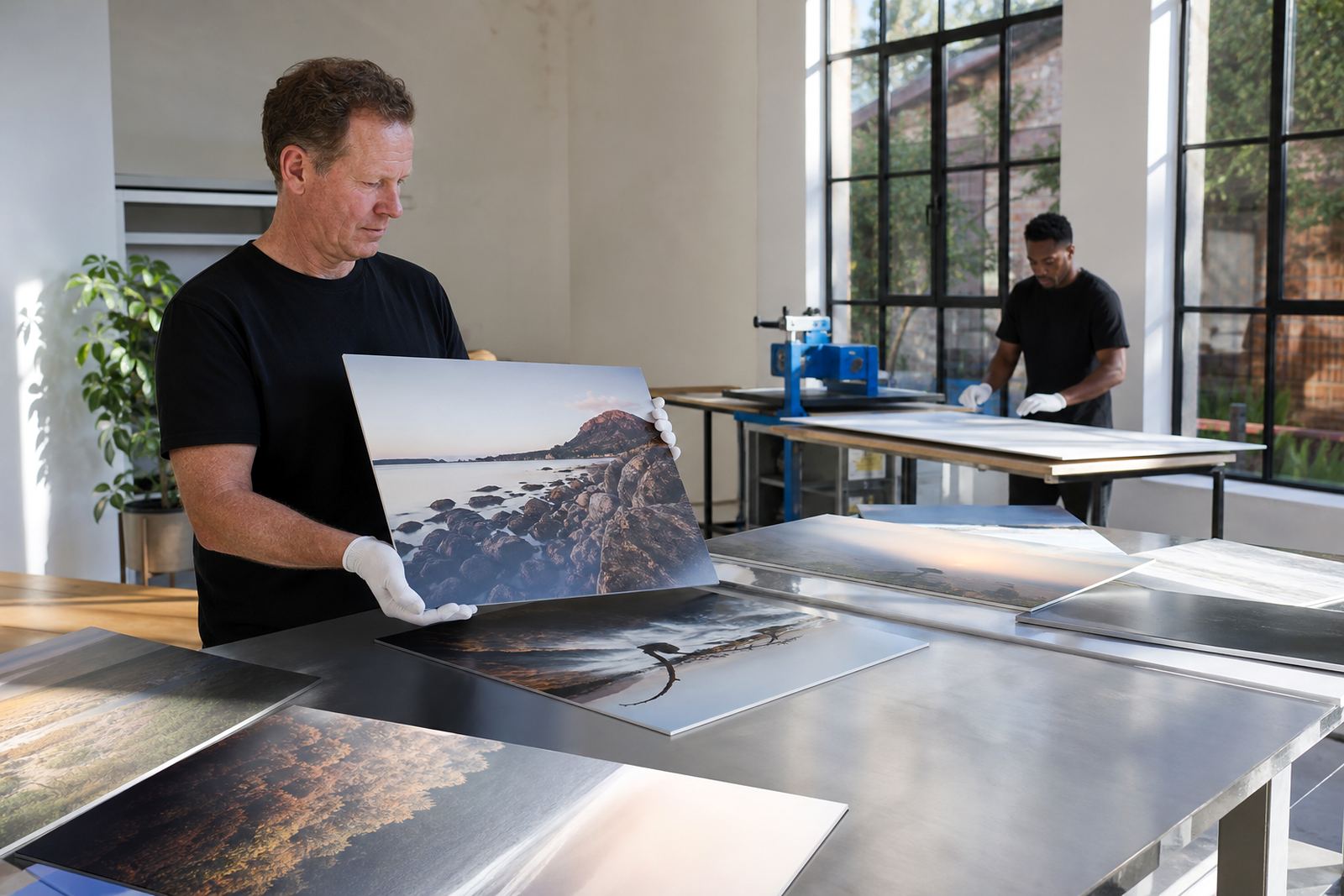
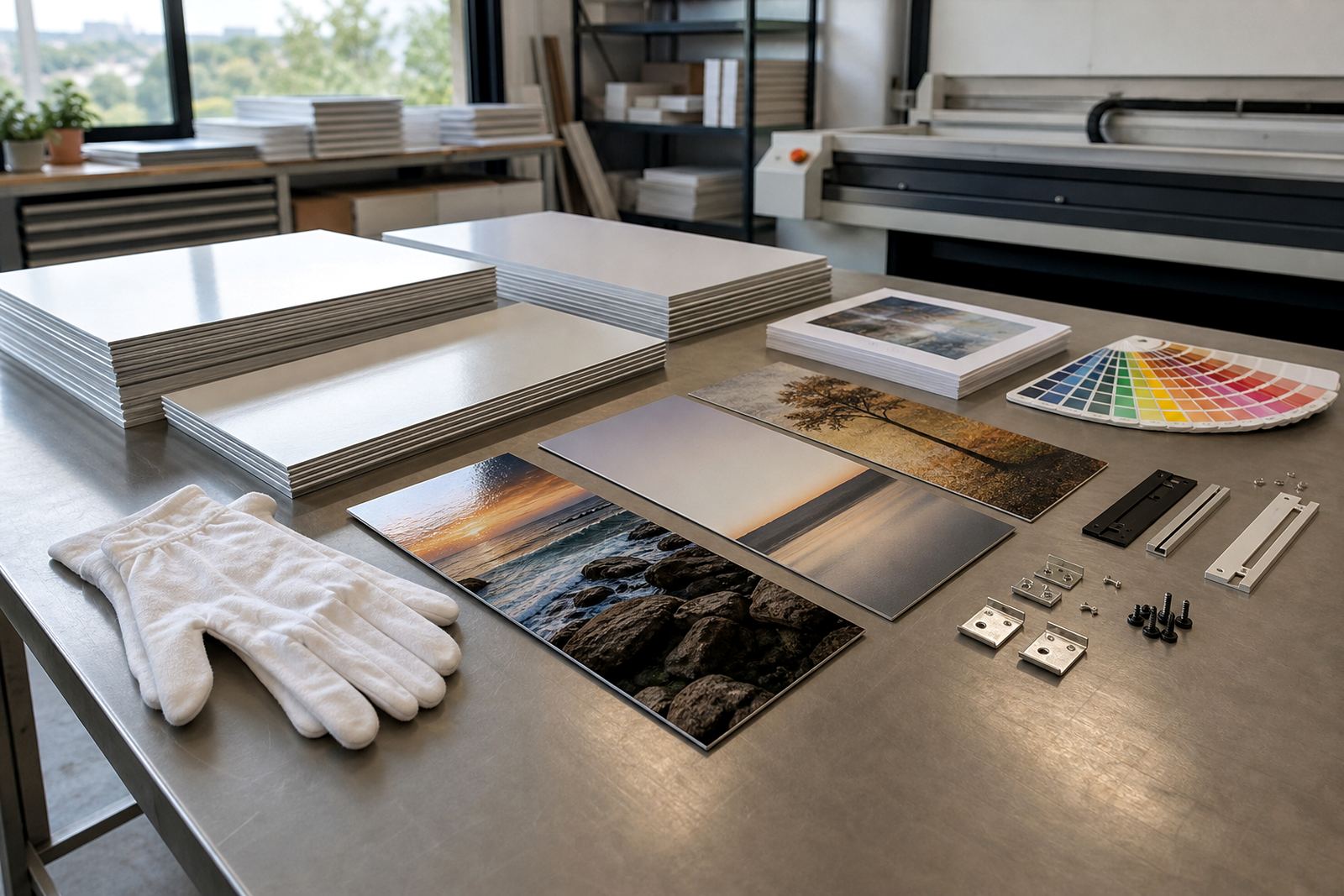
That same logic applies to a series of smaller panels arranged as a set. If the pieces need to line up across a corridor or boardroom wall, consistent backing makes installation easier. At a Randburg production base, the workflow normally includes file checks, colour preparation, finish selection, test panels where needed, and packing for delivery across Johannesburg, Pretoria, Cape Town, Durban and Gqeberha. It is a practical process, not a decorative one, and the rail is part of that practical approach.
When to ask for a rail mount, and when you may not need one
Not every panel needs a rear rail. Smaller pieces, especially those under roughly 600 mm on the longest side, may hang perfectly well with a simpler backing depending on the space and hardware used. But when the artwork gets larger, narrower, or more exposed to handling, a rail becomes worth considering.
Ask for a rail mount when the panel will be:
- Large or long-format
- Moved between sites or installed off-site
- Placed in a public-facing area
- Mounted where wall conditions are uncertain
- Part of a premium presentation where straightness matters
It is also worth planning the mount at the same time as sizing and finish choice, because those decisions affect the final weight, appearance and installation method. For customers across South Africa, especially where the panel needs to travel a long way, the rail adds peace of mind without drawing attention to itself.