
Start with the portrait you want people to stand in front of
A portrait for aluminium should be prepared with the final viewing distance in mind. A gallery wall in Johannesburg, a salon in Sandton or a reception area in Cape Town all call for different treatment, because people may stand close and notice every edge, or view the work from a few metres away.
For head and shoulders portraits, keep the subject large enough that facial detail still reads after trimming and mounting. If the image is tight on the face already, allow enough breathing room around hair, shoulders and hands so the crop does not feel cramped once the panel is cut to size.
- Leave safe margins around the face, especially near the top of the head and the elbows.
- Check that important details are not sitting on the edge of the frame.
- For group portraits, make sure no one is half cut at the outer edges unless that is the intended composition.
SubAlu can help with crop planning before production so the panel format supports the portrait, not fights it.
Skin tone is the part clients notice first
Dye sublimation onto coated aluminium gives strong colour and crisp detail, but skin tones need careful handling. If the file is too warm the portrait can pick up a reddish cast, while overly cool files can leave faces looking pale or grey. A good starting point is a neutral, clean edit that keeps the true complexion intact.
We check portrait files for tonal balance, contrast and highlight detail before print. This matters most where there is bright daylight on cheeks, forehead shine or deep shadow under the chin. A little retouching can help, but heavy edits often look harsh once printed on a glossy or matte panel.
- Watch for blown highlights on foreheads, noses and shoulders.
- Keep shadows soft rather than blocked black.
- Make sure teeth and whites of the eyes do not turn blue or yellow.
- For darker skin tones, preserve texture and keep the midtones open.
In coastal towns like Durban, where humidity can affect storage and handling, files should be prepared well before dispatch so the panel can be printed and packed without delay.
Choose the finish that suits the portrait, not just the room
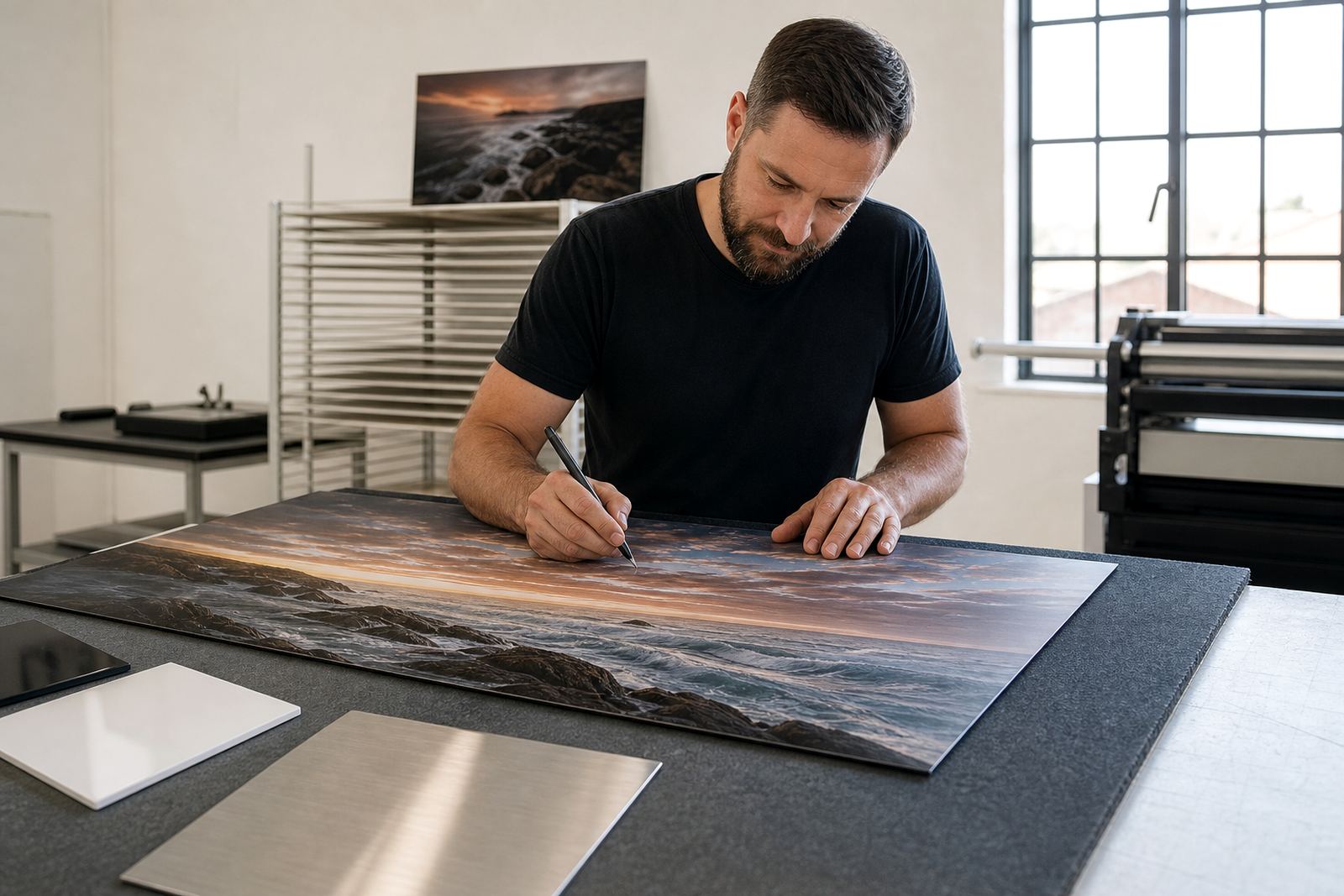
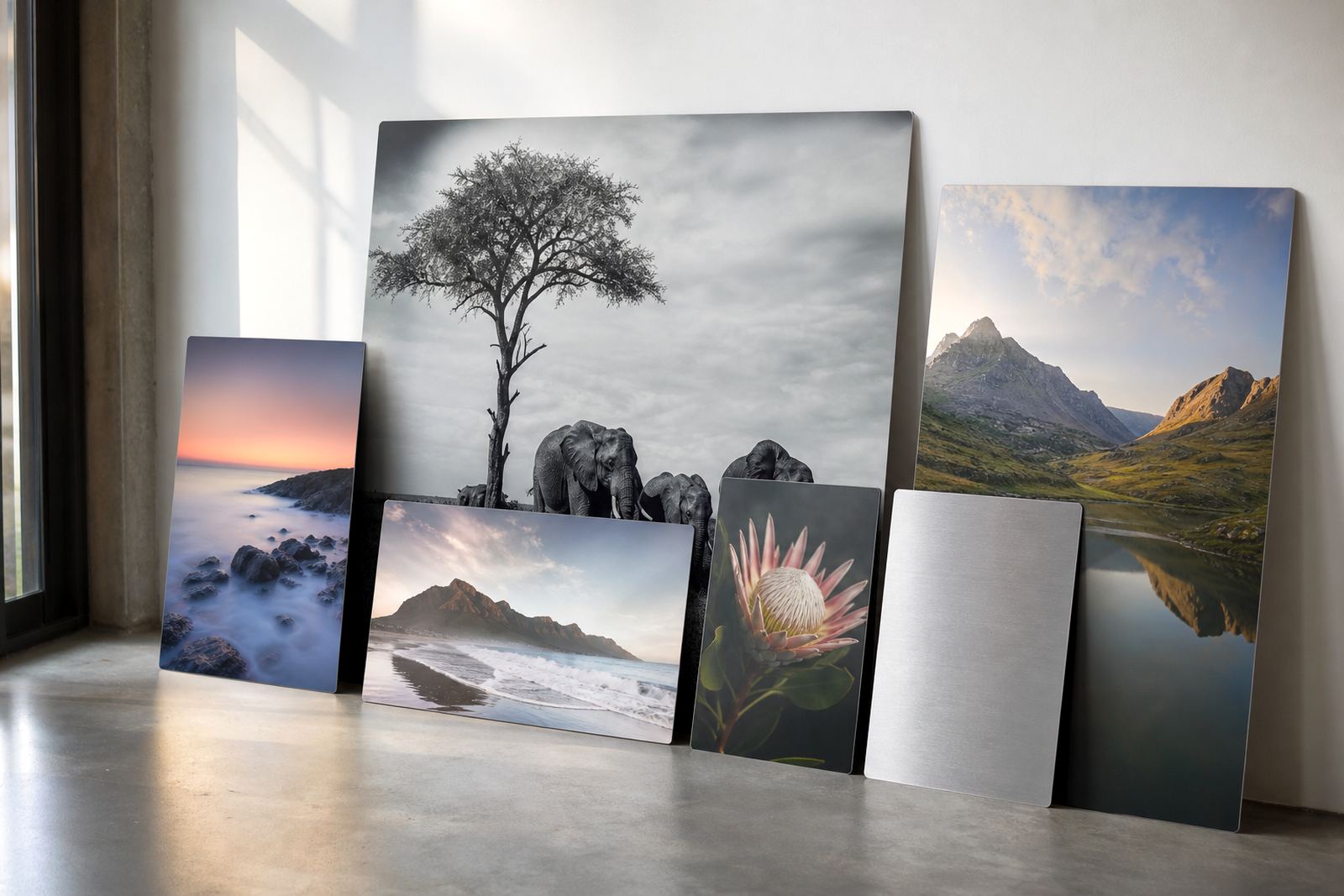
Portraits on aluminium can be produced on gloss, matte, white or brushed finishes, and each one changes the look of the image. Gloss adds punch and reflectivity, which works well for bold colour portraits and studio work. Matte reduces glare and is often better for spaces with strong daylight or overhead lighting. White gives a clean base for accurate colour, while brushed aluminium can be used for a more textured, contemporary result where some metal grain showing through is part of the effect.
The finish should match the image, the wall and the viewing conditions. A portrait hung near a window in Pretoria may need a matte finish to limit reflections, while a corporate portrait wall in an office could suit gloss if the light is controlled. It helps to think about where the panel will live before choosing the surface.
- Gloss for rich colour and high impact under controlled lighting.
- Matte for reduced glare and easier viewing in bright rooms.
- White when you want clean colour reproduction and a bright base.
- Brushed when the design can carry a subtle metallic texture.
Finish selection is part of the file conversation, not an afterthought.
Crop placement decides whether the portrait feels calm or awkward
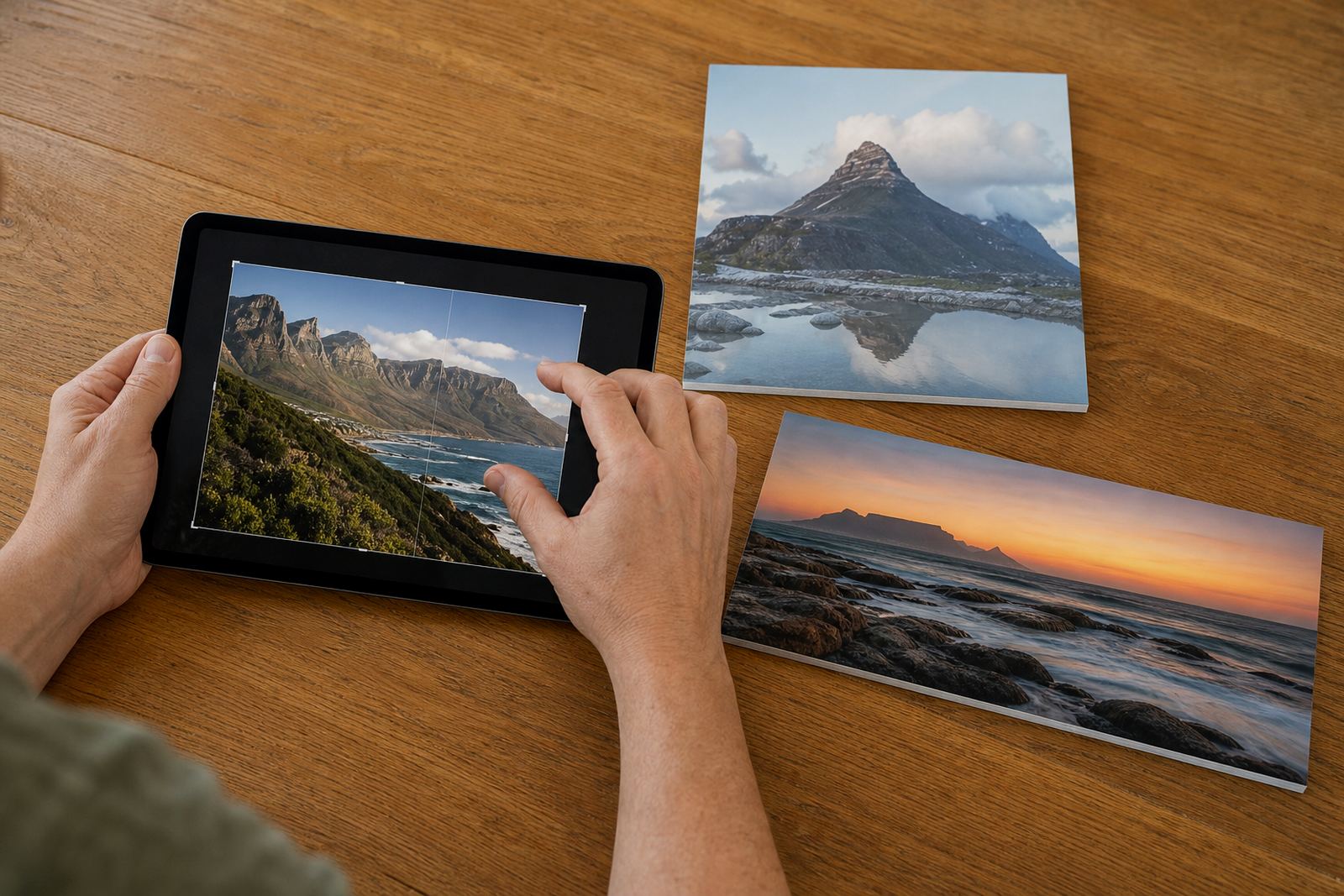
Crop placement is one of the easiest places to lose a good portrait. If the eyes sit too high, the image can feel top heavy. If the chin is too close to the bottom edge, the face may feel pressed into the frame. Balanced placement gives the portrait room to breathe and makes the panel easier to live with on a wall.
When checking a file, look at how the shoulders sit, whether the subject is facing into the open space, and how much negative space sits above the head. A portrait with a little lead room usually feels calmer. For formal business portraits, straight alignment and clean borders matter even more.
For families and personal work, the crop can be more relaxed, but the same rule applies: the frame should support the expression. A strong crop tells the viewer where to look, and on aluminium every line is sharp, so a weak crop shows quickly.
File checks save you from avoidable print trouble
Portrait files need enough resolution for the final panel size. Low resolution might look acceptable on a screen, but once printed on coated aluminium it can soften facial detail, hair texture and clothing detail. As a rule, send the highest quality version you have, and avoid files that have been repeatedly compressed through messaging apps.
Colour preparation matters too. Screens can mislead, especially if your monitor is too bright or too cool. If the portrait is meant for a client in Johannesburg, Cape Town or Gqeberha, make sure the file has been checked before dispatch so the printed result matches the intention as closely as possible.
- Send the original high resolution file where possible.
- Avoid screenshots and compressed forwards.
- Keep shadows and highlights open during editing.
- Check that the portrait is correctly rotated and not missing metadata that affects placement.
SubAlu offers file checks, resolution review and colour preparation so the final panel prints cleanly the first time.
Mounting and packing should match the weight of the work
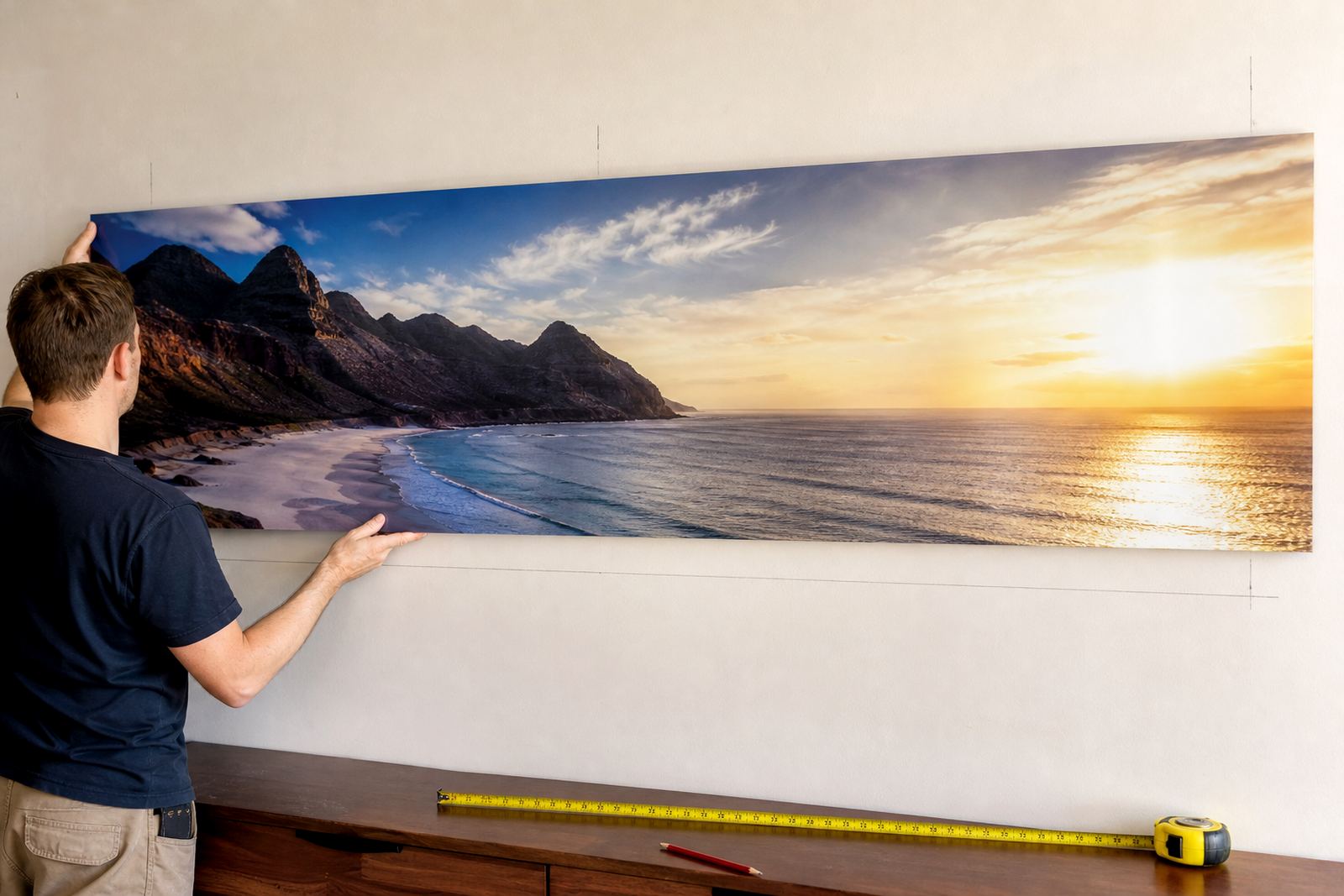
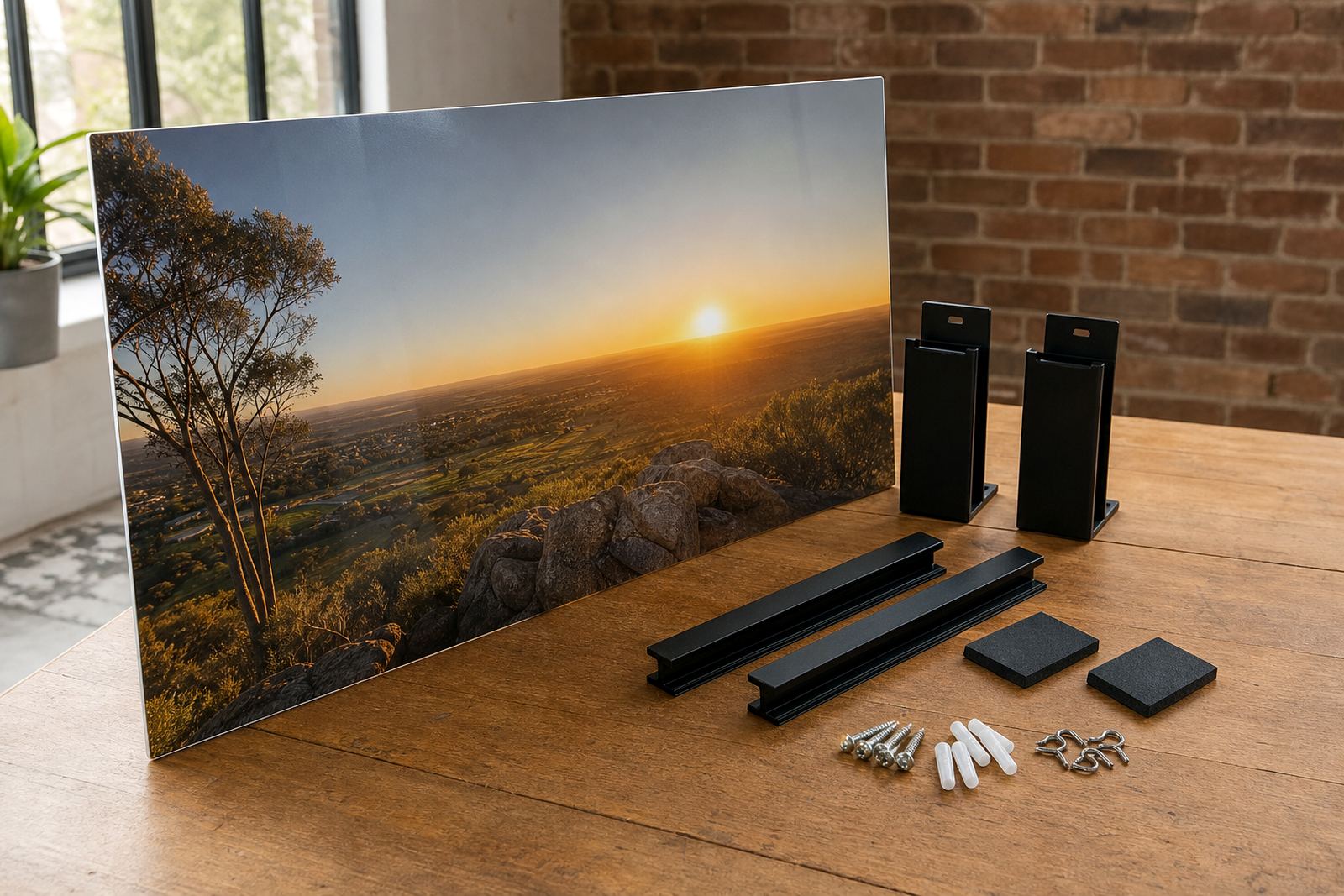
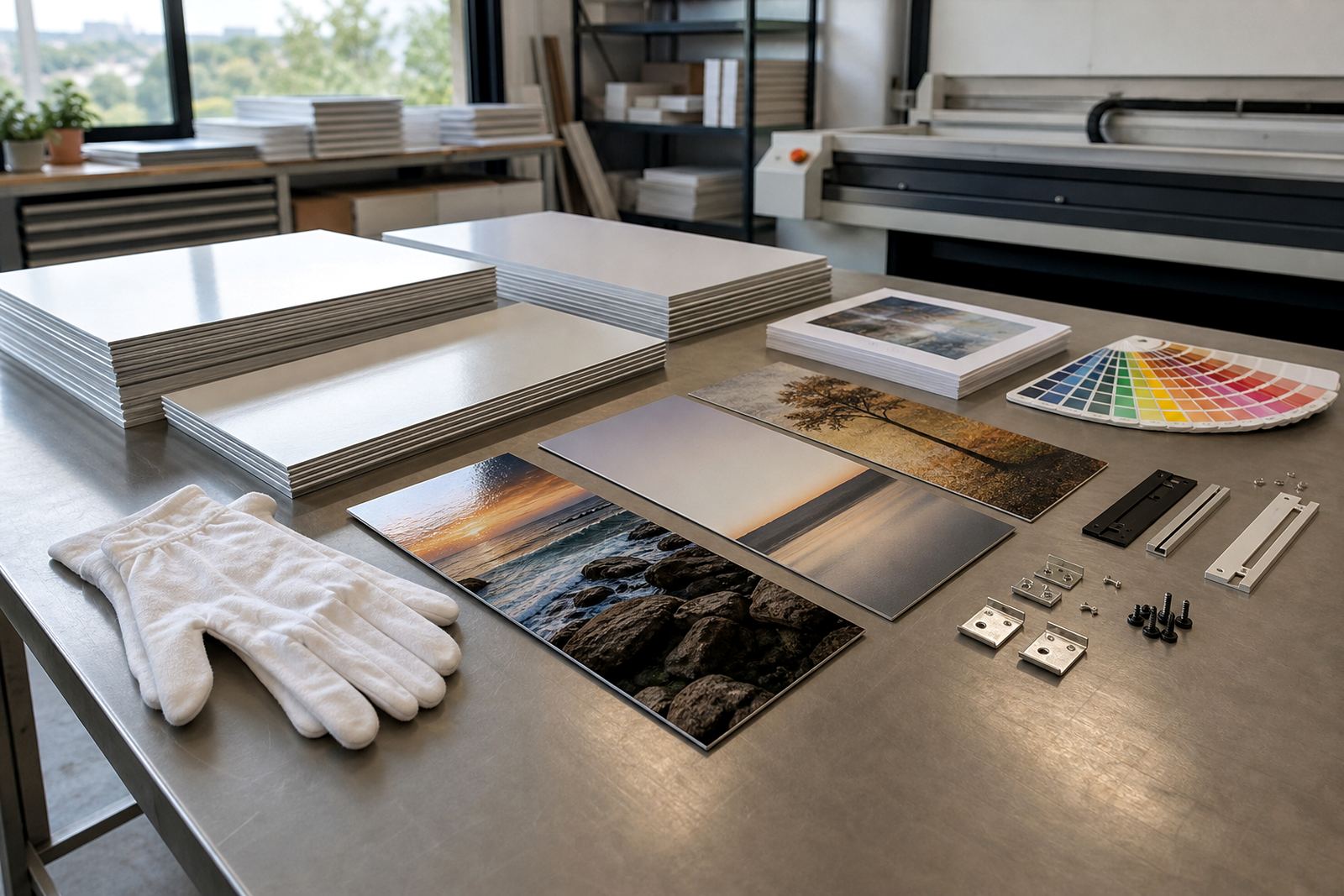
Aluminium panels are neat and modern, but they still need correct hanging hardware and safe packing. A portrait panel that is not mounted properly can sit unevenly on the wall or shift after installation. For larger pieces, the mounting option should suit both the panel size and the wall material.
For businesses ordering portraits for offices or reception areas, ask for the hanging method to be planned alongside the size. If the wall is uneven, if there is regular cleaning, or if the work is going into a public area, that affects the hardware choice. Packing is just as important, especially for deliveries to Durban or long-distance dispatch to Cape Town and Pretoria.
- Confirm whether the panel will hang flush or with a small stand-off.
- Check wall type before choosing the hardware.
- For larger panels, ask for extra support where needed.
- Keep the panel in its packaging until the wall is ready.
Good mounting and packing protect the print, but they also protect the sharp edges and finish.
A Randburg portrait order that gets the details right
A photographer in Randburg preparing a studio portrait for a client in Midrand may have a strong file, but the print only works if the skin tone, crop and finish line up. If the face was shot under mixed light, the colour may need correction before it is sent to production. If the image is for a brushed finish, the composition should allow for a slightly different visual effect than a pure white panel. Small choices stack up.
That is why portrait prep is worth a bit of time before ordering. A clear file, a considered crop and the right finish can turn a good portrait into a panel that holds attention in a home, gallery or office. When the work is meant to last, the preparation must be steady, not rushed.
If you are sending portraits to SubAlu, make sure you own the image rights or have permission to use the images before submission. That keeps the process clean from the start and avoids trouble later on.