
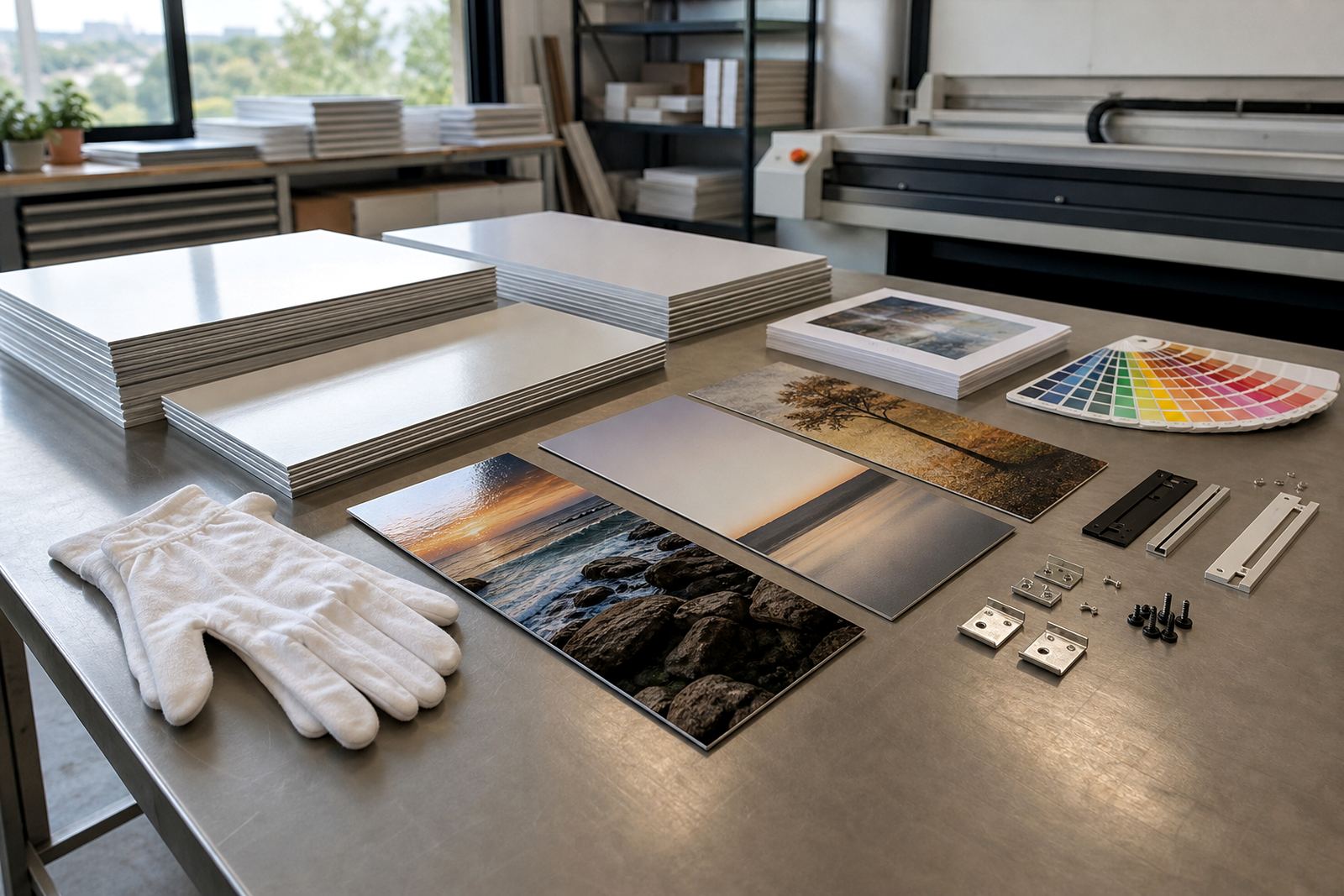
Why the hanger matters more than most people think
Dye sublimation onto coated aluminium gives a crisp, colour-rich finish, but the panel is only part of the job. The hanging system has to suit the size of the piece, the wall type and how the room is used. A light panel for a passage has different needs from a 1200 x 1800 mm feature piece in a boardroom.
On larger prints, poor support can leave the panel sitting proud on one side or twisting over time. In Randburg, we often see offices with dry interior air and strong sun through glazing, while coastal clients in Cape Town or Durban deal with humidity and salt in the air. The panel itself is made for print stability, but the wall fixing still has to be chosen properly.
- Small panels can often use a simple flush hanger.
- Medium panels usually do better with paired fixings for balance.
- Large panels need a system that spreads the load evenly.
Flush hangers for a clean, low-profile finish
Flush hangers sit close to the back of the panel and keep the print neat against the wall. They are a good fit for smaller to medium aluminium panels where the client wants a tidy look with very little gap. This approach works well in homes, receptions and gallery walls where the image should feel like it is floating just off the surface.
Flush hardware suits pieces that will not be moved often. It is also useful where the wall space is tight and the panel must not protrude too far into a walkway. For white or gloss panels, the low profile helps the image take centre stage. If the wall is not perfectly level, though, the install needs a careful check or the panel can appear slightly skew.
- Best for smaller artwork, family images and office pieces.
- Good where a clean and simple look is wanted.
- Not the first choice for very large panels or rough walls.
Standoff mounts when the wall should also be part of the look
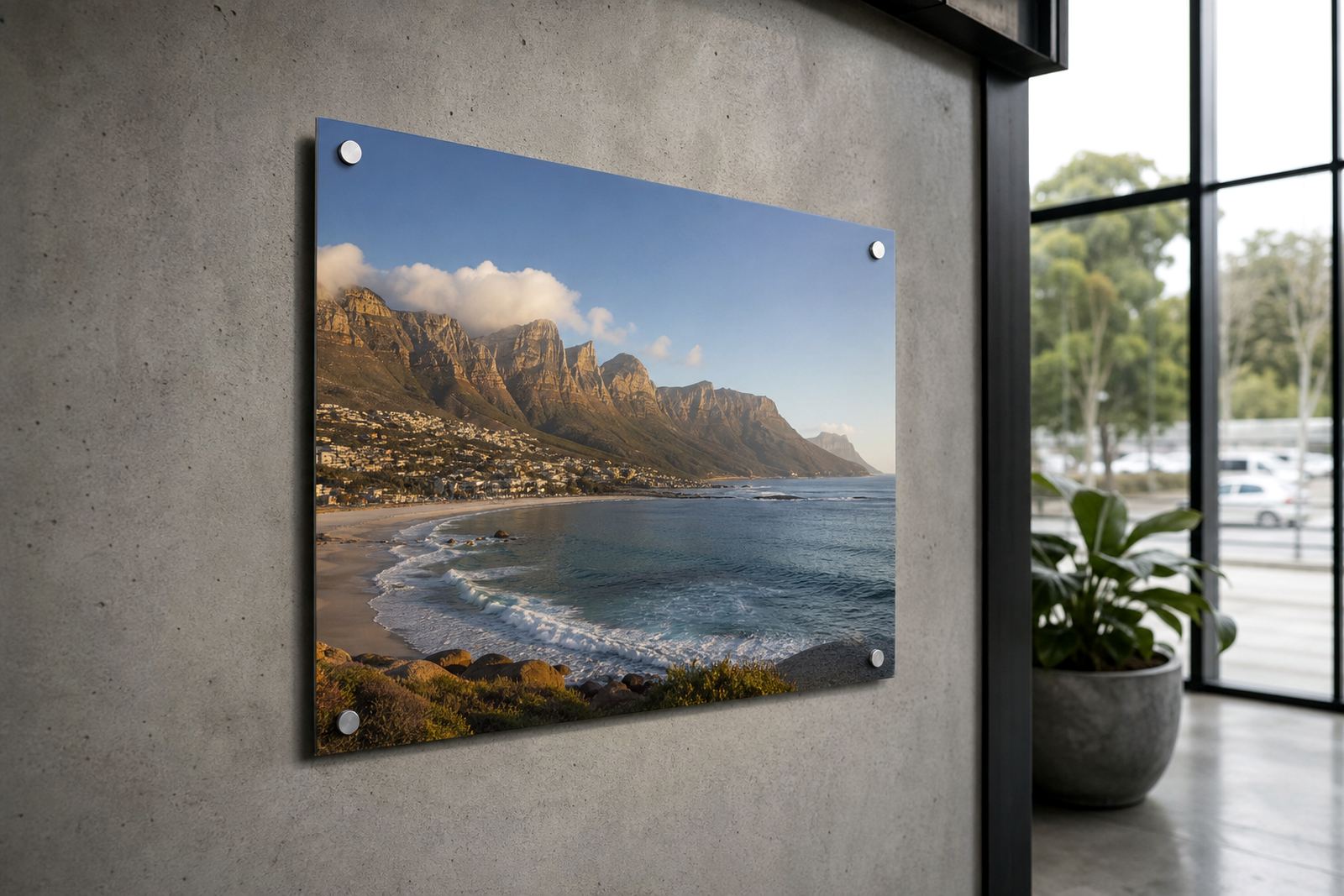
Standoff mounts use spacers that hold the panel away from the wall. They are useful when a client wants a more architectural feel, especially on brushed aluminium panels where the edge treatment matters. The small shadow gap gives the print more presence and can suit boardrooms, hotel lobbies and reception areas.
This option is popular for businesses that want a display piece to feel deliberate rather than decorative. It also allows the panel to sit slightly proud of the wall, which can help in spaces with textured paint or small surface imperfections. The fixing points must be measured accurately, because a mismatch will show immediately. Ayesha from client services will often flag this during file and layout checks before production moves ahead.
- Useful for branded walls, awards areas and contemporary interiors.
- Works well with brushed finishes where the metal texture forms part of the image.
- Needs accurate drilling and a solid wall surface.
Float mounts and hidden frames for bigger jobs
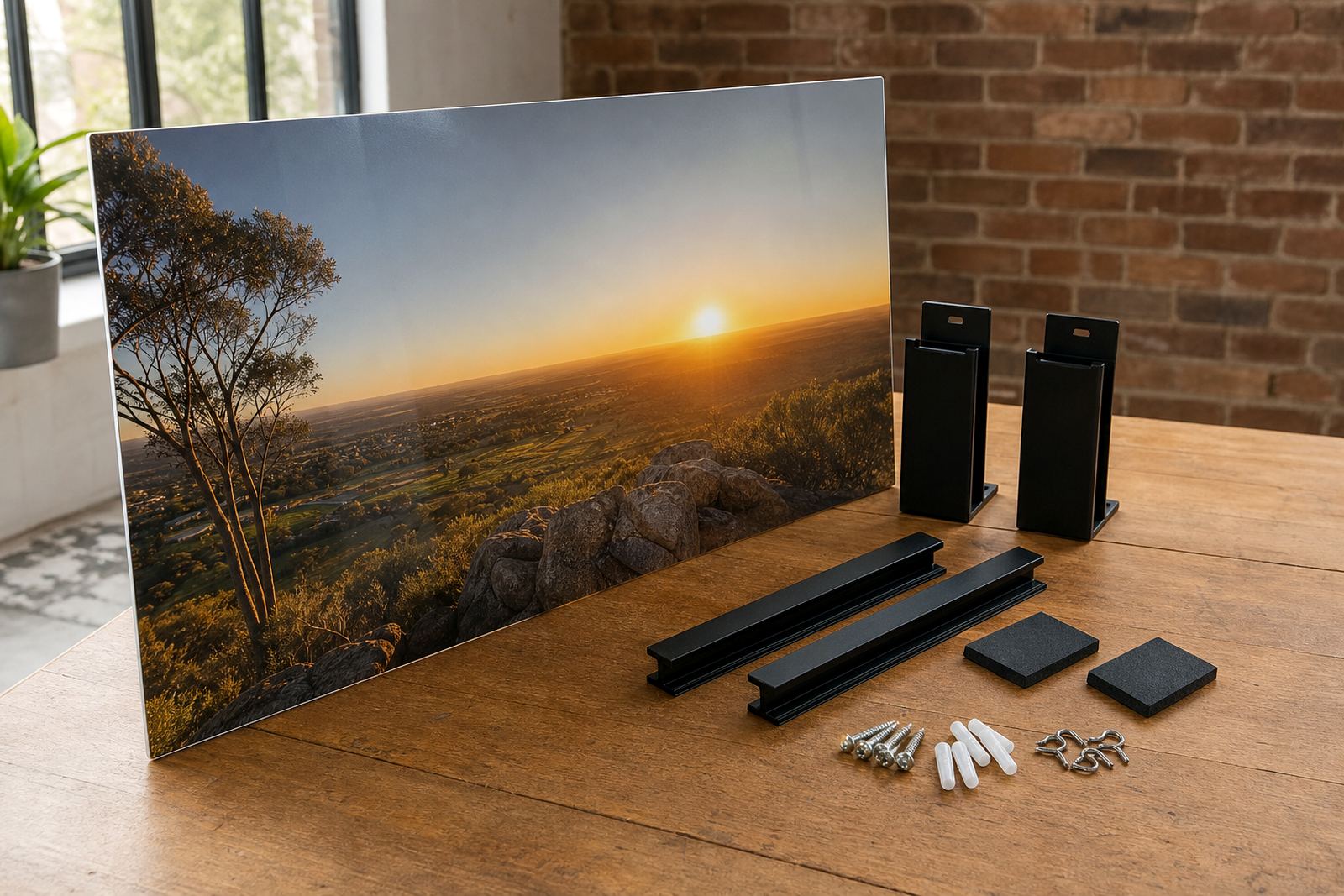
For larger aluminium photo panels, a float mount or hidden frame can give extra support while keeping the front view uncluttered. The panel appears to hover off the wall, but the backing helps with stability and reduces flex on wide formats. This is a strong option for panoramic prints, exhibition pieces and long corridor displays.
Where the panel is going into a commercial space, hidden framing can also make removal easier for cleaning or relocation. It is a practical choice for businesses with changing office layouts, or for venues that need to swap displays between events.
- Good for wide panels and repeated handling.
- Helps keep the print flat over time.
- Often better for offices, galleries and high use spaces.
Choosing hardware for the wall you actually have
Hardware should match the wall, not only the artwork. Brick, concrete, drywall and partition systems each call for different fixings. A panel that feels fine on a solid brick wall in Pretoria may not be safe on a light internal partition in a rented office in Sandton. If the wall is weak, the best print in the world will still be a problem.
Before mounting, it helps to check the wall surface, the panel size and how often the piece may need to come down. If the panel is going into a coastal home in Durban, corrosion resistance matters too, especially near sliding doors and open verandas. We also remind clients that they must own, or have rights to, the images they send for printing. That protects everyone and keeps the job straightforward.
- Brick and concrete can handle stronger anchors.
- Drywall often needs specialised toggles or spreader fixings.
- Coastal locations need hardware that resists rust and tarnish.
When finish and hardware should be decided together
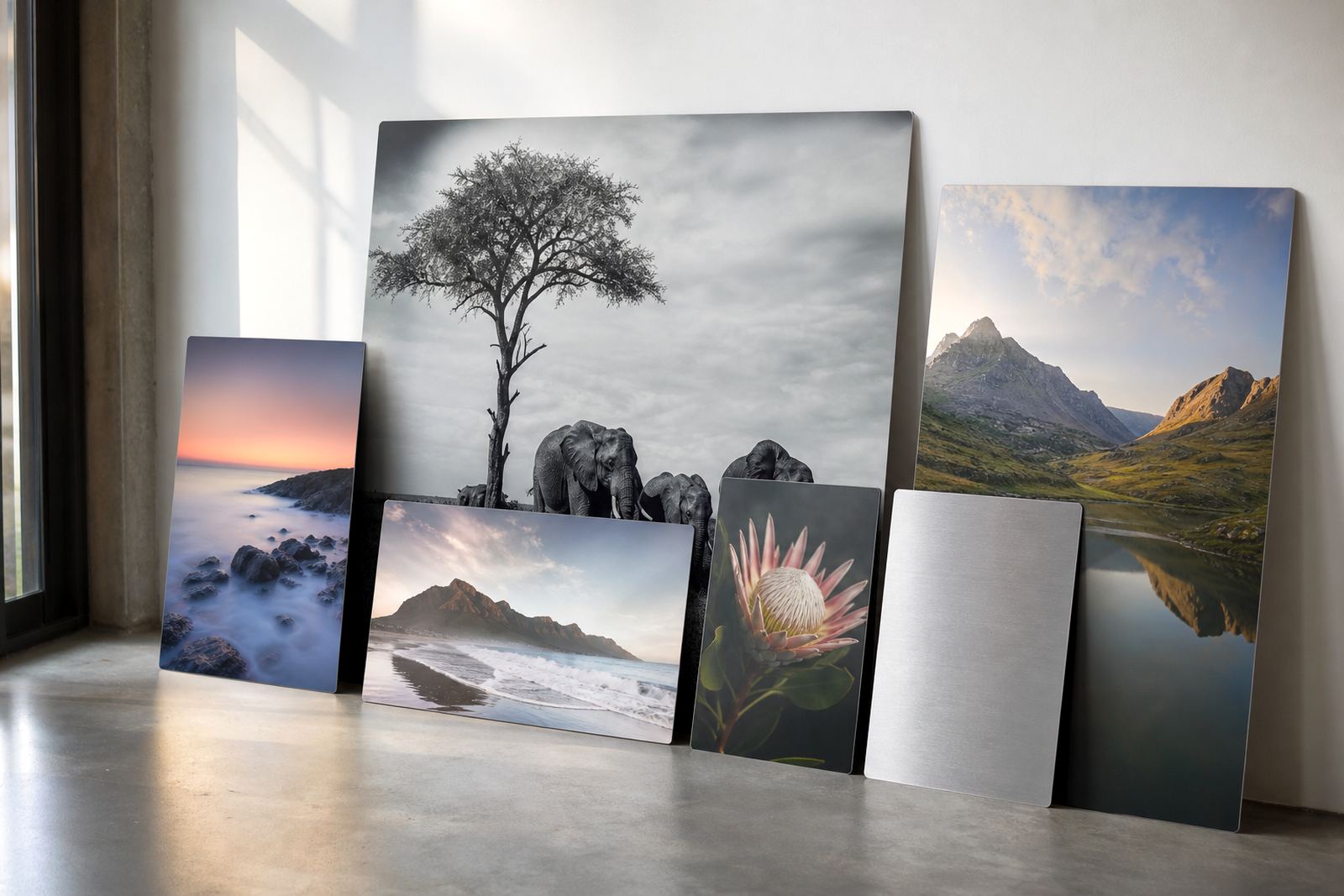
Finish selection changes how hardware behaves visually. A matte white panel can hide a little reflection, while gloss needs careful light placement so it does not catch overhead fittings. Brushed aluminium works well with visible standoffs, and white coated panels are often chosen when the image needs strong colour and a clean border.
That is why finish selection, crop planning and mounting options should be considered as one decision. A test panel can be useful if there is doubt about glare or edge appearance. Johan in colour and prepress often checks whether the file has enough detail for the requested size, because a panel that is too large for the source image can lose sharpness no matter how good the hanger is.
- Gloss shows more reflection and needs better light control.
- Matte is easier in bright offices and public areas.
- Brushed suits industrial or architectural interiors.
A Randburg example that shows the difference
A marketing office in Randburg wanted two aluminium panels for a client wall, one for a reception space and one for a boardroom. The reception piece was a smaller white panel with flush hangers so it sat tight to the wall. The boardroom panel was larger and used a hidden support frame so it stayed level and could be lifted off later if the room layout changed.
That mix kept the overall look consistent but matched the practical use of each space. Lerato in production would usually check the panel edges and Sibusiso would confirm the mounting points before packing. Nicole then arranges delivery so the hardware and panel arrive together, which avoids delays when a client is working to a handover date.
For many South African spaces, the best hanging system is the one that respects the wall, the room and the way the print will be used. A neat hanger is not just a small detail, it is part of keeping the piece straight, safe and presentable for years.