
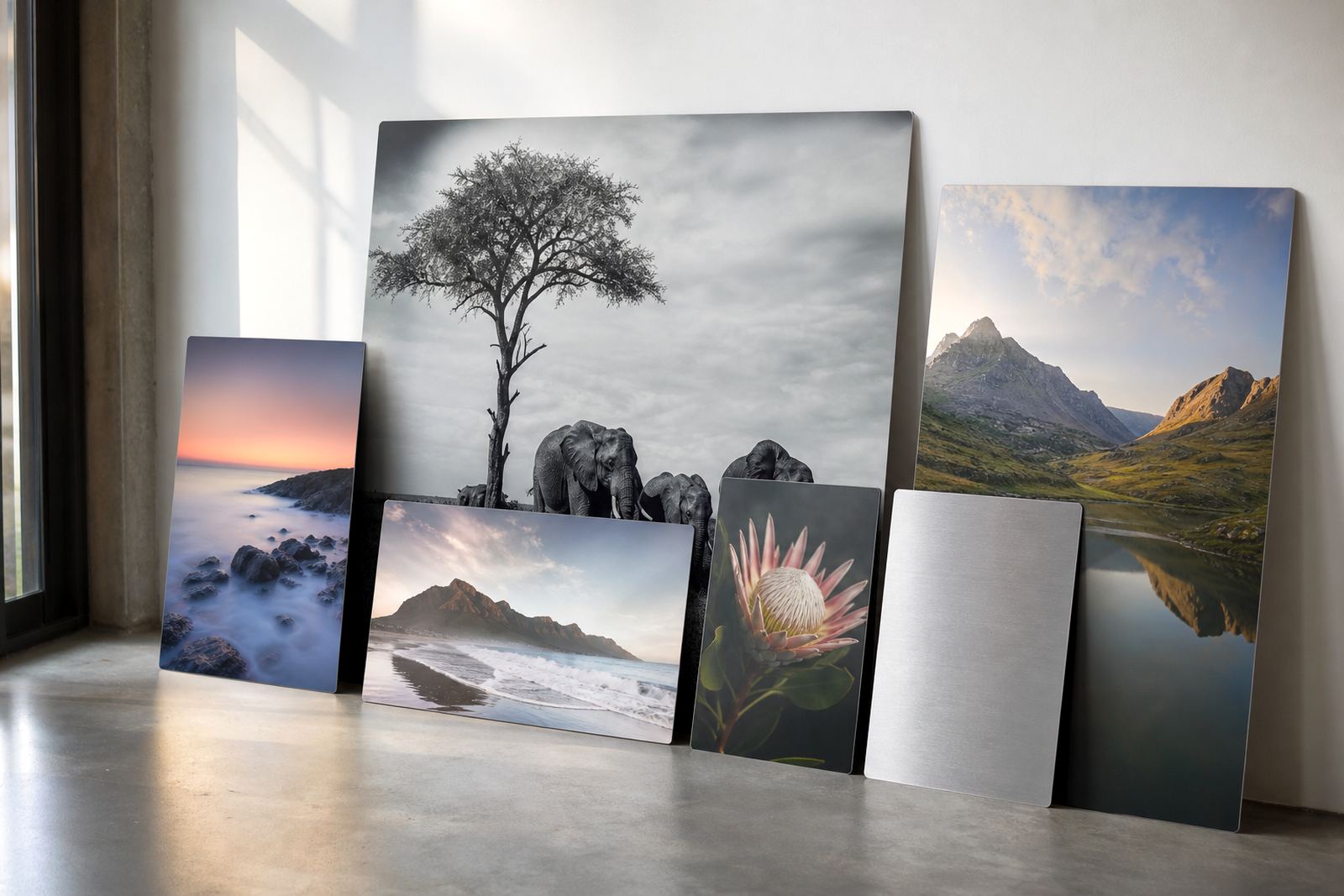
Why the crop matters more on a hard surface
With dye sublimation onto coated aluminium, the print reads differently from canvas or paper. The image sits on a firm panel, so edges feel sharper and the overall composition can look more direct. That is why cropping is not only about trimming a file to size, it is about deciding what should lead the eye first.
For photographers, artists and businesses, this matters when the work is going into a reception area, boardroom or home wall. A tight crop can create energy. A wider crop can give breathing space. If the room is already busy, the image often needs a cleaner frame and less visual clutter.
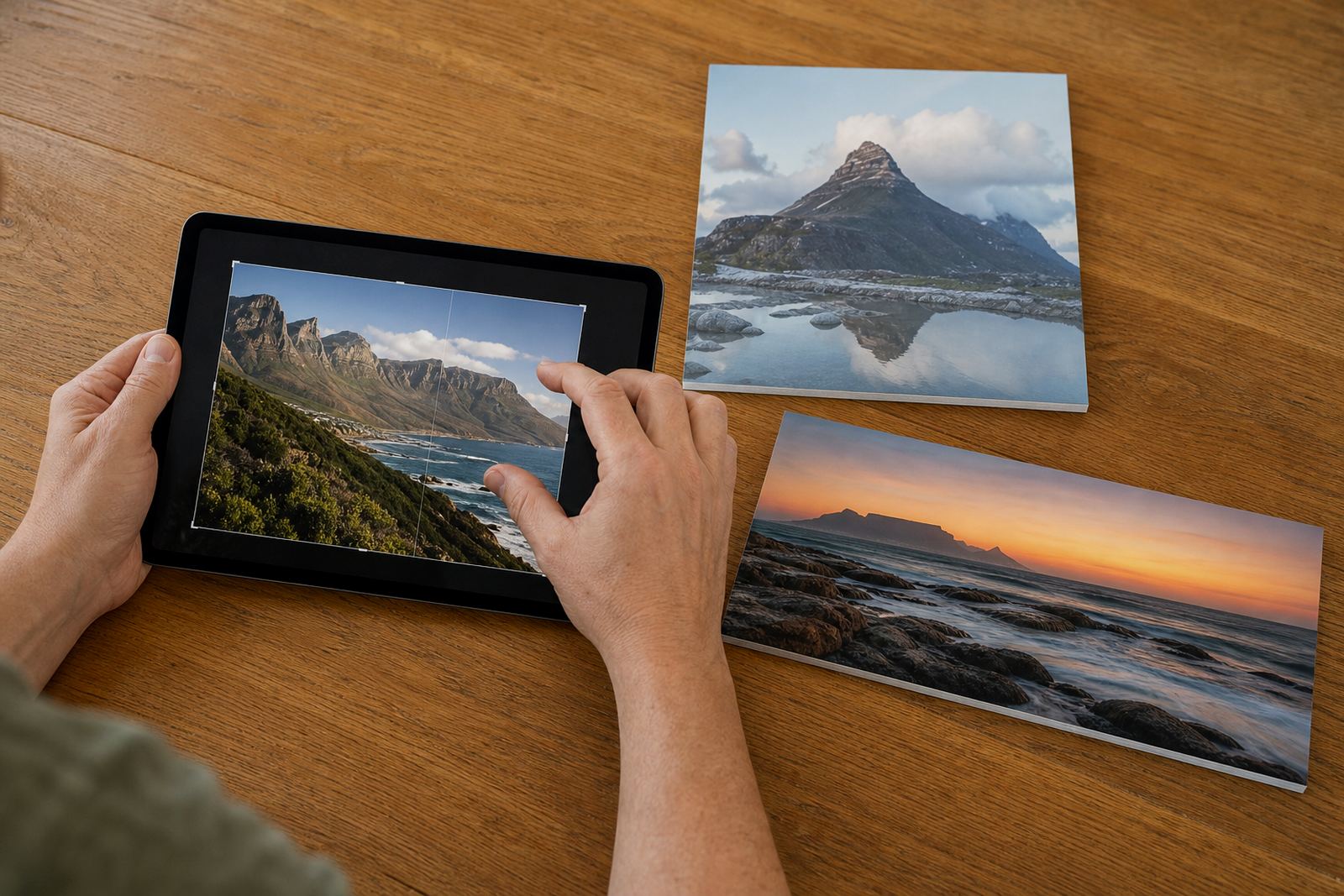
In Randburg and across Johannesburg, we often see corporate clients choose panoramic crops for long passage walls, while portrait images work better in narrow entry spaces. The panel shape should support the image, not fight it.
Match the picture to the wall before you trim the file
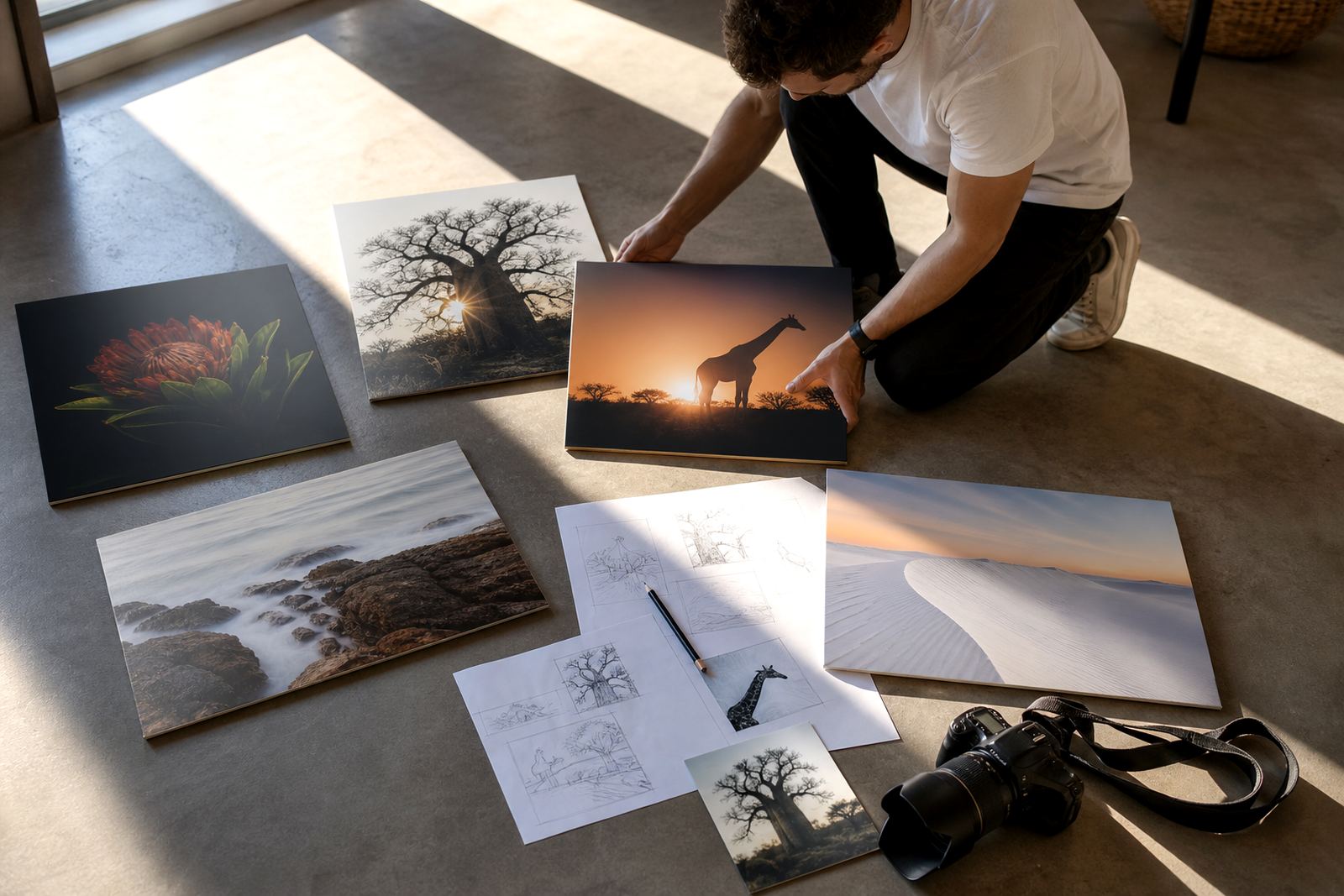
Start with the wall, not the camera file. Measure the available area, note nearby doors, power points and furniture heights, then decide how much of the scene should stay in view. A mountain scene may need width. A head and shoulders portrait may need more vertical room. If the subject is too close to the edge, the finished panel can feel cramped.
For many clients, a test crop on screen saves time later. It helps show whether a skyline is better as one long panel or split into two or three aligned panels. In a compact office in Sandton, for example, a wide image above a couch can feel lighter if the crop removes empty floor space and keeps the horizon at eye level.
- Measure the wall and mark the centre line before choosing a crop
- Keep important faces, text and key detail away from the panel edge
- Check how the image reads from 2 metres and again from across the room
- Leave space for hanging hardware and any visible standoff
The finish changes how far you can crop
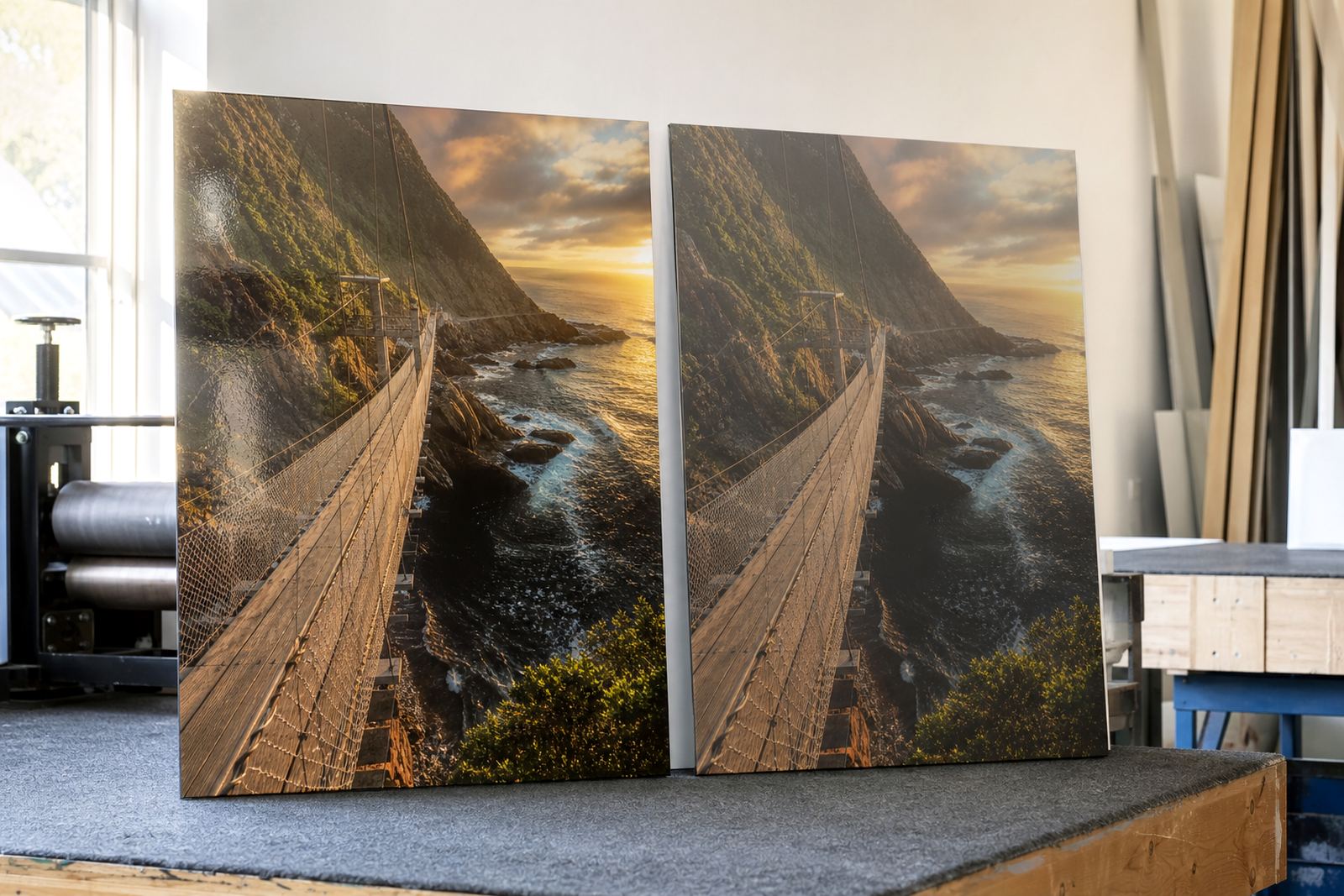
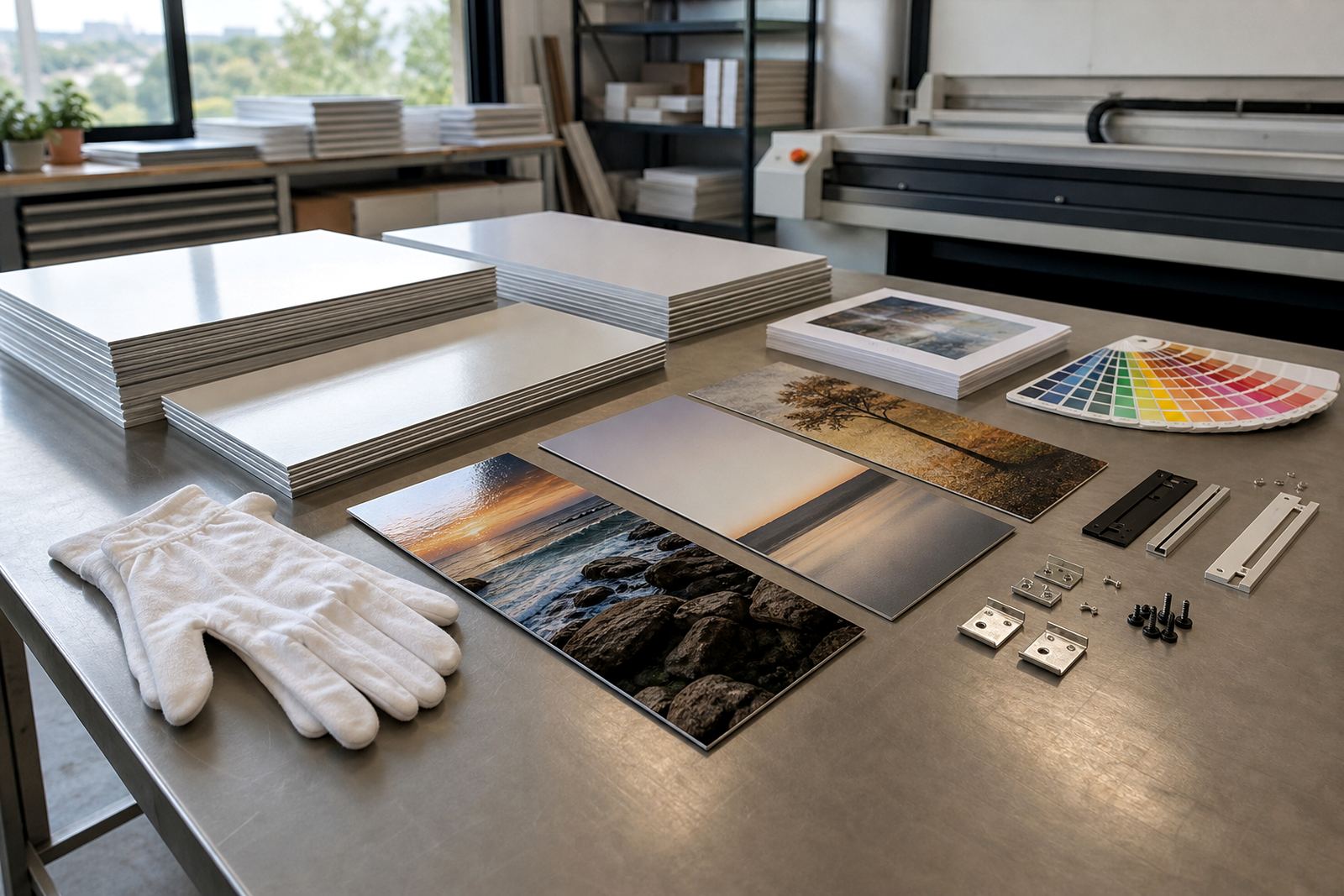
Gloss, matte, white and brushed finishes all handle the same image differently. Gloss gives strong colour and a bold surface, which suits images with clear contrast and clean framing. Matte reduces glare and is useful in bright offices or rooms with direct light. White panels suit full colour work where the print needs a bright base. Brushed aluminium can work well when the metal texture is meant to show through lighter areas of the picture.
The finish can also affect cropping decisions. On brushed panels, fine detail near the edges may need extra care because the texture can alter how light moves across the image. On gloss, a very tight crop may intensify reflections if the panel is placed near windows or under strong downlights. In coastal towns, where humidity can be a factor, the right finish and proper sealing are worth considering before the file is locked in.
If a client in Durban sends a family photo for a lounge wall, we will usually look at both crop and finish together. The same picture can feel warmer on matte and more striking on gloss, depending on the room.
Cropping for multi panel layouts needs a steady hand
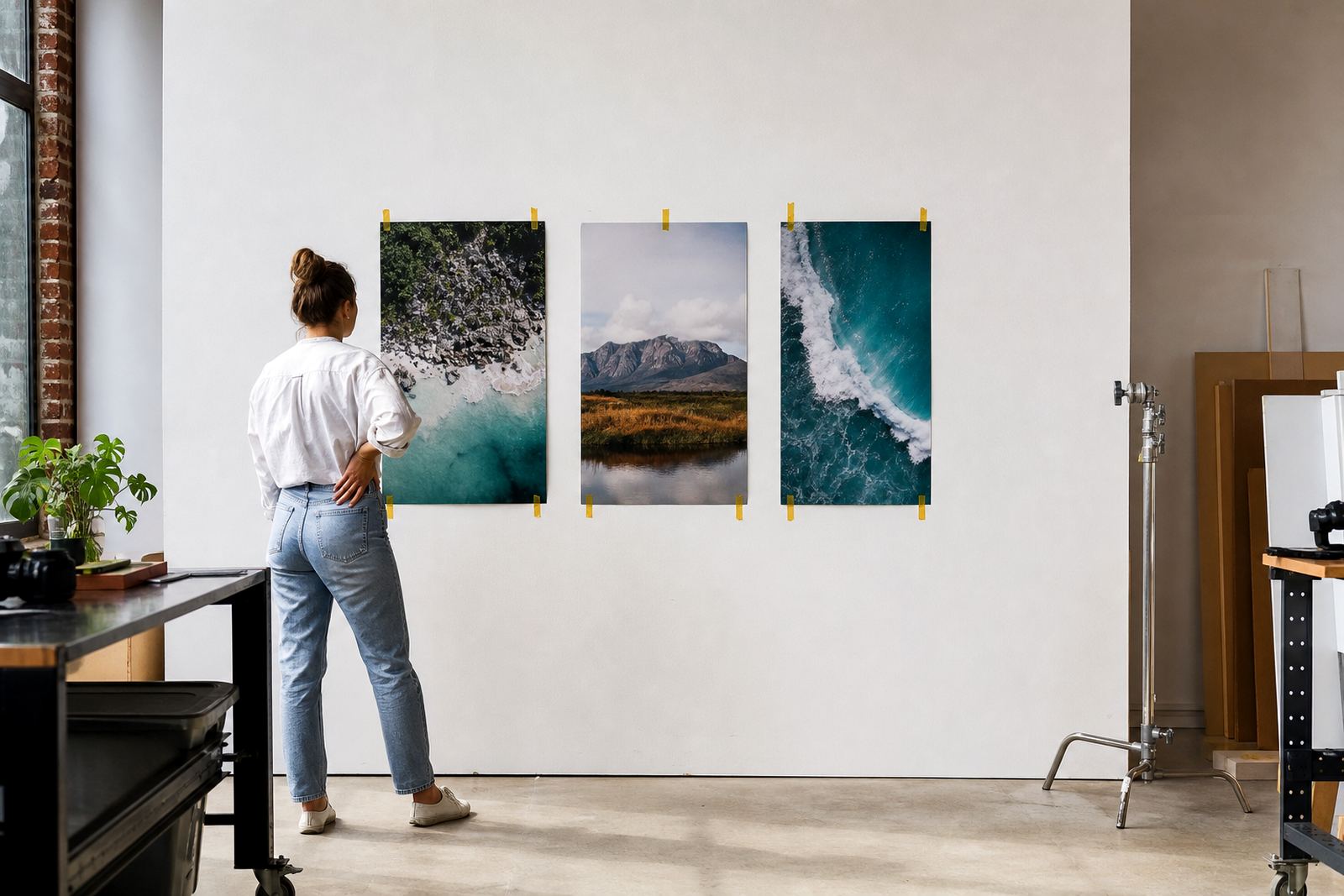
Multi panel layouts need more than a pretty image, they need rhythm. A single photo split across two or three panels must keep important lines flowing from one panel to the next. If the crop lands badly, the eye jumps instead of moving naturally across the wall.
That is why it helps to plan the crop before deciding where each break will sit. A horizon line should not land awkwardly in the middle of a split unless that is the intended effect. A face should never be cut by a panel join. For business interiors, even a logo or product shot needs enough margin so it still reads clearly from a distance.
- Use wider crops for long wall runs and reception counters
- Avoid placing key detail across a join unless the layout supports it
- Leave equal visual weight on each panel where possible
- Check that the full set hangs level before final packing and delivery
A Randburg example: from phone photo to boardroom wall
A client in Randburg recently wanted a large image for a new boardroom wall. The original file came from a phone and included a lot of empty foreground. The room itself was long and narrow, with a meeting table running close to the wall. Instead of using the image exactly as sent, the crop was adjusted to bring the building lines higher in frame and remove dead space at the bottom.
That small change made the composition feel calmer and more grounded. The panel was produced on coated aluminium with a matte finish so the overhead lights would not throw glare back into the room. Hanging hardware was selected to suit the wall, and the final panel sat neatly above the furniture without overpowering the space.
This is the part many people miss. Cropping is not about making the image bigger by force. It is about making the picture fit the place where it will live.
Files that crop well usually arrive with a bit of breathing room
Images that work best on aluminium panels often have enough resolution, a clean focal point and some extra space around the subject. That breathing room allows the crop to adjust for the final size without damaging quality. If the file is too small, the crop may have to be tighter than planned, and that can soften detail or cut into important parts of the image.
Before production, we review file size, image quality and the intended panel dimensions. Customers must own the images they send or have the rights to use them. If a file needs correction, colour preparation or re framing, it is better to do that early than after printing. In Johannesburg and Pretoria especially, where offices often want quick turnarounds, a clean file saves a lot of back and forth.
Good cropping gives the wall a clear voice. It makes the panel feel deliberate, not improvised.
When the crop is right, the room settles
There is a practical kind of satisfaction in seeing an image sit properly on a wall. The subject feels balanced, the edges make sense, and the room stops arguing with the artwork. That is the value of cropping with purpose. It is not only a technical step, it is part of how the final piece is read in a home, gallery or office.
For clients across Cape Town, Durban, Pretoria and Gqeberha, the best results usually come from treating the crop as part of the design, not an afterthought. Once the wall size, finish and mounting method are all considered, the image has a much better chance of landing exactly where it should.
And when the wall needs to carry a lot of attention, the crop can do more work than people expect.