
Why a wide frame can make a scene feel thin
A panorama works best when the image has room to breathe. The trouble starts when a picture is stretched too far just to fit a long panel, because important detail gets pushed out or the scene starts to feel empty in the middle. For that reason we look at the full sweep of the image before any sizing is set.
In practice, strong panoramic work often comes from coastlines, city skylines, open farms, mountain passes and interior spaces shot with care. The composition needs anchor points, such as a line of trees, a pier, a horizon or a building edge, so the eye can travel across the panel without getting lost. A wide format can be striking, but only if the image has enough structure to carry it.
Pixels, crop ratios and the part people forget to check
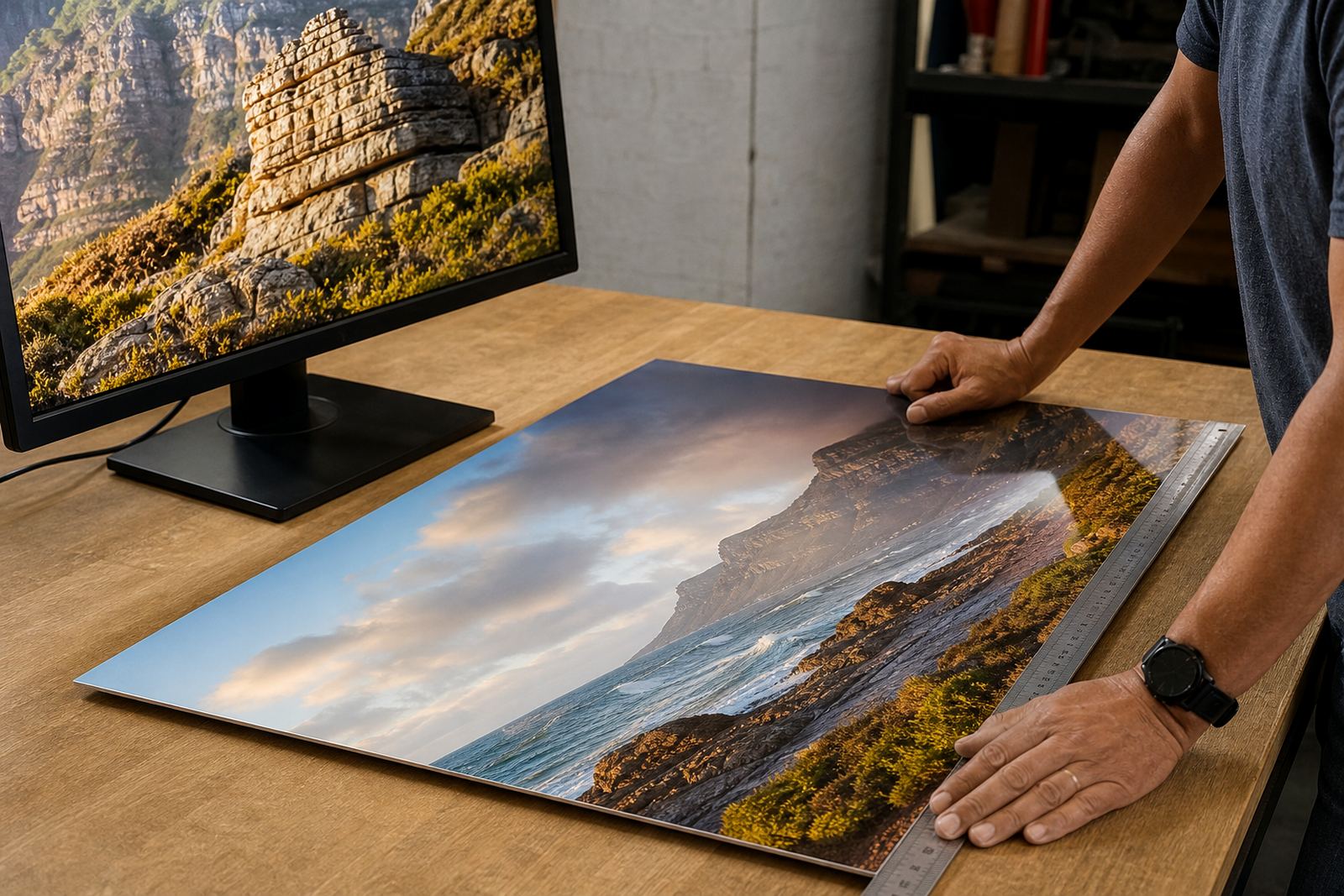
Before a panoramic file is sent for dye sublimation, the image needs a proper resolution review. A file may look fine on a laptop screen and still fall apart when stretched across a long aluminium panel. The first job is checking the actual pixel count against the finished size, then looking at where the crop will sit.
- Keep key subjects away from the outer edges if the image may need trimming.
- Check whether the horizon is level, especially on seascapes and skyline shots.
- Allow for extra width if the image will be wrapped or mounted with hidden fixings.
- Leave breathing space around text, logos or important architectural lines.
If the image is being used for a business space, the crop should also suit the room. A reception wall in Sandton may need a cleaner centre-weighted layout, while a long corridor in Midrand may work better with movement running from left to right. Small shifts in crop planning can change the whole feel of the piece.
Finish choices that change the mood of the image
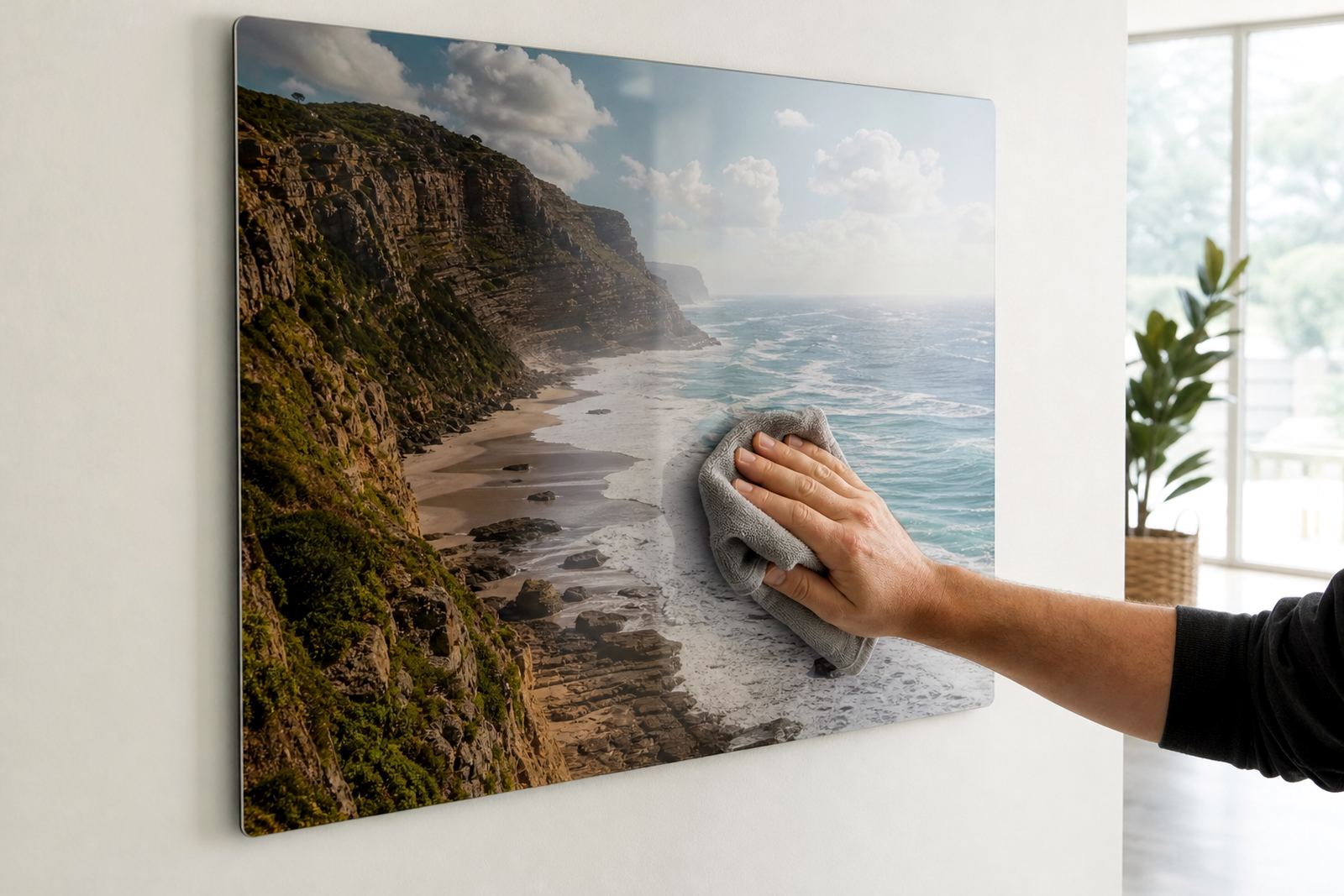
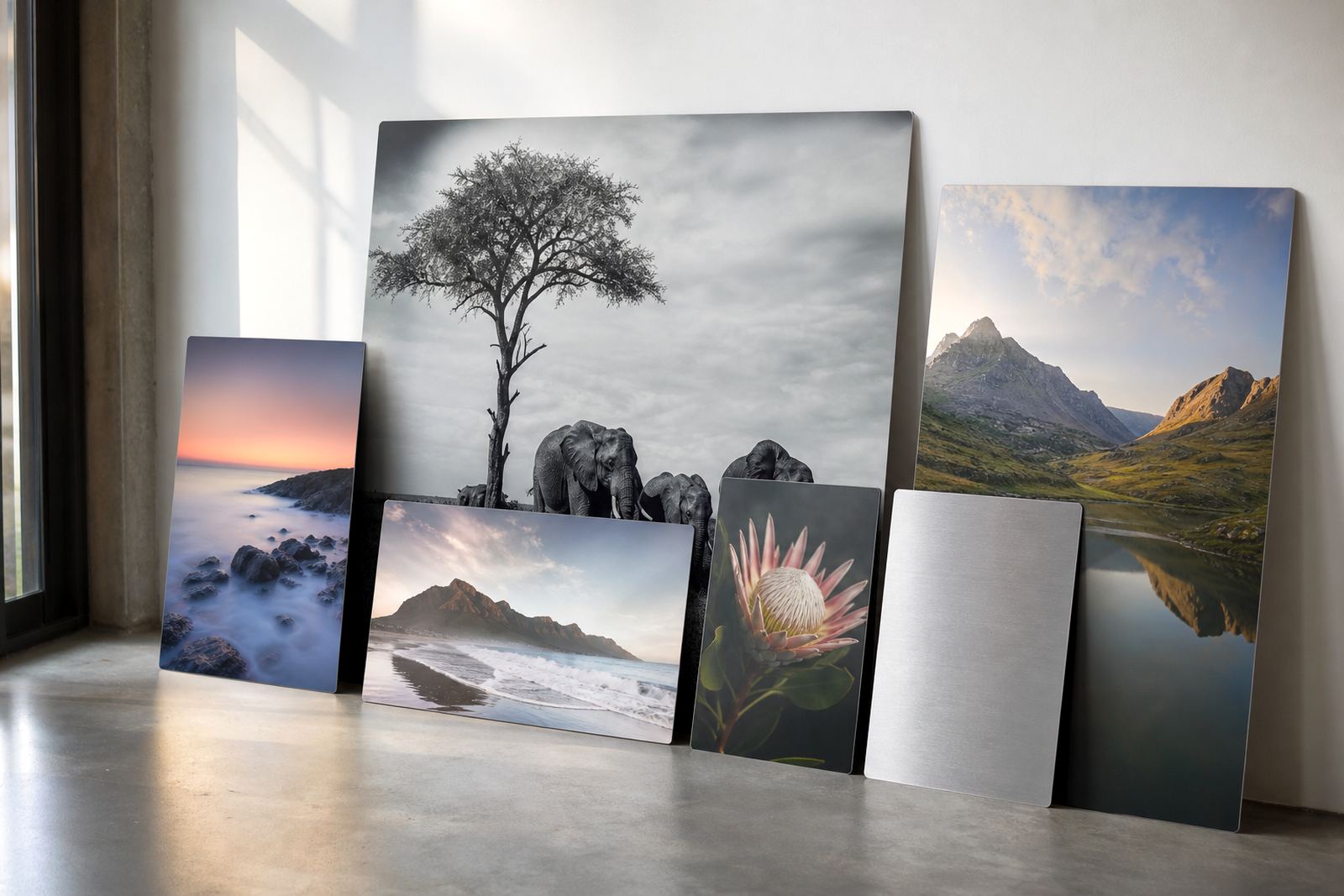
Coated aluminium panels can be finished in gloss, matte, white or brushed effects, and each one handles a panorama differently. Gloss lifts colour and gives strong contrast, which suits bright city lights, water, sunset tones and bold travel images. Matte reduces glare and is useful in offices, galleries and homes with direct sunlight. White panels keep colour clean and true, while brushed aluminium lets the metal texture show through lighter areas for a more industrial look.
The right finish also depends on where the panel will be seen. A bright foyer in Cape Town may need a matte surface to cut reflections from the windows, while a darker boardroom in Johannesburg can take a gloss finish without trouble. Coastal humidity is worth thinking about too, because proper sealing and careful handling help the panel stay presentable in Durban or Gqeberha where the air carries more moisture.
Mounting a long panel without making it feel awkward
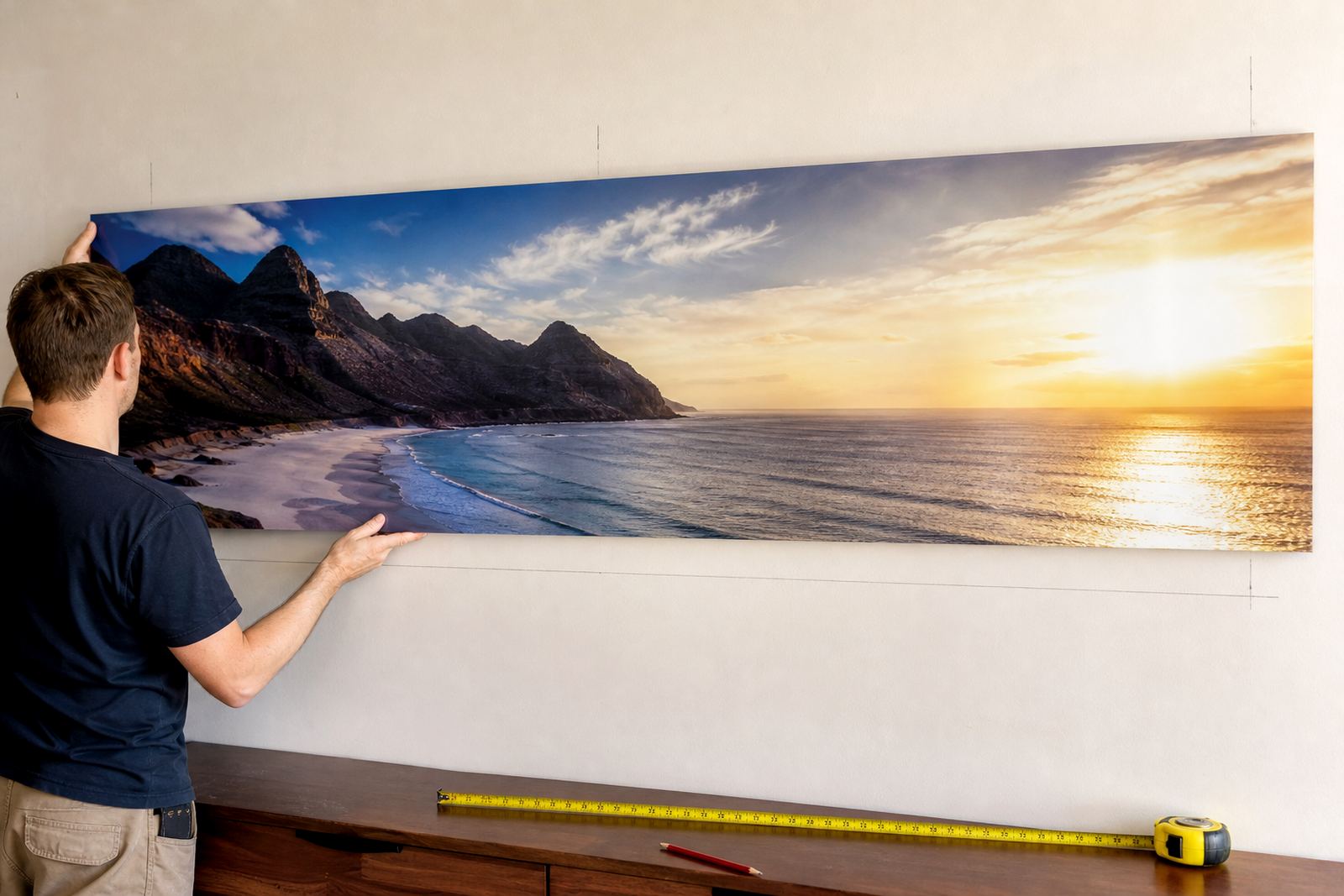
Panoramic panels need the right hanging hardware so they sit level and secure. Longer pieces can show even small mistakes in alignment, so the mounting method matters as much as the print itself. Hidden wall fixings give a clean floating look, while stand-off hardware can add depth and help the panel sit away from the wall surface.
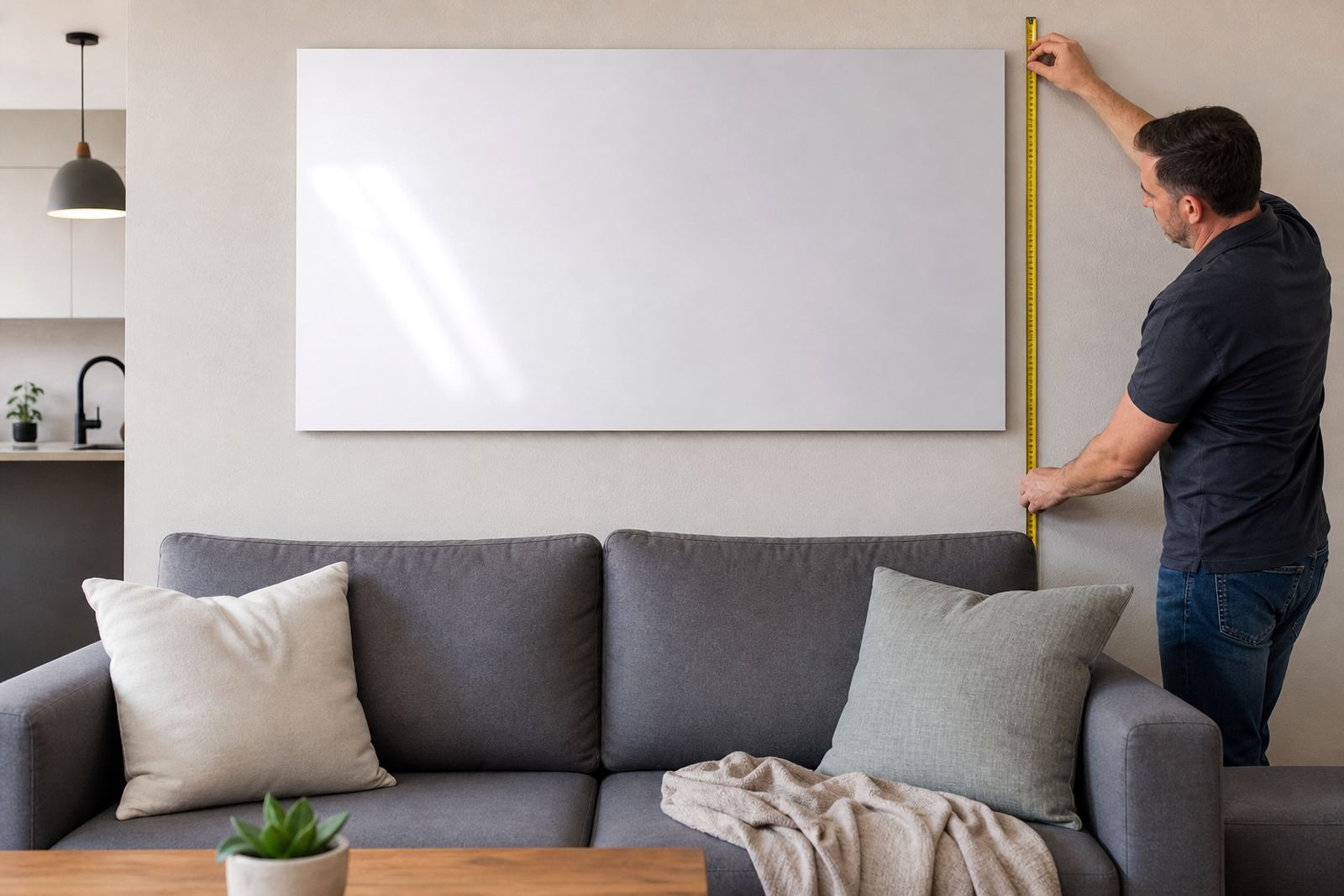
- Measure the wall space carefully before final sizing.
- Check that the panel can be lifted and hung by the available staff on site.
- Allow for plaster, brick, drywall or tiled surfaces.
- Use mounting that suits the weight and length of the finished piece.
In busy workplaces, a well mounted panorama can do a lot of visual work without taking over the room. A long panel above a boardroom table, for example, can lead the eye across the wall and keep the space feeling ordered, even when the office is full of screens, chairs and cable runs.
A Johannesburg skyline panel is not the same as a beach panorama
Local subject matter changes how the file should be handled. A skyline image of Johannesburg often has sharp verticals, reflective glass and strong tonal contrast, so colour preparation needs to keep the buildings crisp. A beach or harbour image from Durban or Gqeberha usually needs careful control of blues, whites and sky gradients so banding does not show up across a long panel.
One recent example involved a panoramic image for a Randburg studio wall. The photographer wanted the full sweep of a late afternoon Joburg skyline, with just enough detail in the clouds and a clean edge for framing. The file was checked for resolution, a test panel was prepared, and the finish was set to matte so the afternoon light from the windows would not cause glare. The result suited the room because the image kept its depth without fighting the space.
What gets reviewed before a panorama goes to press
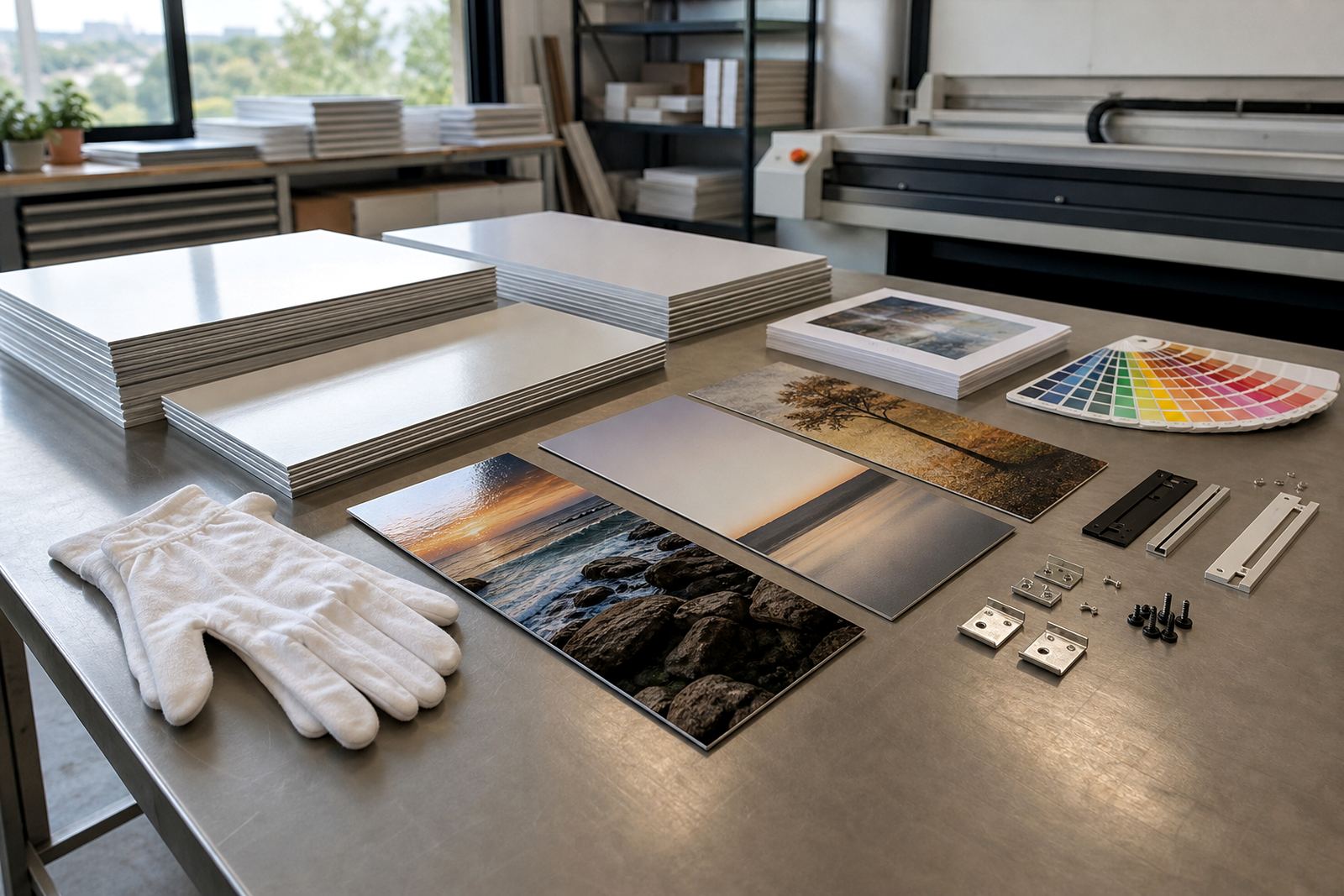
Good panoramic work depends on the checks before printing, not after. At SubAlu the file is reviewed for image quality, colour balance, crop safety and the fit between the artwork and the intended panel size. If there is a concern, a test panel or a reprint matching check can be used before the full order is finalised.
- File checks for sharpness, borders and hidden marks.
- Resolution review against the final panel dimensions.
- Colour preparation for balanced skin tones, skies and product shots.
- Finish selection based on room light and viewing distance.
- Custom sizing for single panels or multi panel layouts.
Customers should own the images or have the rights to use them. That matters just as much as the printing method, especially when the panel is going into a business reception, gallery wall or client-facing space. If the picture is right and the file is prepared properly, a panorama can hold attention without shouting for it.