
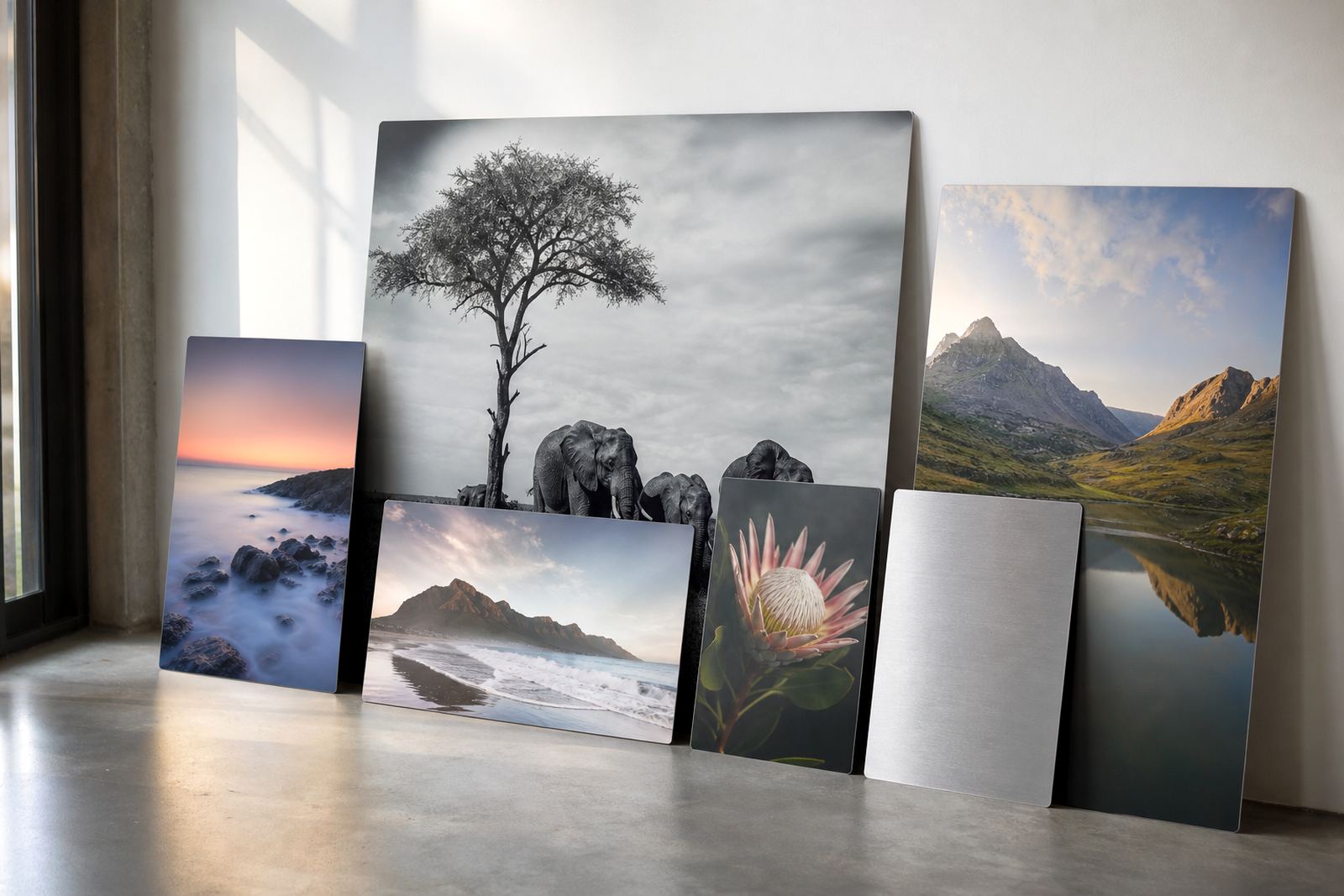
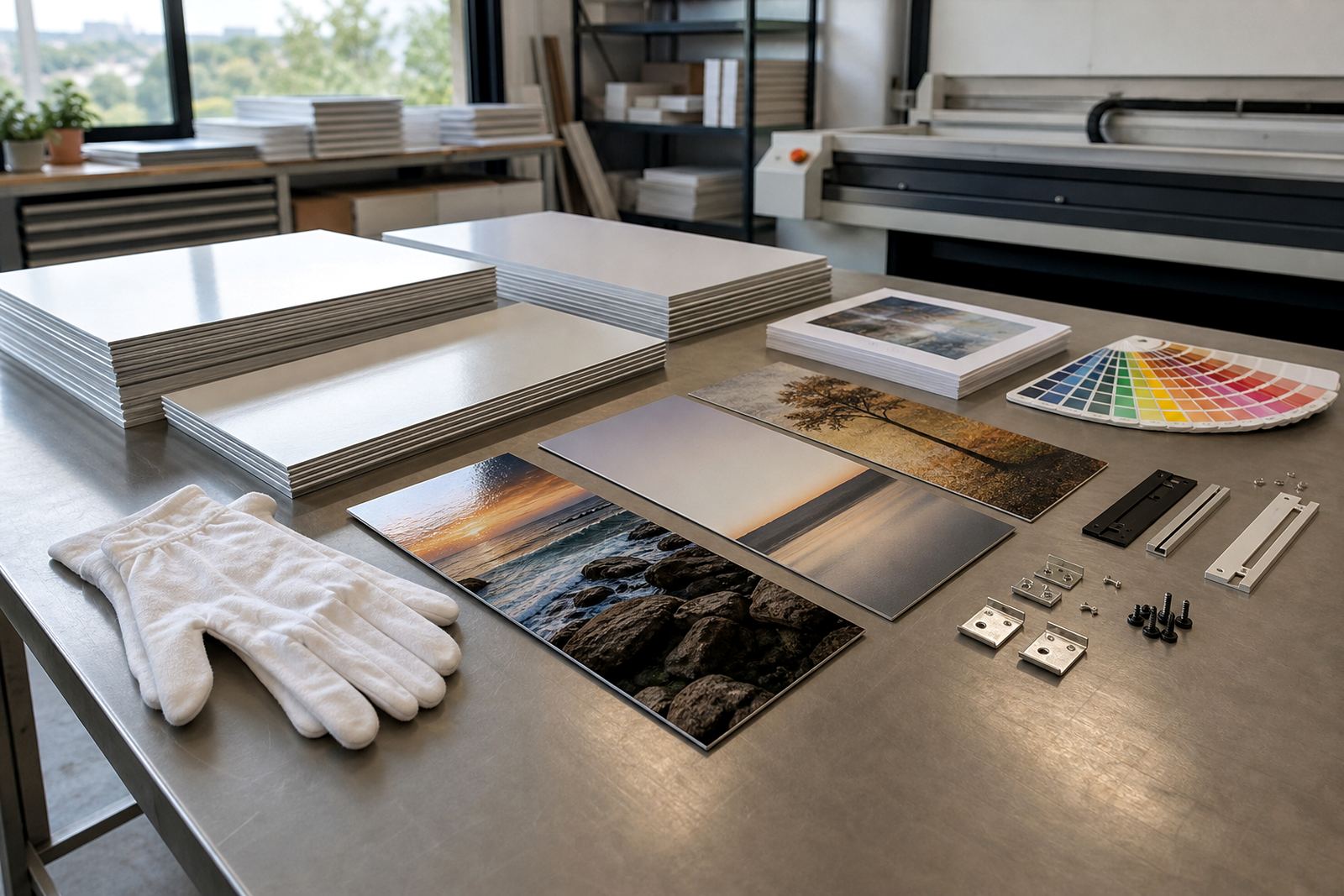
Start with the least aggressive touch first
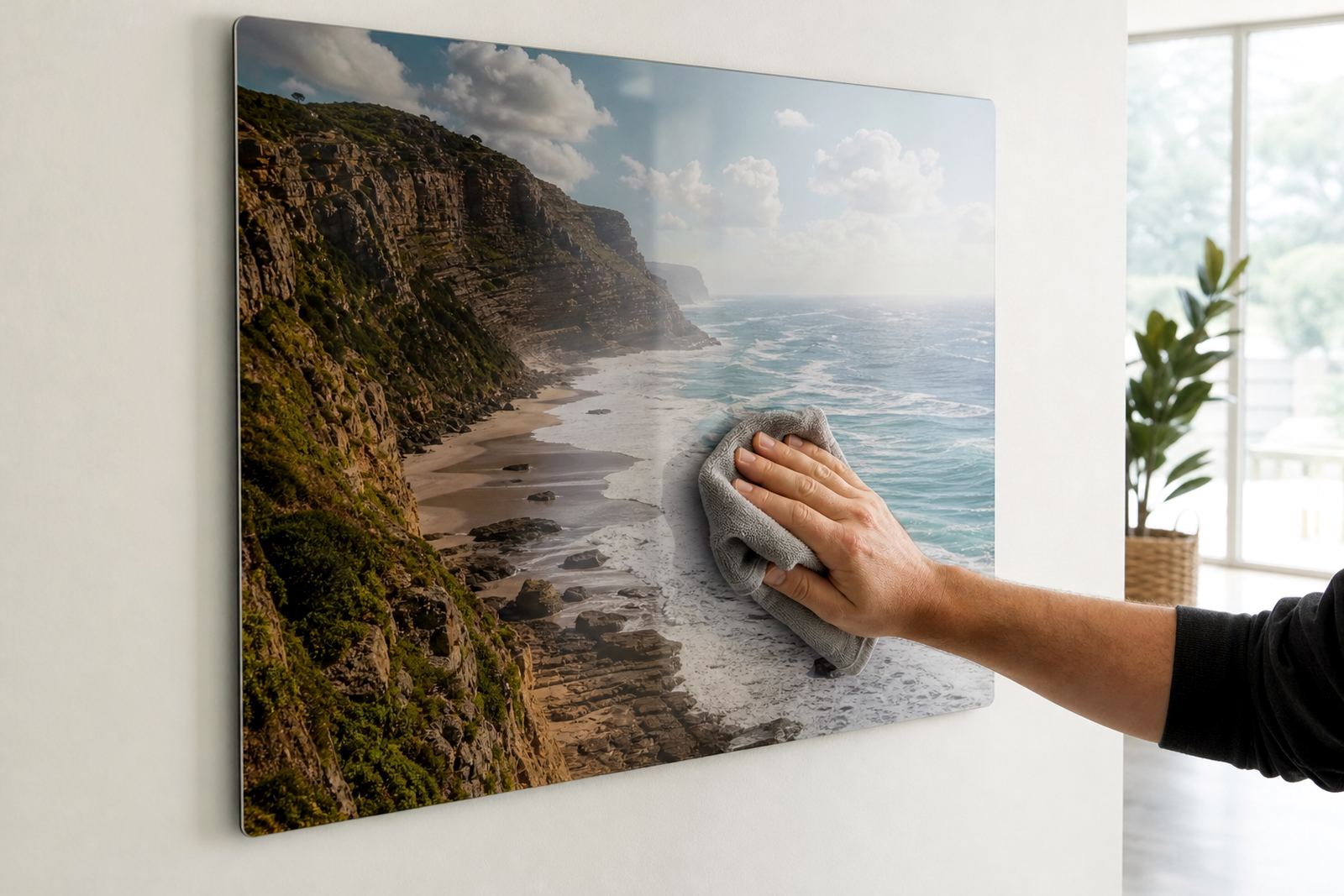
Most cleaning jobs on dye sublimation aluminium panels do not need anything stronger than a dry microfibre cloth. Dust, fingerprints and the light film that builds up in Johannesburg traffic areas usually lift off with a gentle wipe, so there is no need to scrub. Keep the pressure light and move in one direction across the panel, especially on glossy finishes where circles can show up fast.
If the print is mounted where people pass close by, such as a reception area or waiting room, quick cleaning every week is better than waiting until grime sets in. A panel that is left alone for months often only needs a careful wipe, not a wet clean. That matters for coated aluminium, where harsh rubbing can dull the surface in patches.
- Use a clean microfibre cloth, not paper towel
- Wipe with the grain on brushed finishes
- Keep fingernails, rings and rough jewellery away from the face
- Test a small corner first if the panel has not been cleaned before
What to keep away from the print face
Strong household cleaners can damage the coating or leave a haze that changes the look of the image. Ammonia, bleach, scouring powders and abrasive pads are all bad news on metal prints. Even glass cleaner can be a problem if it is sprayed straight onto the panel, because liquid can creep into edges and around mounting points.
In coastal towns like Durban or Gqeberha, people sometimes reach for stronger cleaner because of salt residue, but that can do more harm than the salt itself. If the panel has a light salty film from open windows or sea air, start with a dry cloth and move to a cloth lightly dampened with clean water only. Dry the surface straight after, do not leave droplets sitting on the print.
- Do not spray cleaner directly onto the panel
- Do not use steel wool, scourers or rough sponges
- Do not soak the edges, backing or hanging hardware
- Do not use solvents unless a specialist has approved them
How each finish likes to be handled
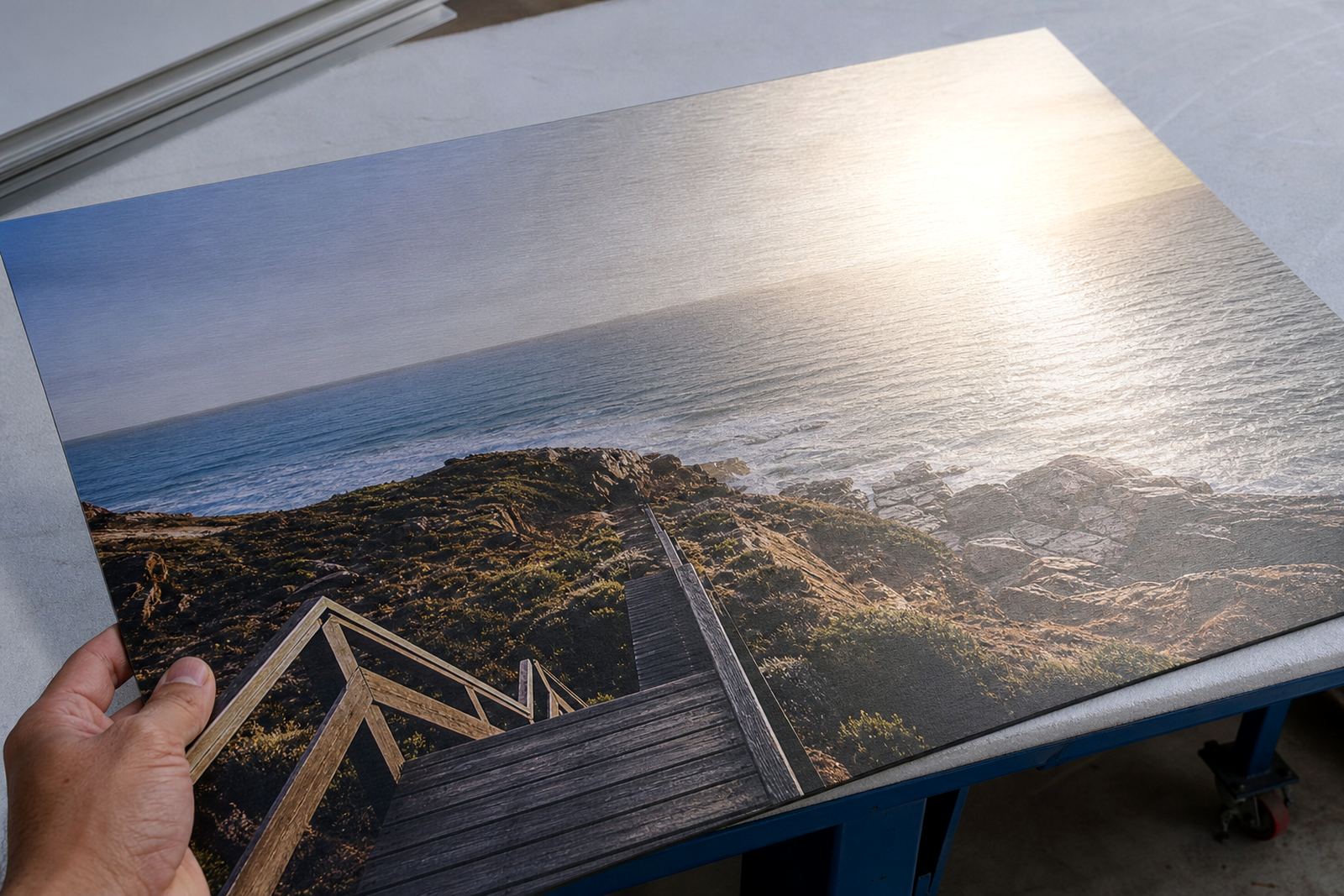
Gloss, matte, white and brushed aluminium all behave a little differently when you clean them. Gloss shows fingerprints and streaks more easily, so the cloth should be very clean and almost dry. Matte hides marks better, but oily fingerprints can still sit on the surface and need a light wipe. White panels usually show dust rather than streaks, while brushed finishes can trap dirt along the directional lines of the metal.
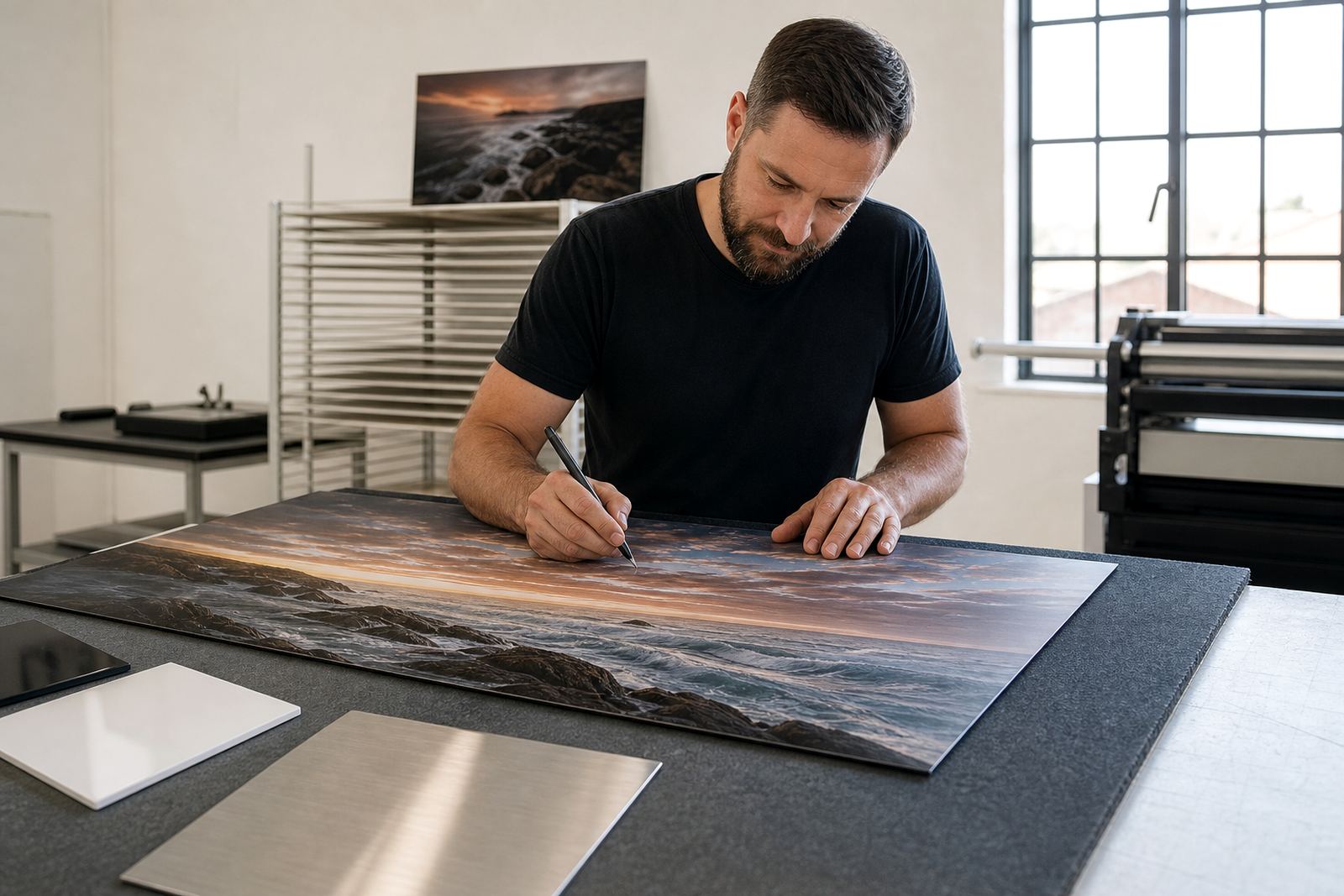
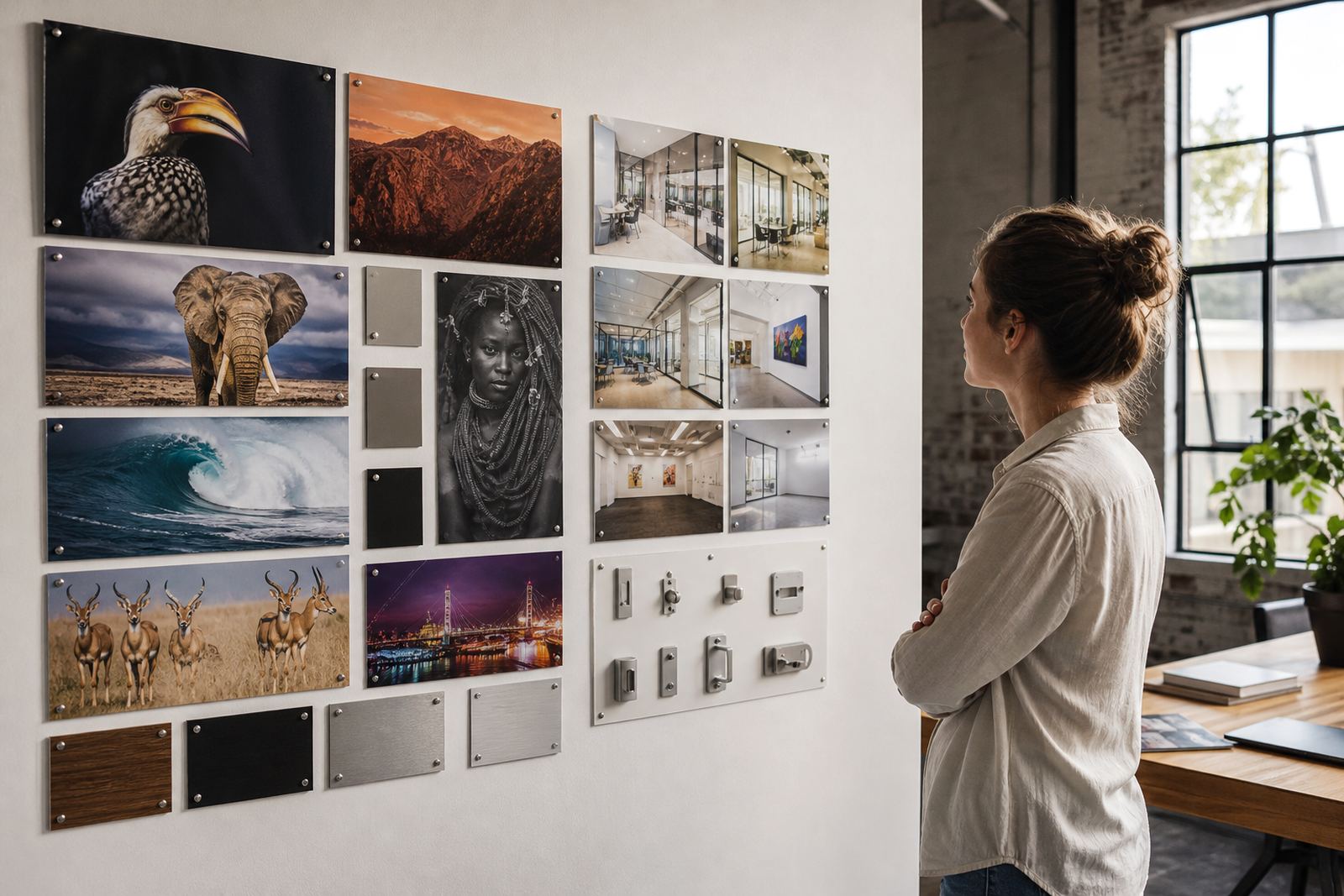
When SubAlu prepares panels for photographers and businesses, finish choice is often linked to the room where the work will hang. A conference room with bright downlights may suit matte. A portrait or product image that needs high contrast can work well in gloss. Brushed metal can add texture to industrial or architectural images, though it needs a careful wipe along the visible grain to avoid making the marks worse.
- Gloss: use extra clean cloths and avoid circular wiping
- Matte: clean gently, as the texture can hold fine dust
- White: watch for grey dust and smudges near the edges
- Brushed: follow the direction of the brushed lines
A safe cleaning mix that does the job
For most aluminium photo panels, clean water on a soft cloth is enough. If there is grease from hands or a mark from a splash, use a tiny amount of mild dish soap mixed into water, then wring the cloth out so it is damp, not wet. Wipe the affected area lightly, then go over it again with a cloth that has only clean water on it. Finish with a dry cloth so no moisture sits on the panel or along the frame.
That method works well in offices around Sandton and Midrand where air-conditioning dust can settle on wall art, and in homes where cooking vapour can drift into passage areas. The key is to keep the cloth soft and the liquid minimal. If the panel is large, work in sections so you do not miss drips before they dry.
- Mix a few drops of mild soap into a bowl of water
- Wring the cloth until it is only slightly damp
- Use a second cloth with clean water to remove soap residue
- Dry the panel fully before touching or rehanging it
Mounting hardware and back edges need attention too
Many cleaning problems start at the back of the panel, not the face. Dust around hanging hardware, wall spacers or corner fixings can build up and later move onto the print. If the panel has been removed for cleaning or moving, check the back edges for grit before it goes back on the wall. A small bit of sand or builder’s dust can scratch the face if it gets trapped between the panel and a cloth.
Make sure the hardware is dry, straight and secure. If you notice looseness, stop there and sort it out before the panel is hung again. A clean print with poor mounting can still end up damaged.
In Randburg offices where panels are often handled during refits, packing and unpacking should be done with clean gloves or freshly washed hands. Sweat and body oils are easy to transfer, and they show up on gloss panels almost immediately.
When a mark is not just dirt
Not every mark can be cleaned off. A light scuff, a chip on the edge or a scratch from moving furniture may look like dust at first, then stay visible after cleaning. If the panel has a deep mark, trying harder with a cloth usually makes it worse. The same applies to pressure marks from stacked items or damage from moisture that sat on the edge too long.
If a panel was made from a high-resolution image and the surface is still sound, colour and sharpness can remain excellent for years with normal care. But once the coating is damaged, the issue is physical rather than cosmetic. At that stage it helps to compare the panel with a fresh test print or a matching reprint, especially for offices, retail walls or photo displays where consistency matters.
When in doubt, treat the area gently and get a second look before using anything stronger. That saves a lot of grief, and it keeps the finish intact for longer.
What works best in South African conditions
South African homes and workplaces throw a fair amount at wall art. Dust in Johannesburg, humidity in Durban, salt in coastal air, and building work in fast-growing areas all affect how often a panel needs attention. The good news is that aluminium photo panels are straightforward to maintain if they are cleaned lightly and regularly rather than roughly and rarely.
For photographers, artists and businesses displaying panels in receptions, showrooms or home living areas, the best routine is boring but effective: dust often, clean only when needed, and dry the panel properly after any damp wipe. That keeps the image clear and the finish looking tidy without chasing every mark with a heavy cleaner.
SubAlu works with customers across Johannesburg, Pretoria, Cape Town, Durban and Gqeberha, and one thing stays the same across all those locations: a careful hand will always outlast a strong product. If a panel is handled well from the start, cleaning becomes a quick part of normal care rather than a repair job.