

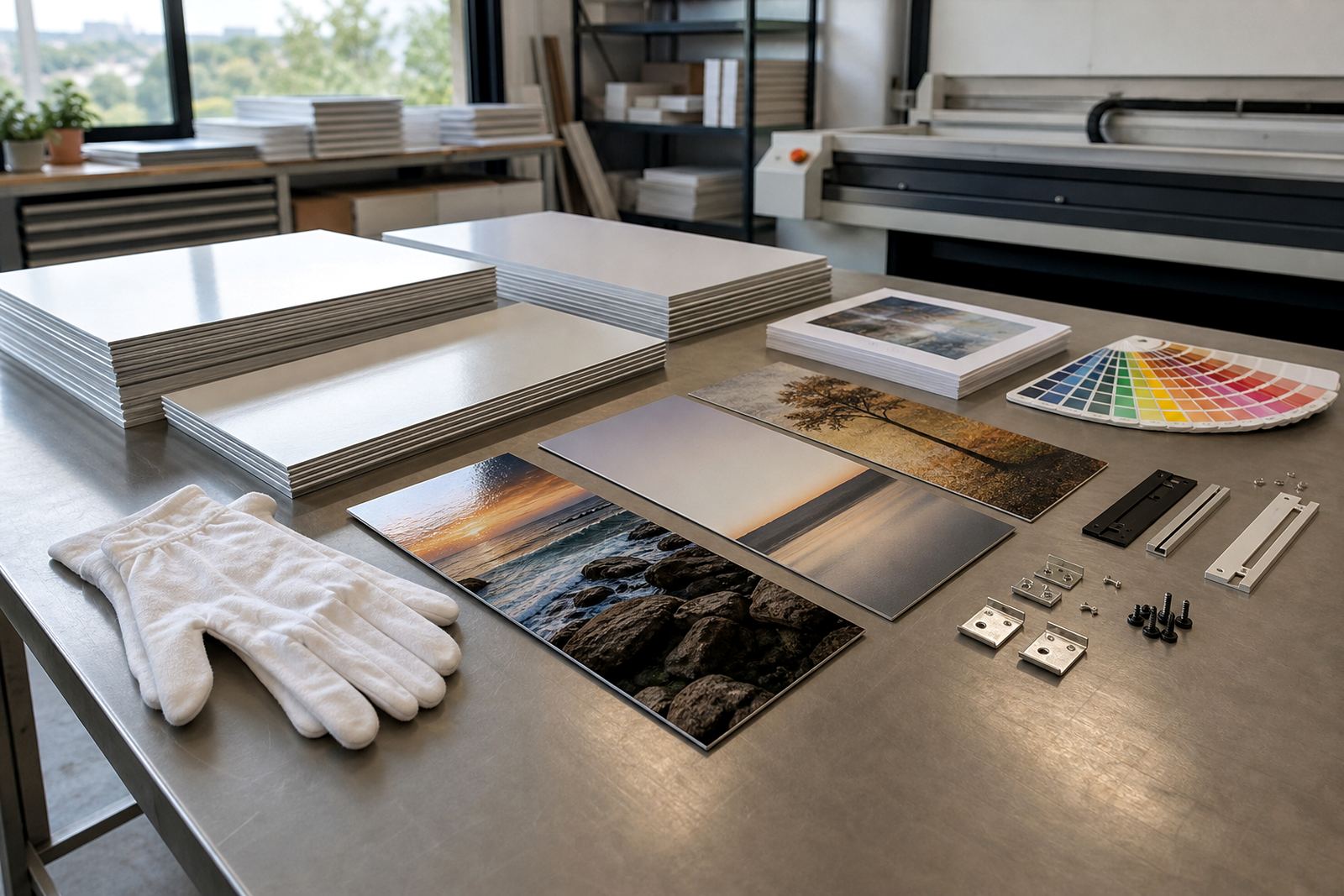
Why the corners take the first hit in transit
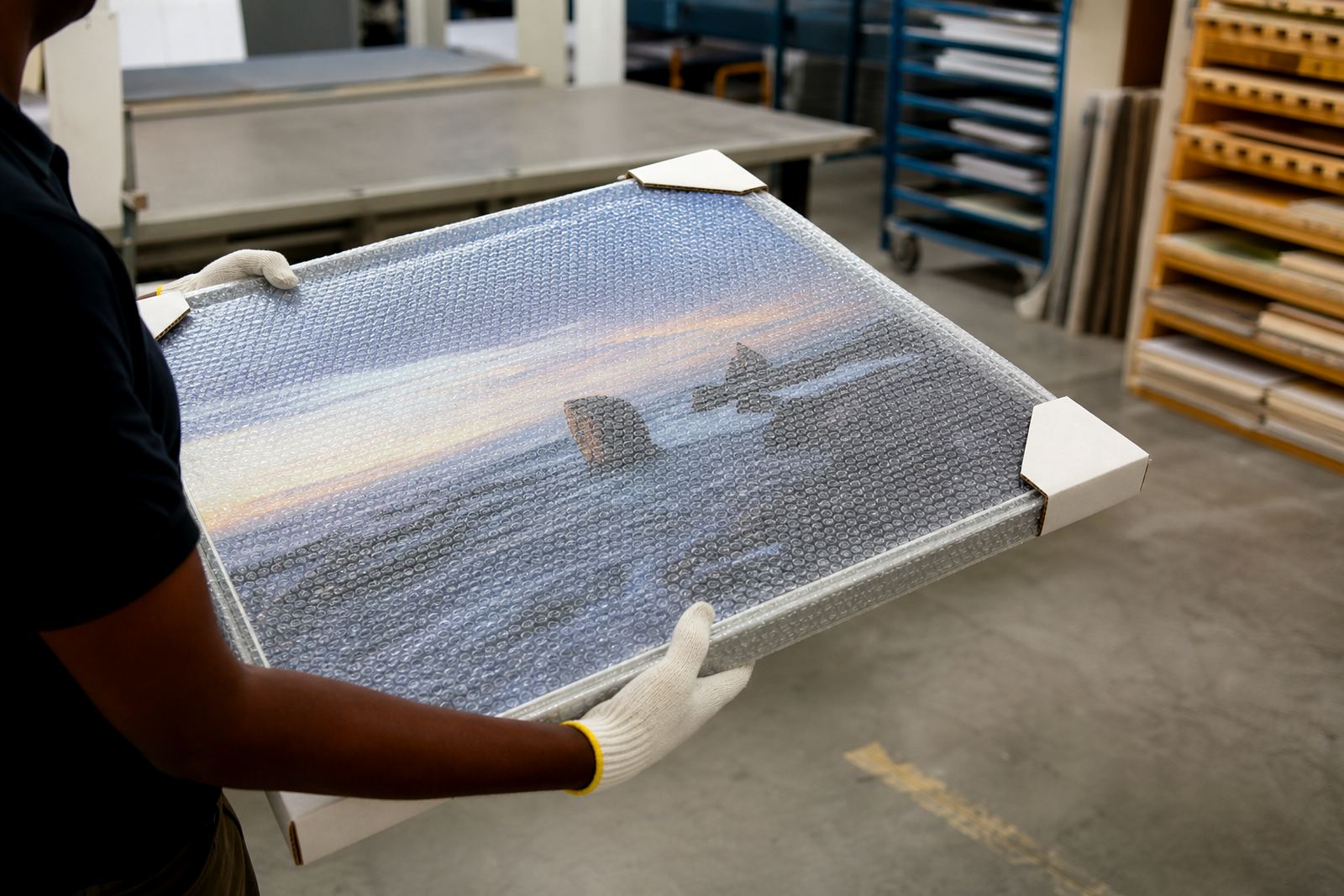
On a coated aluminium photo panel the corners are usually the first point of impact. A small knock from a sorting belt, stacking tray or vehicle vibration can chip the coating, bruise the edge or leave a pressure mark that shows up once the panel is mounted on a wall.
That is why corner protection matters more than decorative outer packaging. A rigid panel still needs a buffer at each corner so the load from impact is spread out instead of landing on one point. For larger pieces, especially 600 x 900 mm and above, the corners need extra attention because the surface area gives the parcel more leverage during handling.
Rigid packing keeps the print flat and the image clean
Aluminium panels are valued for their crisp image detail and smooth colour, but only if the face stays flat. If a parcel bends even slightly in transit, the panel can pick up a curve that affects how it sits on the wall and how the light moves across the image.
- Use a firm outer carton or crate that does not flex under hand pressure.
- Place the panel between protective sheets so the print face does not rub against the wrap.
- Add internal support so the panel cannot slide inside the carton.
- Keep the panel from resting directly on hard packing tape or staples.
For courier work, a rigid pack is not overkill. It is the difference between a panel that arrives ready to fit and one that needs rework or replacement.
Moisture aware wrapping for humid coasts and wet roads
South African deliveries face heat, coastal humidity and the odd wet loading bay. A wrapped panel can pick up moisture during a long run from Randburg to Durban or in a damp storeroom in Cape Town, and that moisture can soften outer cartons or leave condensation on the packing layers.
Good wrapping helps keep the panel dry from the point it leaves production until it is opened at the other end. The aim is not to seal the panel in a way that traps damp air, but to use clean dry layers that protect the surface and keep the carton from taking on water.
- Use dry inner wrap before the outer carton goes on.
- Keep cartons off wet floors and away from open doors during loading.
- For coastal deliveries, add a moisture resistant outer layer where needed.
- Do not pack a panel warm from handling and then seal it tight if there is visible condensation.
Finish choice changes how much protection a panel needs
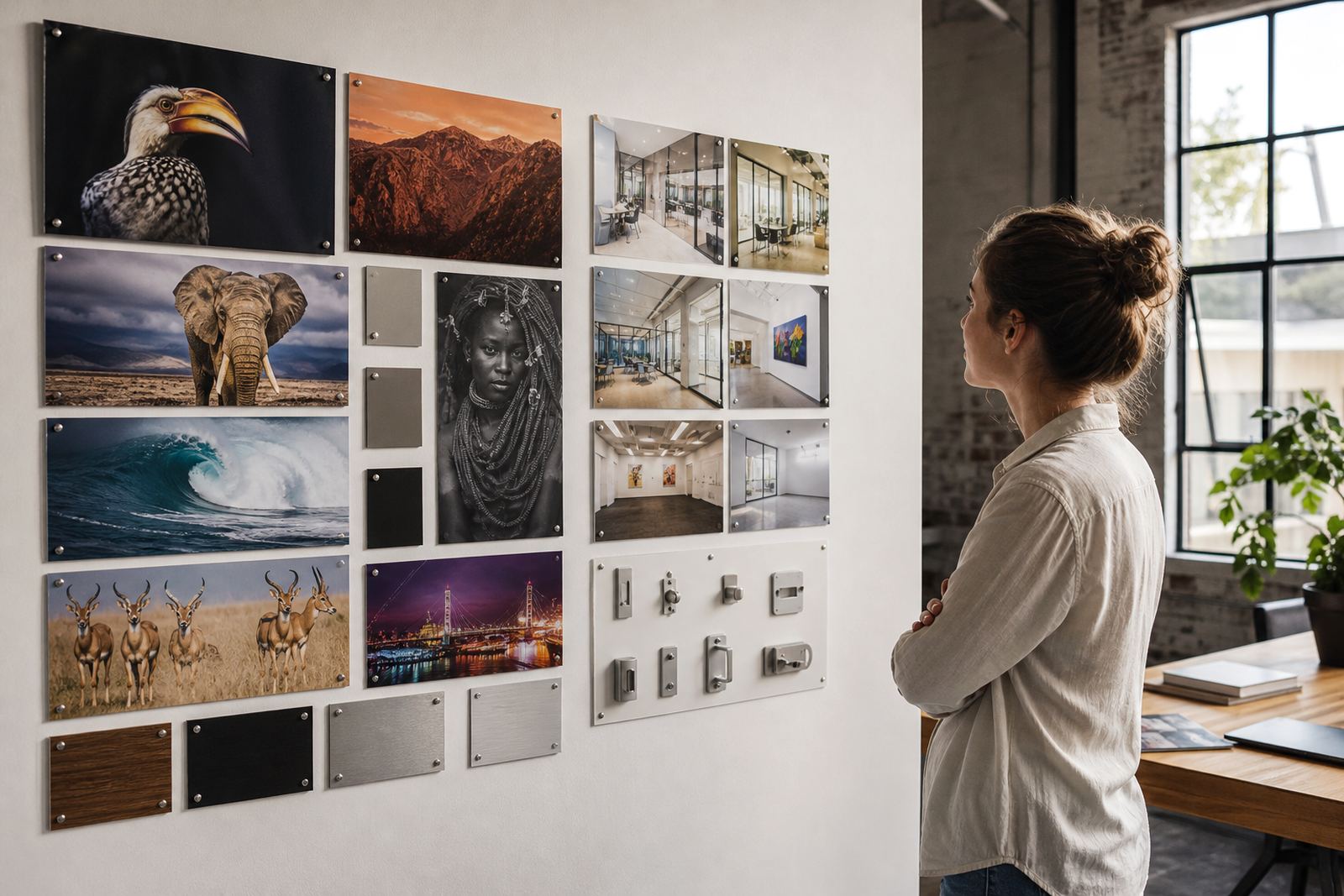
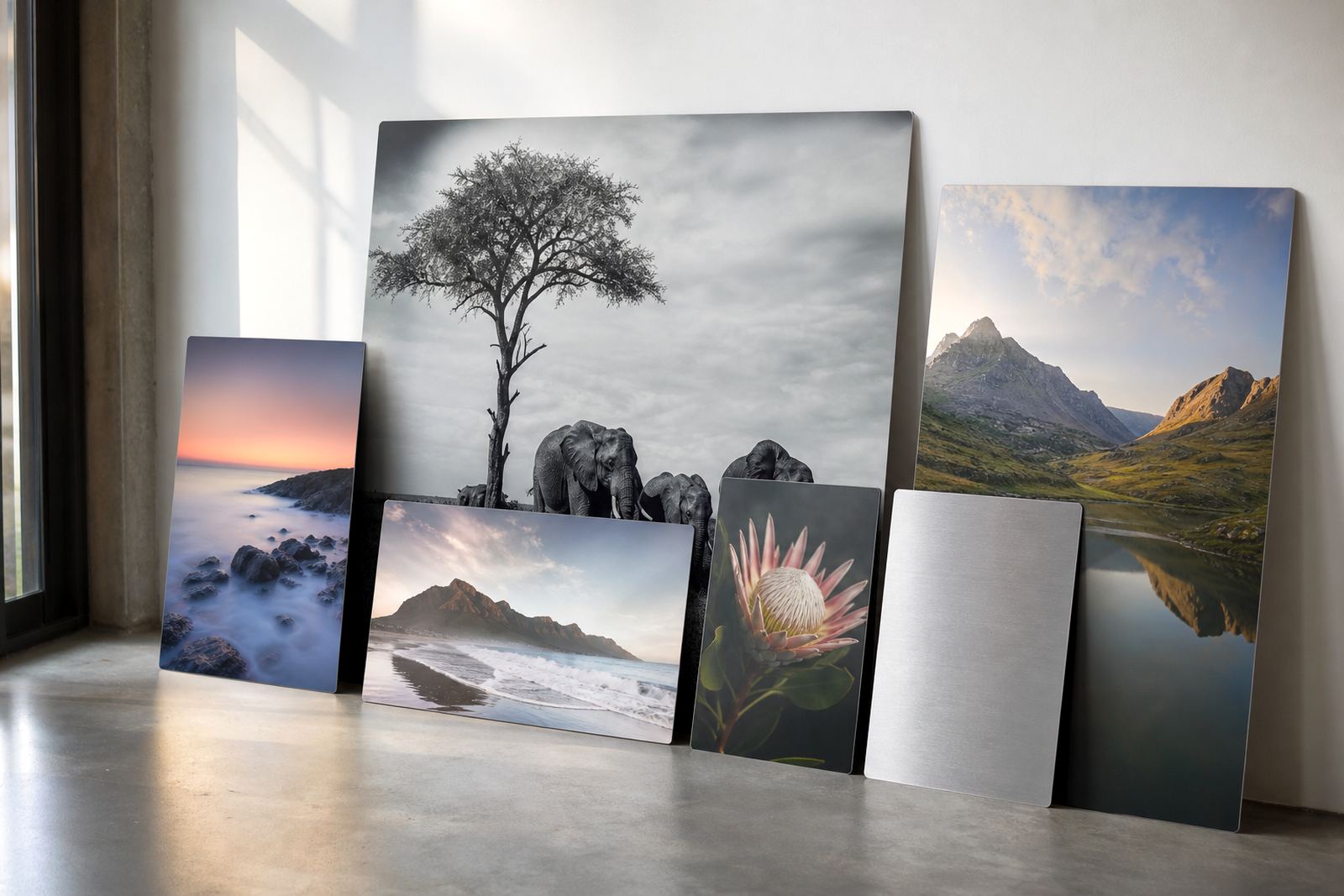
The finish affects how a panel should be packed. A gloss panel shows fine marks more easily, so the face needs cleaner separation from any packing material. A matte finish is more forgiving on the surface, but the panel still needs the same edge and corner protection. White and brushed aluminium finishes also need careful handling because scratches or scuffs can show in certain light.
When a customer orders a panel, finish selection should be matched to the route it will travel and how it will be installed. Panels going to busy offices in Sandton or retail spaces in Johannesburg city centre may need extra face protection because the final install often happens under time pressure. A careful pack saves time later.
What a courier-ready pack should include
A proper packing setup is practical, not fancy. The materials need to do three jobs: stop movement, prevent damage and make handling easier for the courier. A panel packed for Randburg collection should be treated the same way as one sent to Pretoria, Gqeberha or Durban.
- Corner guards or a corner frame that covers all four corners.
- A rigid outer carton sized to the panel with limited empty space.
- Internal cushioning that does not press hard against the image face.
- Surface interleaving to stop rubbing during movement.
- Clear handling labels so the parcel is not stacked face-down.
- Hardware packed separately where needed, not loose against the print.
Mounting fittings can mark the image if they rattle around inside the same parcel. Keep them secured in a separate sachet or box and fix them so they cannot move.
A local run from Randburg to Durban shows the difference
Think of a set of panels leaving Randburg for a gallery wall in Durban. The parcel may be sorted, restacked, set down in a depot and loaded again before it reaches the client. If the corners are unprotected the first bump can damage the visible edge. If the carton flexes, the face may rub against the wrap. If the packing takes on moisture, the outer layer can soften before delivery.
Now compare that with a rigid pack, dry wrap and corner protection. The panel arrives square, the edges remain clean and the installer can fit it straight onto the wall. That matters for photographers, artists and businesses that want the image to look crisp when the parcel is opened, not after a repair job. In practical terms, good packing protects both the print and the schedule.