
Why the wall gap changes the whole read
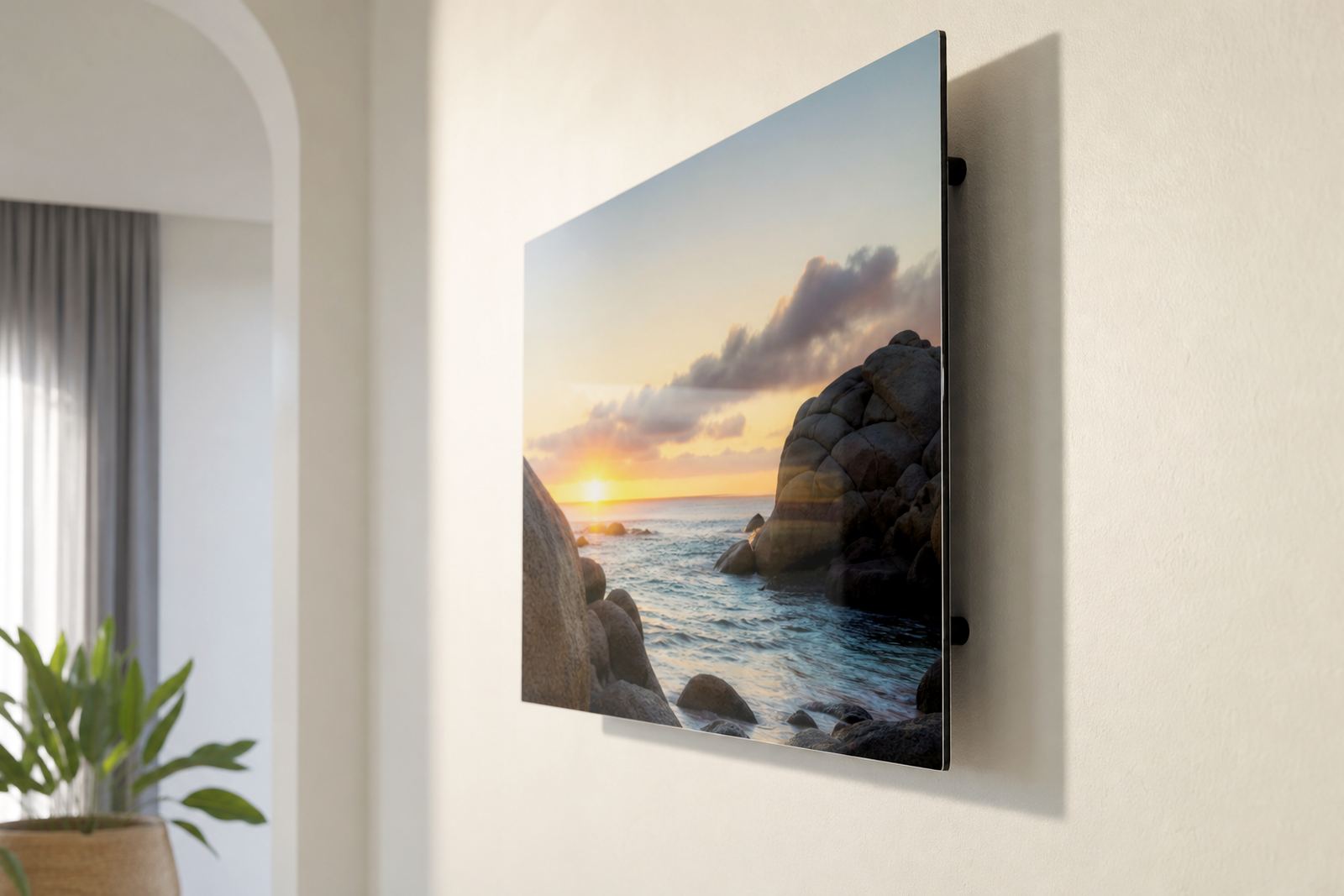
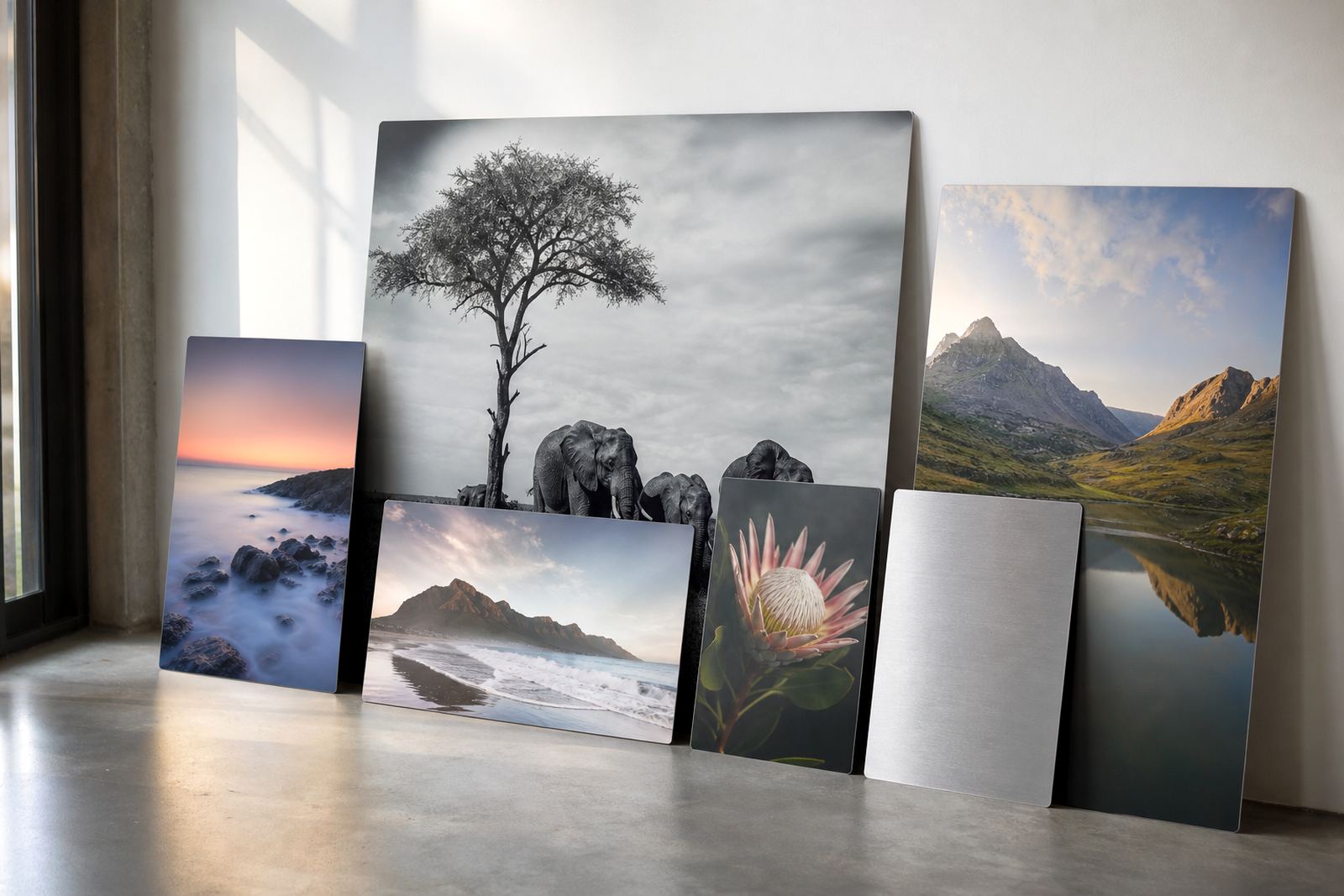
A float mount uses hidden rear hardware, so the fixing point sits behind the panel and not on the face. That small stand-off creates a shadow line around the work, which gives the image a crisp framed look without adding a visible frame. On aluminium photo panels, the effect is especially neat because the print surface stays clear and the edges remain tidy.
In a Randburg boardroom, that clean gap helps a set of cityscape panels look organised rather than crowded. In a living room or reception area, it stops the display from feeling bulky against the wall. For many clients the main benefit is practical: the artwork is easier to position straight, and the finished piece looks intentional even on uneven plaster or brick walls.
The mounting style that suits real South African walls
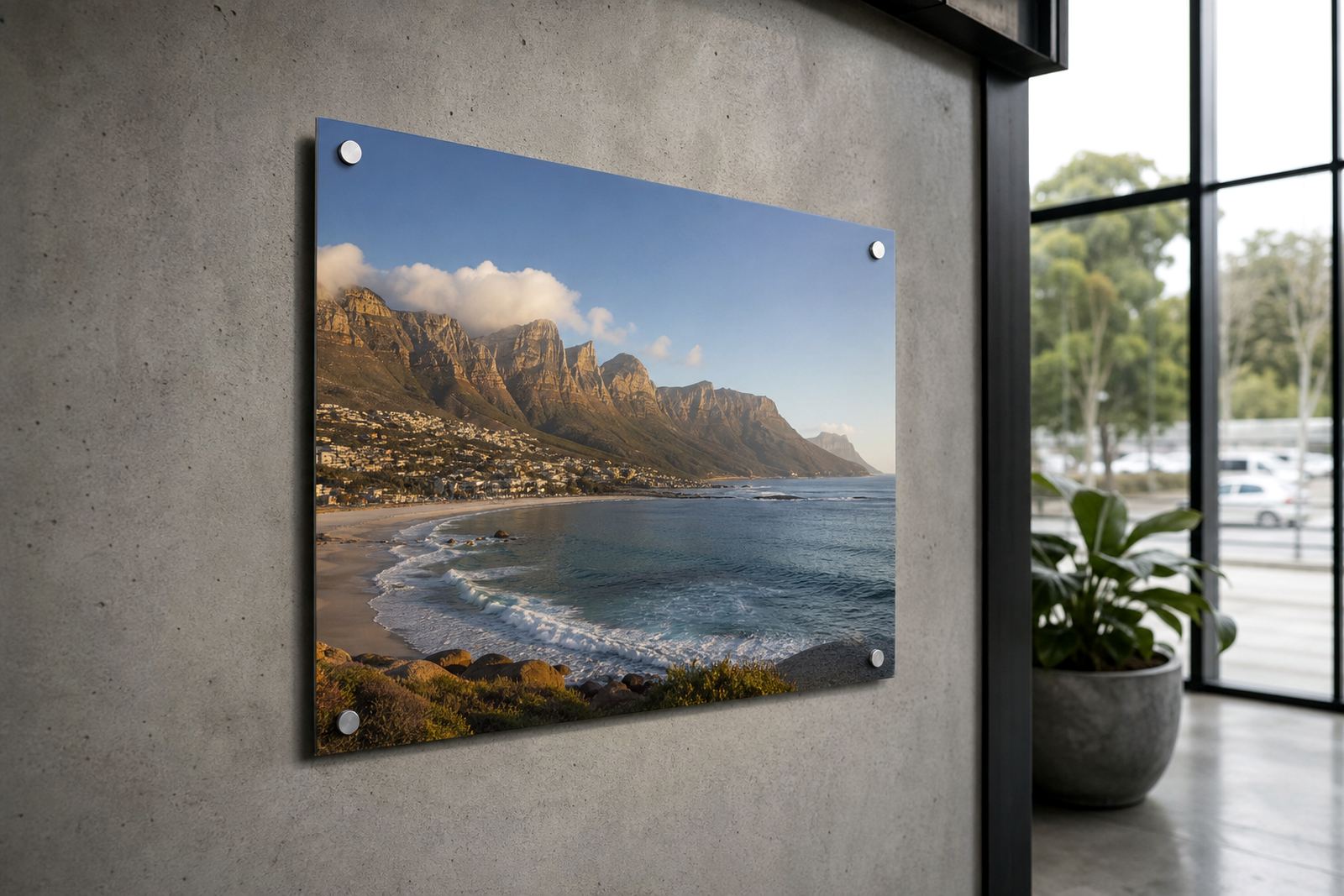
Many South African walls are not perfectly flat. Older plaster can bow slightly, and some office spaces in Johannesburg or Pretoria have patchy surfaces where a normal frame sits awkwardly. A float mount helps because the panel is supported from the rear and the gap can visually hide minor wall marks. That makes it a sensible choice for homes, galleries, retail spaces and clinics.
- Rear hardware keeps the front face clear of hooks and brackets.
- The panel sits evenly, which helps on textured or slightly uneven walls.
- The shadow line makes a single image read like a finished feature.
- It works well for both portrait and landscape layouts.
For coastal areas such as Durban or Gqeberha, aluminium is also a practical display material because it copes well with humidity when handled and mounted properly. It does not need the same care as paper prints in glass frames, which can show moisture issues over time.
Why aluminium panels suit float mounting so well
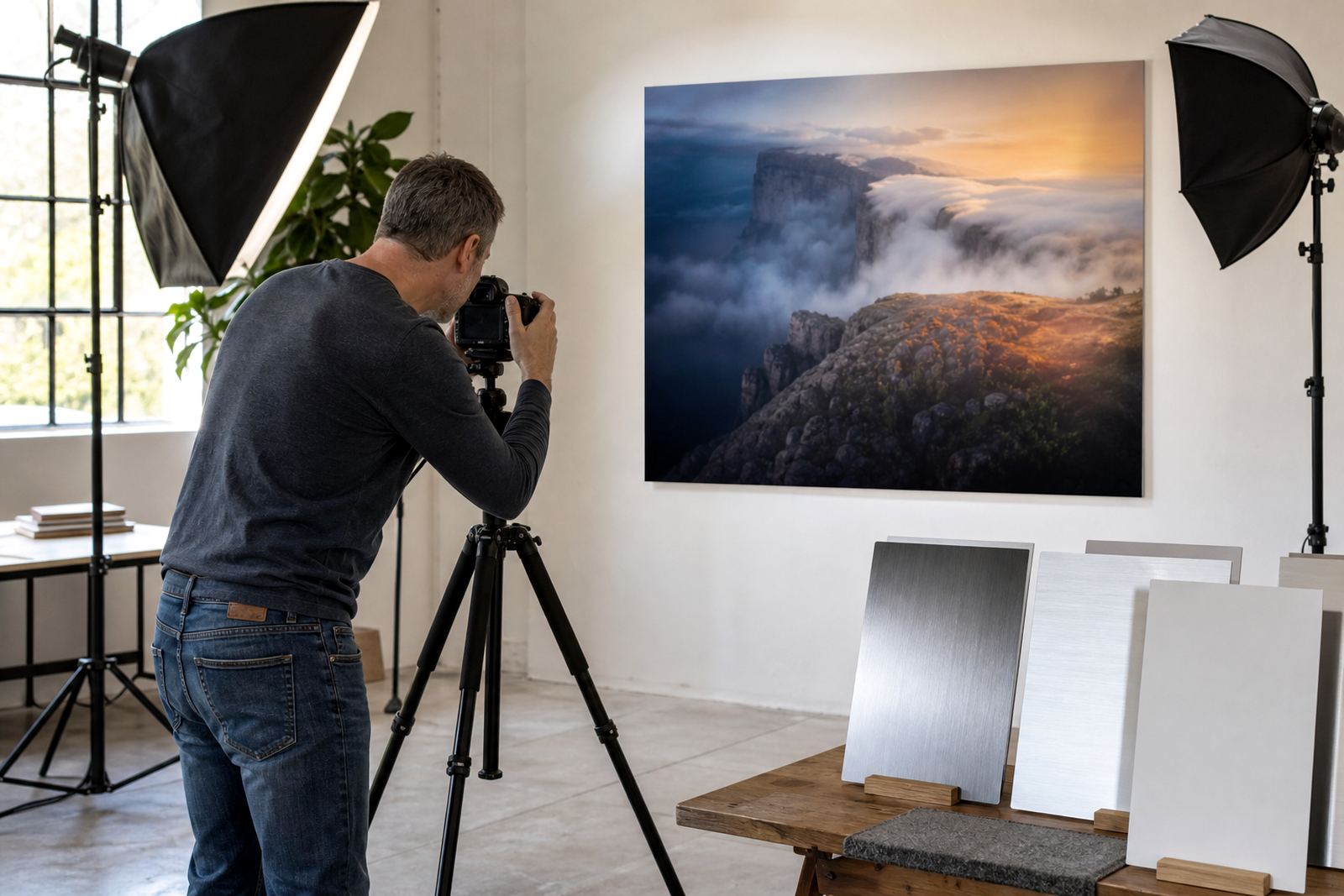
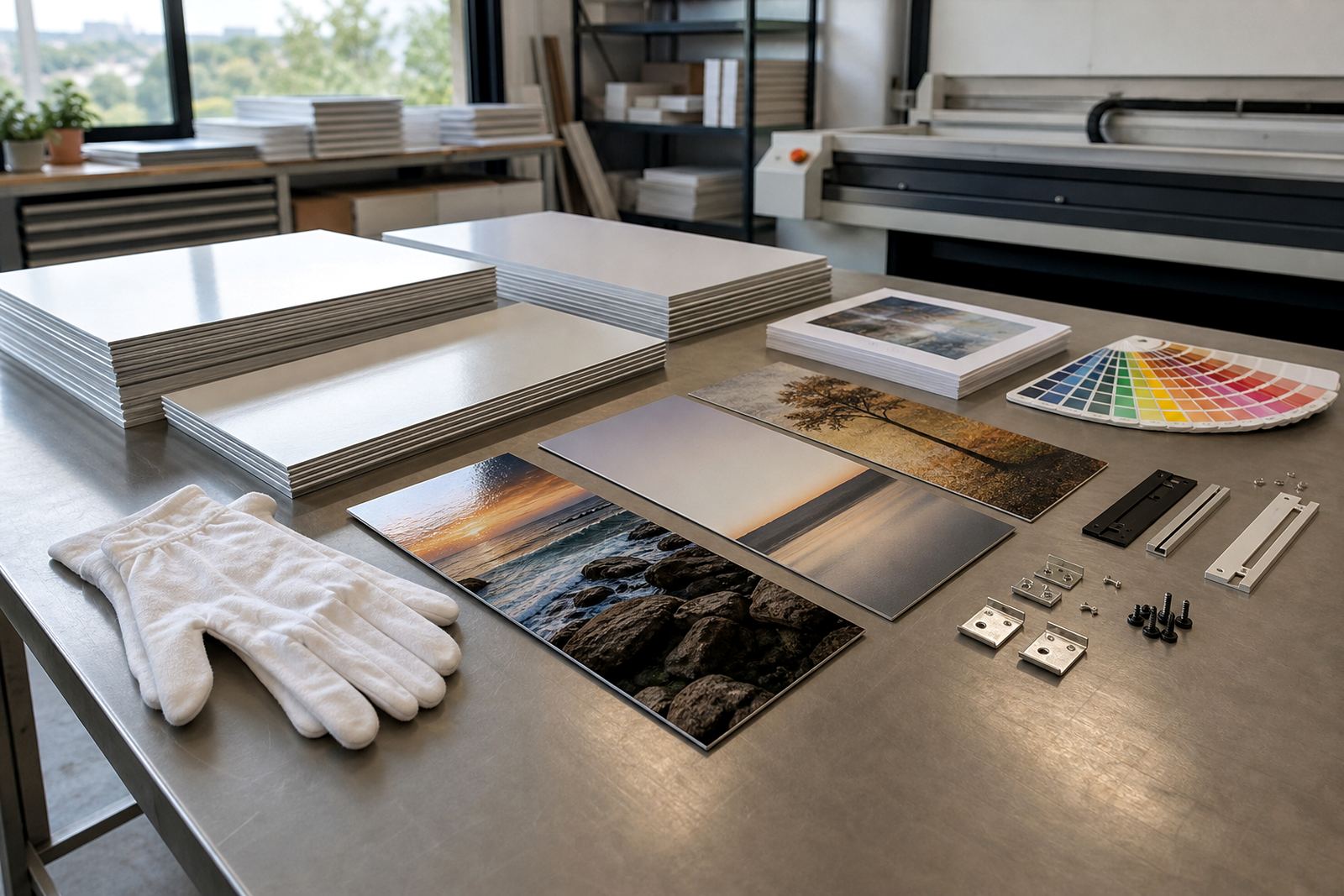
Dye sublimation on coated aluminium gives a hard-wearing image surface with strong colour and sharp detail. When that print is mounted as a float, the clean edge becomes part of the presentation instead of being hidden inside a frame. Gloss, matte, white or brushed finishes each change the feel of the image, so the mounting style can be matched to the artwork and the room.
A glossy finish suits high-impact photography with deep contrast, while matte reduces reflections in bright offices and gallery lighting. White aluminium keeps colours bright and even, and brushed metal can leave selected bright areas with a metallic character. The choice of finish matters because the float mount does not distract from the panel, it lets the material speak for itself.
- Gloss works well where colour saturation matters most.
- Matte helps in rooms with strong daylight or overhead LEDs.
- White gives a smooth base for clean, accurate colour.
- Brushed adds texture where the metal effect is part of the design.
The practical side: hanging, alignment and maintenance
Float mounting is popular because it makes hanging straightforward. The rear fixings are hidden, so the front remains uncluttered and the panel can be adjusted with a level before final tightening. For businesses that rotate displays or move offices, that simplicity saves time and reduces the risk of visible damage to the front surface. It also means less fuss when replacing one image with another.
Everyday care is easy too. A soft microfibre cloth is usually enough to remove dust, which is useful in busy Johannesburg offices where aircon and foot traffic can build up fine grime. There is no glass to clean and no deep frame cavity to trap dust.
Where a float mount earns its keep
The clean edge and subtle depth make float mounts useful in places where the display needs to look finished without calling attention to the hardware. That includes reception counters, hotel corridors, retail feature walls, home stairwells and studio spaces. A local photographer in Sandton might use a triptych of float-mounted panels for a client meeting room, while a café in Cape Town may prefer one large landscape print above the seating area.
For business use, the mount also helps repeat a brand look across several rooms or branches. A consistent wall gap keeps the work uniform even when the images change from one panel to another. If the artwork is being sent across the country, the panel edges and mounting points need to be planned carefully so the pieces arrive ready for installation and line up properly on site.
- Feature walls in offices and showrooms.
- Reception areas where first impressions matter.
- Home interiors that need a tidy, modern finish.
- Gift pieces where the display should feel finished straight away.
Getting the file and the mount matched before production
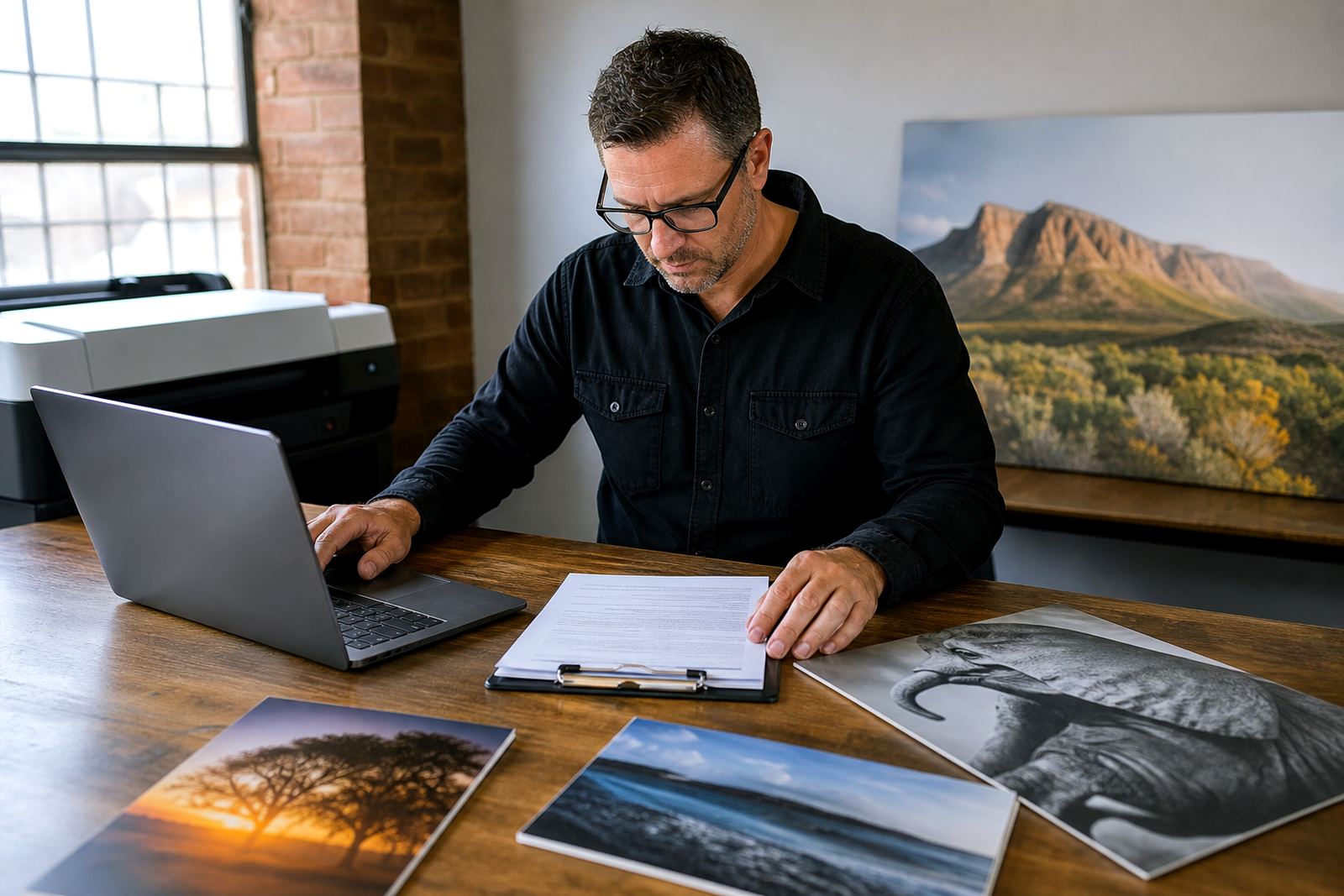
A good float mount starts before printing. The image should be supplied at proper resolution for the finished size, with enough detail for close viewing and clean edges after trimming. Colour preparation matters too, because the chosen finish will change how highlights, shadows and skin tones read on the aluminium. A file that looks fine on a screen can print very differently if crop planning and tonal balance are not checked first.
Customers must own the images or have the right to use them. That matters whether the panel is for a family wall, a commercial office or a gallery display. Once the file is ready, the mounting option can be matched to the panel size, the wall surface and the final placement. Mandla Chetty and the SubAlu team work from Randburg, Johannesburg, with deliveries into Pretoria, Midrand, Sandton, Cape Town, Durban and Gqeberha, so the practical side of shipping and hanging is part of the process, not an afterthought.