
A wall story for a busy Melville room
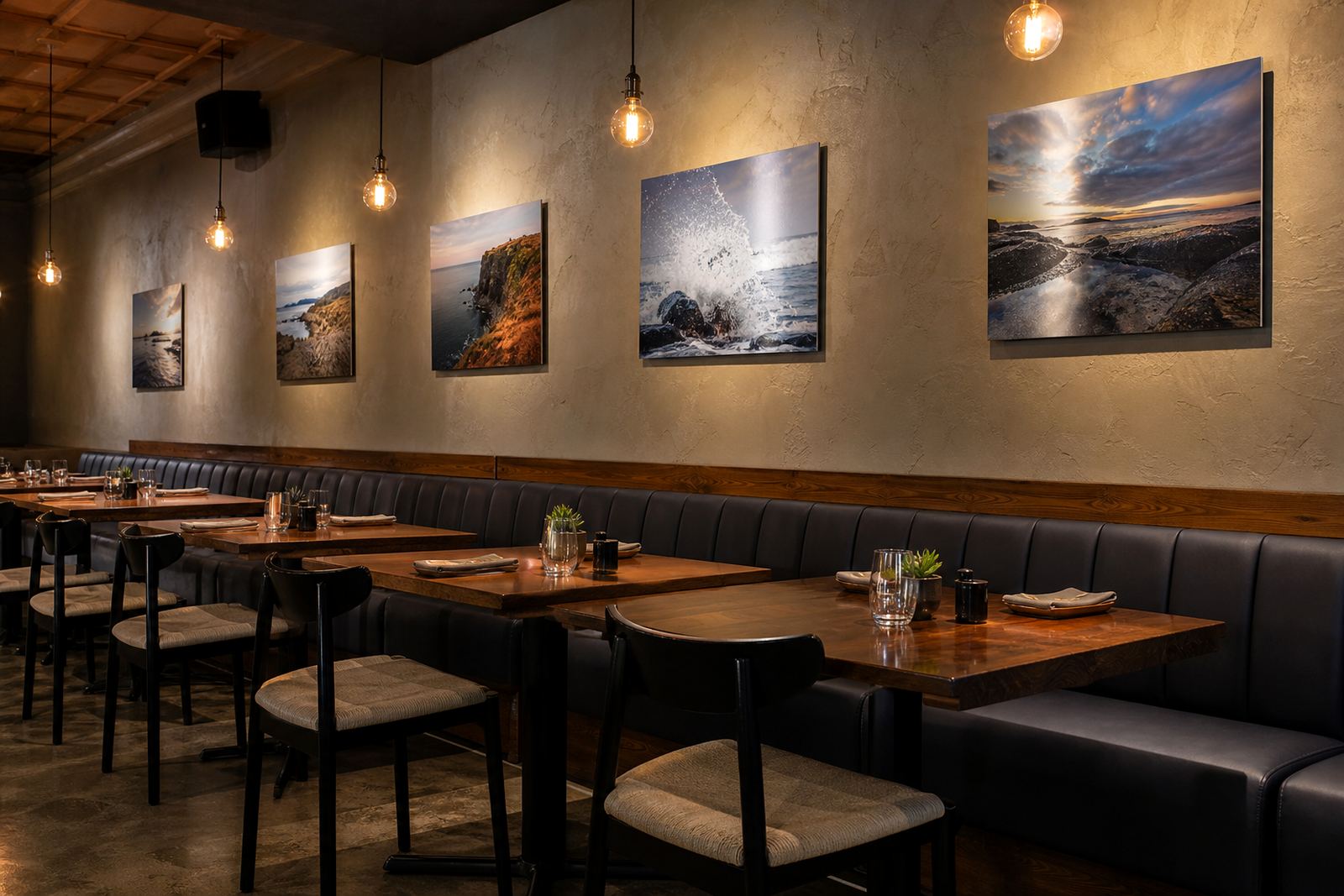
The brief came from a restaurant team in Melville, Johannesburg that wanted something more grounded than standard framed prints. They needed artwork that could sit comfortably beside timber, steel fittings and warm lighting, while still handling the daily knocks, moisture and cleaning that come with a working dining space. The imagery had to feel local and recognisable, with food close-ups and street-life scenes that tied the room to the neighbourhood.
We worked from supplied image files and checked each one for print suitability before anything went to production. The client needed a finish that would hold detail in the food photography without looking glossy or overly polished, so brushed aluminium was the right fit. It gave the set a soft metallic grain, which worked well with the restaurant’s interior tones and did not pick up glare from the downlights.
- Project type: restaurant wall set
- Location: Melville, Johannesburg
- Image style: food photography and neighbourhood scenes
- Panel finish: brushed aluminium
What had to work inside the room
The restaurant had a few practical limits to work around. The wall space was broken into sections, so the panels had to line up visually without forcing every image into the same size. There were also mixed light conditions during the day, with brighter window light at lunch and warmer evening light after dark. The panels needed to read clearly in both, without washing out or becoming too reflective.
We also had to keep the install practical. Hospitality spaces usually need quick fitting, secure mounting and easy cleaning, especially where steam and food splatter can reach the walls. The client wanted a system that looked neat from the front and did not leave visible clutter around the edges. We planned the set with those details in mind and kept the finish choices consistent across the whole group, so the final display felt intentional rather than pieced together.
- Uneven wall sections needed matched proportions
- Lighting changed through the day and into the evening
- Surface had to be easy to wipe down
- Mounting needed to sit flush and neat against the wall
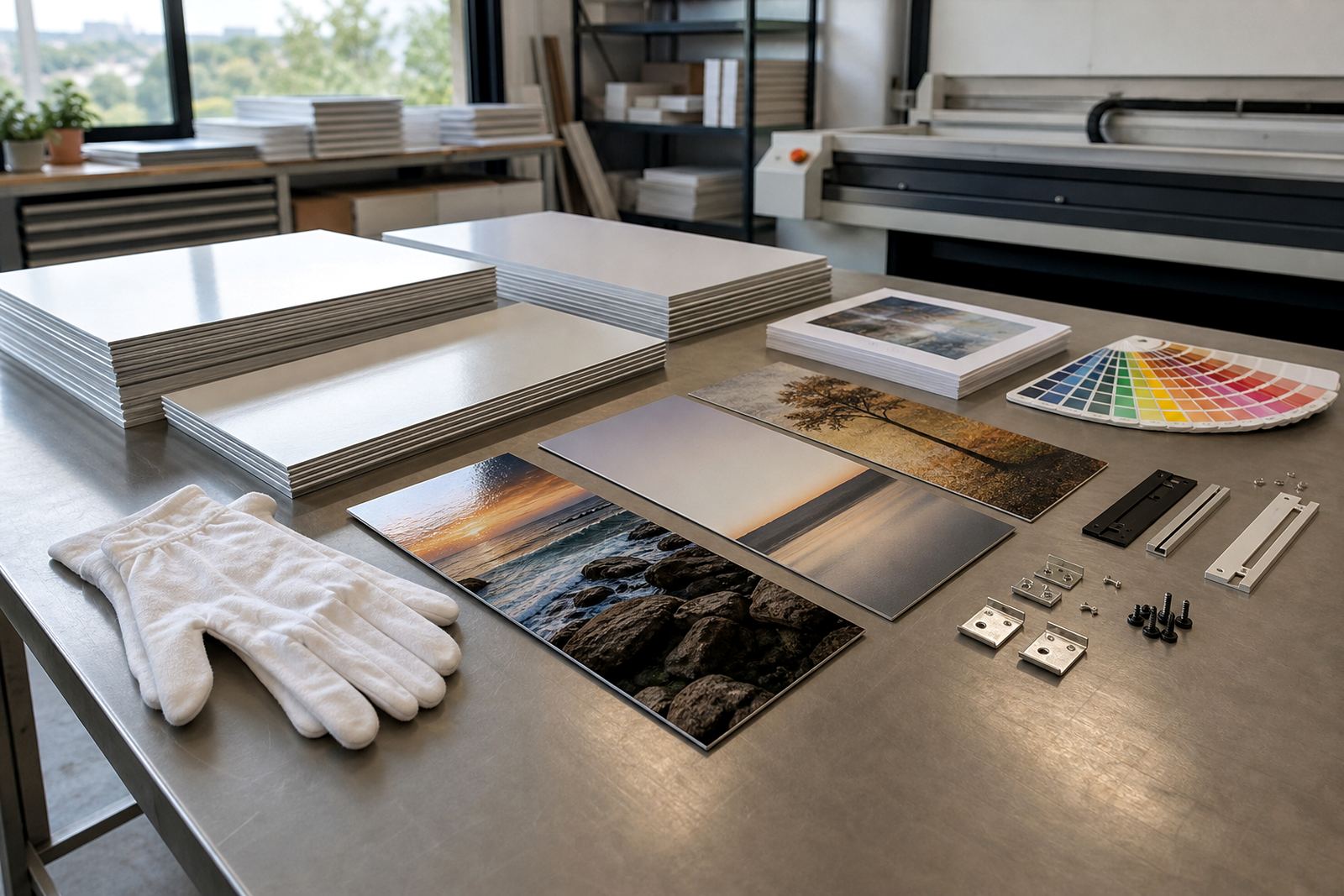
Print prep, size planning and panel finish
We reviewed resolution first, then handled the colour preparation and crop planning. Where needed, we adjusted framing so the hero details in each food image stayed clear once printed to size. The project called for multiple panels rather than one large image, so spacing and visual rhythm mattered just as much as the print quality itself.
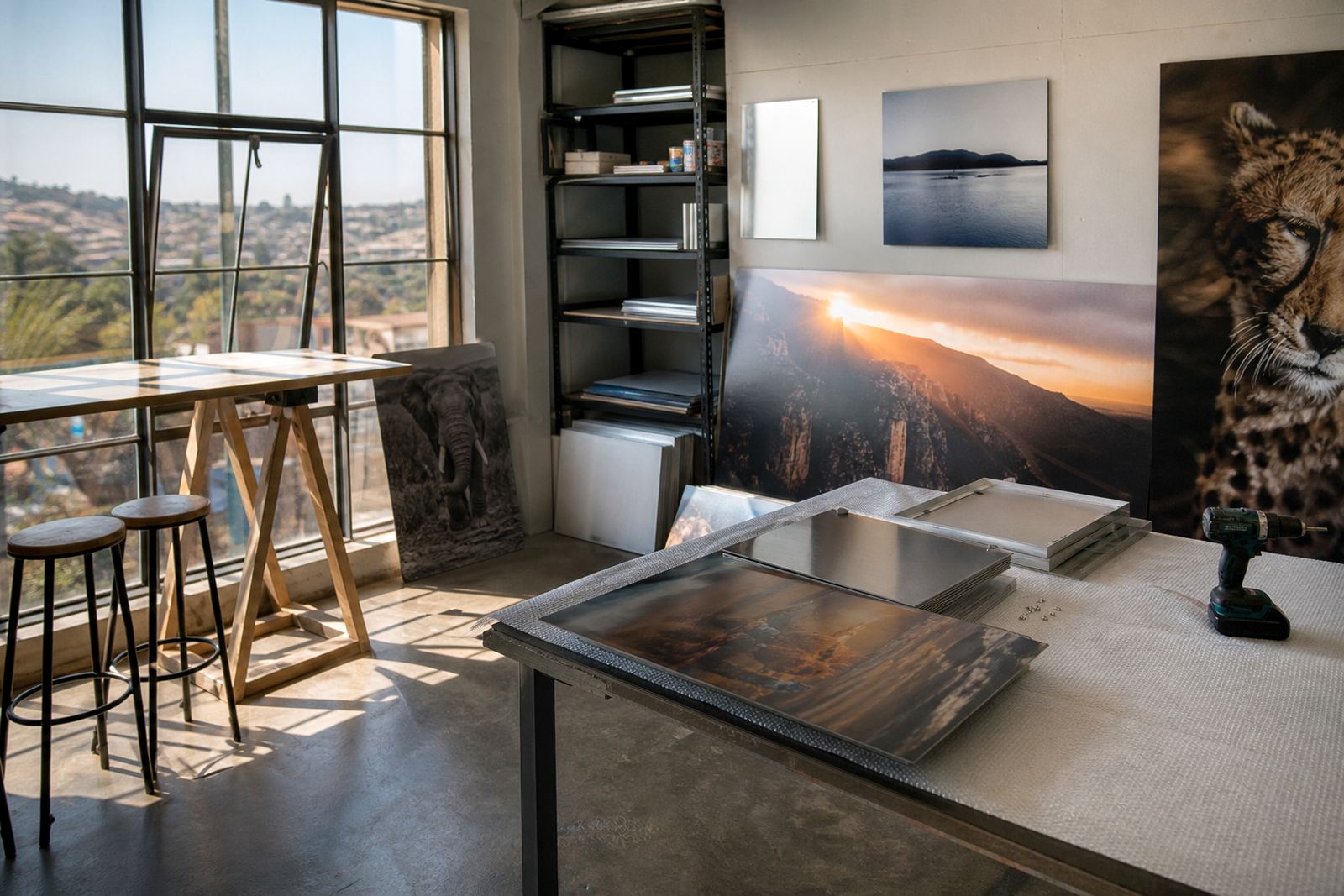
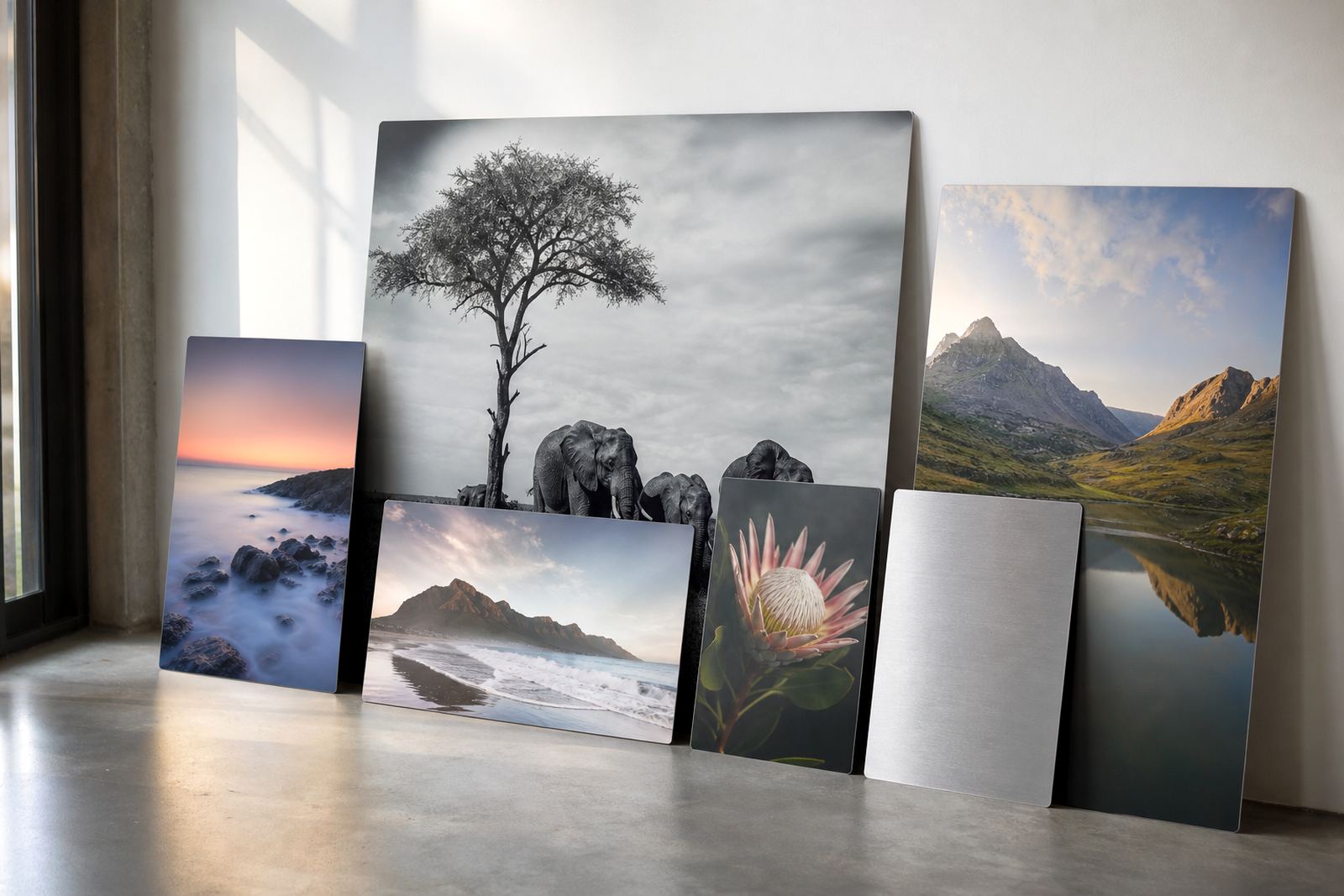
The artwork was produced using dye sublimation onto coated aluminium panels, with the brushed surface left visible through lighter areas of the images. That finish gave texture to the non-printed metallic sections and added depth without overpowering the photographs. For this set we supplied a mix of panel sizes, including smaller feature panels and a larger anchor piece, all made to suit the wall dimensions shared by the client.
- File checks completed before production
- Colour preparation matched across the full set
- Custom sizing used for the wall layout
- Brushed finish selected for texture and reduced glare
From file check to mounted panels in three weeks
The full job ran over three weeks from initial file review to final dispatch. The first week covered checking image quality, reviewing crops and confirming the panel arrangement. In the second week we completed test panels and final colour preparation, then moved into printing and finishing. The last stage covered mounting hardware, packing and delivery coordination for Johannesburg.
For a restaurant project, timing matters because space often has to stay open for service while updates are being done. We kept the process tight and gave feedback early when an image needed cropping adjustment or a tonal lift. That reduced the risk of rework later on and kept the set moving through production without delays.
- Week 1: file review and layout planning
- Week 2: test panels and print preparation
- Week 3: production, mounting and dispatch
- Delivery arranged for the Johannesburg area
Why brushed aluminium suited the Melville brief
The finished panels worked well because the brushed surface brought a bit of visual grit to the restaurant without making the artwork feel heavy. Food images can become too shiny on some surfaces, especially under warm spotlights. Here, the brushed finish helped soften reflections and gave the photographs a more tactile look. The neighbourhood scenes also benefited from that texture, with street details and building lines holding steady across the panels.
The client wanted a result that could handle everyday use, and the aluminium substrate is a practical choice for spaces where humidity, cleaning and general wear are part of the routine. It does not behave like ordinary paper prints and it suits interior walls where a cleaner, more permanent finish is preferred. The set gave the room a stronger identity and made the walls feel tied to the food being served, not just decorated.
- Lower glare under restaurant lighting
- Textured look that suited food and street imagery
- Hard-wearing surface for daily use
- Consistent tone across separate panels
Hardware, care and the parts we would repeat
We supplied hanging hardware suited to the panel sizes and the weight of the finished pieces, with a clean front presentation once mounted. For a hospitality space, that matters because the installation must stay level and secure while still looking tidy from close range. We also gave care advice so the team knew how to wipe the panels down without marking the surface or leaving residue behind.
If we repeated this project again, we would keep the same brushed finish and the same file preparation steps, because they suited the content and the room very well. We would also keep the multi-panel planning approach, especially for a venue where the wall breaks are not symmetrical. That allowed the images to sit naturally in the space, with each panel doing its part without competing for attention.
- Generic hanging hardware supplied for secure mounting
- Care guidance given for daily restaurant cleaning
- Multi-panel layout kept the wall balanced
- Same brushed finish would be used again for a similar brief
Key facts
| Project | Melville Restaurant Set |
|---|---|
| Client type | Restaurant in Melville, Johannesburg |
| Print method | Dye sublimation onto coated aluminium panels |
| Finish | Brushed aluminium |
| Scope | Food imagery and neighbourhood scenes in a multi-panel layout |
| Turnaround | 3 weeks from file review to delivery |