
When a studio needs prints that read clean at arm’s length
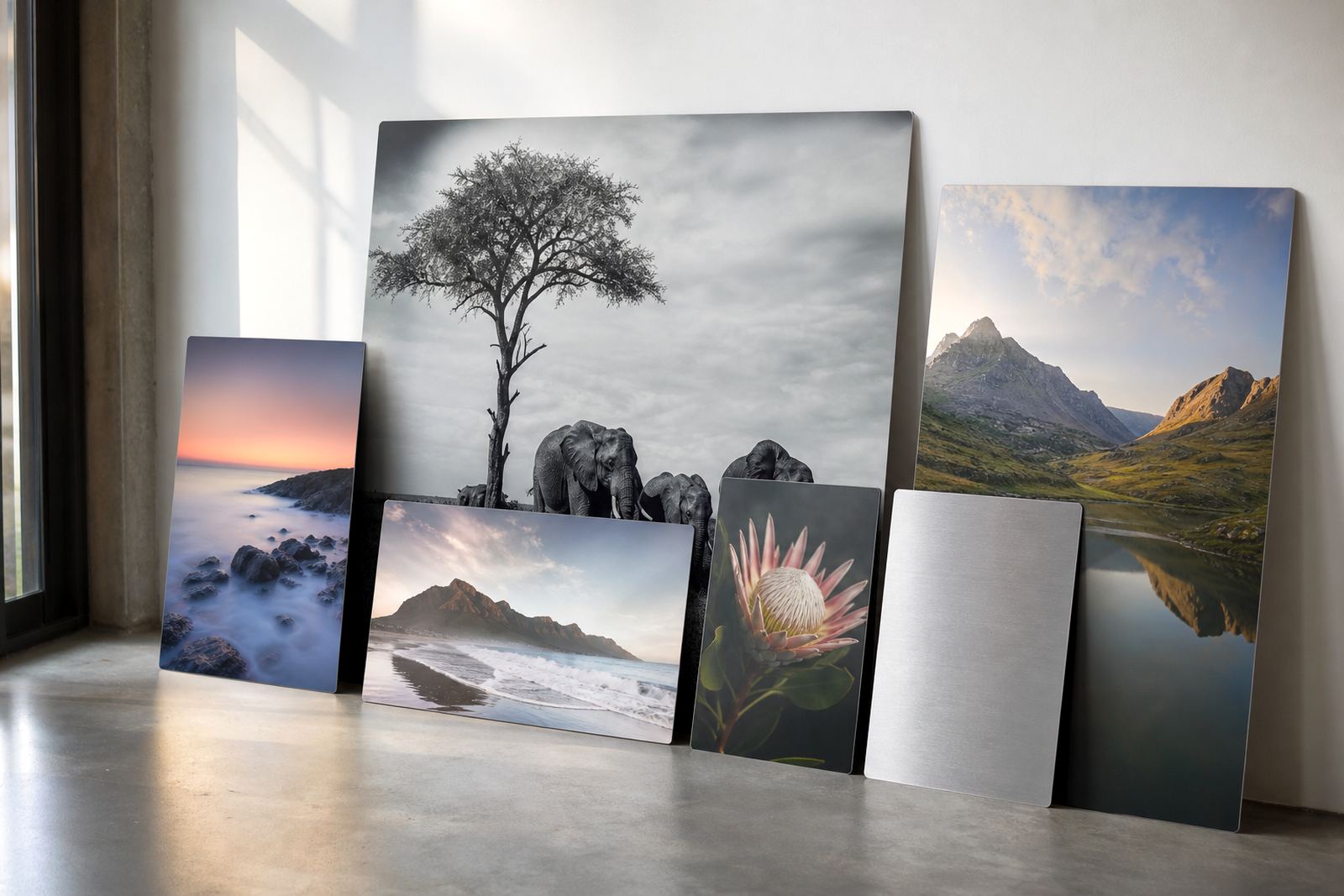
In a working photography studio, prints are not just decor.Aluminium panels suit that setting because the image sits on a coated metal surface, giving crisp detail and stable colour without the curl or sag you get with paper or some foamboard options.
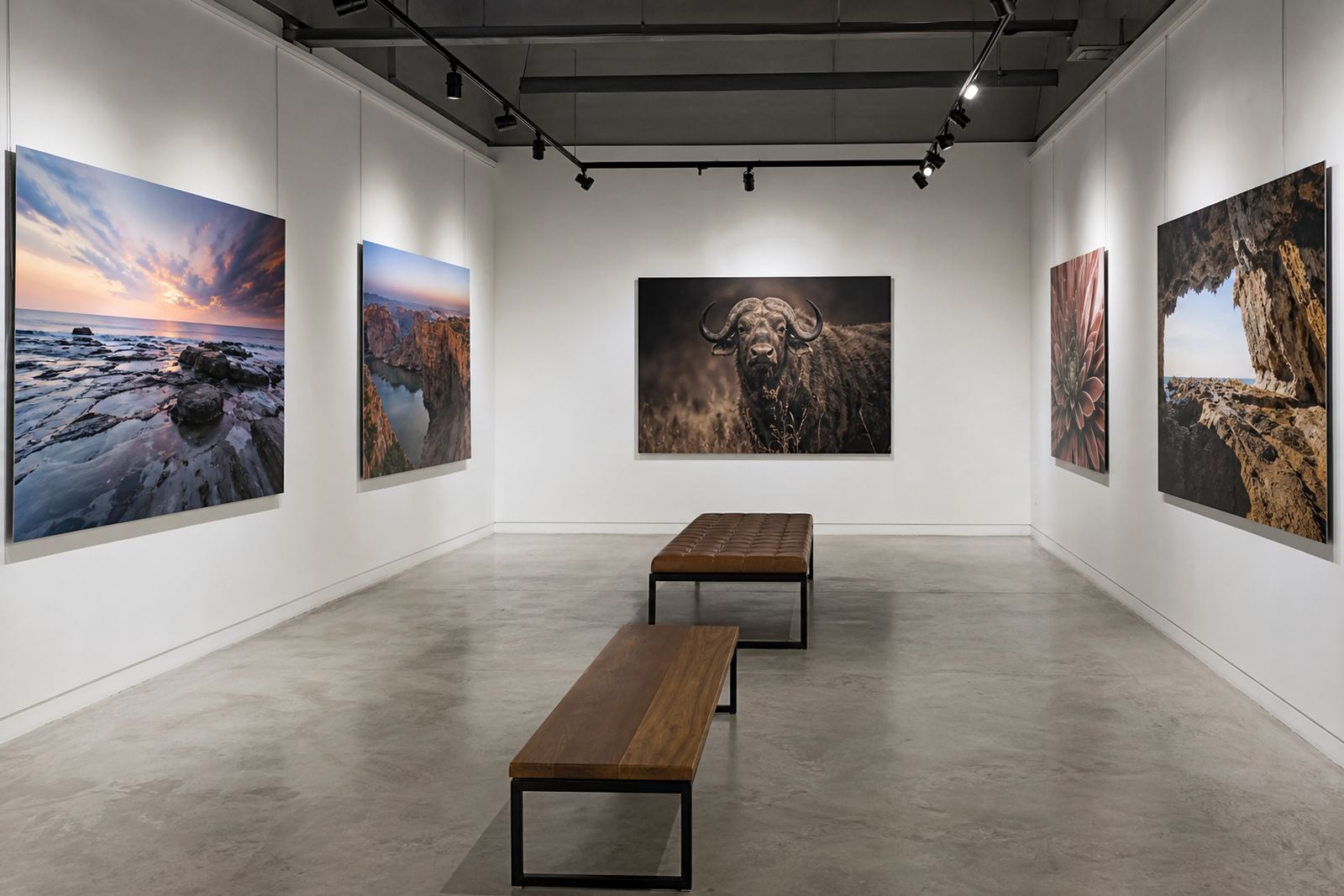
For portrait, wedding, fashion and commercial studios, the usual brief is consistent: the panel must look sharp under mixed lighting, stay tidy in a busy room, and be easy to hang on a plaster wall, concrete wall or display rail. We work with photographers who need one hero panel for a reception wall and others who want a full suite of images for a client meeting room or print sales corner.
- Hero images for reception walls and waiting areas
- Portfolio sets for client presentations
- Feature prints for backdrops and styled shoots
- Signed editions for studio sales and exhibition use
How dye sublimation changes the way a studio image lands
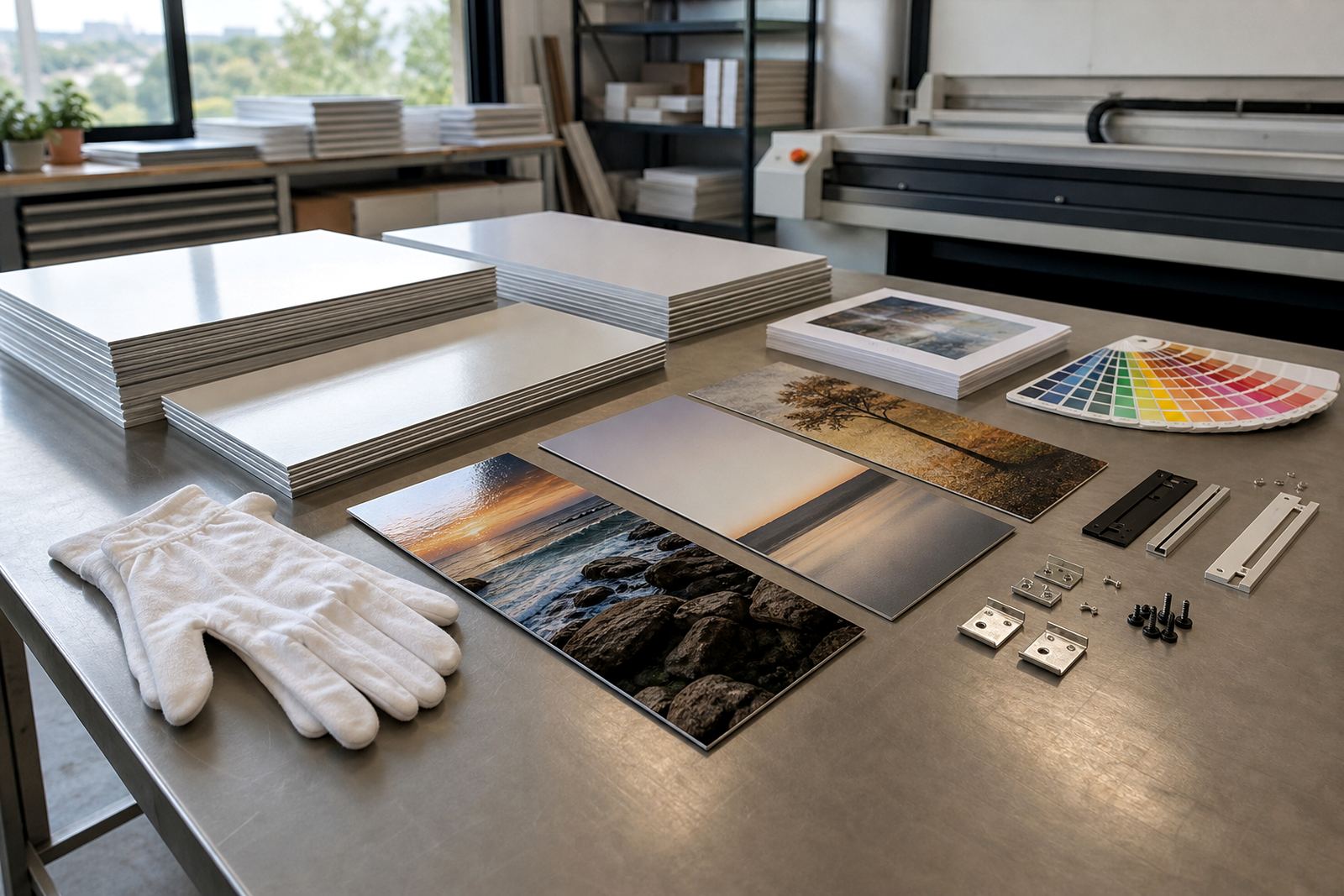
Dye sublimation on coated aluminium uses heat to transfer the image into the panel surface. The result is a hard wearing print with strong detail, smooth tonal transitions and a clean edge finish. It works well for high-resolution portraits, fashion work, product shots and architectural images where line clarity matters.
Finish choice changes the mood of the final piece. Gloss gives extra punch for rich colour and dramatic studio work. Matte cuts reflections and is often preferred where lights hit the wall at an angle. White panels give the cleanest colour response, while brushed aluminium can suit monochrome images, industrial spaces or editorial work with visible metal grain. A test panel is useful if your studio has unusual lighting or if the image has deep shadows, pale skin tones or fine type within the artwork.
- High-resolution files help preserve skin detail and subtle gradients
- Colour preparation reduces surprises between screen and final panel
- Crop planning matters when faces, hands or text sit close to the edge
- Test panels are worth it for large orders or repeat studio ranges
Bring files with enough pixels for the finished size, because a sharp image on a small monitor can still soften when stretched to a 900 x 600 mm or larger panel. We also check borders, safe areas and whether the crop should favour the subject or the room layout. If your studio uses a standard wall grid, we can mirror that spacing so the set looks planned rather than patched together.
Typical studio kit that works well with aluminium panels
Most photography studios already have a mixture of framed prints, canvases, sample books and digital screens. Aluminium panels sit neatly alongside those tools because they give a hard surface sample that clients can touch and view under real room light. In Johannesburg offices, Cape Town showrooms and Durban spaces with humid air, the coated surface is also a practical option because it is less fuss than materials that can warp or absorb moisture.
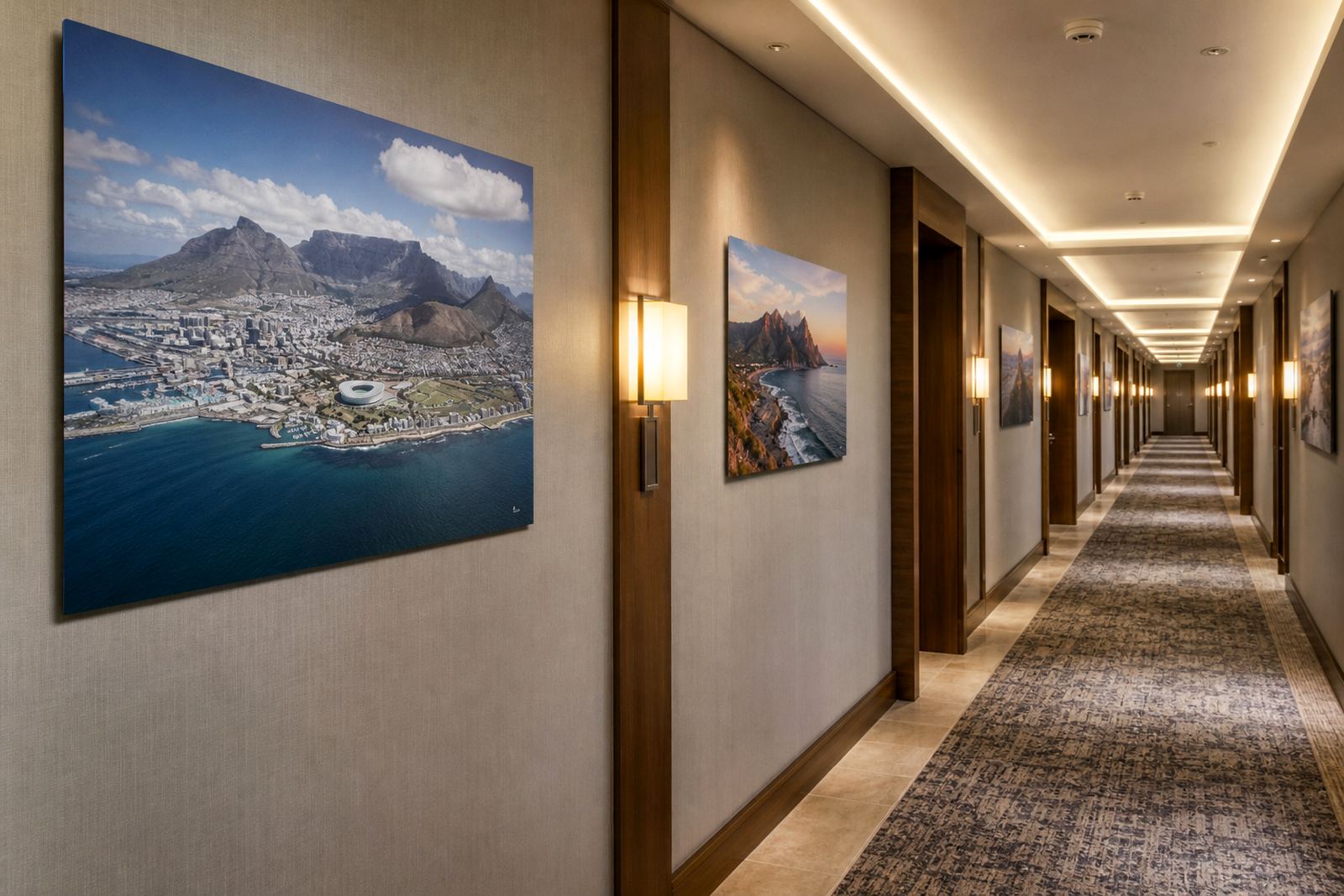
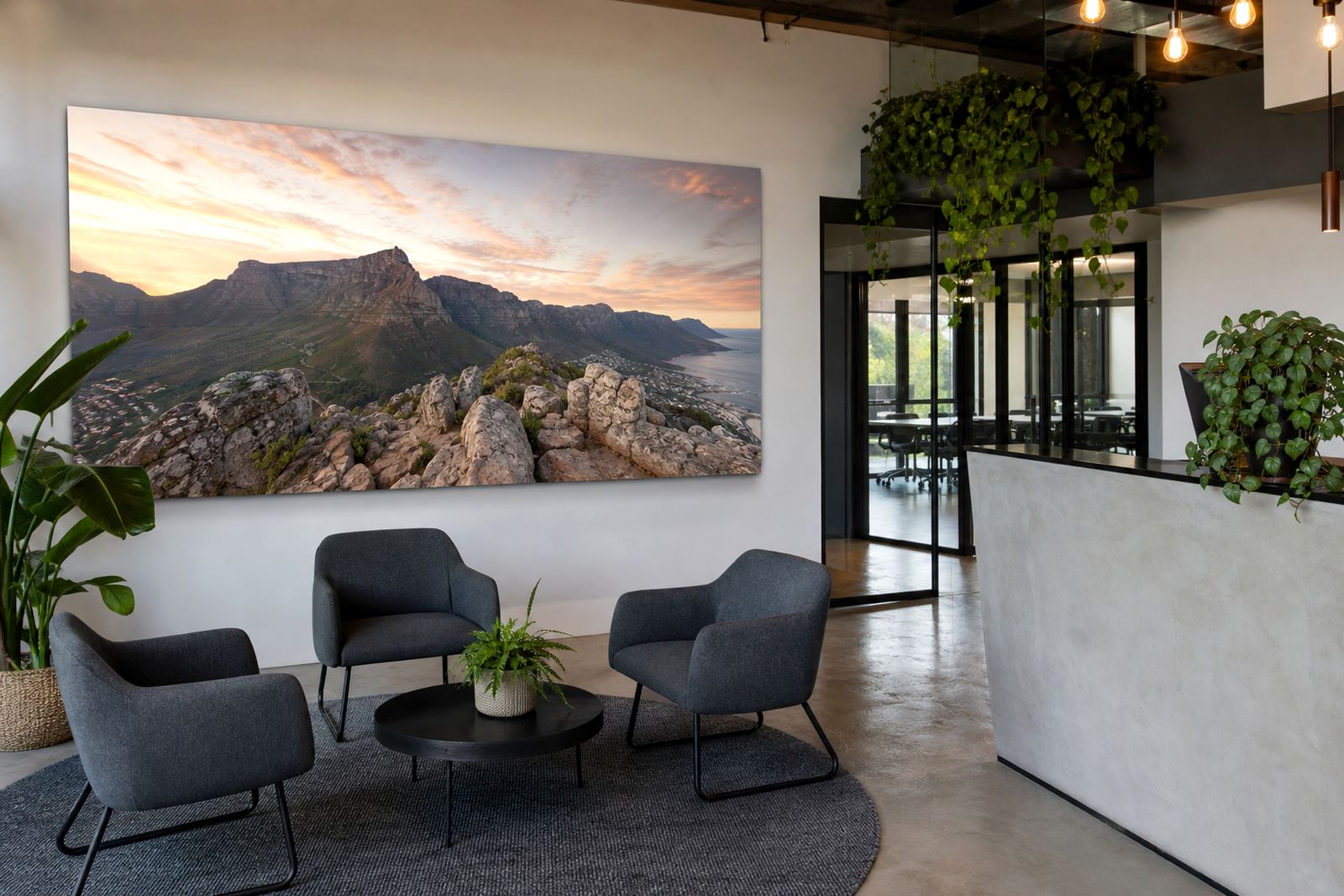
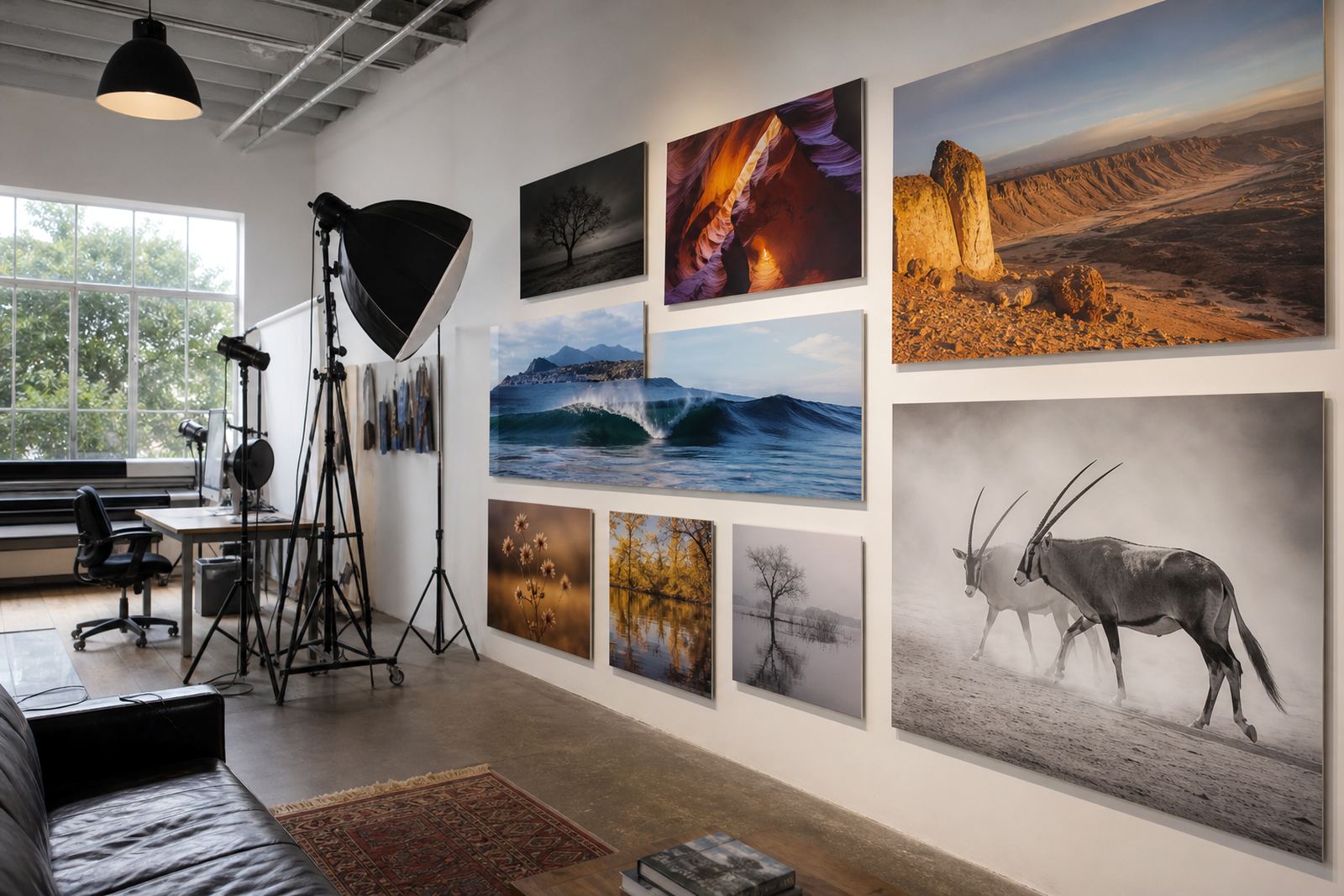
A common studio set-up might include a reception wall panel, two or three medium-sized portfolio pieces and a smaller selection of finish samples. Some studios add multi panel layouts for album reveals or branded feature walls. Others use one large panoramic image above the seating area and smaller supporting panels in a corridor or meeting room.
- Reception panel: strong first impression in the entry area
- Viewing wall set: 3 to 6 images in matching sizes
- Sample strip: gloss, matte, white and brushed finishes
- Large wall piece: statement print for branding or awards areas
Layout planning that saves time on reveal day
Good layout planning starts with the room, not the file. Measure the wall, note plug points, switches, aircon units and door swings, then decide where a client should stand when viewing the work. In a narrow Randburg studio or a split-level Pretoria space, a panel that is too wide can fight the room. A set that is too small can disappear once mounted.
Leave visual breathing space around each panel. If you are building a grid, keep the gaps even and work from the centre line of the wall. For mixed image sets, group by tone or story flow rather than by random size. A wedding studio may want soft, airy frames next to a single high-contrast hero image, while a commercial studio might prefer repeated sizes with strict alignment.
- Use wall measurements before approving final crop
- Match finish to the viewing angle and light source
- Allow space for hanging hardware and safe handling
- Plan for future additions if the wall will grow over time
We also advise checking how the room is cleaned. Some studios dust daily, others wipe surfaces after every session. That affects where fingerprints are noticed and which finish will suit the space best. A matte panel can be kinder in bright rooms, while gloss may be right for darker client areas where reflections are less of a problem.
Mistakes that show up only after the panel is on the wall
The most common mistake is sending a file that was cropped for Instagram instead of print. Another is choosing a finish without thinking about the studio lights. A glossy panel under direct spots can reflect a lamp or window and distract from the portrait, while a brushed finish can introduce texture that not every image can carry. The wrong size is another one, especially when the wall has a fixed bench or branding sign nearby.
Clients should also own the image rights or have permission to print the photographs they send. That matters for studio albums, team portraits, campaign images and event coverage. If the image belongs to a third party or model agreement is unclear, sort that out before production. It saves delays and avoids awkward reprints.
- Low-resolution files that look fine on screen but print soft
- Too much contrast in the dark areas of studio portraits
- Ignoring room lighting and creating unwanted glare
- Choosing a size before measuring the wall properly
Budget ranges that make sense for studio walls
Studio budgets vary by size, finish and mounting method. A single small panel for a proof corner will sit at a different price point to a large multi-panel wall for a client lounge. As a working range, smaller studio panels can start in the low hundreds of Rand, while larger custom pieces, special finishes and mounted sets can move into the higher hundreds or more depending on size and quantity. Test panels, packing and delivery also affect the total.
For many studios, the best approach is to start with one or two key images and build out the wall later. That lets you check the colour response in your own lighting, see how clients react and adjust the layout before placing a bigger order. We can help with custom sizing, finish selection, mounting options and reprint matching when you need a second panel to sit beside an existing one.
From Randburg, we supply studios across Johannesburg, Midrand, Sandton, Pretoria, Cape Town, Durban and Gqeberha. Orders are handled through the enquiry form on our contact page, with file checks and delivery arranged once the brief is confirmed.