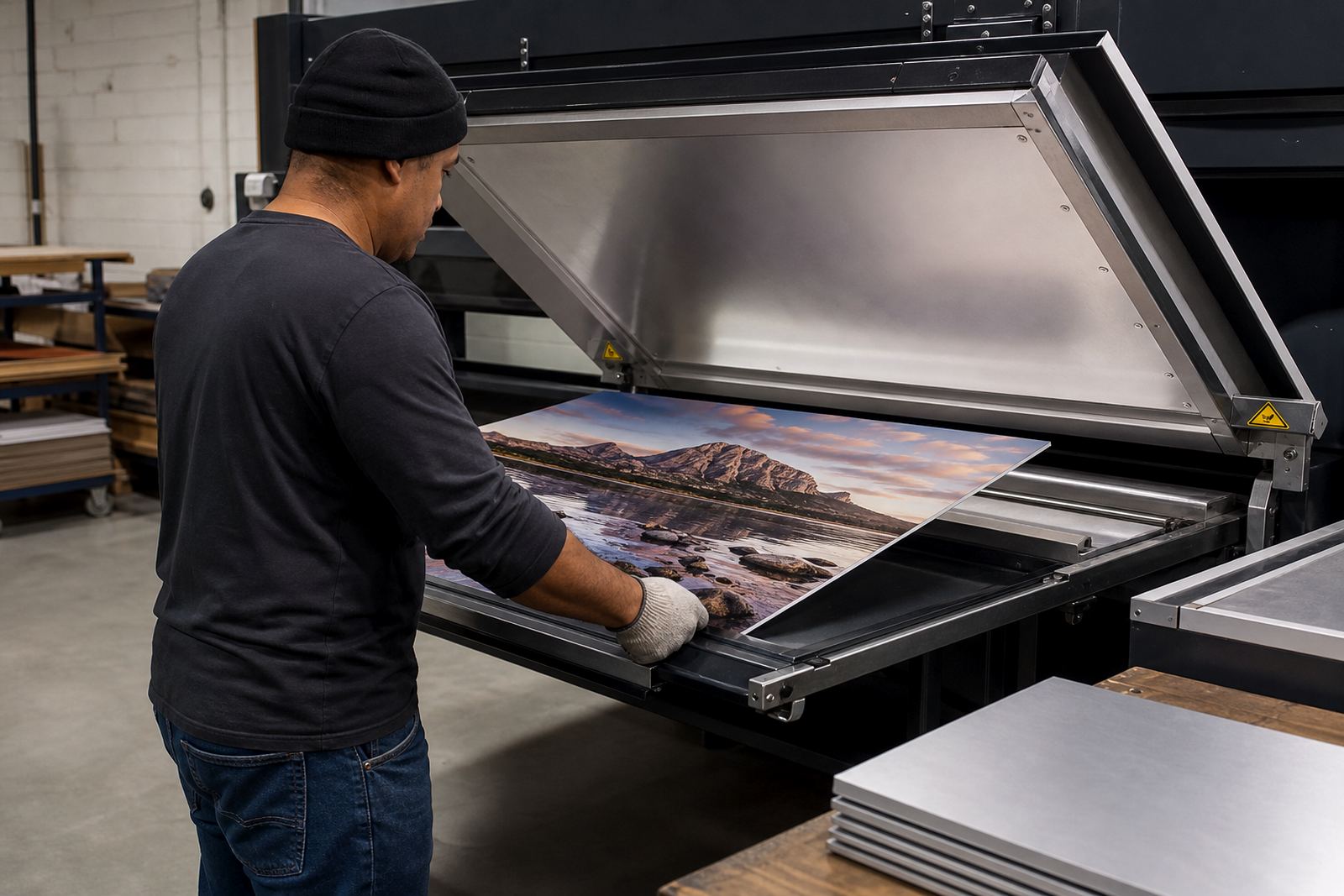

First handling after unpacking
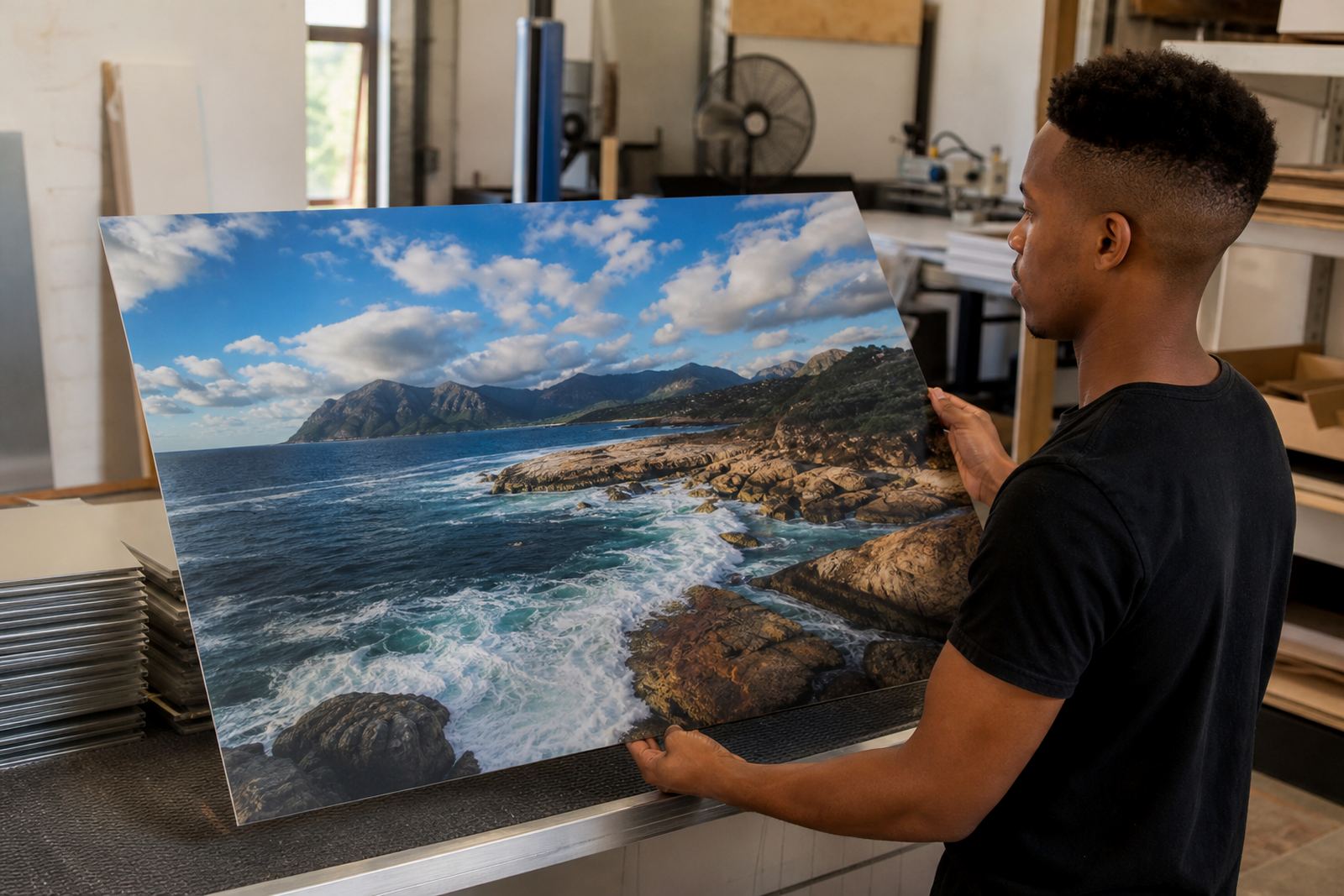
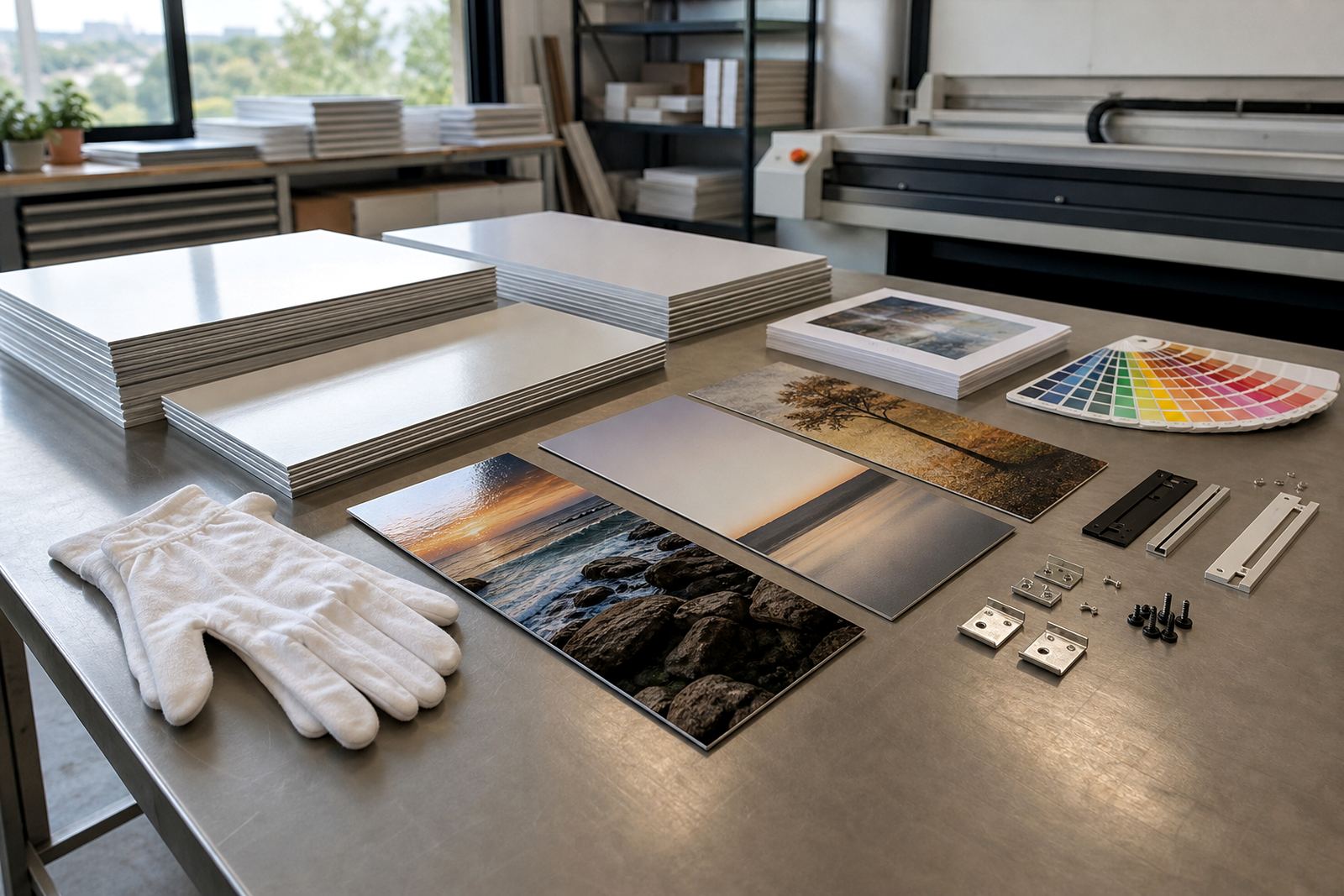
When a panel arrives, open the carton on a clean table and lift it with two hands. The printed face can pick up marks from dust, hand cream and rough fabric, so handle the edges rather than pressing on the image area.
If the panel was in transit from Randburg to Johannesburg, Cape Town or Durban, let it rest flat at room temperature before mounting. This is useful after a hot delivery van or a cool store room, because sudden changes in temperature can create condensation on the surface.
- Wash and dry your hands before handling the panel.
- Keep the protective film or wrapping until the display area is ready.
- Do not slide one panel over another without a soft separator.
- Check corners and hanging points before lifting it to the wall.
Cleaning without clouding the finish
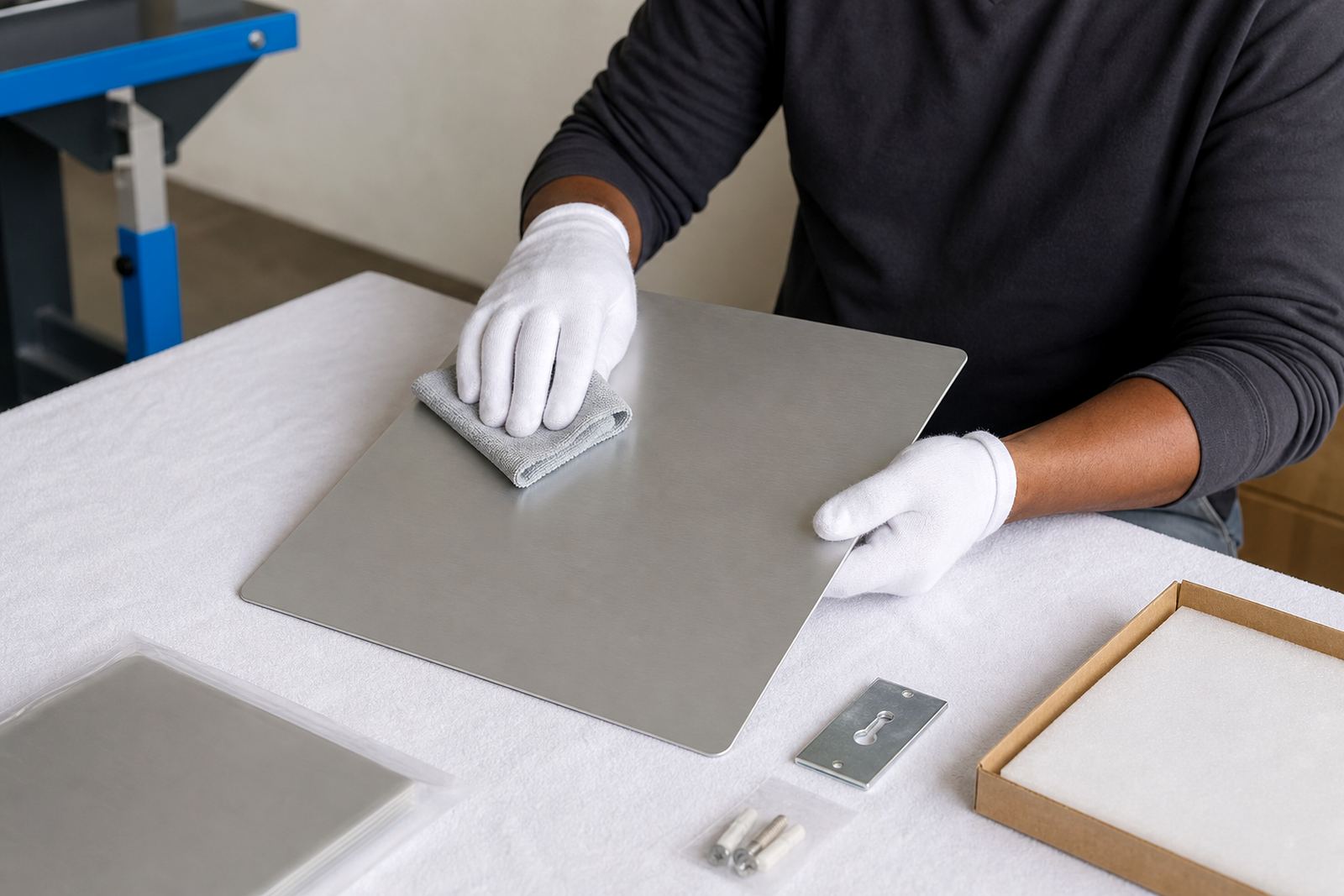
Most aluminium photo panels only need a light wipe now and then. Use a soft microfibre cloth and, if needed, a little clean water. Wipe gently in straight passes, then dry the surface with a second cloth so water does not sit on the coating.
A mild pH neutral cleaner can be used for fingerprints, but spray it onto the cloth first, not onto the panel. This keeps liquid out of the edges and helps prevent streaks on gloss finishes. Matte and brushed finishes can hide small marks better, but they still need gentle treatment.
- Do not use scouring pads, paper towel or abrasive cream cleaners.
- Avoid ammonia, solvent based sprays and strong glass cleaners.
- Never scrub one spot hard, especially on dark areas or fine detail.
- For coastal homes, wipe salt film off sooner rather than later.
What the finish needs from you
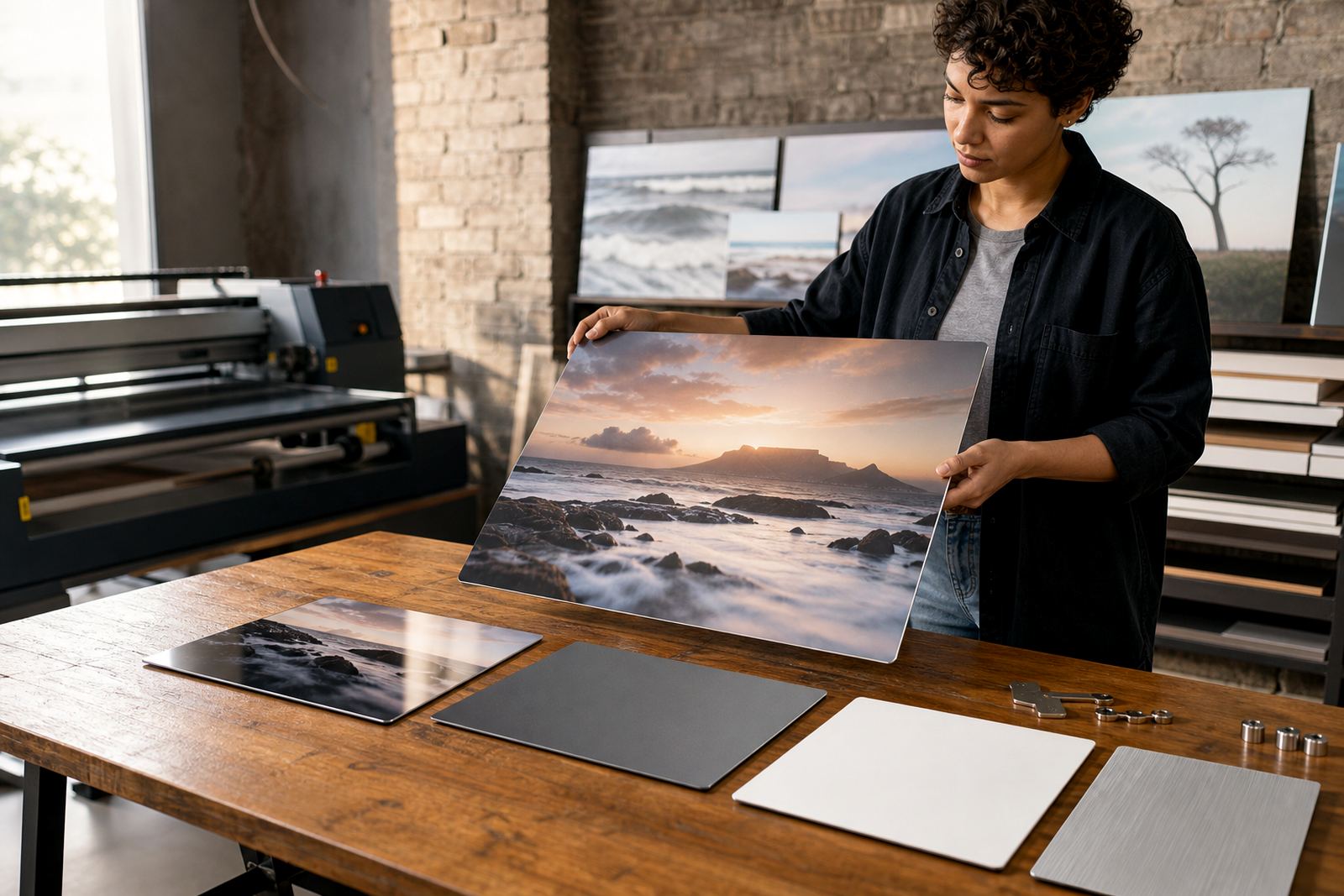
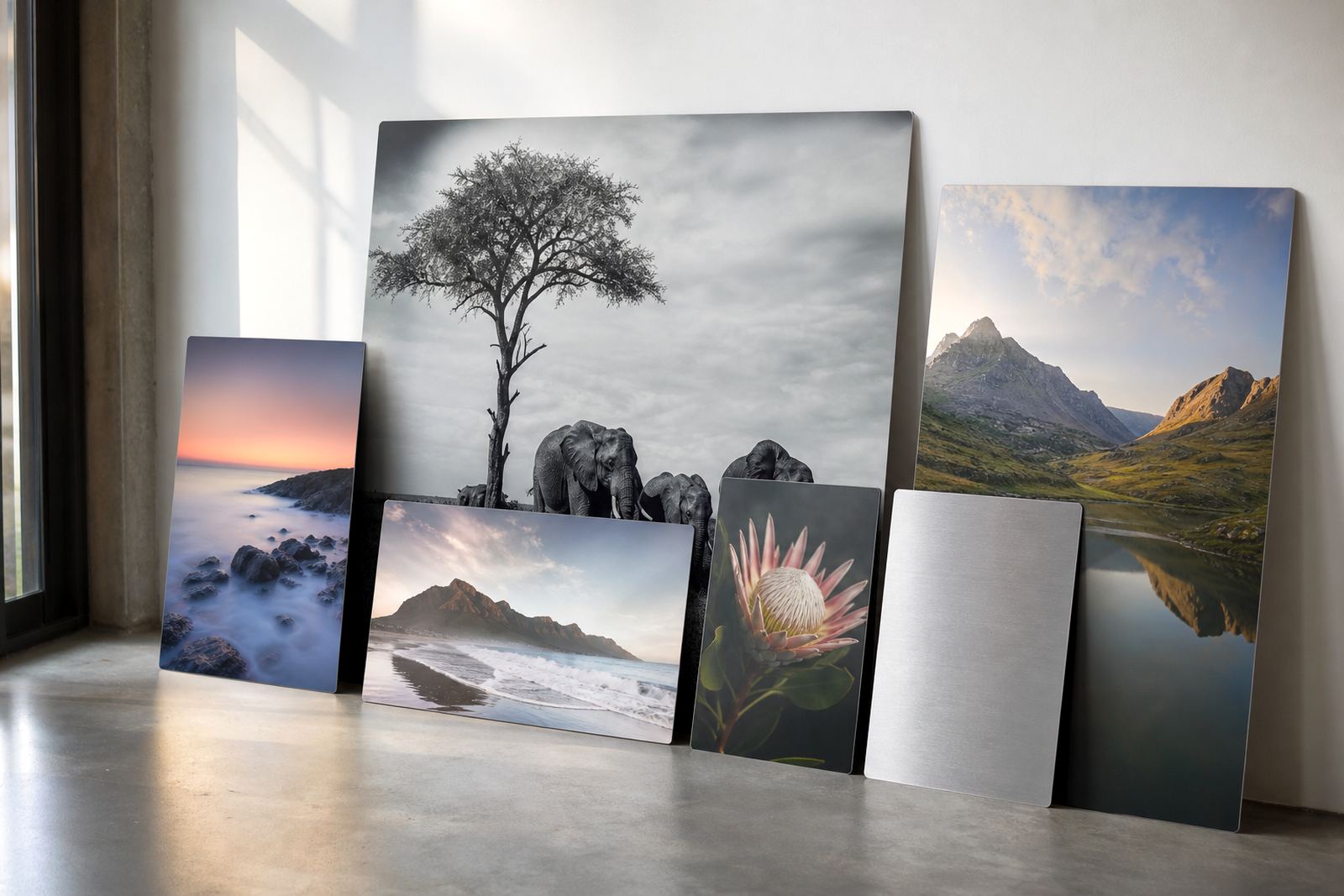
Different finishes ask for slightly different care. Gloss panels show colour and contrast strongly, so they should be kept away from greasy fingers and direct glare where possible. Matte panels are easier in bright offices and reception areas because they cut reflections, but the surface still needs a soft cloth only.
White coated panels suit clean, crisp artwork and business displays. Brushed aluminium gives a visible metal texture, so avoid dragging anything across the face or the surface pattern can show scuffs. If a panel has a white ink layer or a layered image build, treat it as a printed art surface, not as bare metal.
- Gloss: wipe lightly and polish dry with a clean cloth.
- Matte: use the least moisture needed for cleaning.
- White coated: protect from staining liquids and dust build-up.
- Brushed: clean in the direction of the texture, not across it.
Hanging rules that help the panel stay true
Once mounted, a panel should sit flat and secure. Use the hanging hardware supplied or specified for the panel size and weight. For larger work, especially in offices in Sandton or Pretoria where aircon runs most of the day, make sure the fixings are into sound wall material and not just plaster.
If the wall is uneven, add spacers where needed so the panel does not bow. Do not rest the lower edge against a skirting board or shelf. That puts pressure on the corners and can mark the finish over time.
- Use level fixings so the panel does not twist.
- Leave a small air gap behind the panel for ventilation.
- For high traffic areas, place it where bags and chair backs will not hit it.
- If the panel is very large, get help when lifting it onto the wall.
Storing panels between exhibitions or moves
If a panel is not going straight onto the wall, store it upright or flat on a clean, dry surface with nothing sharp against the face. Keep it away from damp garages, unventilated storerooms and direct sunlight through windows. In humid areas such as Durban or Gqeberha, moisture can creep into packaging and leave marks if panels are packed too tightly.
Use interleaving sheets or soft wrap between panels. Avoid leaning heavy objects against the corners, because that can mark the edges or shift the panel shape.
- Store in a room with steady temperature, not next to a heater or open window.
- Keep panels off concrete floors where cold and damp can travel upward.
- Do not stack loose hardware on top of the image face.
- For long storage, inspect the wrap every few weeks for dust or moisture.
When a reprint or matching check is worth asking for
If a panel has a scratch, a hard mark or a colour issue after display, send through clear photos and the details of the panel size and finish. That helps with a reprint matching check and makes it easier to see whether the problem came from handling, wall conditions or the original file setup.
Customers should own the image rights or have permission to use the pictures they submit. That applies to family photos, gallery work, commercial images and branded content alike. If you are planning a set of matching panels for a shop, studio or office, keep the original file safe and name it clearly so the next panel can match the first one closely.
- Keep the original high resolution file, not a compressed social media copy.
- Note the finish used: gloss, matte, white or brushed.
- Record where the panel was fitted and how it was cleaned.
- For multi panel layouts, keep the exact crop and spacing notes.