
A seating wall that had to work as hard as the service counter
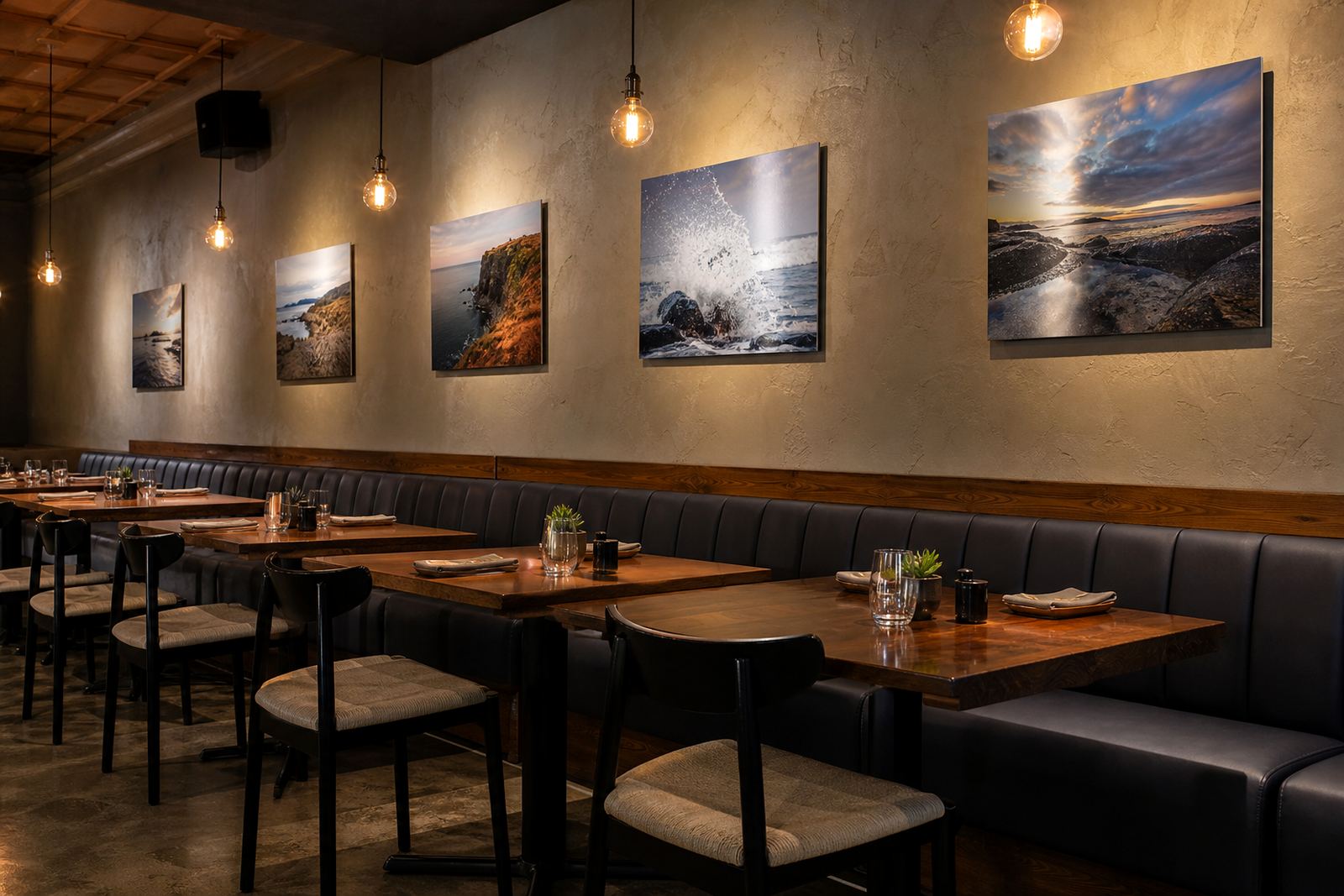
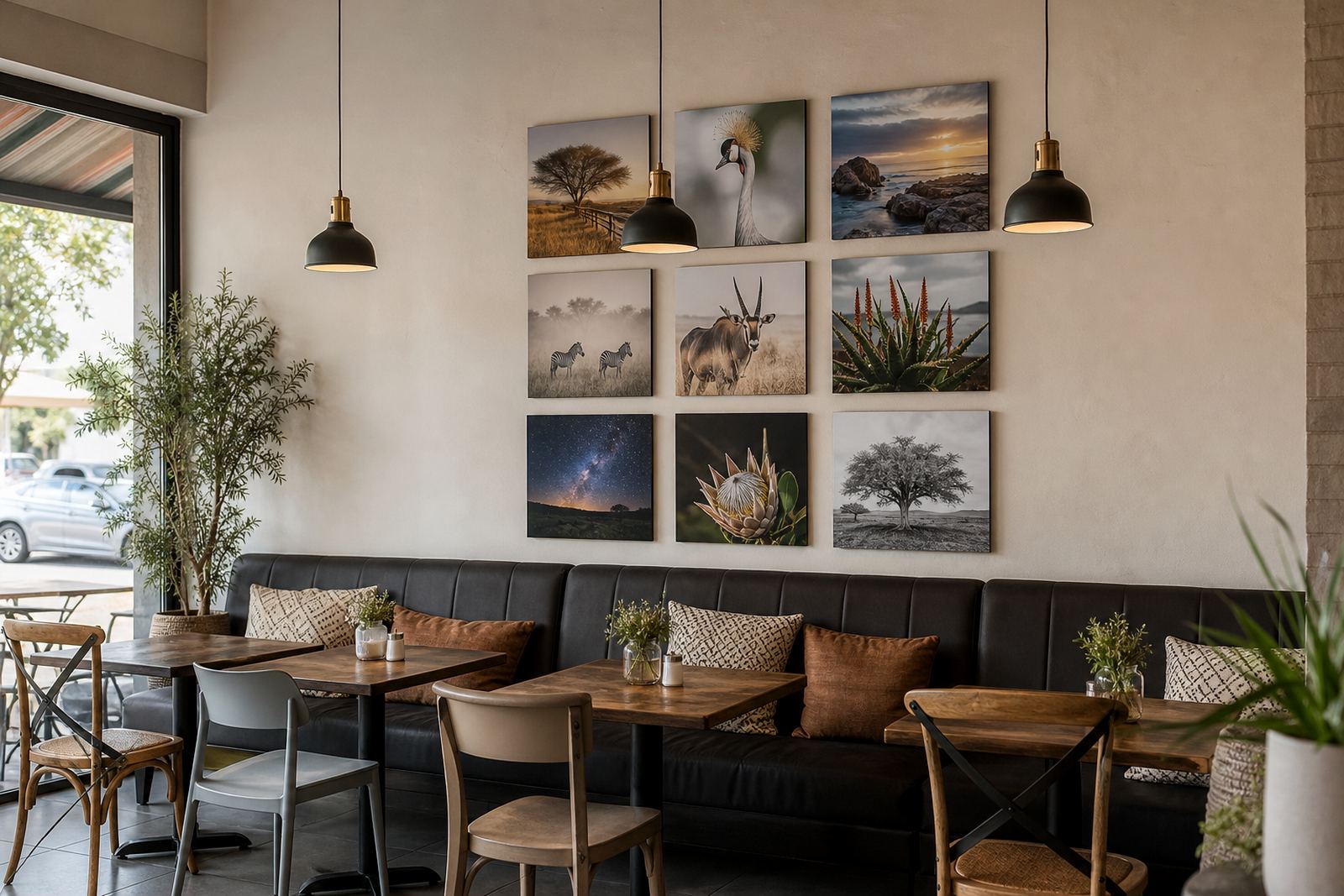
The brief came from a café in Fourways, Johannesburg that wanted a calm visual feature close to the seating area. The wall needed to show a local photographic series, but it also had to cope with fingerprints, steam, frequent cleaning and the usual knocks that happen when chairs and trays move past the wall all day. The owners did not want framed prints or glass, because those can pick up glare and feel too delicate in a busy café.
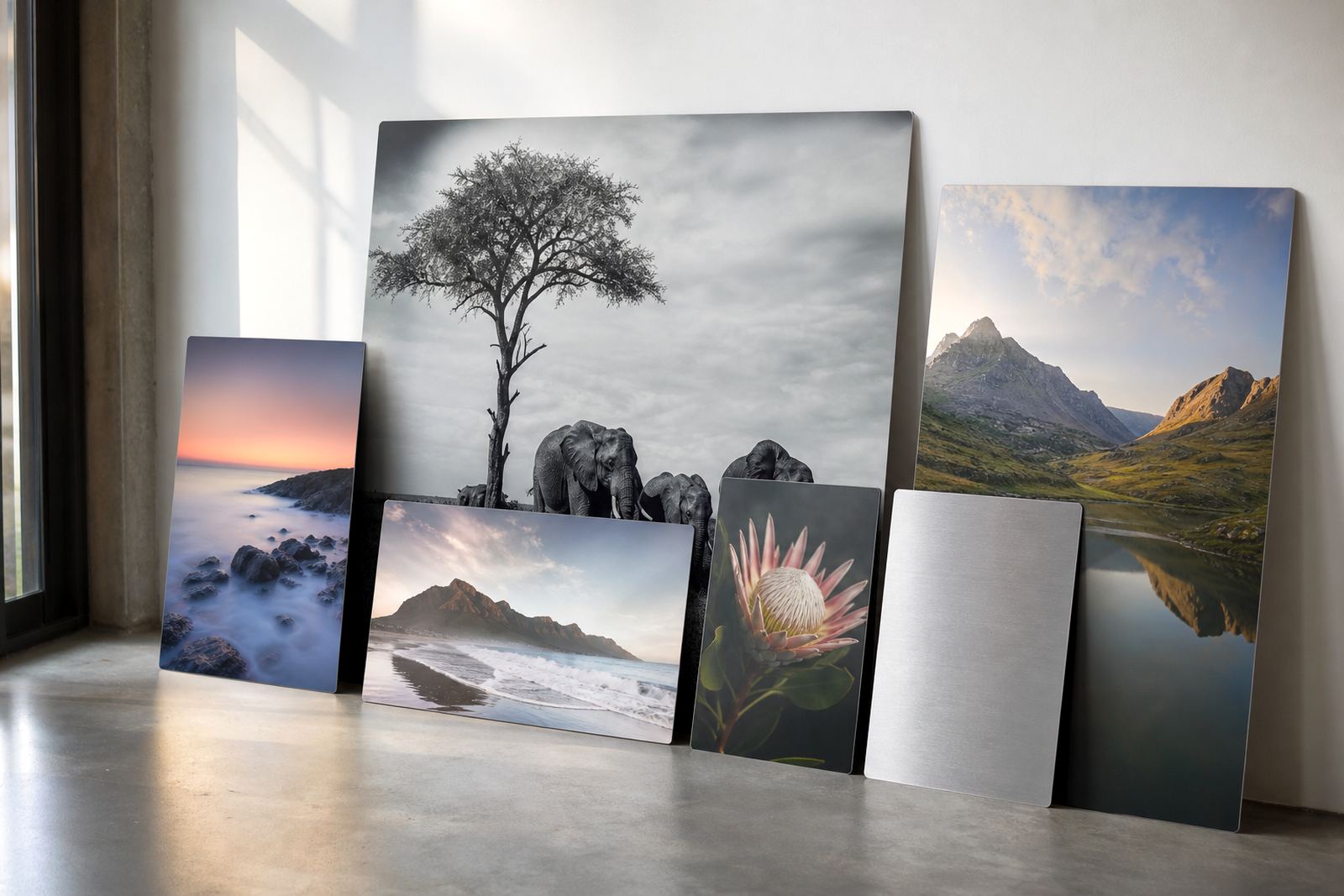
We proposed a set of smaller square aluminium photo panels so the display could read as one wall from a distance, yet still be easy to replace in sections if needed. The panels were sized to suit the wall rhythm and the sightline from the tables, with enough spacing to keep the composition airy. It was a practical choice for a hospitality space, not just a decorative one.
- Client type: independent café
- Town: Fourways, Johannesburg
- Display type: modular photo wall near seating
- Finish chosen: matte to reduce glare from windows
What the wall had to survive every day
The café gets strong side light in the mornings and patchy light later in the day, so the images had to hold their colour without flashing back under the overhead fittings. The wall also sits close to the passage between tables and the service area, which meant the panels had to be flat, safe at the corners and easy to wipe down with a damp cloth.
We reviewed the supplied image files for resolution, crop safety and tonal balance before printing. Because the panels were going into a restaurant setting, we also checked whether lighter areas would hold detail once the images were printed onto coated aluminium. That step matters more than most people expect, especially when a wall is seen both up close and across the room.
- Environmental factors: indoor humidity changes, dust, direct sunlight patches
- Practical requirement: easy-clean surface with no glazing
- Image handling: resolution review, crop planning, colour preparation
- Safety detail: softened corners and flush mounting approach
How we built the panels for a clean repeat pattern
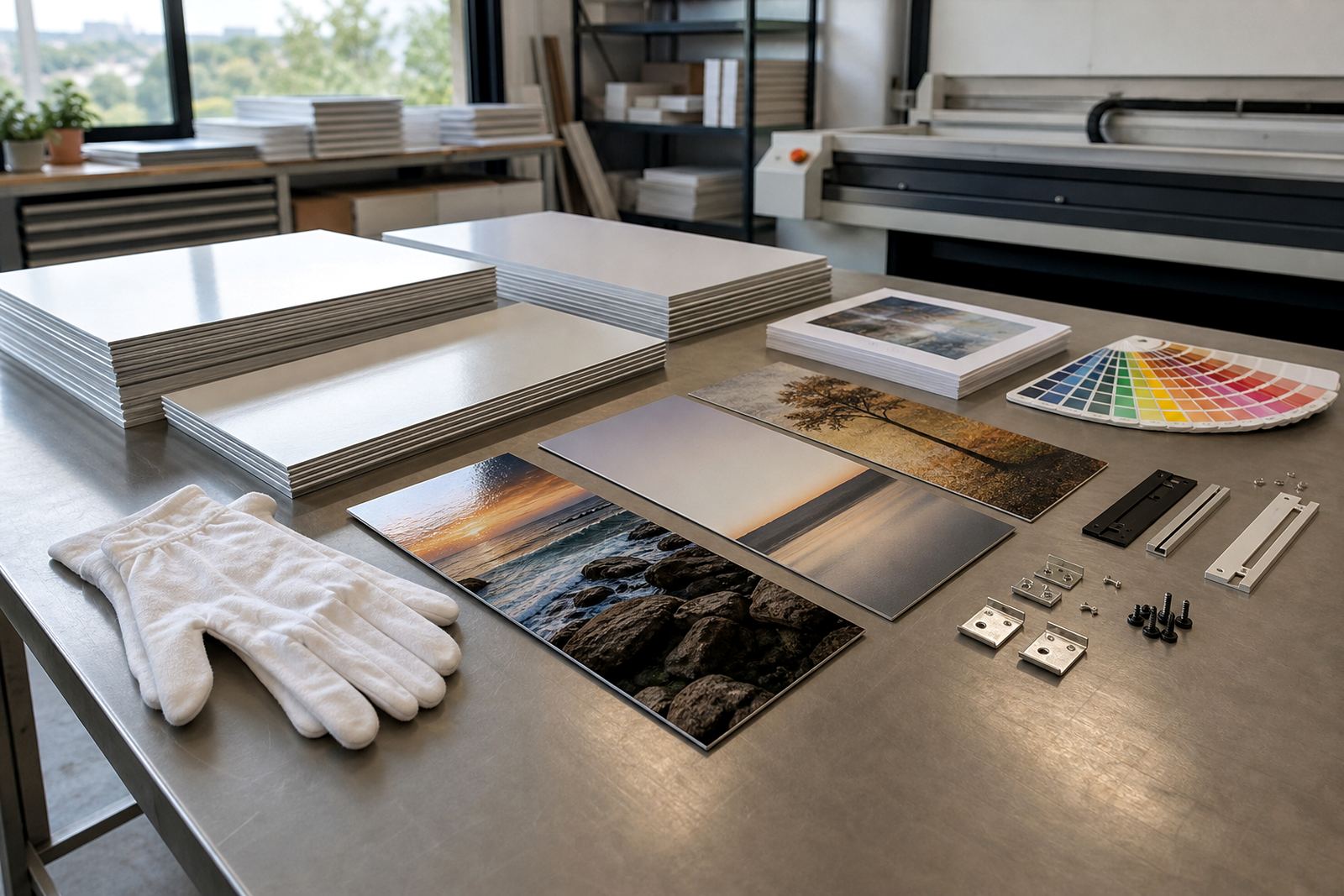
The final set was produced using dye sublimation onto coated aluminium panels, which gives a hardwearing image layer with good colour depth and a smooth finish. For this wall we selected a matte surface because it suited the room better than gloss. Gloss can work well in other spaces, but here the matte finish kept reflections down and made the artwork easier to read from different seats around the room. A brushed finish was discussed too, though it was not the right match for this particular series.
Each square panel was cut to the agreed size and checked before dispatch. The file set was prepared as a repeatable layout so the panels would line up cleanly once installed. The result was a visual run that felt ordered but not rigid. The café owner wanted something modern without looking cold, and the square format helped with that balance.
- Process: dye sublimation onto coated aluminium
- Panel format: smaller squares for a modular wall arrangement
- Surface: matte
- Colour handling: image correction and repeat layout checks
Mounting that stayed neat behind the tables
The hanging method needed to be tidy, level and secure. We supplied a generic rear mounting system suited to aluminium panels so the faces sat neatly off the wall without visible hardware showing from the front. In a busy café, that detail matters because exposed fixings can interrupt the look and collect grime over time. The mounting also had to tolerate small bumps from cleaning equipment and staff movement.
We packed the panels with protective layers between each piece, then arranged delivery so the set could be handled in one go. The team on site had a straight run through the wall space, which made spacing easier to set out before the first panel went up. There was no need for on-site rework, only a final level check once the full row was in place.
- Mounting style: generic rear hanging hardware
- Display benefit: no visible front fixings
- Packing: interleaved protection for each panel
- Delivery: coordinated for a single installation slot
Two weeks from file check to a finished wall
The full job ran over two weeks. In week one we completed the file review, confirmed the crop positions and locked in the finish choice. We then produced a small test panel to confirm tone and surface response before moving to the full set. That test helped confirm that the matte finish kept skin tones and darker shadows in balance under the café lighting.
In week two we completed the main print run, inspection and packing, then arranged delivery to Fourways. The schedule suited the client because the café could prepare the wall in advance and install during a quieter trading period. That part is often overlooked, but timing matters when tables are close and there is limited space to work.
- Week 1: file checks, crop planning, finish selection, test panel
- Week 2: full production, inspection, packing and delivery
- Outcome: install ready without interrupting service for long
What changed once the panels were on the wall
The finished wall gave the café a clean focal point near the seating without adding clutter. Because the panels are easy to wipe, the staff do not have to baby the display, and the owners can keep the area looking sharp during normal trade. The square layout also works well with the room proportions, so the display feels intentional rather than squeezed in as an afterthought.
For this type of interior, we would do the same again: keep the panels smaller, keep the finish low-glare, and plan the crops carefully before print. If a future update is needed, the modular format makes it easier to replace one section without disturbing the whole wall. That is often the most practical part of using aluminium in a hospitality setting.
- Visual result: tidy, balanced wall with strong colour
- Maintenance: wipe-clean surface for daily use
- Future value: single panels can be replaced if the series changes
Key facts
| Project | Fourways Cafe Wall |
|---|---|
| Client type | Independent café |
| Location | Fourways, Johannesburg |
| Product | Dye sublimation aluminium photo panels |
| Finish | Matte |
| Timeline | 2 weeks |