
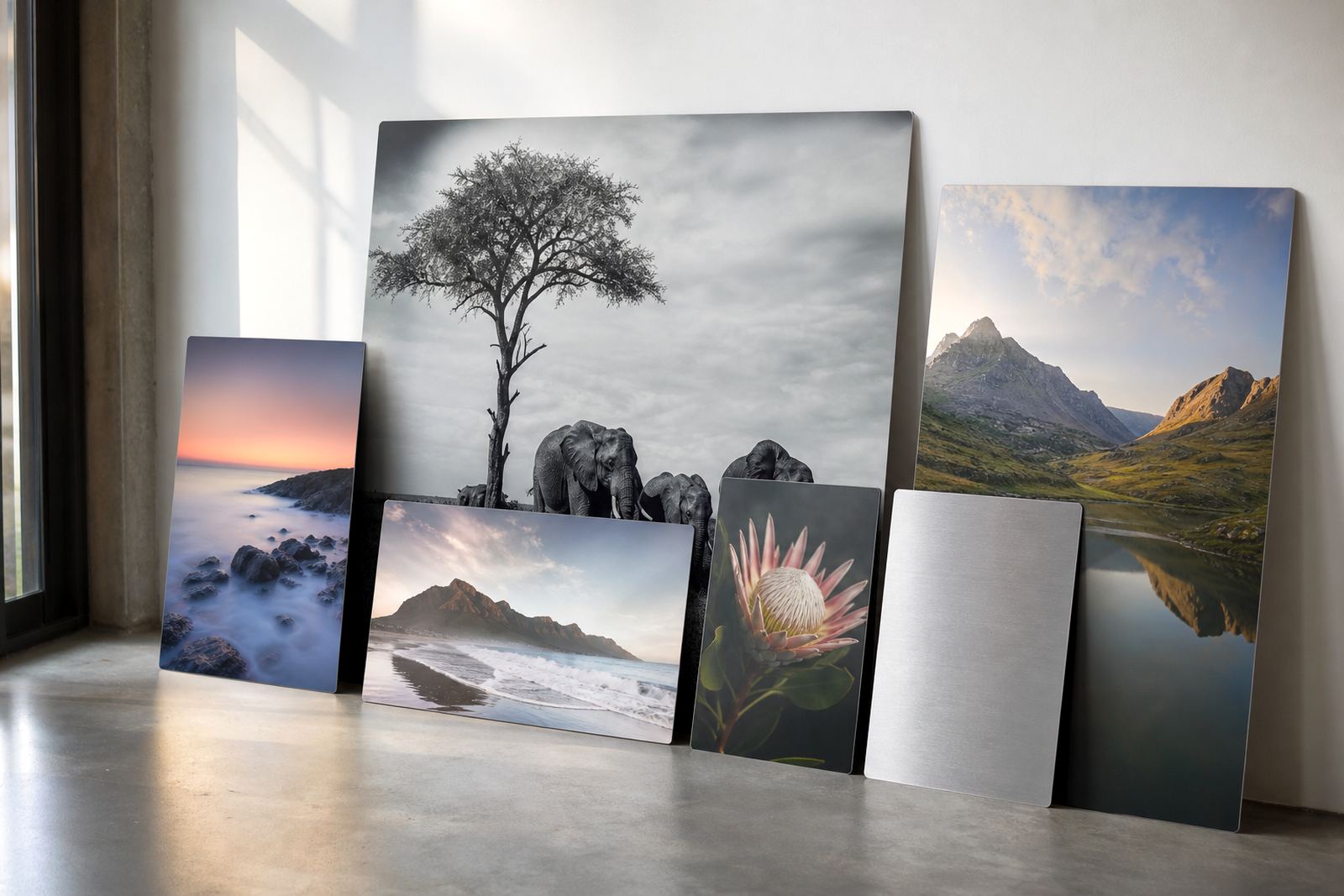
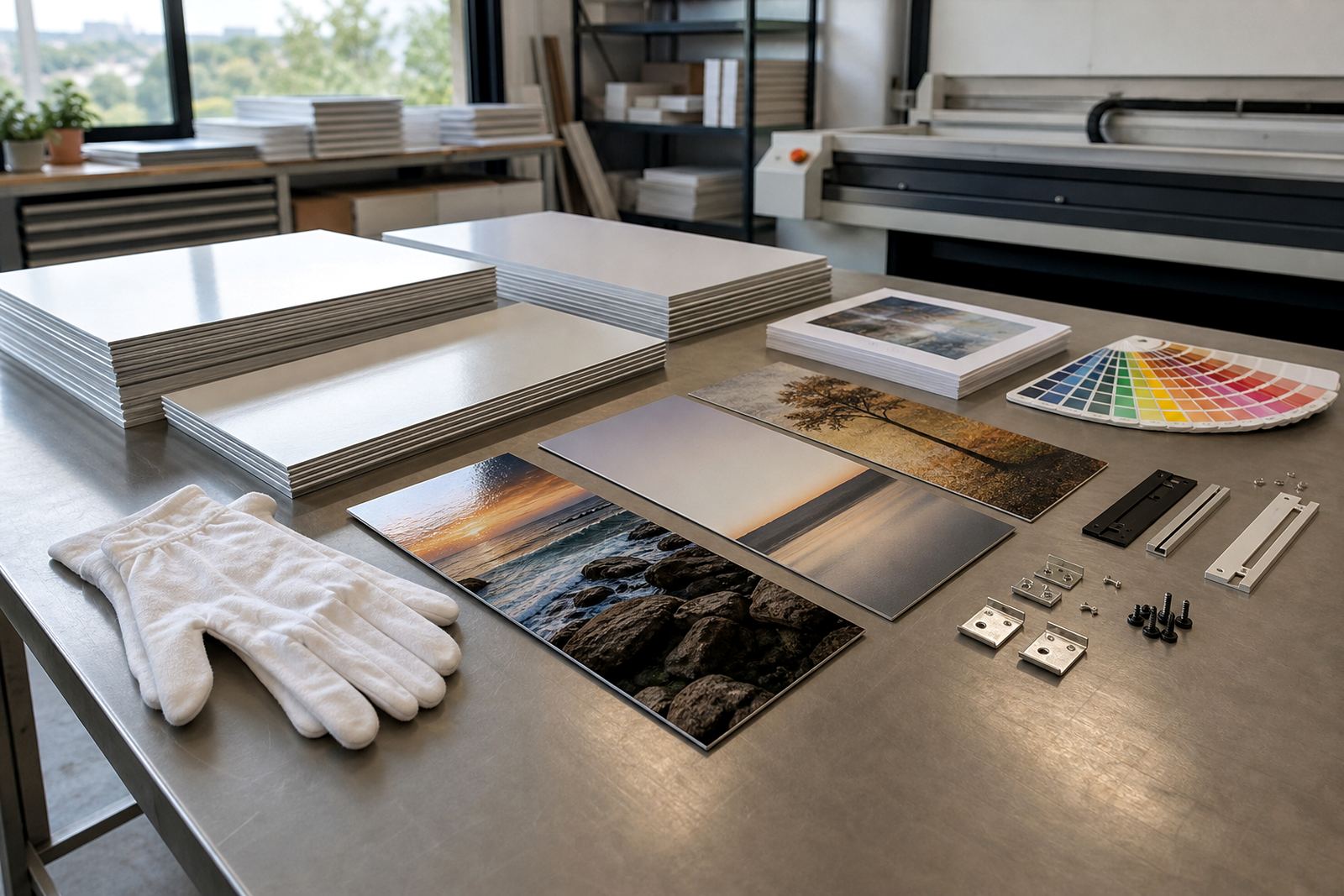
What gets handled before the first panel is pressed
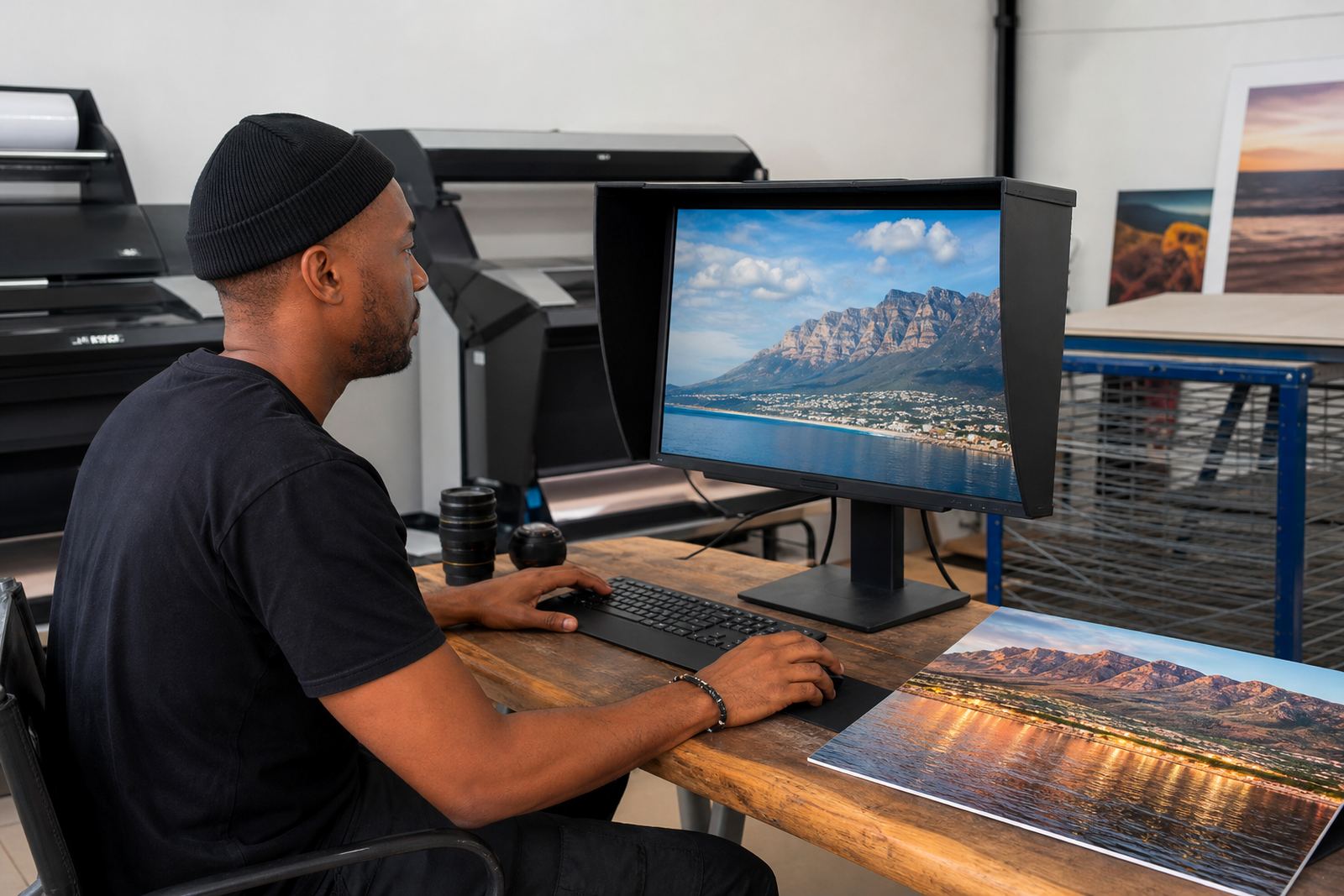
Colour preparation is where we check the file for print readiness and adjust it for dye sublimation onto coated aluminium panels. That means looking at brightness, contrast, shadow detail, highlight recovery, saturation and how the image will behave on a glossy, matte, white or brushed finish. A file that looks good on a screen does not always hold up once heat, coating and metal reflectivity are part of the process, so the setup has to be practical, not guesswork.
We work with photographers, artists and businesses across Randburg, Johannesburg, Pretoria, Cape Town, Durban and Gqeberha. If the file is supplied in the wrong colour space, too soft for the chosen size, or cropped badly for a panel edge, we flag it before production starts. Customers must own the image rights or have permission to use the files they send.
- File review for resolution and crop safety
- Check of shadows, highlights and midtone balance
- Colour handling for coated aluminium output
- Finish advice for gloss, matte, white or brushed looks
How we prepare artwork for metal, not paper
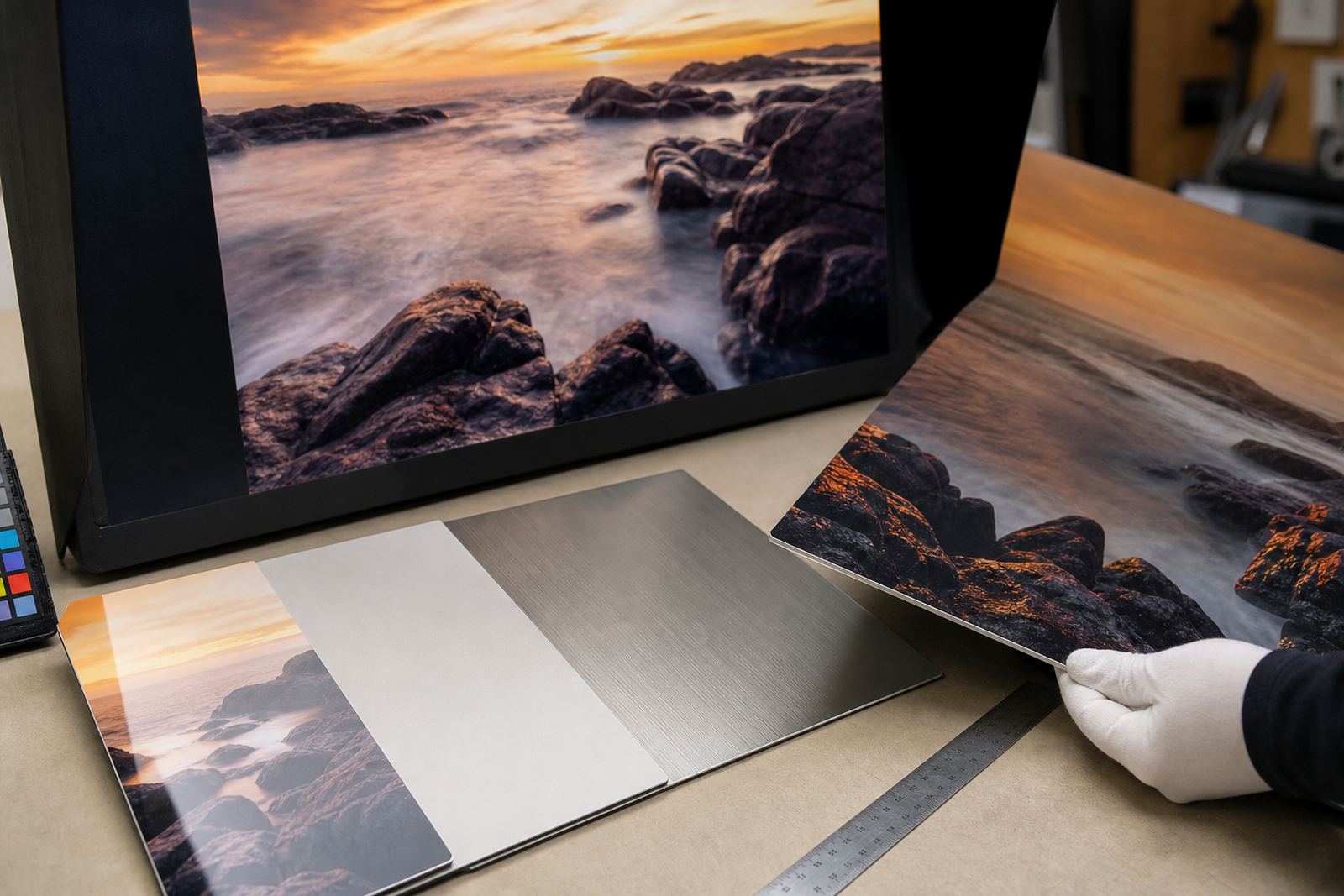
Aluminium behaves differently to canvas or photographic paper. Bright whites on a white coated panel stay clean and crisp, while brushed aluminium can let some of the metal grain show through lighter areas. Gloss gives more punch and reflection, matte softens glare in offices, reception areas and galleries. We prepare the file with the chosen finish in mind so the final print reads properly in real light, including strong daylight near windows and mixed indoor lighting.
Where needed, we also look at colour shifts that can happen in warm skin tones, deep blues and dark reds. If a image is too contrast-heavy, we may reduce clipping and open the shadows a touch so faces and detail do not disappear in the finished panel.
- Finish matched to the image and viewing space
- Tone mapping for strong daylight or indoor lighting
- Soft proof style checking for likely print shifts
- Advice on whether a white base or brushed base suits the image
The colour path from file to finished panel
We keep the process clear. First we inspect the supplied file and confirm the size you need, then we advise on any colour or crop changes. After that the image is prepared for output, with the correct bleed and edge allowance for the panel size. If a test panel is sensible, we can use one to check tone before a larger run is produced. This is useful for gallery work, brand display pieces and reprints where colour needs to stay consistent.
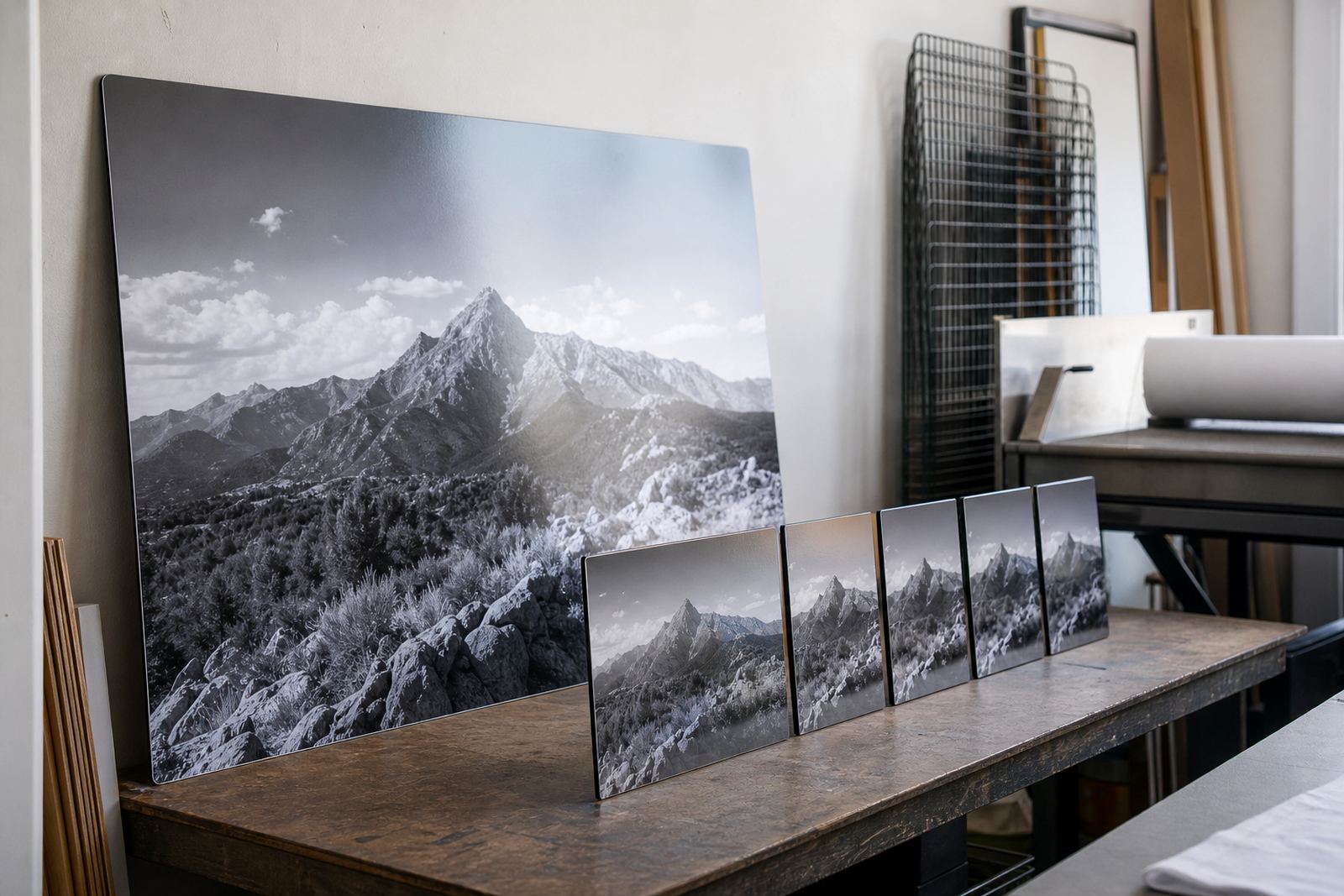
For larger jobs or multi panel layouts, consistency matters across every board. We line up the files so panels sit together properly and the colour does not wander from one piece to the next.
- Initial file check and print suitability review
- Colour correction and crop planning where needed
- Test panel option for important pieces
- Final preparation for mounting and dispatch
Turnaround, production flow and local delivery timing
Turnaround depends on file condition, size, finish choice and whether a test panel is required. Straightforward files can move quickly, while detailed correction or multi panel sets take longer. We plan around production queues and local supply timing, including days when power interruptions can affect press scheduling. That helps us give a practical lead time instead of a hopeful one.
Orders are prepared in Randburg and delivered to Johannesburg, Sandton, Midrand, Pretoria, Cape Town, Durban and Gqeberha through arranged dispatch. Larger panels need careful packing so the corners and edges stay clean in transit. If the job is time-sensitive for an installation, exhibition or office handover, tell us early so the schedule can be matched to the deadline.
- Lead times depend on file quality and panel quantity
- Rush requests are handled case by case
- Packing is planned for local and long distance delivery
- Installation timing can be coordinated for site handover
Pricing that follows the file, not a one-size rate
Pricing for colour preparation depends on what the file needs. A clean image that only needs minor checking is different from a file that needs crop rebuilding, tonal correction and rework for a specific finish. We also factor in panel size, number of panels, whether a test print is required and how much prepress time is needed before production can run safely.
This keeps quotes fair for small one-off gifts and also for commercial orders from photographers, offices and retailers. You only pay for the prep the job actually needs. If the file is already strong, we do not pad the work. If it needs extra preparation to print well on aluminium, we explain what is involved before the order moves ahead.
- Quoted according to file condition and panel size
- Separate pricing for test panels where needed
- Multi panel and repeat-order preparation available
- Clear pricing before work starts
Aftercare for panels that have to stay presentable
Once the panels are delivered, the main care is straightforward. Keep the surface free of abrasive cloths and harsh cleaners. A soft dry microfibre cloth is usually enough for dust. In coastal areas like Durban and Gqeberha, it helps to avoid damp storage and salty air exposure where possible. For offices and homes in Gauteng, avoid placing the panel where direct sunlight will sit on one area all day if you want the colour to age evenly.
If a client needs a matching reprint later, we keep the prepared information aligned so the new panel can sit alongside the earlier one as closely as the process allows. That is especially useful for businesses adding more locations or photographers building a series over time.
- Use a dry microfibre cloth for everyday dusting
- Avoid abrasive sprays and rough materials
- Store spare panels flat and dry
- Ask for reprint matching when extending a series
Key facts
| Output method | Dye sublimation onto coated aluminium panels |
|---|---|
| Finish options | Gloss, matte, white coated and brushed aluminium |
| File review | Resolution, crop, colour space and tonal suitability |
| Typical use | Homes, galleries, offices and branded displays |
| Size handling | Custom sizing and multi panel layouts available |
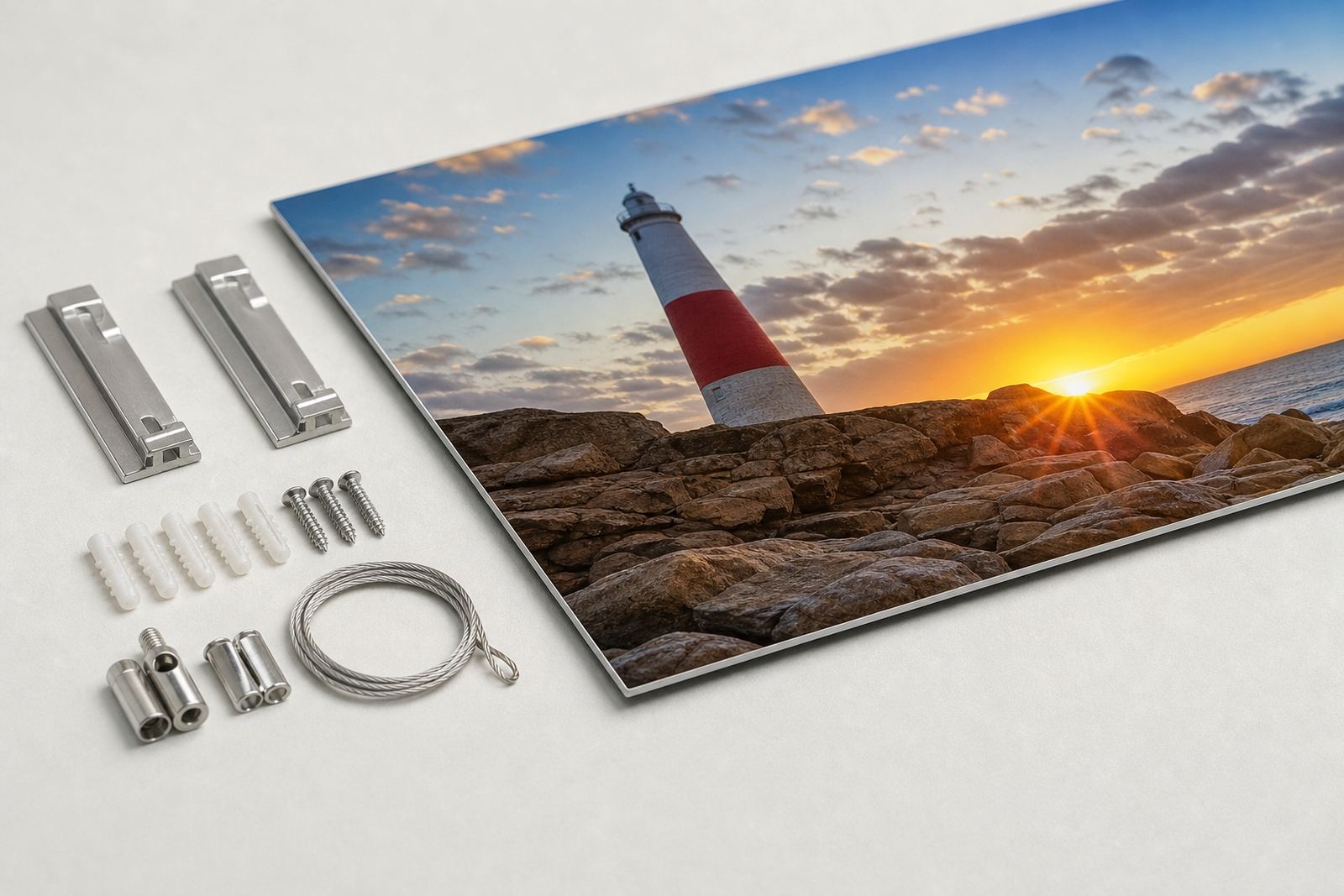
| Mounting | Generic hanging hardware and mounting options can be advised |