
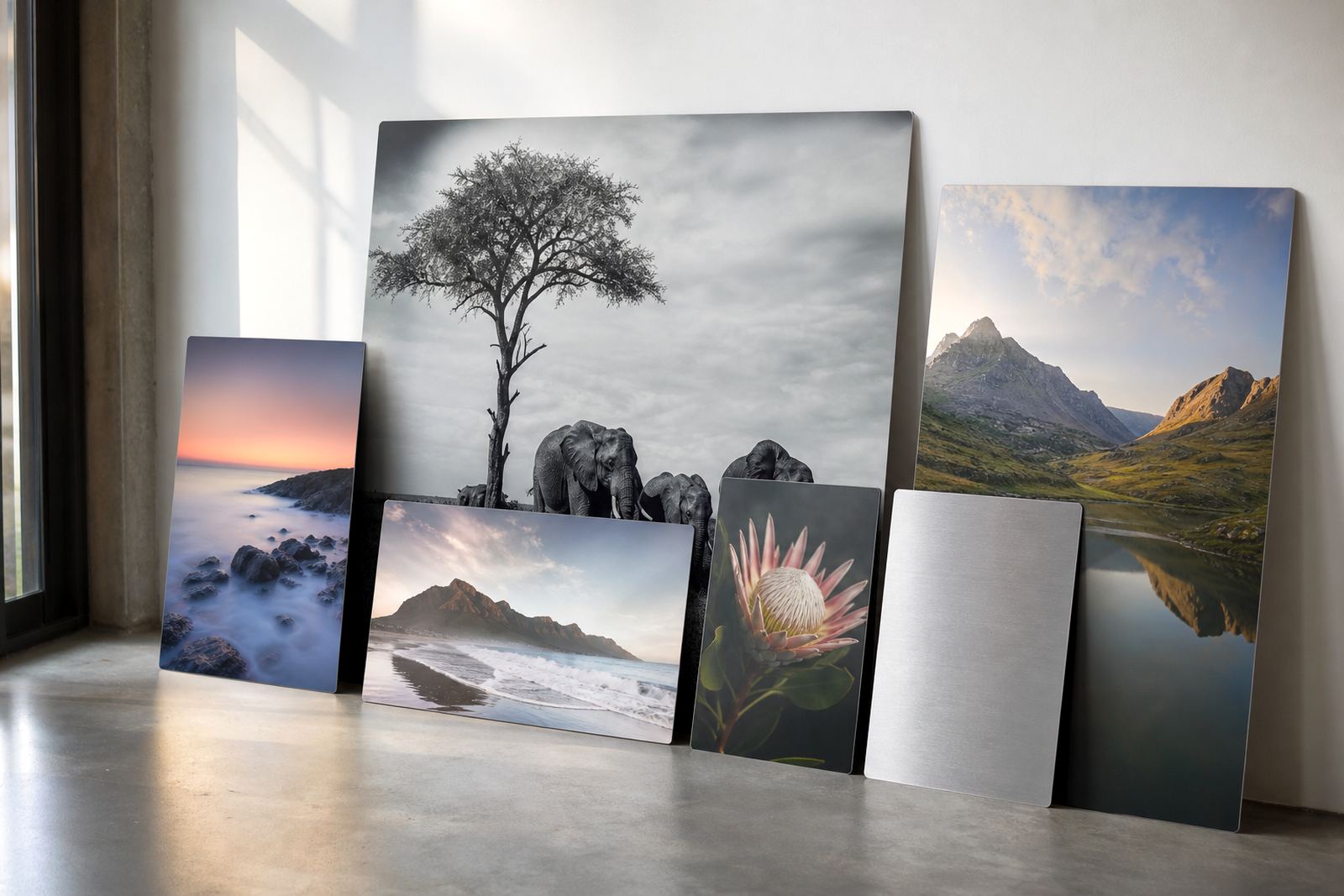
Start with the wall, not the picture
Before you drill, look at the wall from the normal viewing point. In a lounge that may be from a couch, in a reception it is often from standing height, and in a gallery it is usually from a slow walk past the work. A panel that feels too high on paper can sit well once the room has furniture, skirting lines and movement around it.
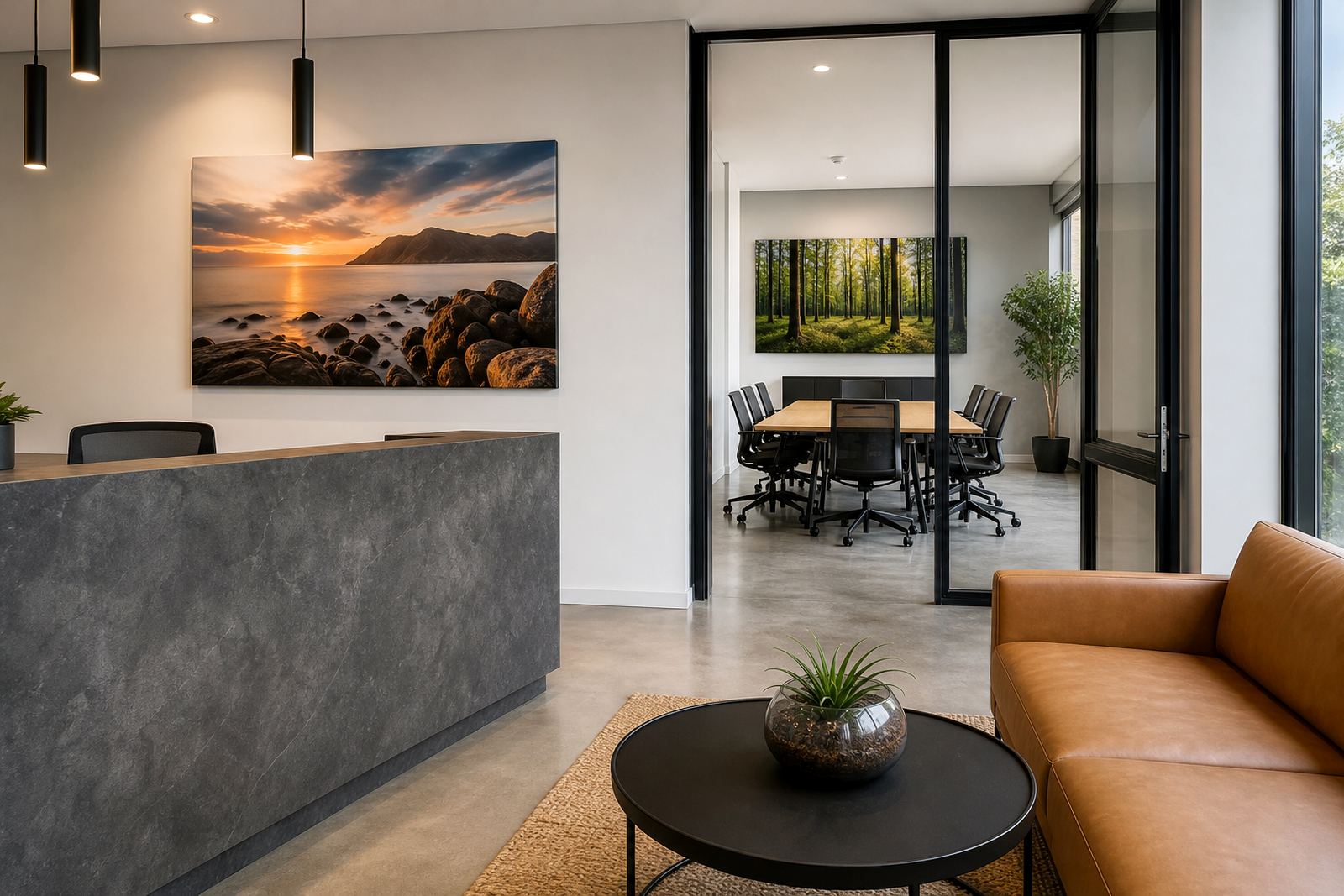
For homes, place the centre of a single panel around eye level, often about 1500 mm from the floor. In offices and reception areas, you may lift that slightly if the artwork must sit above counters, signage or seating. In stairwells or double volume spaces, use the wall shape to guide the layout rather than forcing the same height on every panel.
- Measure the wall width and usable height first.
- Mark the centre point with masking tape before drilling.
- Check sight lines from the main entrance and seating areas.
- Leave enough breathing room around light switches, frames and furniture.
Select the finish that suits the room and light
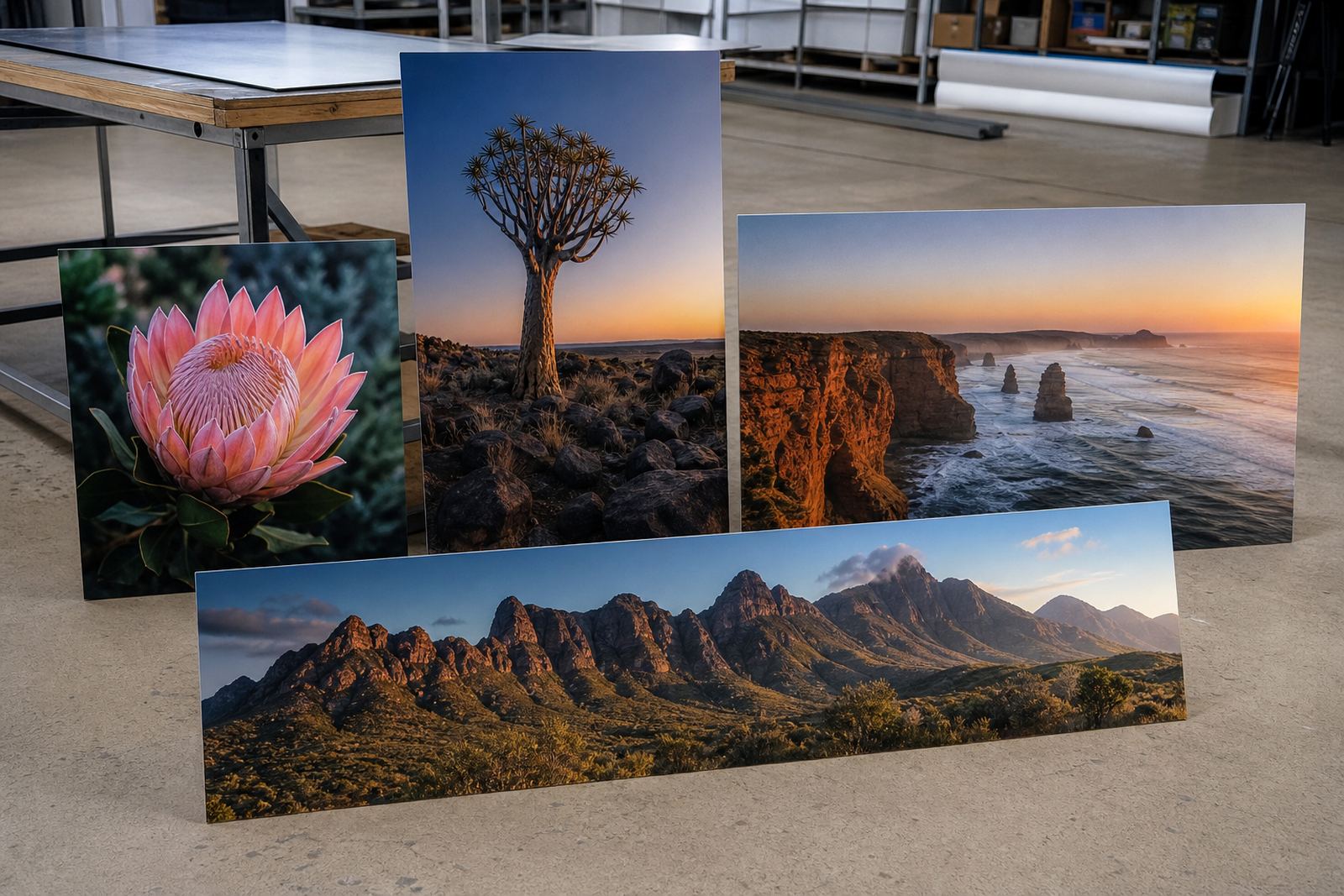
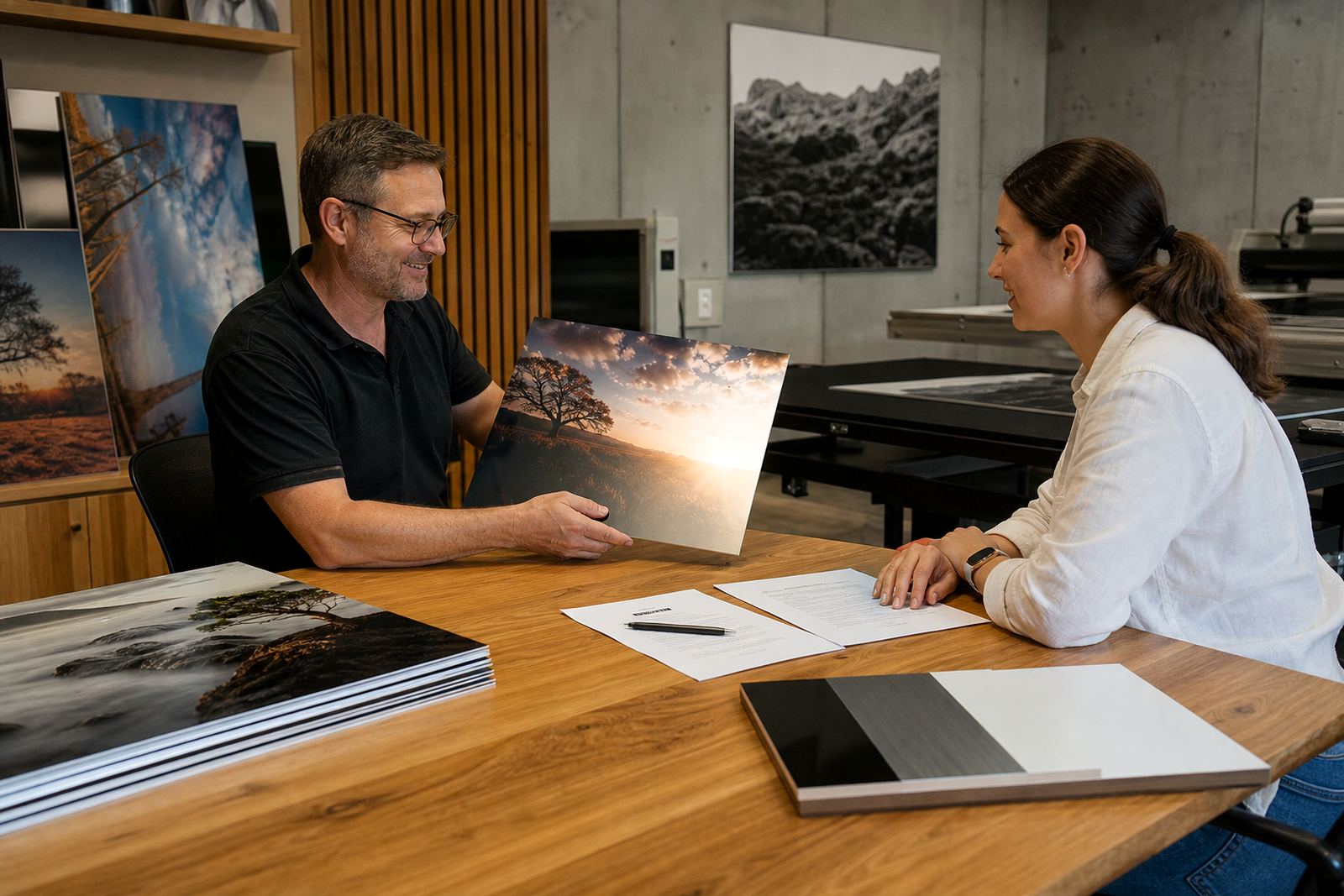
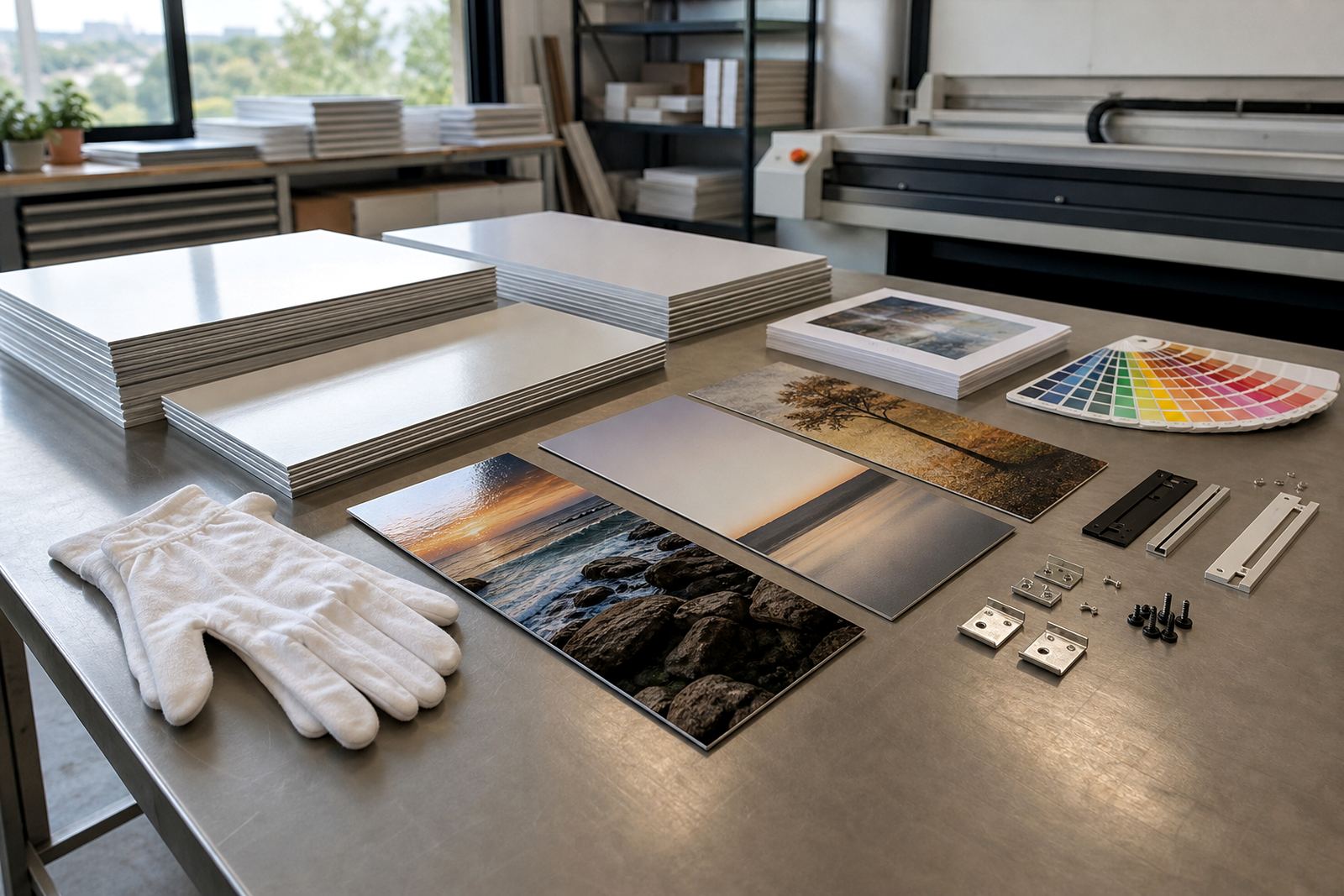
Coated aluminium panels take dye sublimation well because the image bonds into the coating and gives a crisp, clean surface. The finish you choose changes the look as much as the photo itself. Gloss is punchy and bright, matte softens reflections, white panels suit strong colour and detail, while brushed aluminium lets parts of the metal show through for a more industrial feel.
Rooms with strong daylight, glass doors or overhead downlights often suit matte or brushed finishes, especially in coastal towns where bright sun and humidity can make reflections feel harsher. Gloss works well in controlled light, boardrooms and display walls where colour pop matters more than low reflection.
- Gloss for rich colour and high impact.
- Matte for softer viewing and less glare.
- White for full image density and clean skin tones.
- Brushed for a metallic effect where the artwork can use the silver base.
Get the file right before the panel is printed
Good hanging starts with a clean file. A sharp image at the correct size helps the panel hold detail, especially in faces, fine lines and text. Low resolution files can look fine on a phone and still fall apart once they are enlarged onto aluminium. For larger prints, the file must carry enough detail for the final panel size.
Check crop, orientation and border decisions before production starts. If the image is going to be cut to size, make sure important details are not too close to the edge. If a triptych or multi panel layout is planned, allow for spacing between panels and confirm where the image should break.
- Send the highest quality file you have.
- Keep important details away from the trim edge.
- Confirm whether the image should fill the full panel or keep a border.
- For multi panel work, mark the sequence and spacing clearly.
How high each type of space usually feels right
There is no single rule for every wall, but some placements work better than others. A home panel above a couch usually sits lower than a panel in a hotel foyer. A reception wall often needs enough height to stay clear of movement and chairs, while a gallery wall should let the viewer take in the work without craning their neck.
Think about the room function first. In a boardroom, the art should not fight with screens or branded signage. In a home passage, the panel can be slightly higher if furniture blocks the lower wall. In a restaurant or salon, keep the work visible from standing and seated positions, and avoid placing it where it will catch grease, steam or regular contact.
- Above a couch: keep the bottom edge clear of cushions and headrests.
- In a reception: allow space above counters and visitor seating.
- In a passage: centre the work so it is readable while walking past.
- In a gallery style wall: keep spacing even so the eye moves smoothly across the set.
Hanging hardware should suit the panel weight and wall type
Aluminium panels need fixing that suits both the panel size and the wall surface. A small panel can often use a simple hanging system, while larger pieces may need stronger supports and careful spacing between fixings. Drywall, brick and concrete all behave differently, so the anchor choice matters. In coastal and humid areas, corrosion resistant hardware is worth using because cheap fixings can stain or weaken over time.
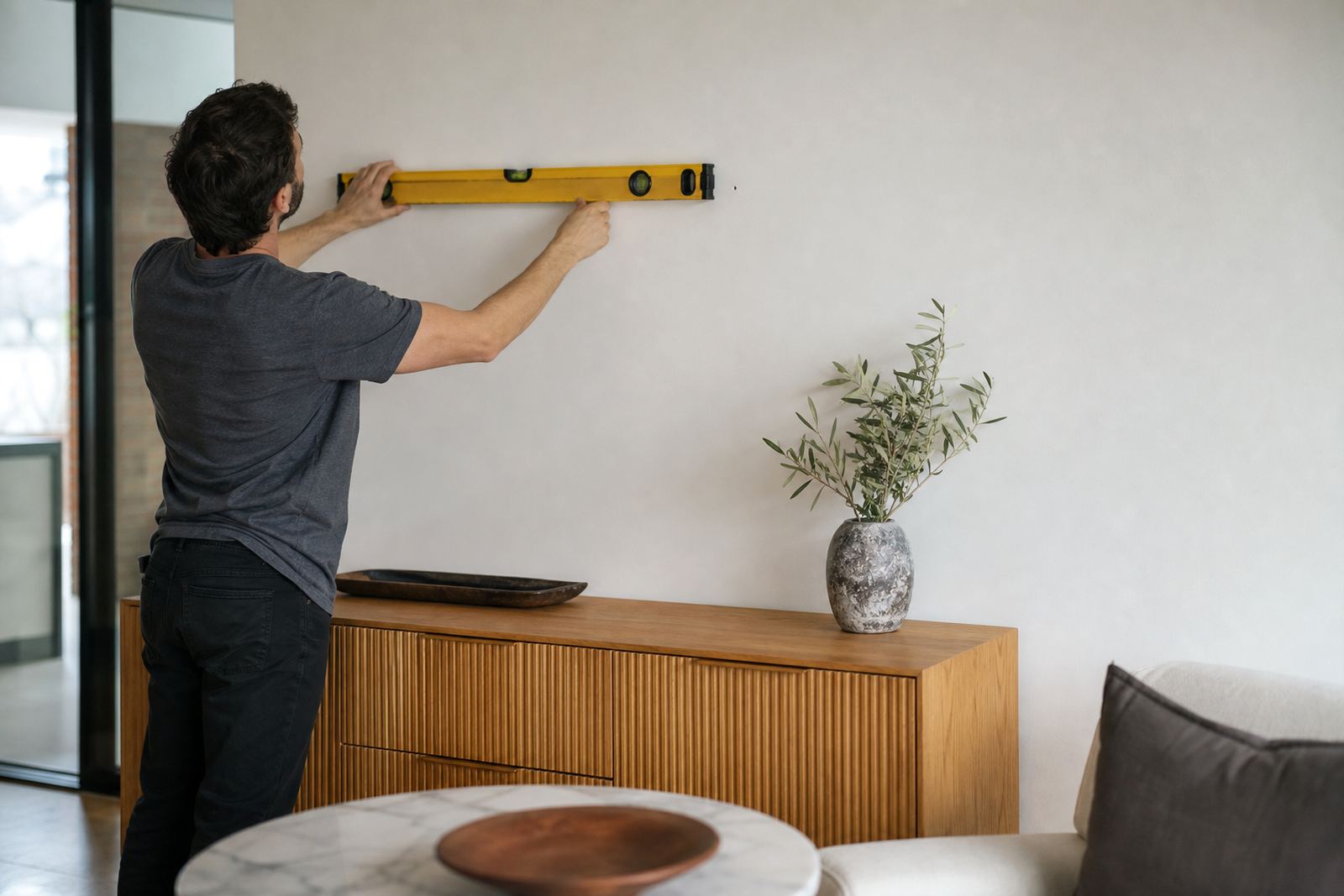
Before hanging, check that the wall can carry the load and that the panel will sit level.A panel that looks perfect in daylight may need to be shifted a little to avoid a hot spot from a lamp or generator lighting.
- Use hardware suited to the wall material.
- Level the panel with a proper spirit level.
- Check that the hanging points are even before the final lift.
- For heavier panels, use a second set of hands.
A last check before the panel goes on the wall
Do one final room test before hanging. Hold the panel at eye level, step back, and look at it from the doorway, sofa or reception queue. If the image feels too small, it may need to move lower or be remade larger. If it feels too close to the ceiling, bring it down and check the balance again. Small adjustments often make a big difference.
For businesses, think about how the panel appears in photographs, client meetings and everyday traffic. For homes, think about sight lines from the kitchen, passage and seating. Once the height is set, clean the surface gently with a soft cloth and keep abrasive cleaners away from the print side. If you need replacement panels later, keep the file name, size and finish noted down so matching is easier.
- View the panel from the room entrance before drilling.
- Confirm the height with the furniture already in place.
- Keep a record of size, finish and mount type for future reprints.
- Only send images you own or have rights to use.