
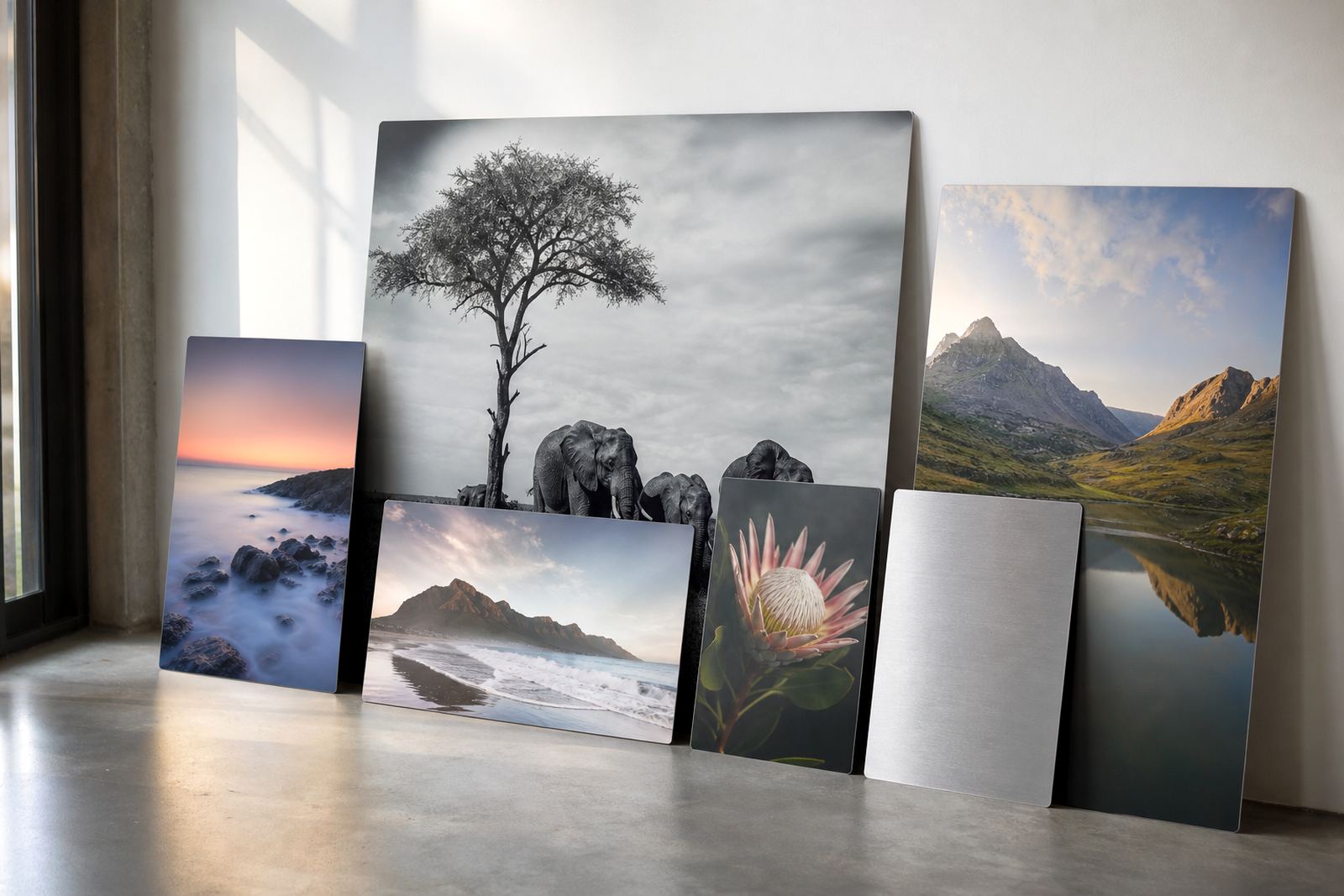
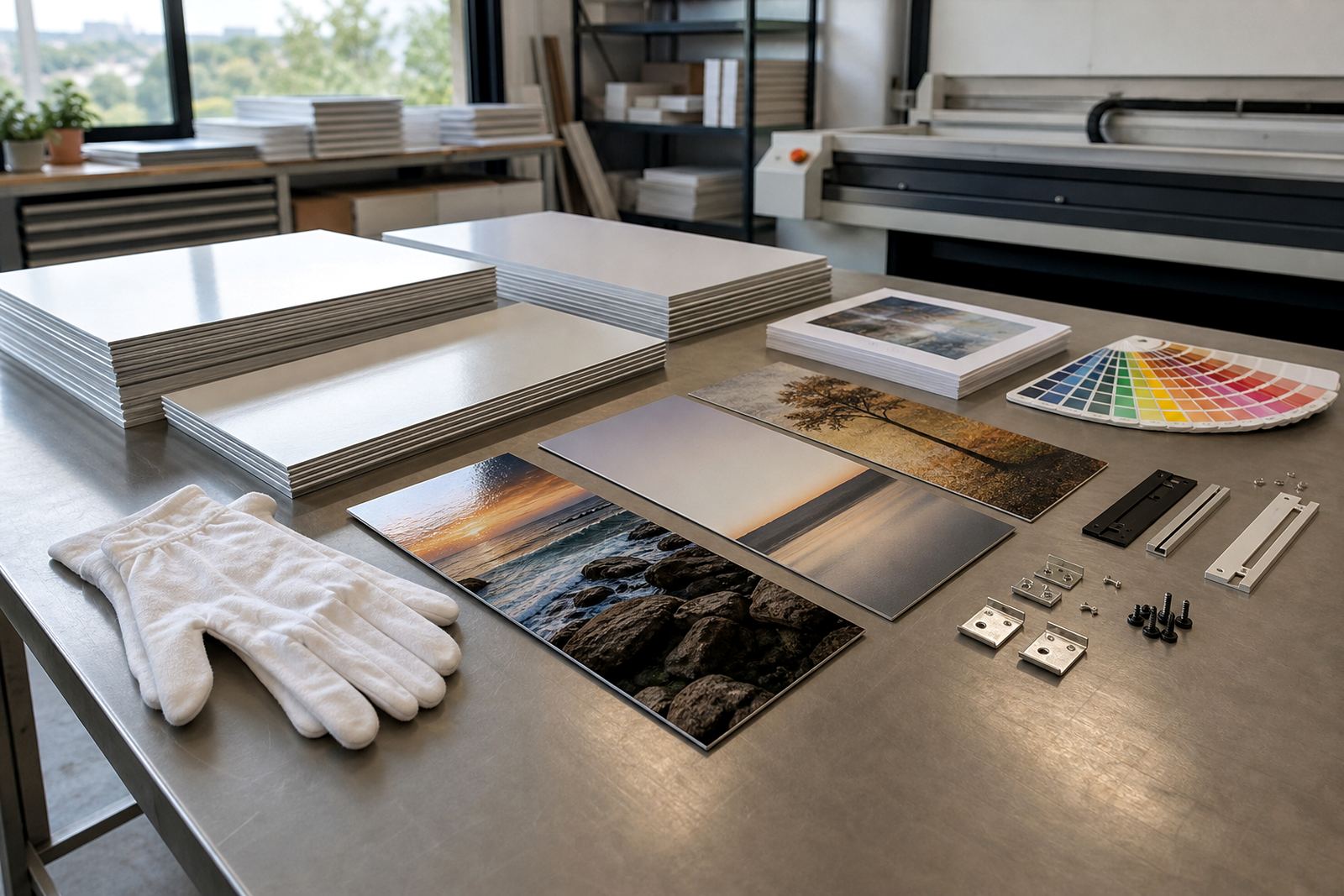
Square panels when the frame should sit still
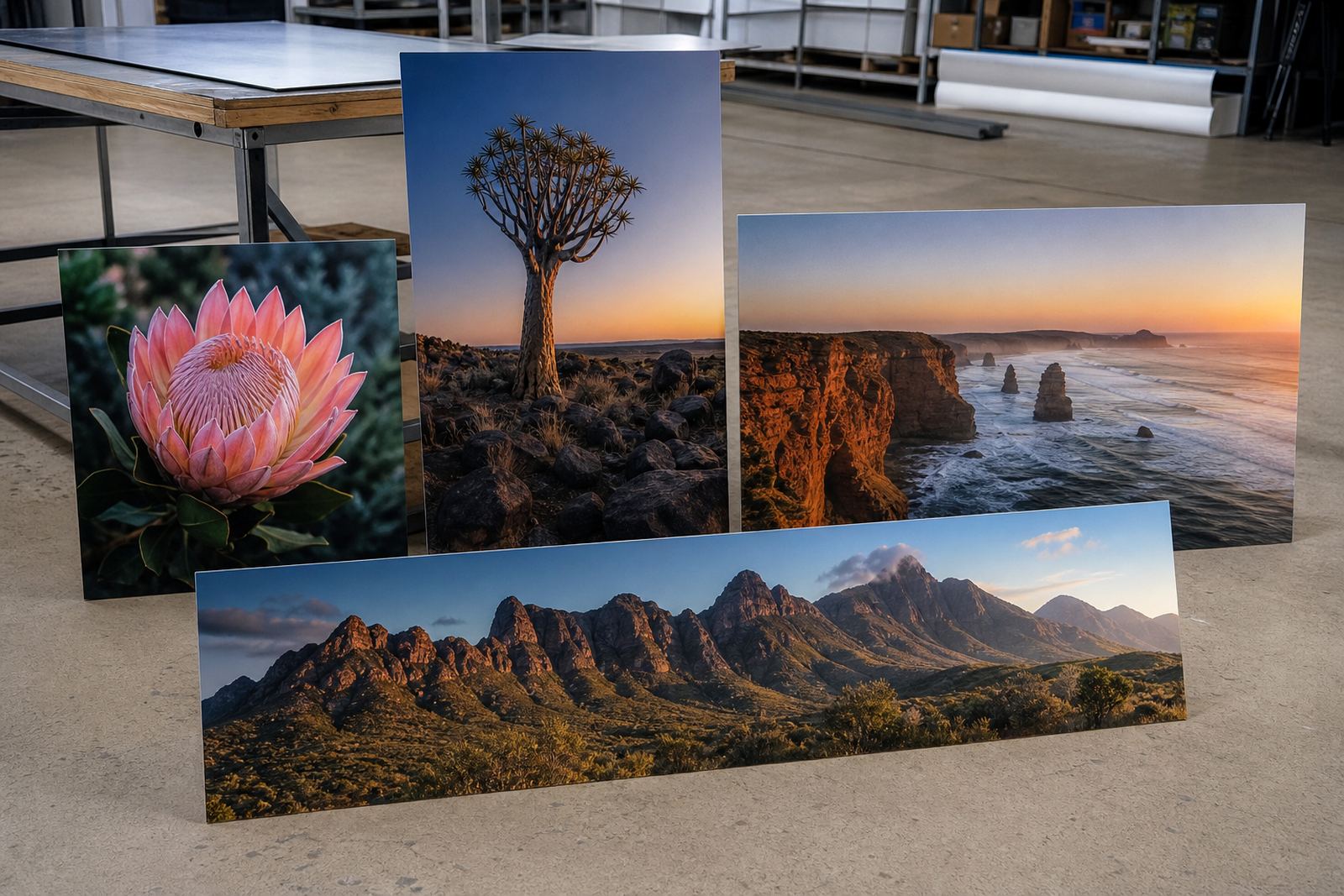
Square panels work well when the image is balanced around a central subject, such as a portrait, product shot, artwork or a clean architectural detail. A square format keeps the eye in one place and suits smaller walls, gallery groupings and office spaces where you want a calm, tidy look.
On coated aluminium, square prints hold fine detail well when the file is sharp and properly prepared. If your original photo is not square, the crop must be checked carefully so faces, signage or key edges do not get trimmed off.
- Best for centred subjects, product images and symmetrical scenes
- Good for 1 panel displays or grouped sets of 4 and 9 panels
- Works well in gloss for bright colour or matte for softer viewing
- Useful when you want a neat finish in a reception area or passage wall
Portrait panels for height, faces and narrow spaces
Portrait format adds height, which makes it a strong choice for people, buildings, trees and narrow wall spaces. It can give a room more vertical movement and works nicely in stairwells, between windows or beside a doorway where landscape panels feel too wide.
For photographers and artists in Johannesburg or Pretoria, portrait panels are often chosen for single hero images and series work. A good portrait crop should leave breathing room above the head and around the shoulders, with enough resolution for the full panel size.
- Suited to people, fashion, street scenes and tall structures
- Good for slim walls and spaces beside furniture
- Check that facial detail stays clear after the crop
- Consider brushed aluminium for industrial or monochrome work
Landscape formats for wide scenes and open views
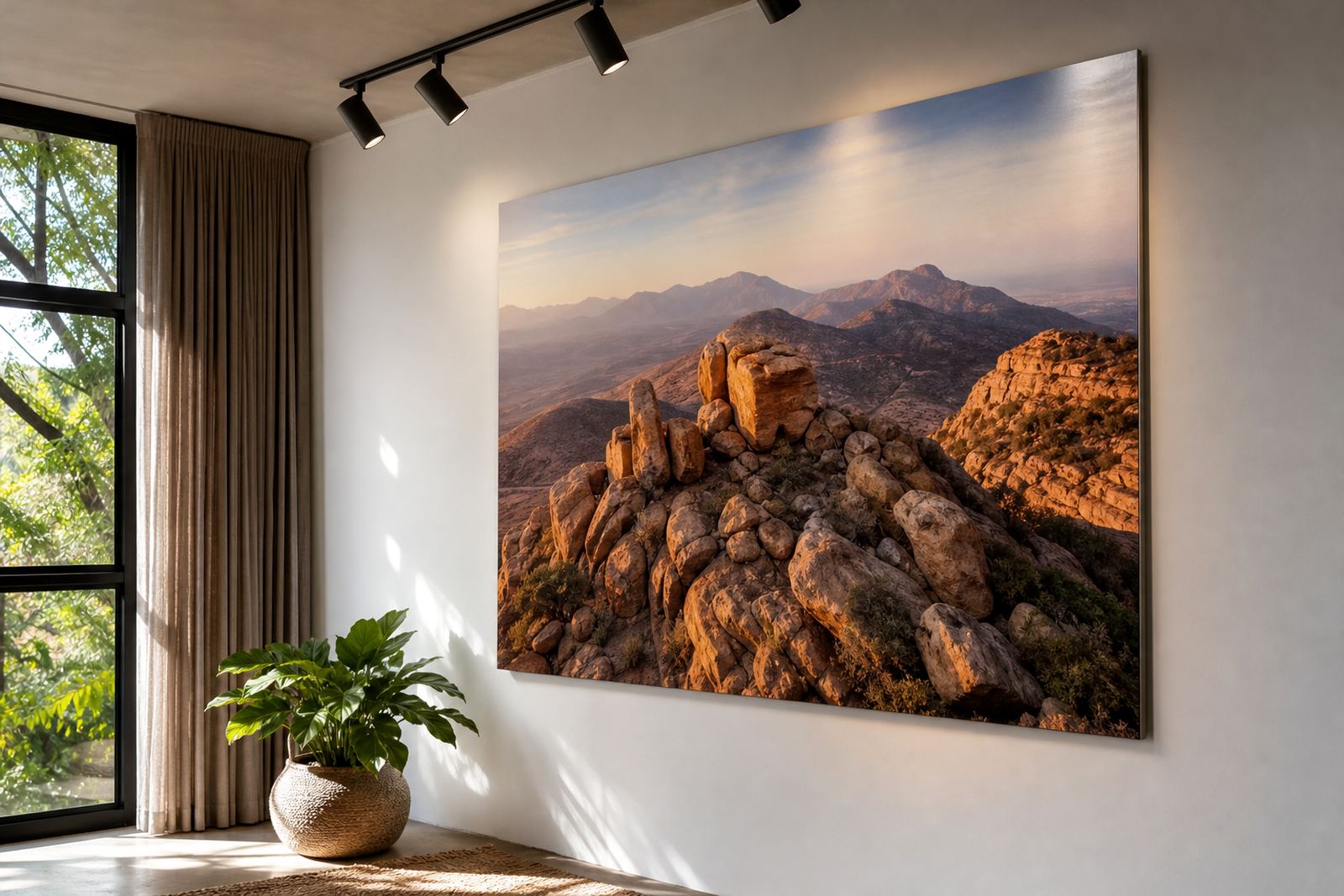
Landscape is the natural choice for seascapes, city views, farm scenes, mountain images and wide commercial spaces. It lets the eye move across the frame and usually needs less aggressive cropping than portrait or square.
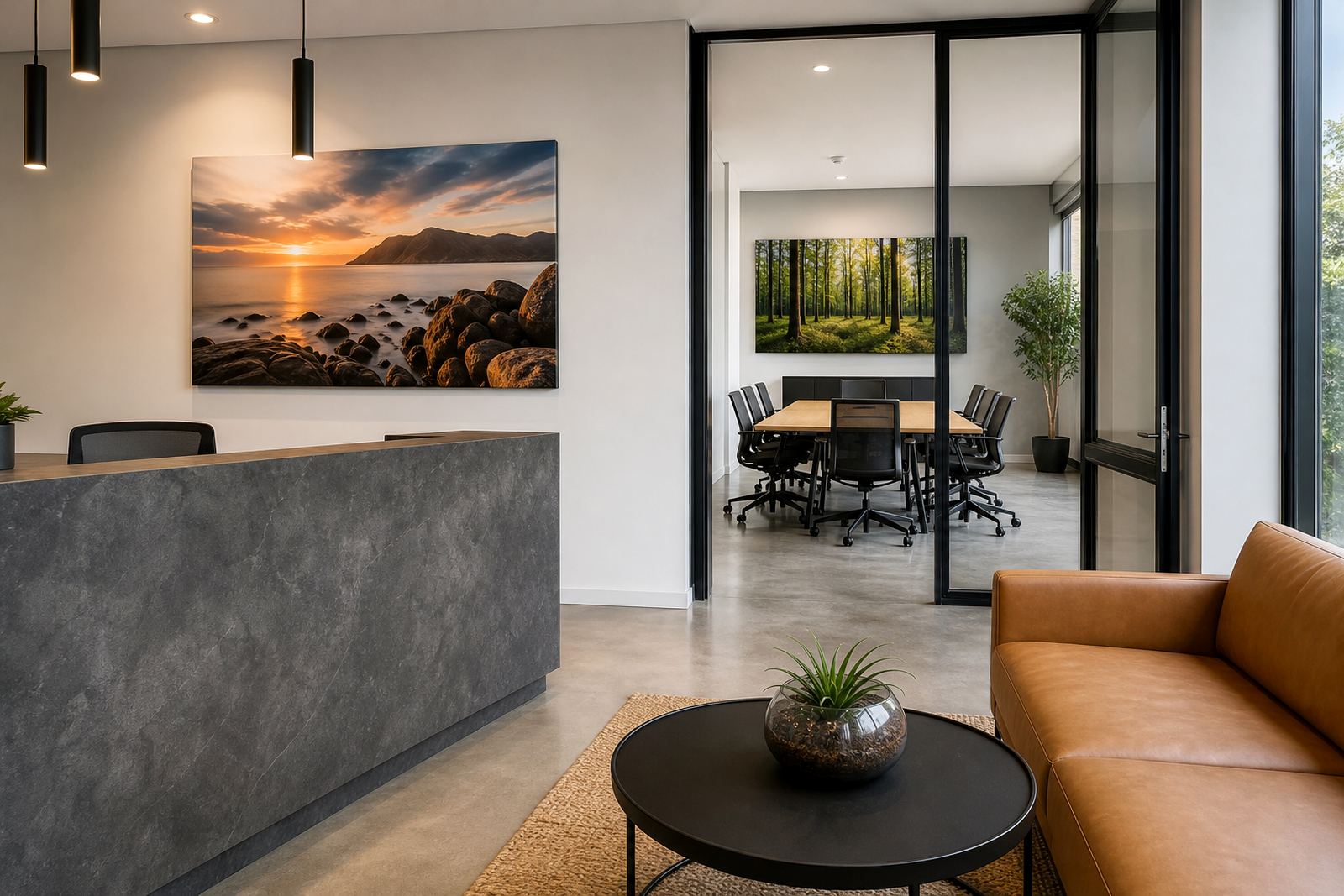
This shape suits boardrooms, hotels, restaurants and homes where a long wall needs one clear feature piece. In humid coastal areas like Durban and Gqeberha, aluminium panels are a practical option because the material does not behave like paper or stretched canvas when the air turns damp.
- Works well for travel, landscapes and large team images
- Can be used above couches, counters or credenzas
- Leave margin for hanging hardware and wall alignment
- Ask for a test panel if the image has delicate sky tones or fine gradients
Panoramic panels for long walls and wide crop stories
Panoramic panels stretch the image into a long visual sweep, making them ideal for skyline shots, coastal horizons, game lodge scenes and event photography. This format can turn a plain wall into a strong visual feature without needing several smaller prints.
Panoramic work needs careful file handling because there is less room for error in the crop. If the source image is not wide enough, the print may lose crispness, so resolution review matters before production starts. A little planning saves a lot of rework, especially on large orders with multiple panels.
- Best for very wide scenes and long horizontal walls
- Useful in corporate foyers, hospitality spaces and large homes
- Check for motion blur in the original file before printing
- Consider multi panel layouts when the wall is long but broken by doors or columns
Finish, colour and surface grain all change the result
The shape is only part of the decision. The finish you choose affects how the print reads in the room and how light plays on the surface. Gloss gives stronger punch and deeper contrast, while matte reduces glare under office lighting or bright daylight. White coated panels usually give the cleanest colour reproduction, while brushed aluminium lets the metal texture show through lighter areas.
When we review files, we also look at colour preparation and how the image will sit on the panel surface. A bright sky, dark jacket or pale wall can behave very differently on gloss compared with matte, so the finish should match both the artwork and the setting.
- Gloss for vivid colour and strong contrast
- Matte for lower reflection in bright rooms
- White for the most accurate colour base
- Brushed for industrial, monochrome or texture driven work
A practical ordering check before your panel is made
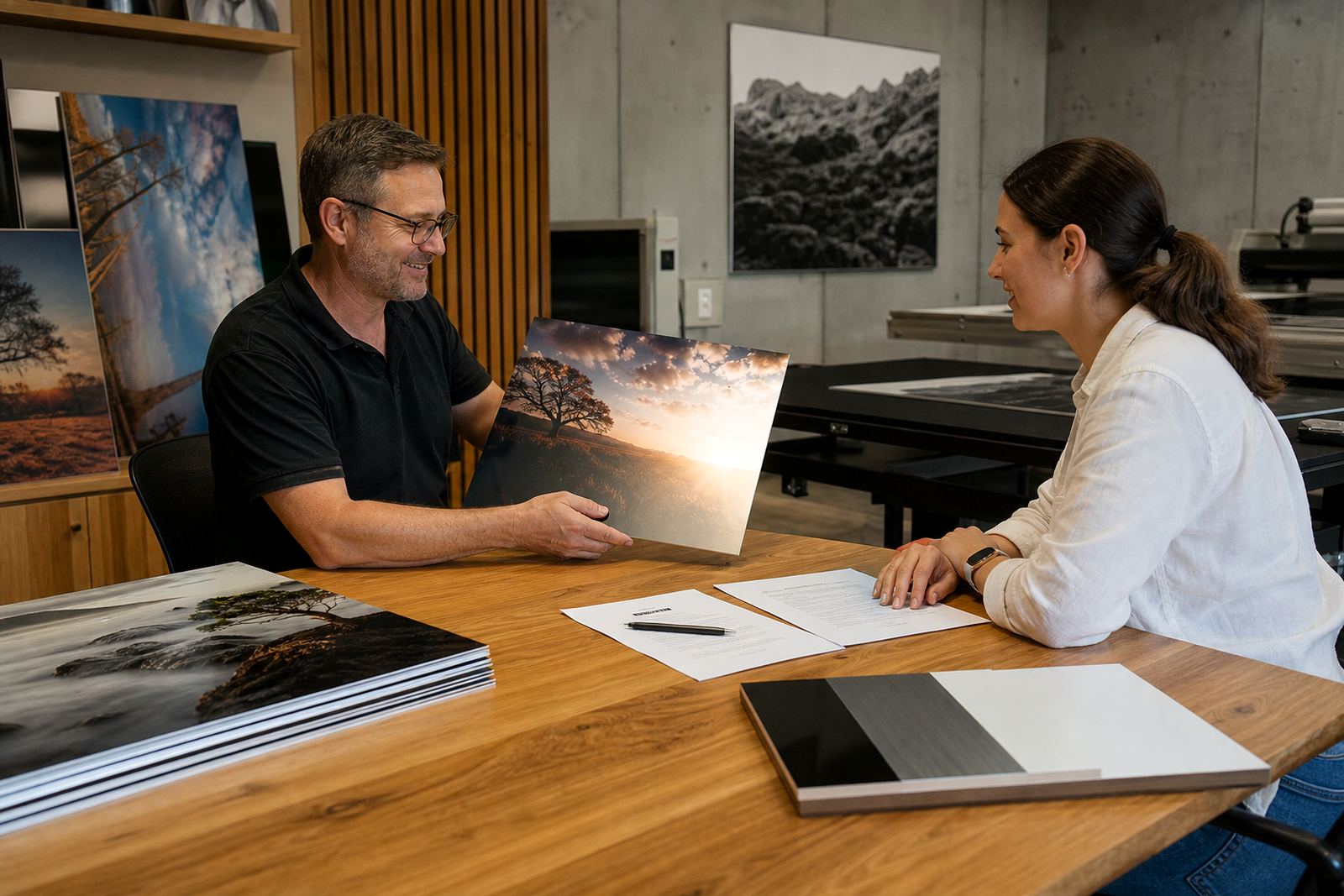
Before a panel goes into production, the file should be checked for size, crop, colour and mounting method. Customers must own the images they send or have the right to use them, including any work for a client, school, venue or campaign. If the file is too small, the image may look soft when enlarged, so it is better to review that first than to guess and hope for the best.
For customers across Randburg, Johannesburg, Sandton, Midrand, Pretoria, Cape Town, Durban and Gqeberha, packing and delivery are arranged with the panel size in mind. Large prints need safe corners, solid backing and handling that suits the route and building access.
- Confirm orientation: square, portrait, landscape or panoramic
- Check resolution for the final panel size
- Choose the finish before printing starts
- Decide on hanging hardware and wall fixings
- Review crop, borders and any text that must stay visible
- Ask for colour preparation if the image must match a brand or interior palette
Mounting and care where the panel will live
Aluminium panels are normally hung with suitable hardware selected for the size and weight of the piece. Smaller panels may use discreet wall mounts, while larger pieces may need a stronger system to keep the panel level and secure. If the wall is uneven or the surface is not ideal, that should be checked before mounting.
Care is straightforward. Dust with a soft dry cloth and avoid abrasive cleaners or harsh solvents. In offices with air-conditioning or coastal homes with salt in the air, regular light cleaning helps keep the surface looking fresh. If a panel needs to be reprinted later, a matching file and colour reference make the job much easier.
- Keep panels away from direct knocks during cleaning or moving
- Use wall fixings that suit the wall type and panel size
- Store spare panels flat if they are not yet installed
- Keep a final approved file for future reprints or matched sets