
Where a dining room starts telling its story
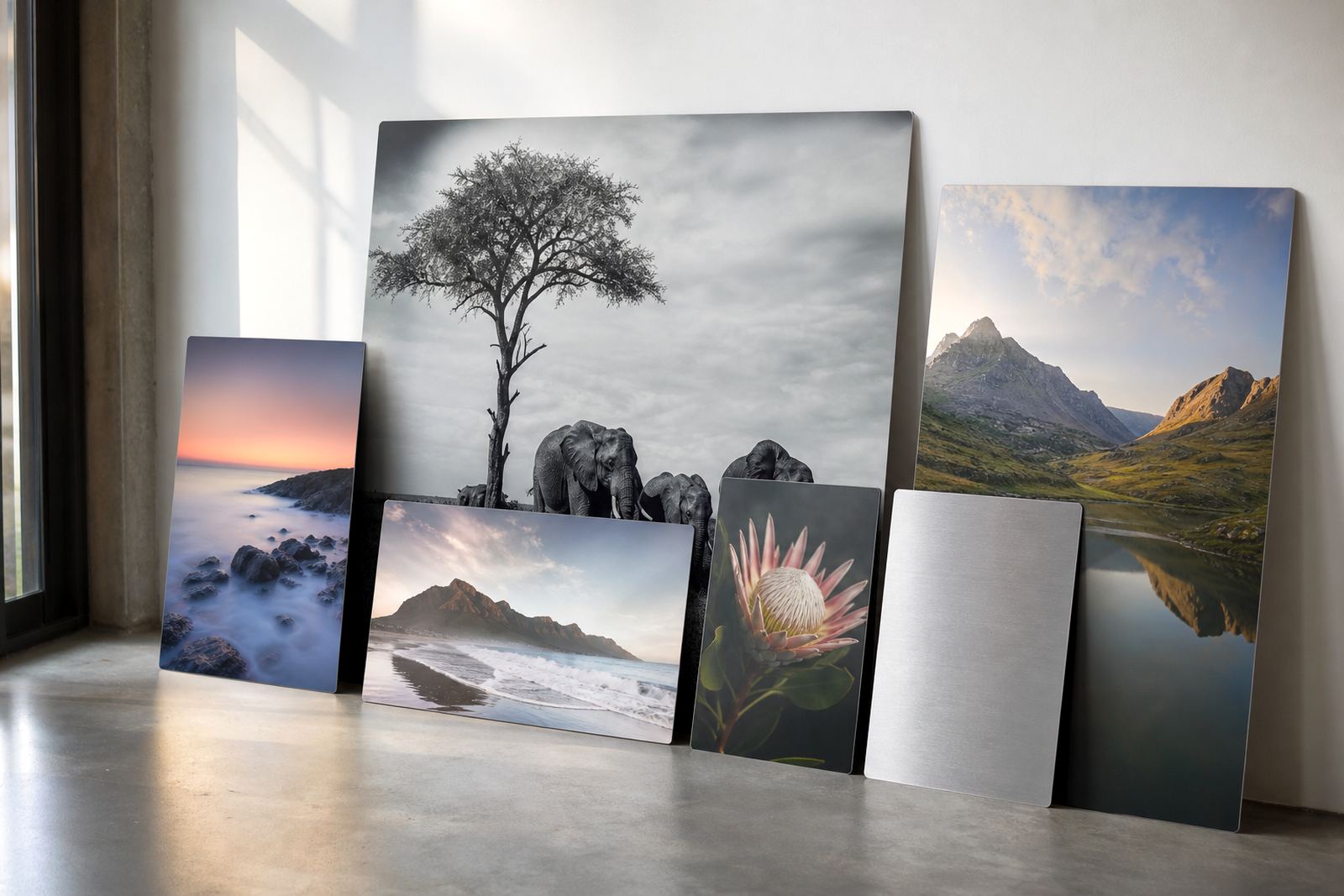
In a restaurant, the wall treatment has to do more than fill space. It needs to support the room mood, match the menu style and hold up to people brushing past chairs, kitchen heat spill, humidity near the coast and the daily wipe-down that hospitality spaces demand. Aluminium photo panels suit that job well because the image is bonded to a coated metal surface, so the result stays sharp and colour rich instead of looking tired after a few busy weekends.
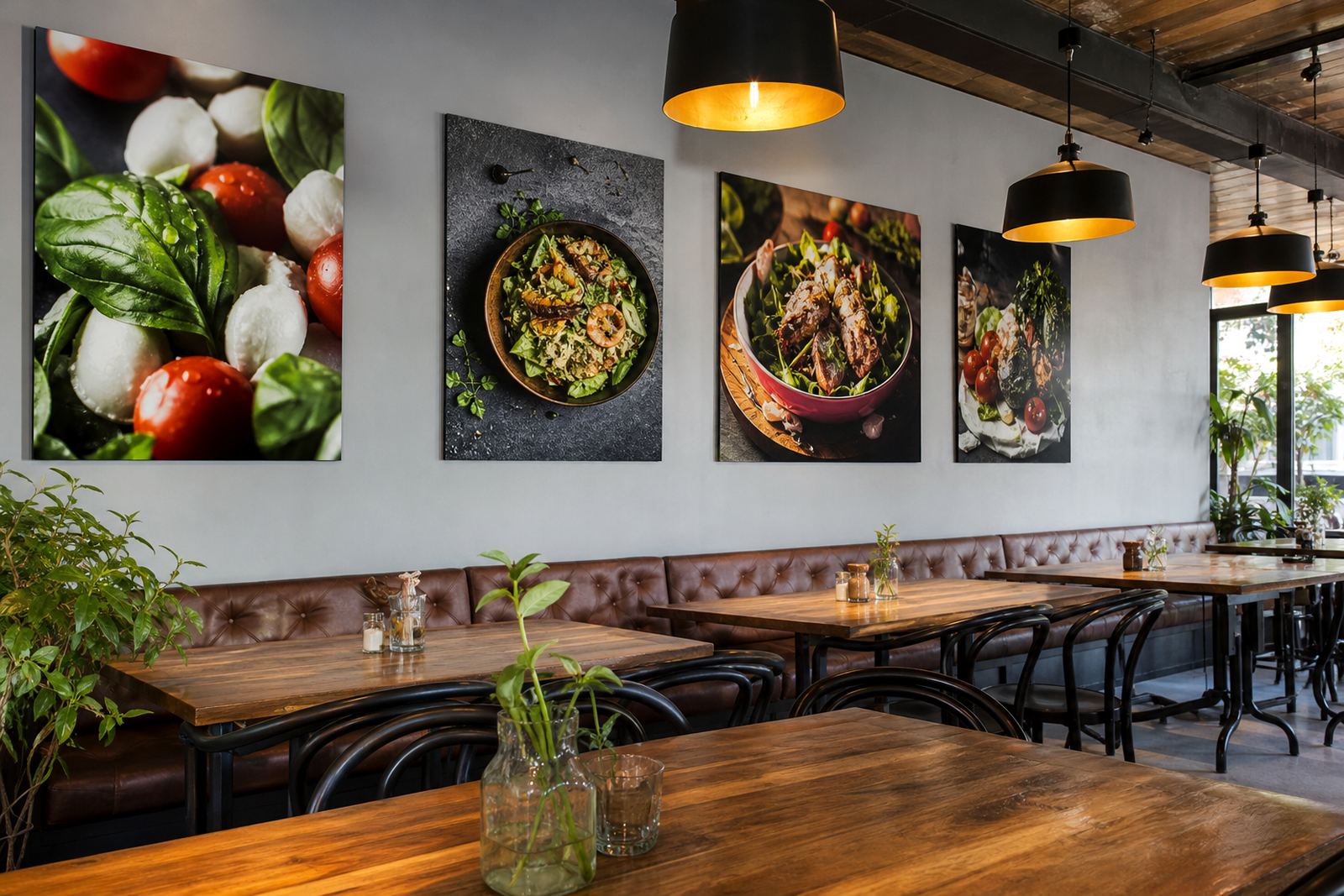
For front-of-house areas, these panels work well behind host counters, along long passage walls, above banquette seating and in private dining rooms. They also suit tasting rooms, coffee bars, wine rooms and takeaway counters where you want the brand to feel considered without adding heavy frames or fragile glazing.
The kind of image work that prints best on metal
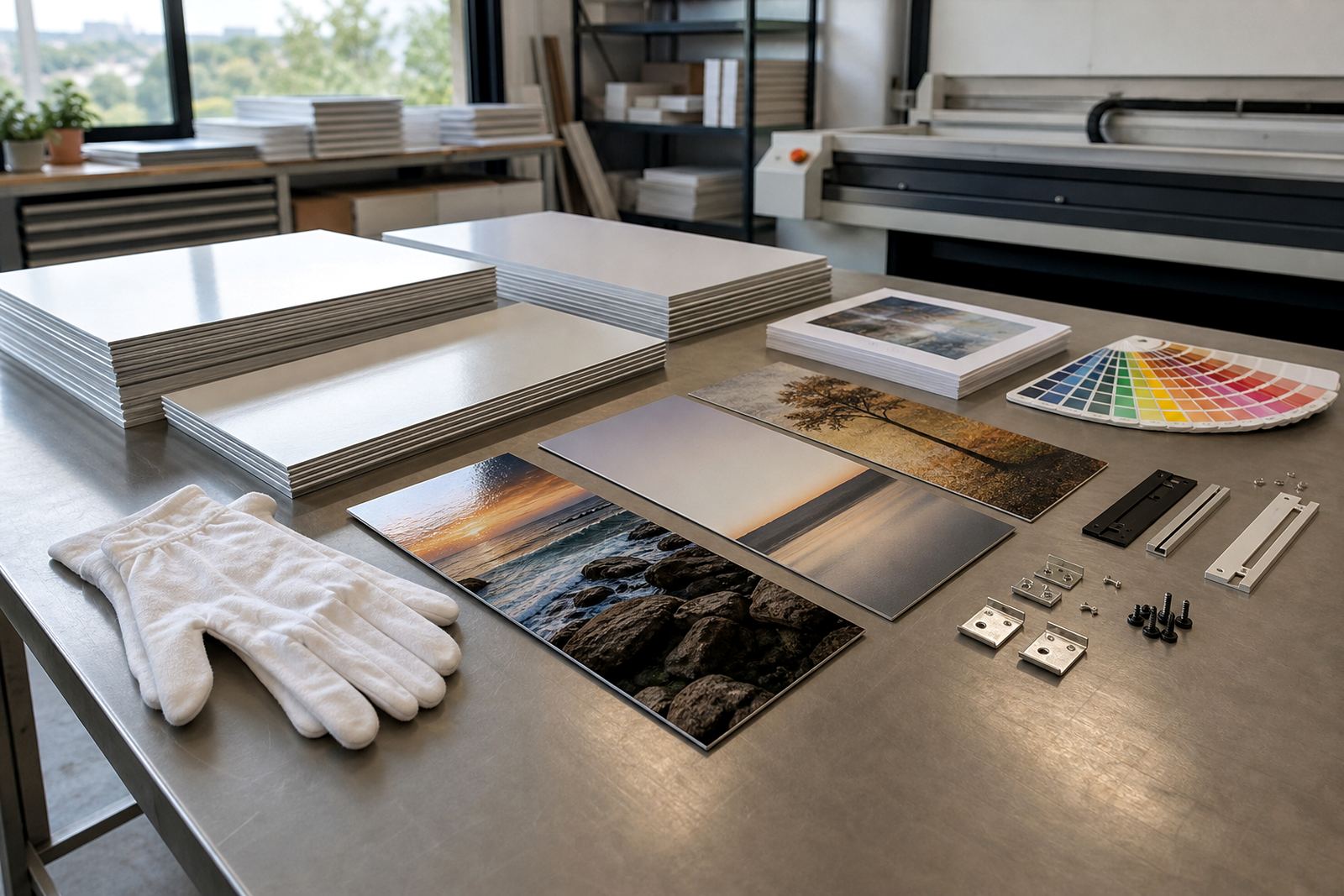
Good restaurant panels begin with the right file. High-resolution photography, artwork, menu imagery and location shots can all work, but the file should be large enough for the panel size and viewed distance. A 300 dpi source is usually a good target for close viewing, while larger feature walls can allow for slightly lower effective resolution if the image is meant to be seen from further back. Soft focus files, screenshots and compressed social media images usually show their weaknesses once enlarged.
Customers must own the rights to the images they send, or have permission to use them. That matters especially for portraits of chefs, supplied venue photography, artwork, logos and lifestyle images. For a restaurant fit-out, we often review the file set before production so cropping, contrast and print direction are sorted before anything goes to press.
- Menu hero images for entry walls
- Chef portraits for private dining rooms
- Local landscape or market scenes for regional flavour
- Wine, coffee or cocktail imagery for bar areas
Finish choices that match the room instead of fighting it
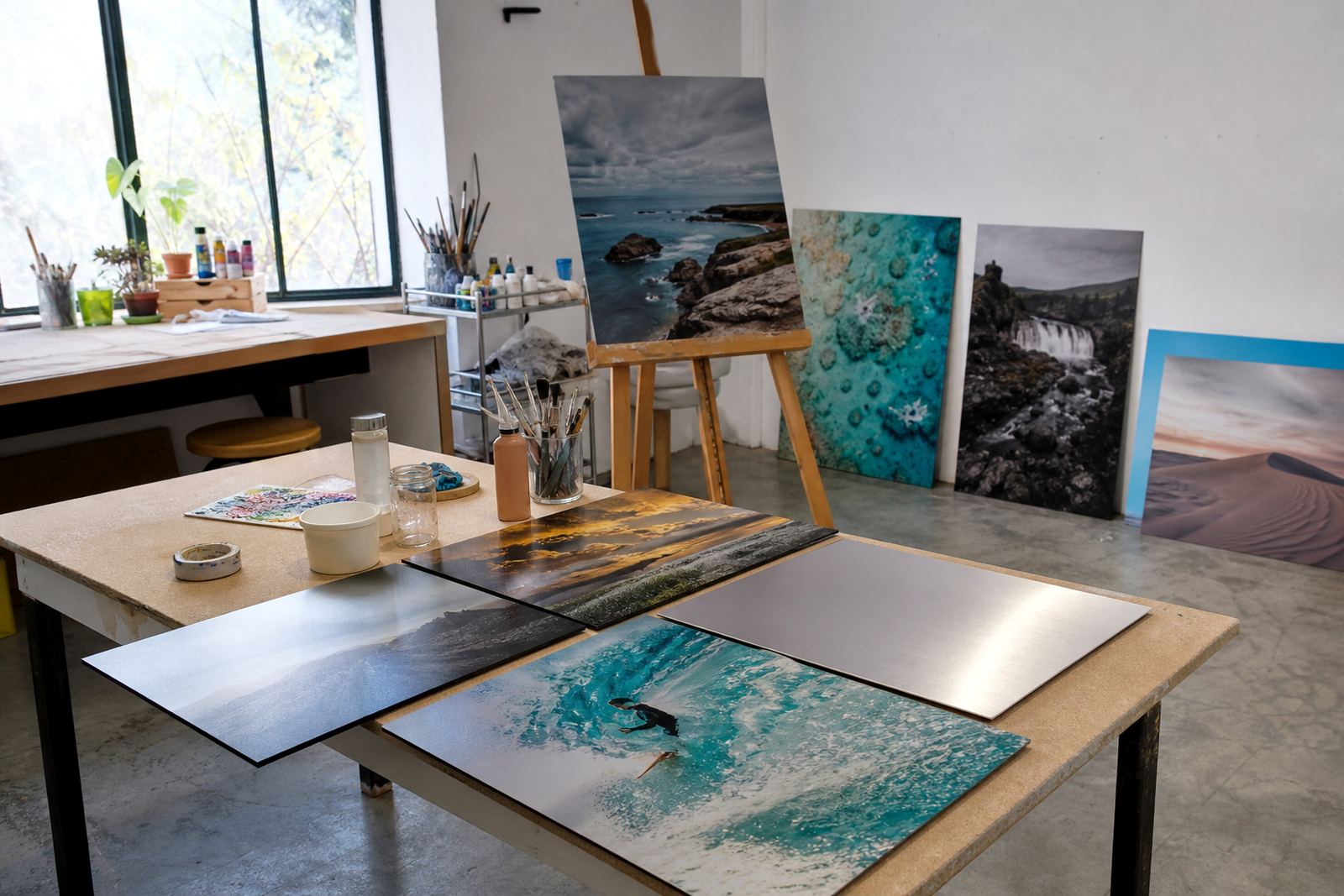
Different finishes change how the panel behaves under restaurant lighting. Gloss gives strong colour punch and a wet-looking surface that works well for bright food imagery, polished interiors and feature points with controlled lighting. Matte reduces reflection and suits spaces with large windows, pendant lights or lots of daylight from north-facing frontages. White aluminium panels give clean colour reproduction for most artwork and product imagery, while brushed aluminium adds a metallic texture that can be used for industrial, heritage or premium bar settings.
The choice is not only about looks. A dark wood dining room with warm lamps may prefer matte to avoid glare, while a modern open-plan restaurant in Sandton with reflective flooring may need careful finish selection so the panels do not catch every light source in the room.
Sizing the wall so it feels intentional
Restaurant interiors usually need more than one panel size. A single oversized artwork can create a focal point, but long walls often benefit from a set of smaller panels arranged in a line or grid. This keeps the eye moving and gives you room to work around columns, mirrors, light switches and fire equipment. In narrow spaces, portrait orientation can help the wall feel taller. In broad dining rooms, landscape panels often sit more naturally above seating.
We also look at the viewing distance, table height and wall colour. A panel that is too small disappears once the room is full, while one that is too large can fight with menus, signage and hanging lights. For hospitality work, test panels are useful when the room has tricky lighting or when the final image has rich blacks and skin tones that need careful balance.
- Use repeat panel sizes where possible for easier installation
- Leave space around artwork so the room can breathe
- Keep hanging hardware aligned with wall studs or suitable fixings
- Plan for cleaning access around high-touch areas
Common mistakes in hospitality fit-outs
The biggest mistakes are usually rushed ones. Low-resolution files, overly dark images, finish choices made without seeing the room light, and panels ordered before the wall measurements are checked properly can all lead to frustration. In restaurant settings, another common problem is choosing decor that looks fine online but does not sit well with the actual material palette, such as polished brass, exposed brick, or painted plaster.
We also see issues where the layout ignores practical matters like clearance for service trolleys, door swings, cleaning equipment and waitron movement. A panel may look perfect on paper but if it sits where chairs constantly knock it, the finish will be tested every day. Mounting should be planned for the wall type and the venue's operating conditions, not left as an afterthought.
Budget bands for dining rooms and bar walls
Restaurant projects vary widely because size, finish, artwork prep and mounting all affect the final amount. Smaller feature pieces for a café or private room can start in the lower Rand thousands, while multi-panel wall sets for a large restaurant or hotel dining area can move into a much higher range. Custom sizing, special layouts, test panels and packing for delivery across Johannesburg, Pretoria, Cape Town, Durban or Gqeberha will also influence the budget.
A useful way to plan is to separate the spend into three parts: print production, mounting hardware and any file preparation work. That helps when the project needs to be phased, for example fitting the main dining wall first and adding bar or corridor pieces later. It also makes it easier to compare gloss, matte, white and brushed options without guessing.
- Small feature panel: usually lower Rand thousands
- Medium restaurant set: often mid Rand thousands
- Large fit-out with multiple walls: can reach higher Rand levels depending on size and finish
For hospitality spaces, good wall art is not a last-minute add-on. It carries the room identity, survives daily use and helps a guest remember the place long after the meal is finished.