
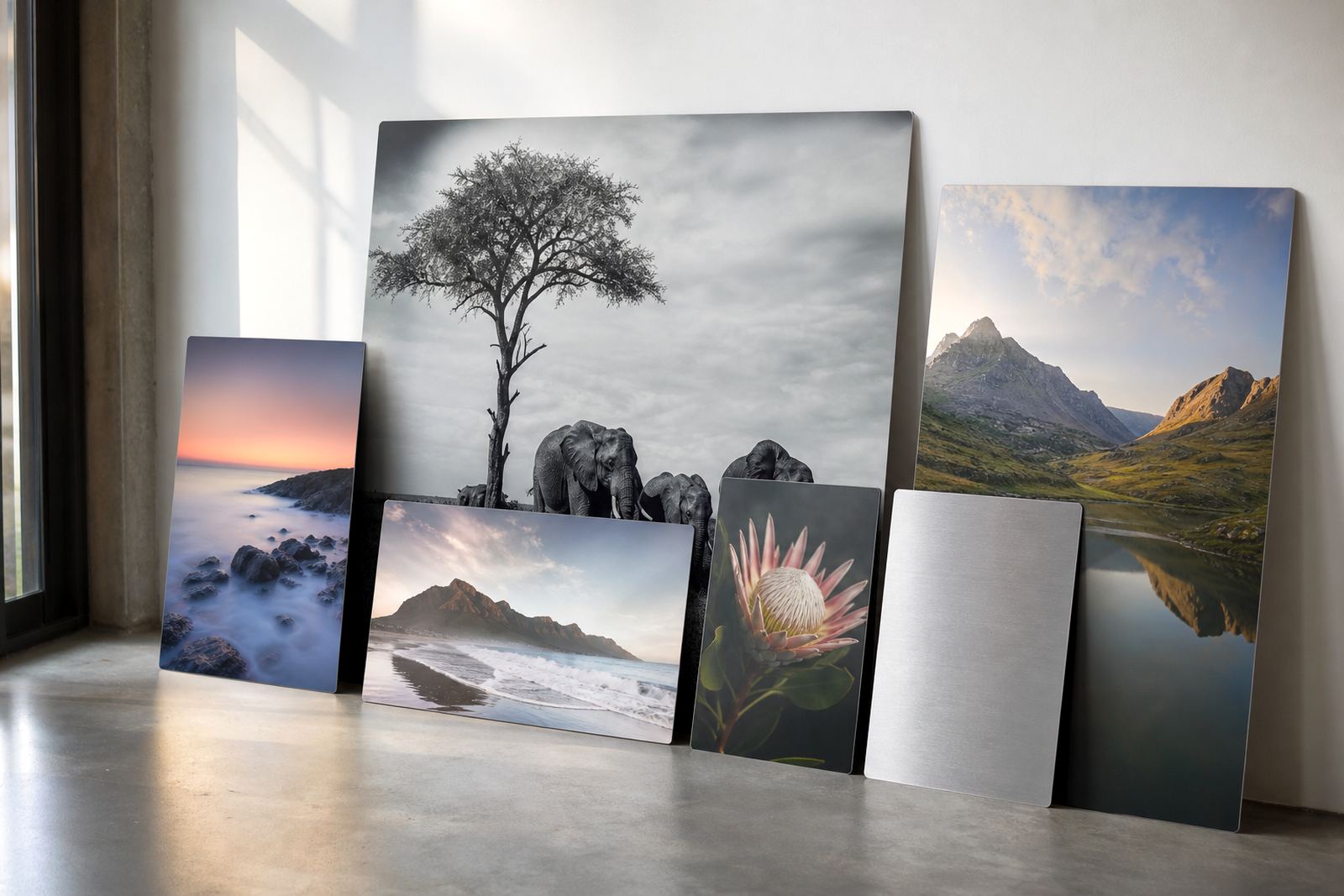
Where the frame starts before the print does
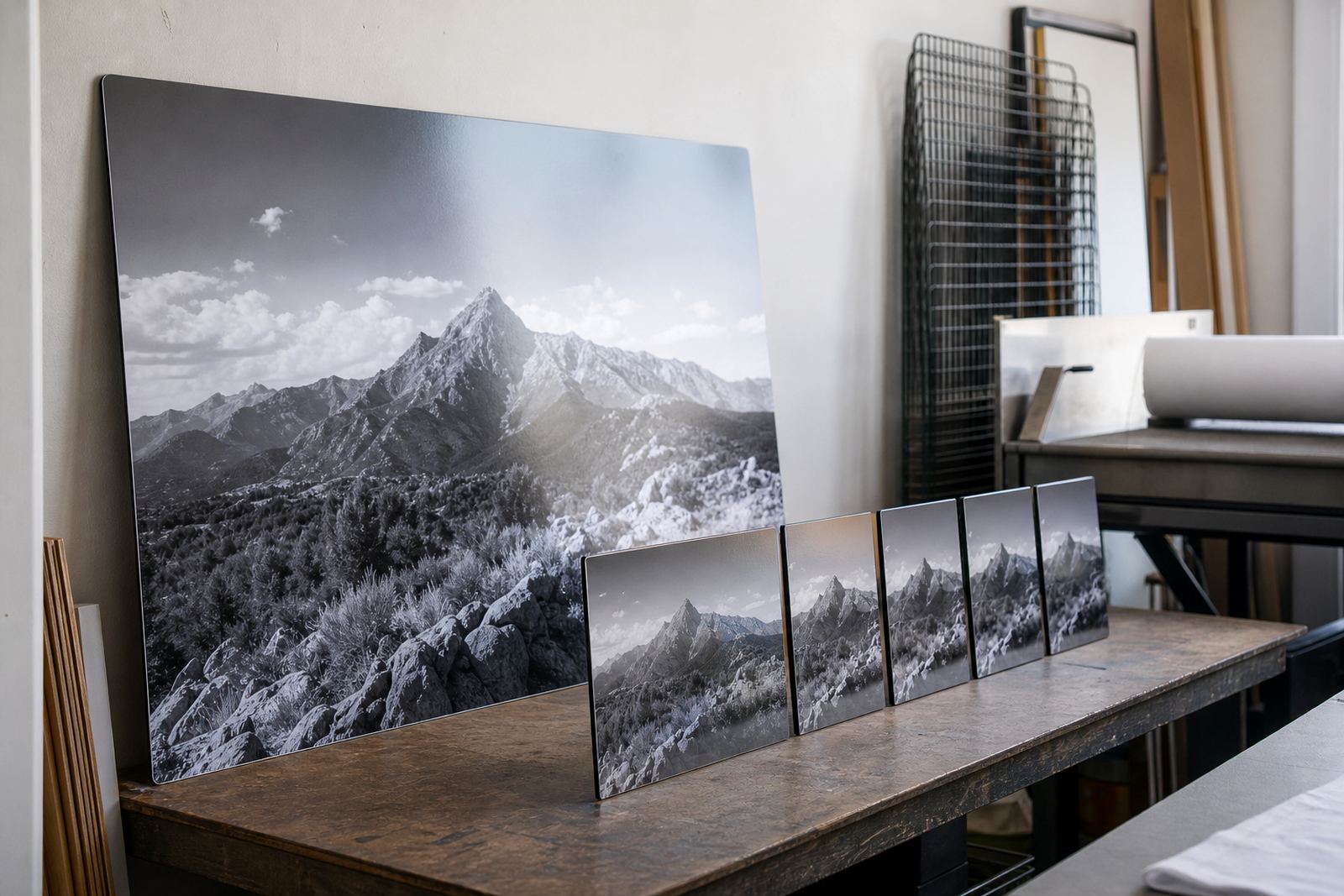
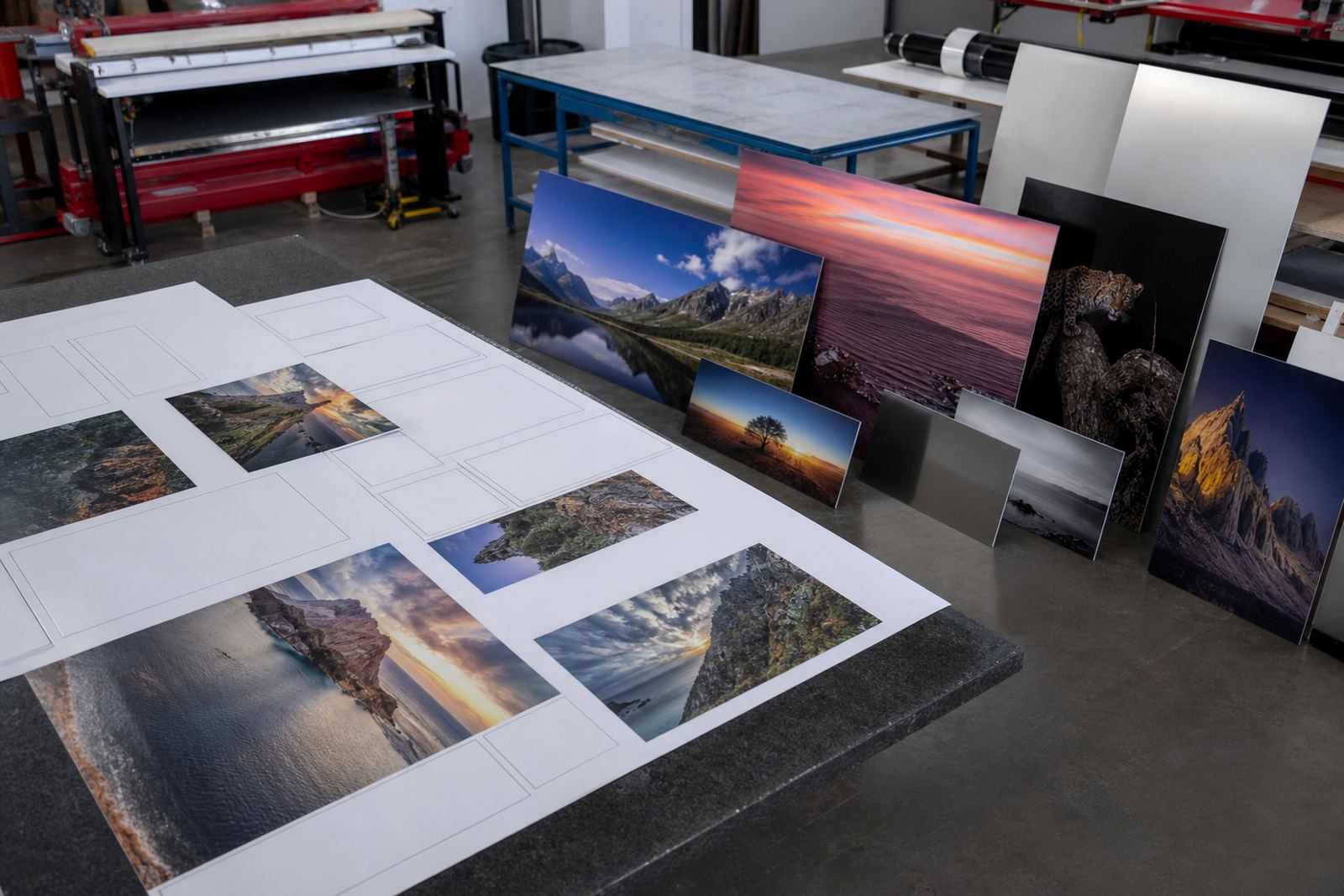
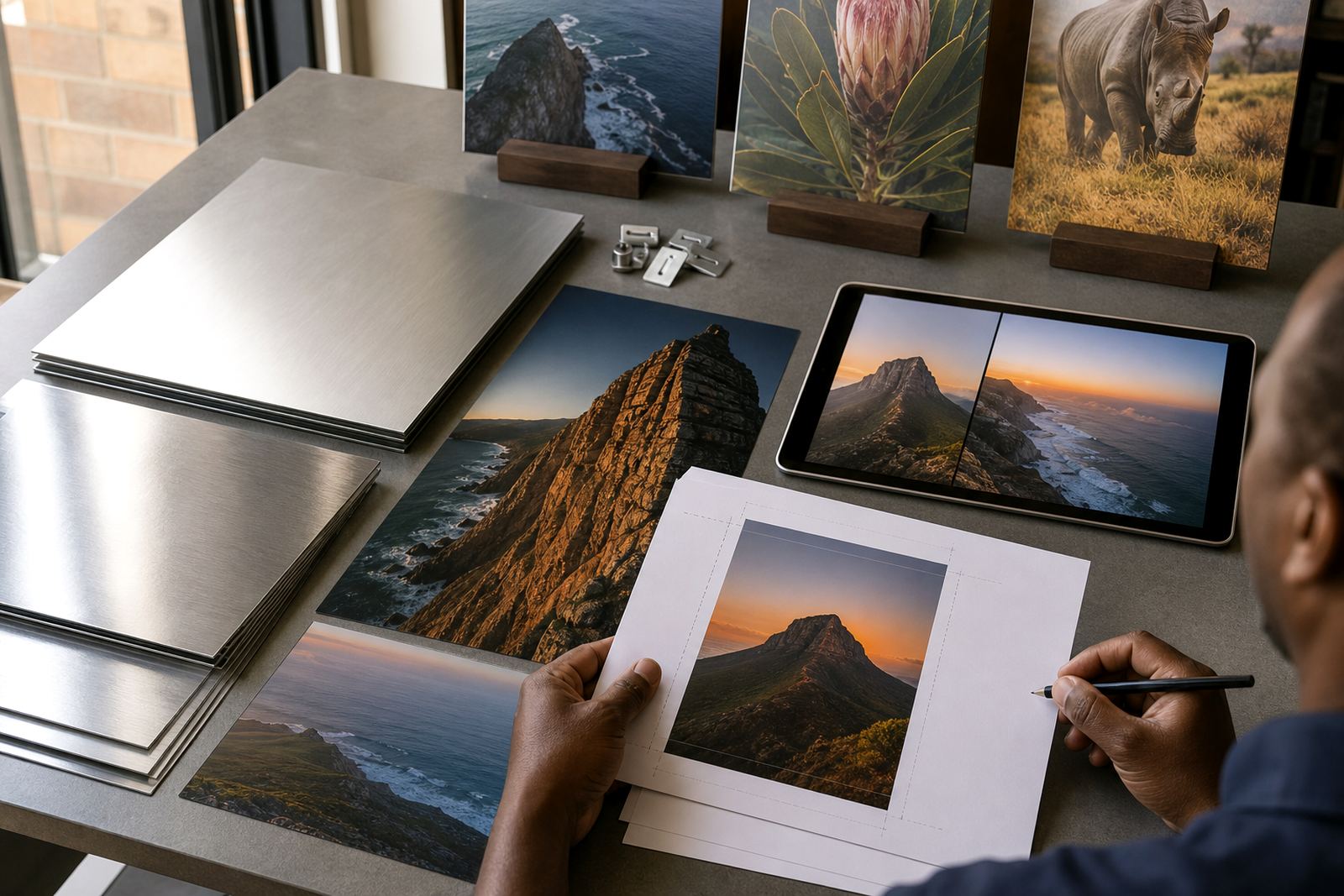
Crop planning is the stage where we shape your image to suit dye sublimation onto coated aluminium, without cutting off important detail or leaving awkward gaps. We check the artwork against the panel size first, then set the crop so faces, horizons, signage and key features sit in the right place. That matters on glossy panels where reflections can make a busy image feel tighter than it looked on screen.
We work with standard sizes as well as custom dimensions, and we plan for common display positions such as wall-hung singles, paired panels and multi panel runs. If a client is sending a wedding portrait, a city skyline, or a product image for a reception area, the crop needs to respect the subject and the final viewing height. A careful crop saves rework later and gives the finished panel a calmer, more professional look.
- Standard rectangles for offices, boardrooms and retail spaces
- Panoramas for landscapes, architecture and wide interior views
- Square formats for portraits, artworks and feature walls
- Matched sets where several panels must line up cleanly
What we check before a blade touches the layout
Our file review starts with the image dimensions, aspect ratio and pixel detail. For a sharp result on aluminium, the source file must hold enough resolution for the panel size you want, especially if the print will be viewed close up in a home passage or office reception. Low-resolution files can still be used in some cases, but we will explain the limits clearly and adjust the crop to protect the strongest part of the picture.
We also look for safe margins around the edge. Some images need a little extra breathing room for mounting hardware, a flush finish or a wrapped visual effect. If the image carries text, logos or border lines, we plan those elements carefully so they do not sit too near the trim. That is important for business signage and branded displays, where a few millimetres can change the balance of the whole piece.
- Resolution review against the final panel size
- Edge safety for trimming and mounting hardware
- Text and logo placement on branded images
- Review of horizon lines, faces and focal points
How the crop is mapped to the panel type
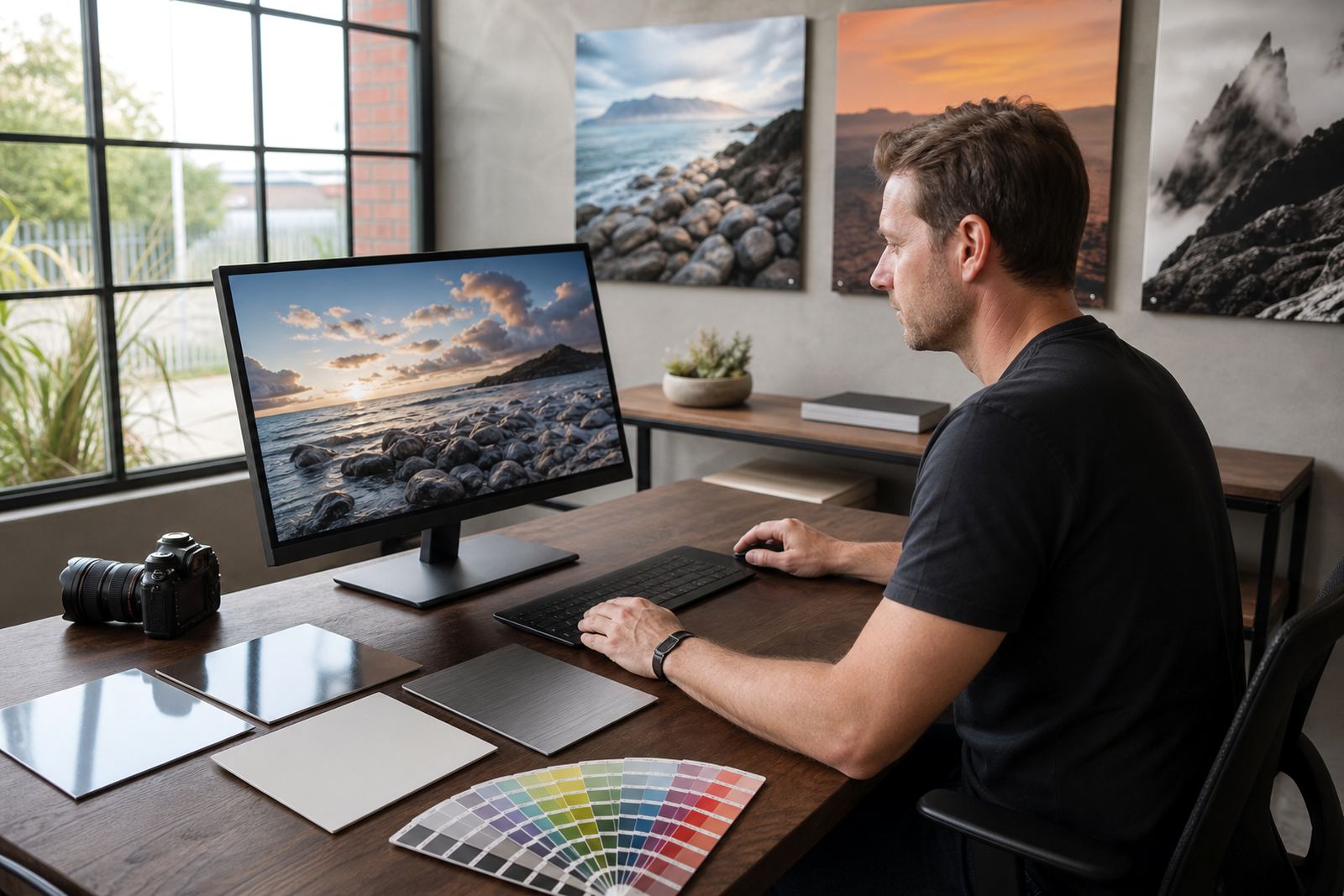
Different aluminium finishes need different crop thinking. A gloss finish gives strong colour and a bright surface, so we avoid crowding the edges with fine detail that may pull the eye outward.White coated panels carry colour cleanly, while brushed aluminium lets portions of the metal show through lighter areas, which can affect how pale tones and open spaces read in the final piece.
For square panels we keep the central subject anchored, especially with portraits or product photos. For panoramas we often widen the crop to preserve the sense of movement across the image. If your photograph has empty sky, water or background texture, we may use that space to balance the composition rather than filling every centimetre. The goal is not just to fit the image, but to fit it well.
- Gloss for strong colour and a sharper visual pop
- Matte for lower glare in bright rooms
- White for clean colour reproduction
- Brushed for a metallic look where the panel surface can show through
The working steps from file to final trim
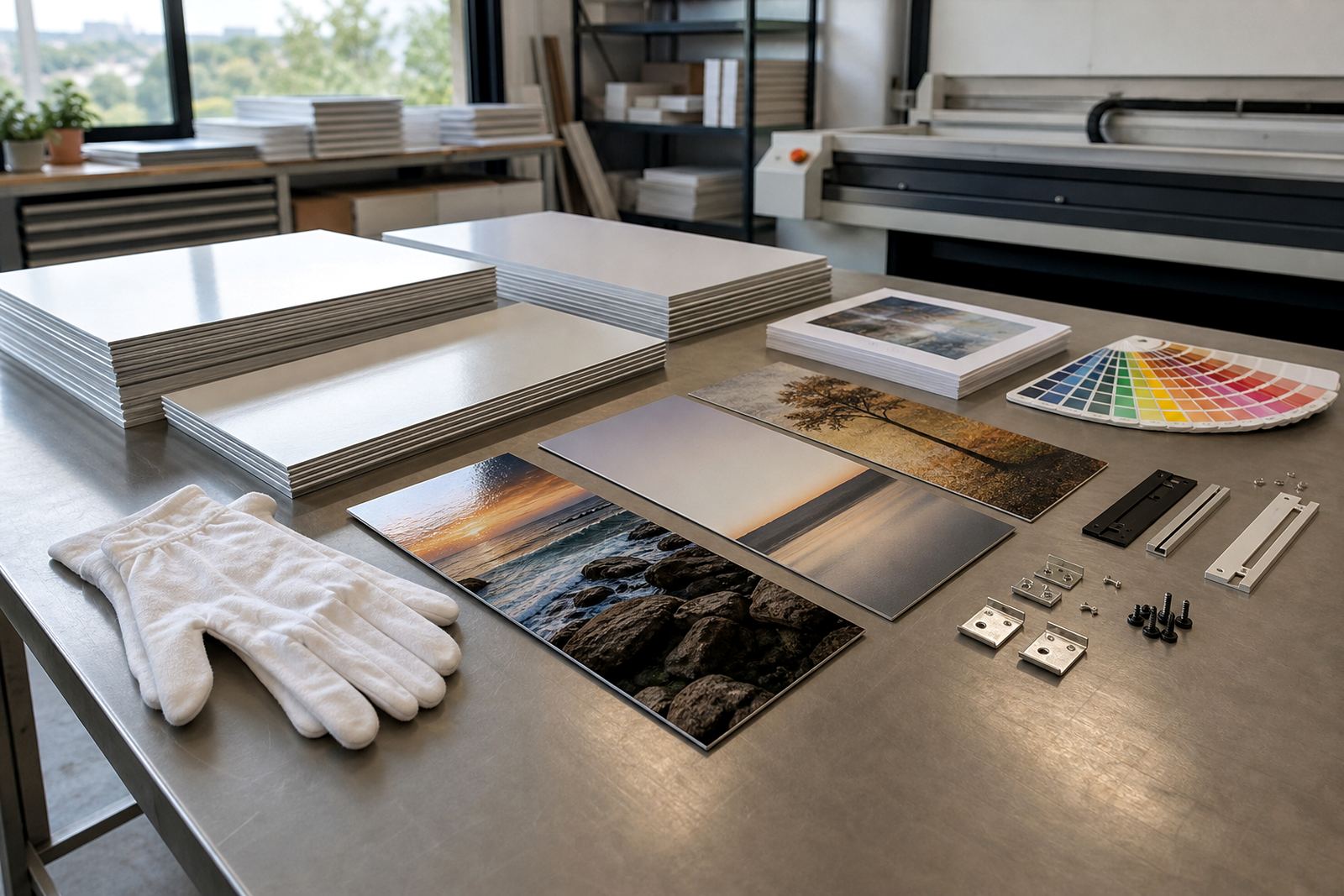
Once the crop is approved, we set the panel layout and move into production planning. Our team in Randburg prepares the file for sublimation transfer, checks orientation and confirms the final cut line. If needed, we produce a test panel or a small sample section for colour and composition review before a full run. This is useful for photographers and artists who need the tone to match a known image set.
The process is practical and orderly. We do not guess at the crop, especially where a photograph has a lot of subject detail near the border. We rather move the framing a few millimetres, check the bleed allowance and confirm the hang position before printing. That keeps the panel square, the image centred and the finished piece easier to install in homes, galleries and commercial spaces across Johannesburg, Cape Town, Durban, Pretoria and Gqeberha.
- File received and checked for size, crop and orientation
- Panel format selected with the right finish
- Crop laid out and approved before print
- Printed, pressed and trimmed to final size
- Hardware fitted and packed for delivery or collection
When custom sizing needs a stronger crop choice
Custom sizes often create the most crop decisions, because the panel may not match standard photo ratios. A tall panel for a stairwell or a long narrow piece for a passage needs a different approach from a common A-size print. We help set the crop so the composition still feels deliberate, not stretched or chopped. If an image has too much empty area for the chosen shape, we will say so and suggest a better panel size or a multi panel layout.
For business clients, crop planning is also useful when several images must sit together across a wall. We can line up repeated branding, consistent sky tones or a sequence of product shots so the set feels joined. The same applies to artists working with series work. Small shifts in crop can make the difference between a set that looks pieced together and one that feels properly prepared.
- Custom width and height planning
- Panoramic and square conversions
- Multi panel spacing and alignment
- Advice when one image suits more than one size
Turnaround, pricing and what happens after the panel leaves us
Turnaround depends on the file quality, the number of panels and whether crop changes are straightforward or need more checking. Clean files with clear instructions move faster, while complex layouts, test panels and multi piece sets take longer. We plan realistically, because rushing crop work can leave a face clipped or a skyline sitting too high on the panel. That is not worth it.
Pricing is quoted according to the panel size, finish, amount of crop preparation, any test panel work and the hardware required. Custom layouts and reprints after approval are handled separately, so clients can see what is included before production starts. Aftercare is straightforward: keep the panel clean with a soft microfibre cloth, avoid harsh cleaners and wipe dust away before it builds up. In humid coastal areas and in busy offices, a gentle clean now and then helps the surface stay looking sharp.
- Quoted by size, finish and layout complexity
- Extra set-up for multi panel or custom crop jobs
- Care advice supplied with the finished order
- Reprint matching available for repeat jobs
Key facts
| Panel materials | Coated aluminium panels for dye sublimation |
|---|---|
| Finish options | Gloss, matte, white coated or brushed aluminium |
| Crop formats | Standard, square, panoramic and custom ratios |
| Image inputs | High-resolution files checked before production |
| Mounting | Generic hanging hardware supplied to suit the panel |
| Service area | Randburg, Johannesburg and deliveries nationwide |